
Smoked Prime Rib Recipe (with video)
Inside: How to smoke a prime rib on a pellet grill to the perfect internal temp, reverse-sear for a killer crust, and finish it with a 5-minute horseradish-mustard rub that boosts beefy flavor.
Make a smoked prime rib the crowning glory of your holiday feast. This primal cut is basically the culinary equivalent of showing up in a tuxedo. With a pellet smoker, you’ve got a significant advantage: consistent temperature control, which means this smoked prime rib recipe is far more approachable than it looks for such an impressive roast.
This post contains affiliate links. If you place an order, you’ll pay the same price for the item, and I will receive a small commission. Win-win.
What is prime rib?
A prime rib roast comes from the rib section of the steer — specifically ribs six through twelve — an area that does very little work, which is why this cut is so naturally tender. It’s considered a primal cut, meaning it’s one of the large foundational sections first broken down during butchering.
That prime real estate, along with generous marbling, is precisely what gives prime rib its rich flavor, buttery texture, and steakhouse reputation–as well as its price tag… Location, location, location. Serving this smoked prime rib is a celebration in itself.
If cooking a cut like this feels intimidating, don’t worry — just like my stuffed rotisserie leg of lamb, smoked turkey, baked ham shank, or filet mignon, success comes down to the method, in this case, a reverse sear, which brings the meat to an even temperature first before searing and browning the exterior.
A pellet grill does most of the heavy lifting with steady heat and gentle smoke. 30-40 minutes per pound is a good rule of thumb for smoking a whole prime rib roast, but a reliable probe thermometer or instant-read thermometer is essential to ensure you cook it to the exact right temperature. With these two pieces of equipment, this smoked prime rib recipe is nearly impossible to mess up.
Why this recipe works:
- Low-and-slow smoking delivers even doneness–Cooking the prime rib at 225°F allows it to cook gently from edge to edge, without a gray ring rimming the outside and producing a consistently tender, rosy interior.
- Trussing the roast ensures uniform cooking. Tying the meat into a tight, even bundle, without any thin or loose ends, helps the meat cook evenly and improves moisture retention, resulting in clean, impressive slices when it’s time to carve.
- A two-stage cook builds flavor and crust without drying the meat–Smoking develops deep beefy flavor and tenderness, while a final high-heat sear creates a steakhouse-style crust — all without overcooking this celebration-worthy cut.
- Seasonings are simple but bold–There’s no seasoning on the interior of a prime rib roast, so generously seasoning the meat with salt, pepper, and an assertive mustard-horseradish paste creates a flavorful crust that’s just enough for impact.
Ingredients:
- Beef Rib Roast — Use a bone-in or boneless rib roast—note that bone-in roasts cook a little slower, and most people remove the bones before carving for better control when slicing (thick or thin). If you don’t want to remove bones yourself, ask your butcher to do it.
- Olive Oil–To help the salt and pepper adhere to the beef rib roast.
- Kosher Salt–I recommend Diamond Crystal kosher salt which has less salt by volume than Morton’s. If you have Morton’s, use ⅓ less to prevent oversalting.
- Black Pepper–Freshly ground will give you the most bold flavor.
- Prepared Horseradish–You can use bottled horseradish or grate your own horseradish root. Do not use horseradish sauce; that’s a garnish for serving.
- Dijon Mustard–This French mustard has a touch of white wine and is less sharp than yellow mustard.
- Whole Grain Dijon Mustard–optional, but the whole mustard seeds amplify the flavor and provide a little texture as well.
- Fresh Thyme–for a bit of herbal lightness.
Helpful tools:
- Nitrile Gloves–for handling the meat, rubs and paste without coating your hands.
- Insulated rubber grill gloves–(for handling hot meat). Your hands are the steadiest method for picking up, flipping and generally handling the meat. Protect them with insulated rubber gloves and avoid getting burned.
- Sear Plates–sear plates are generally made from durable cast iron, which provides constant, even heat and delivers steakhouse-like crust to reverse-seared meats and roasts.
- Probe thermometer–usually standard with your pellet grill, but if you don’t have one, this one is the Gold Standard.
- Instant Read Thermometer–I recommend the Thermoworks Thermapen One. In case you can’t find your probe, or as a failsafe to double-check the temperature.
- Meat Cutting Board with a deep well for collecting juices.
- Carving Set–Don’t hack away at your smoked prime rib, carve it tableside with flair.
Step-by-step instructions:
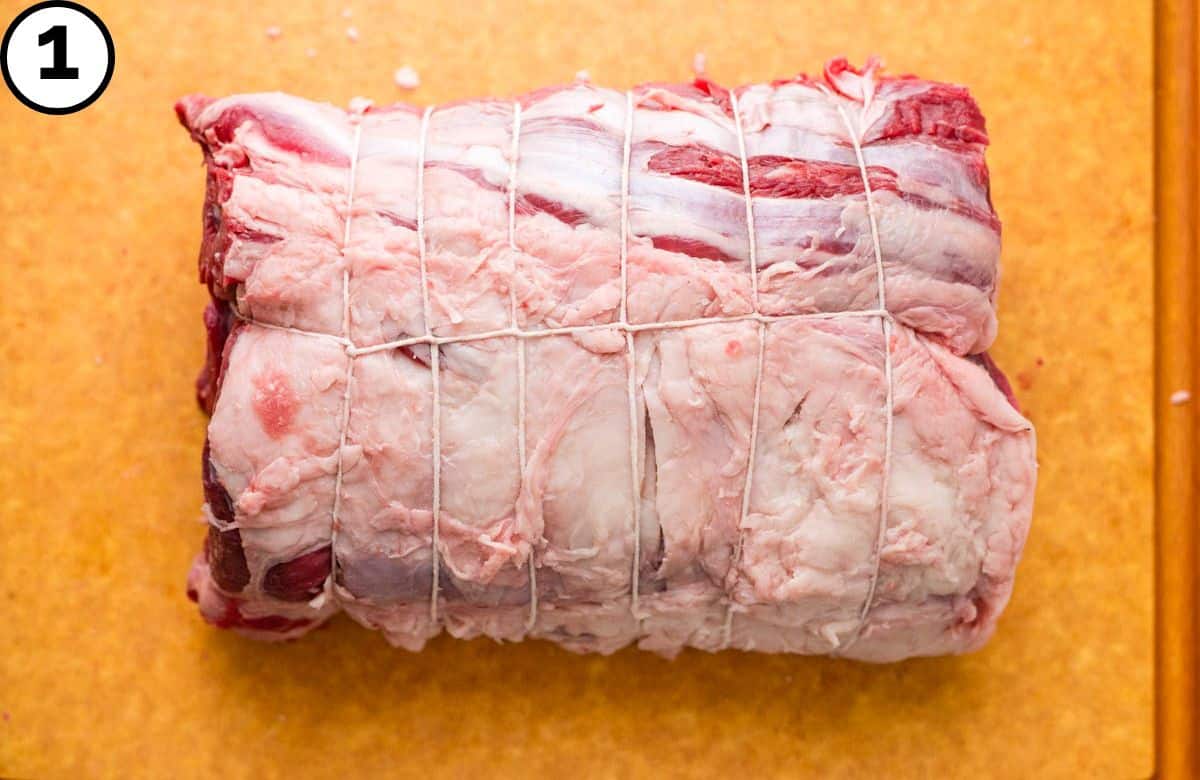
- If you have a boneless rib roast (or have removed the ribs from a bone-in roast, use a 10 to 12-foot piece of kitchen string to tie the roast so that it holds its shape. (watch this video to see how).
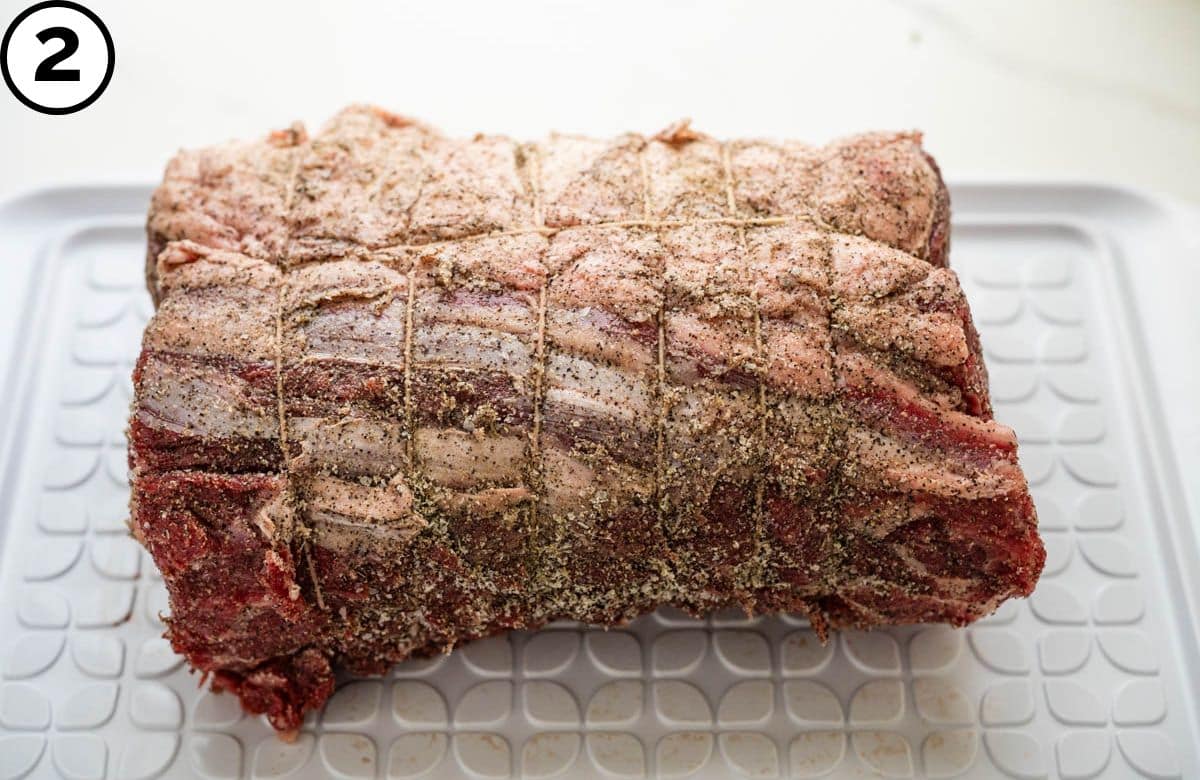
2. Rub the olive oil over all sides of the roast, then season all sides generously with the kosher salt and pepper.
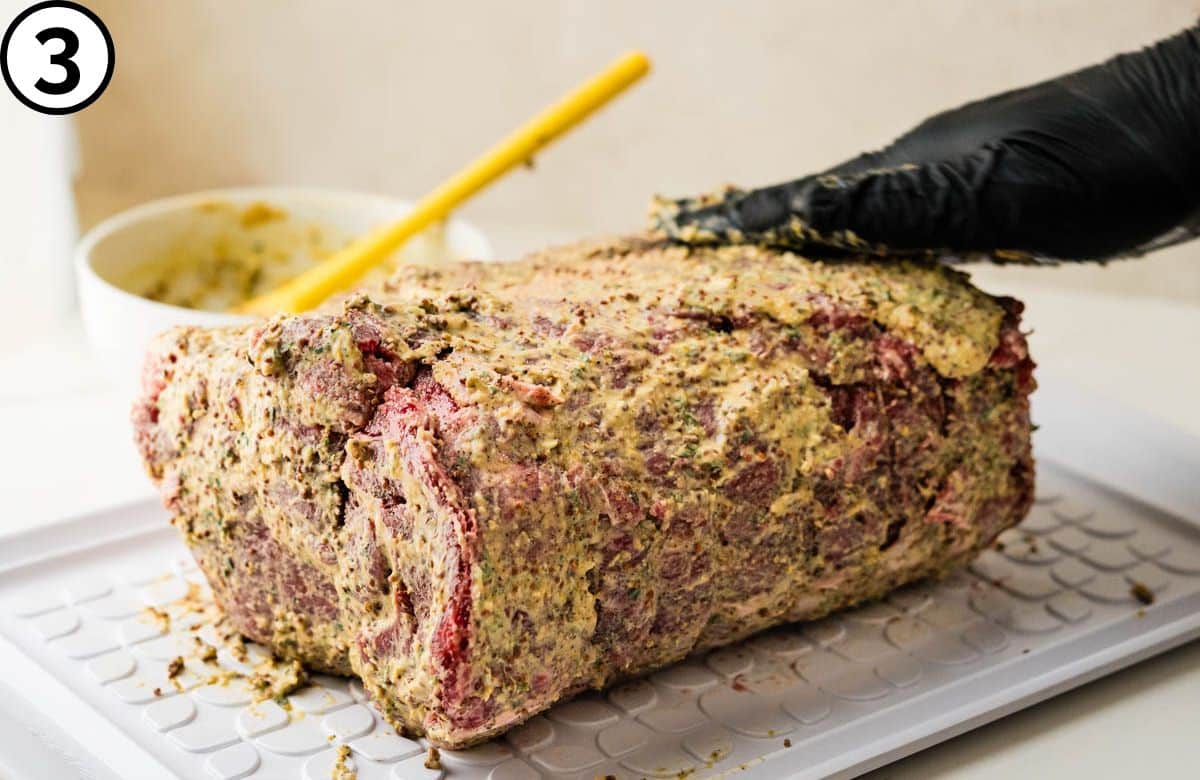
3. In a small bowl, combine both the mustards, horseradish and thyme. Slather the entire roast with the paste.
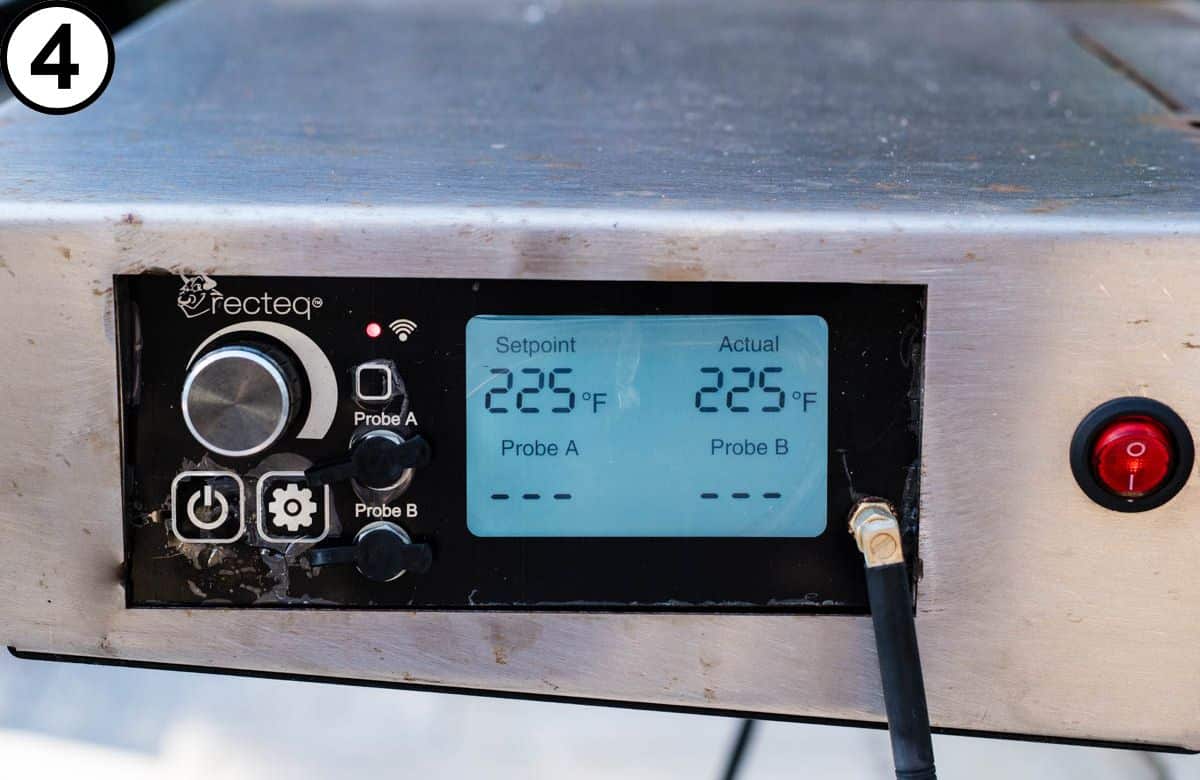
4. Fill the hopper with wood pellets and preheat the smoker to 225°F. Place a tin tray underneath the rack to catch any drippings, if desired.
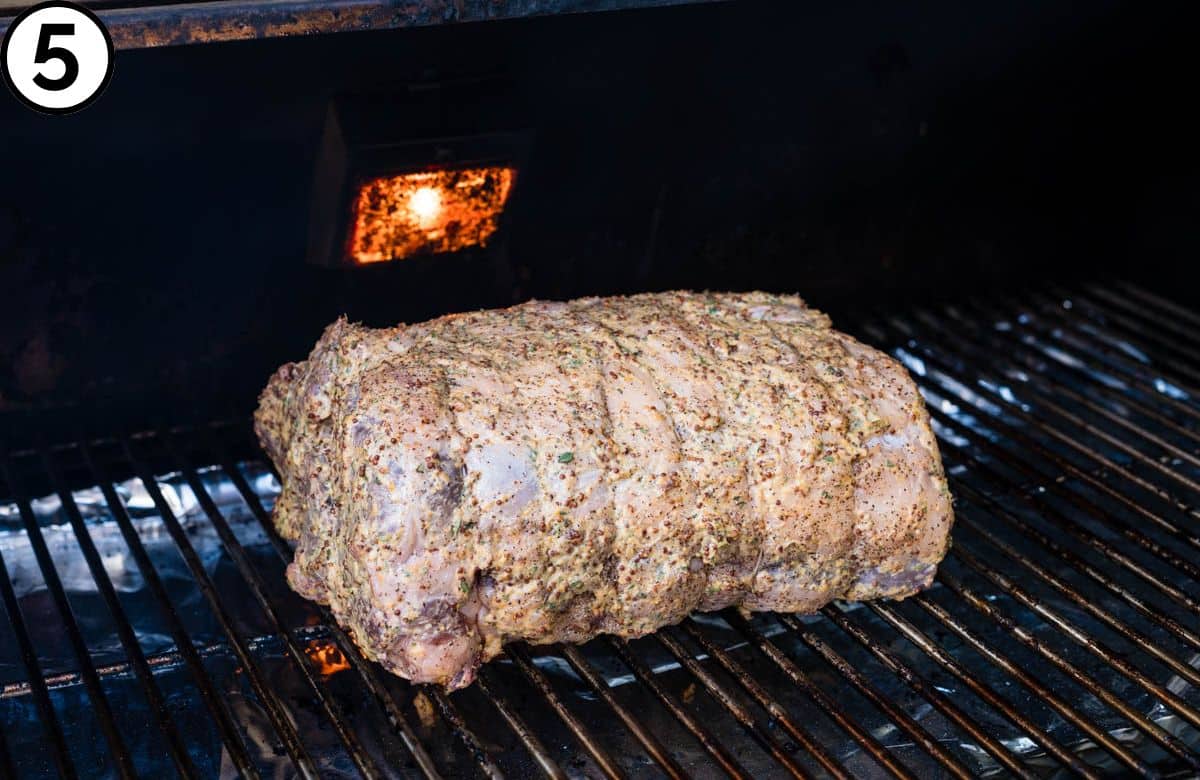
5. Place the meat on the grill. If you have one or two probe thermometers that connect to your smoker, insert them into the center of the roast. Close the lid and smoke until the thermometer registers 118°F-122°F.
If you are using an instant-read thermometer, begin measuring the temperature around the 2-hour mark to see where it stands, so you can better gauge how much longer the prime rib roast will need.
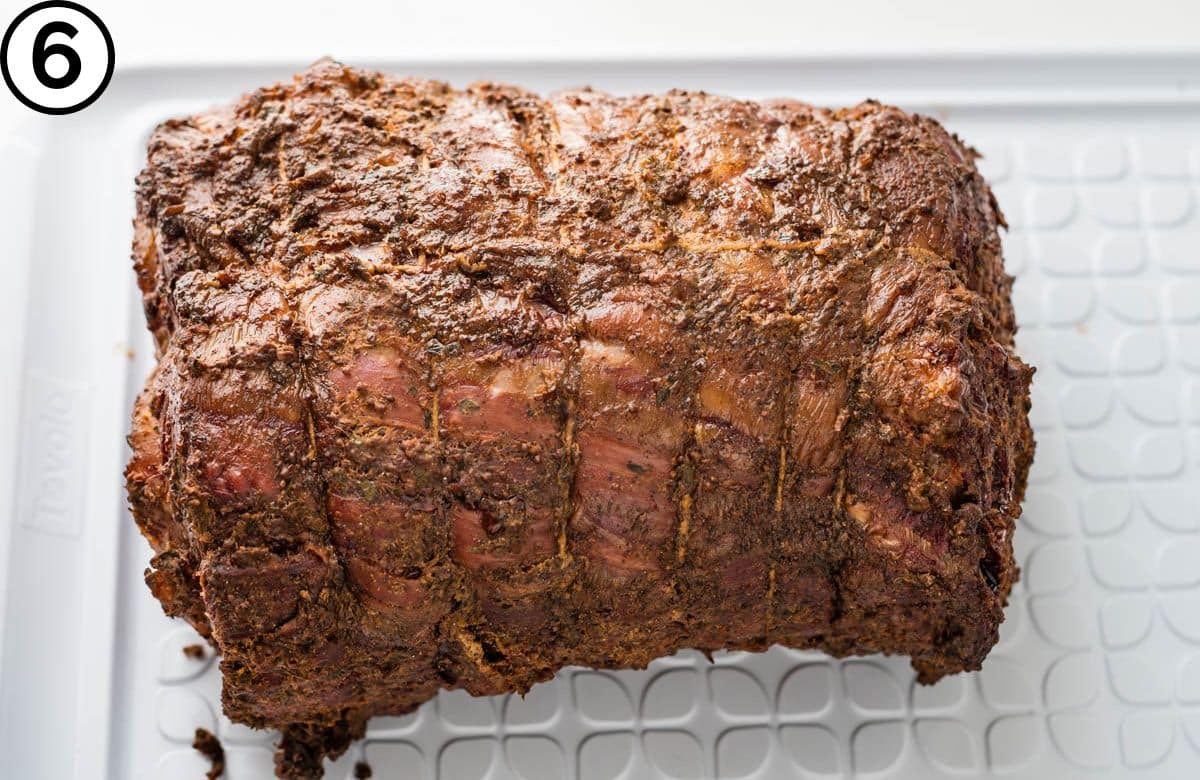
6. Once the meat reaches 118°F-122°F transfer it to a tray with a lip (to catch any juices) and tent it with foil. Turn the smoker up to 500°F for the final sear. (Note, it usually takes 15-20 minutes for the grill to achieve the high heat.
If you have sear plates, place them on the grill before you increase the temperature. If you don’t have them, you can sear the roast directly on the grill.
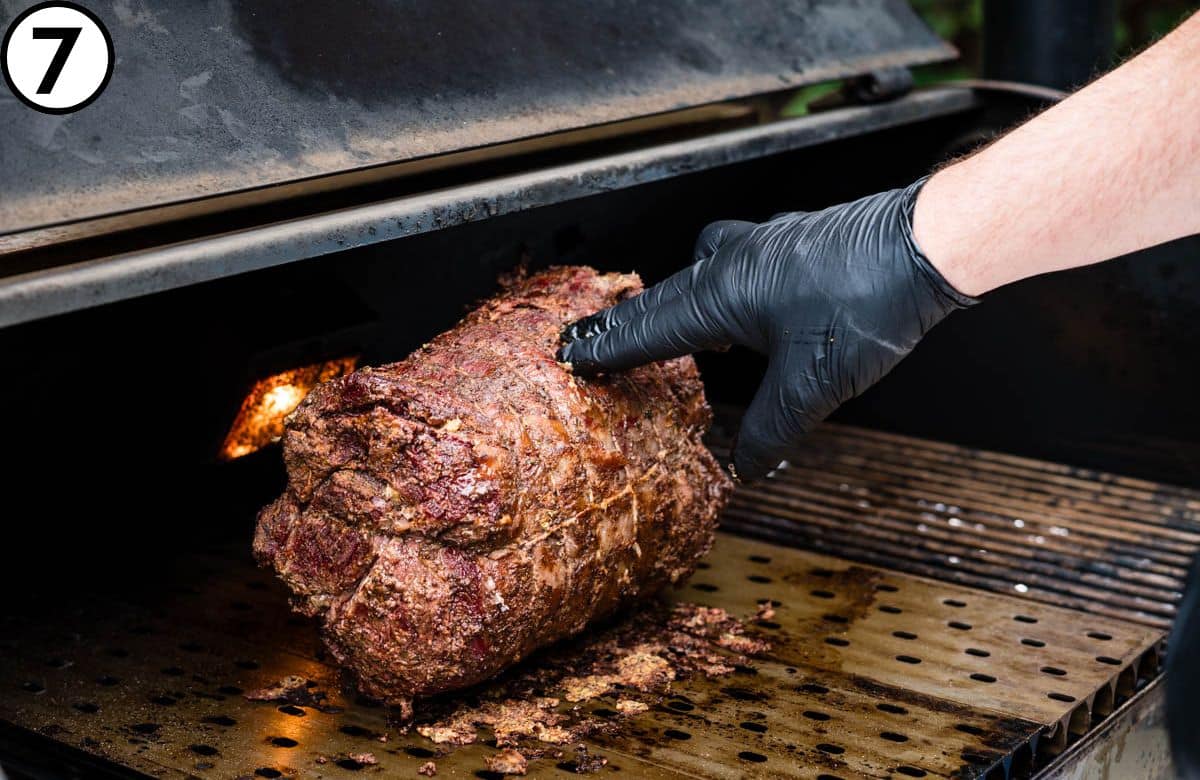
7. With sear plates: place the roast on the sear plates for about 1 minute per side, rolling it over and onto each end.
Without sear plates, place the prime rib roast directly on the hot grates and sear for 1 minute, then flip and sear the other side for another minute. Stand the roast on either end and cook for one minute on each to create a burnished crust.
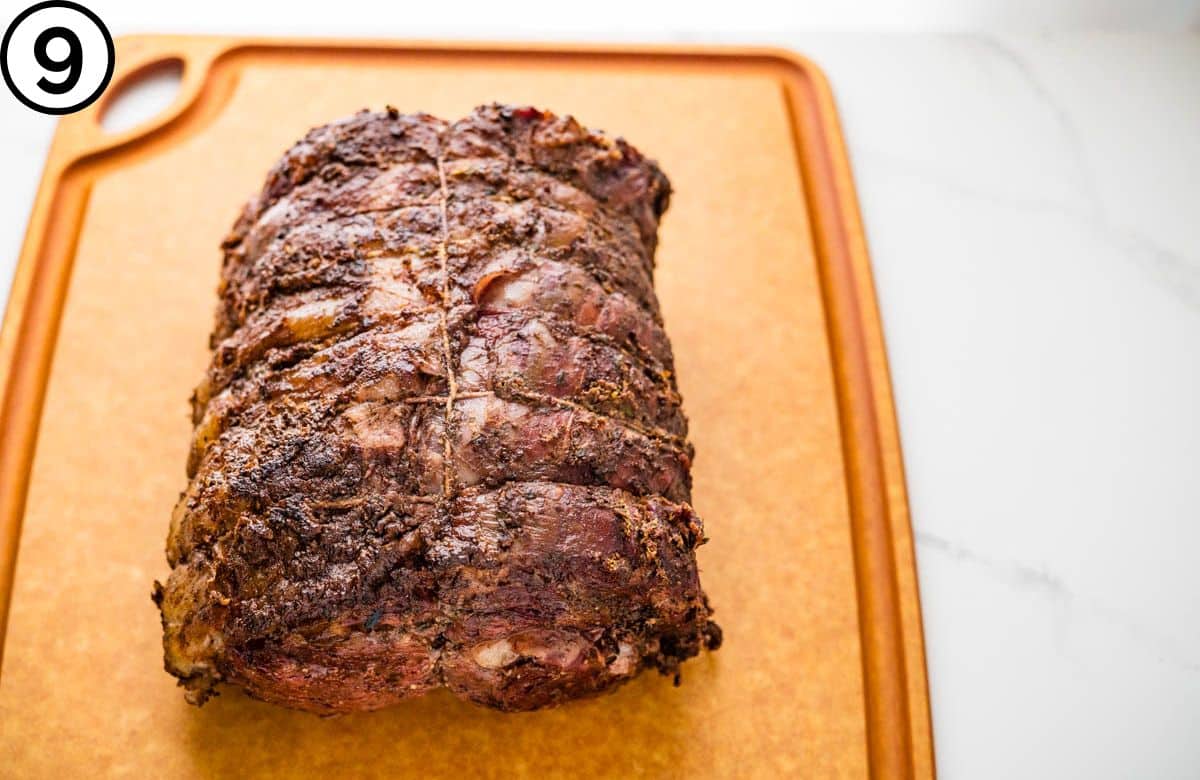
9. Transfer the smoked prime rib to a cutting board with a channel for collecting juices. Rest the meat for 20-30 minutes to allow the juices to redistribute throughout the flesh.
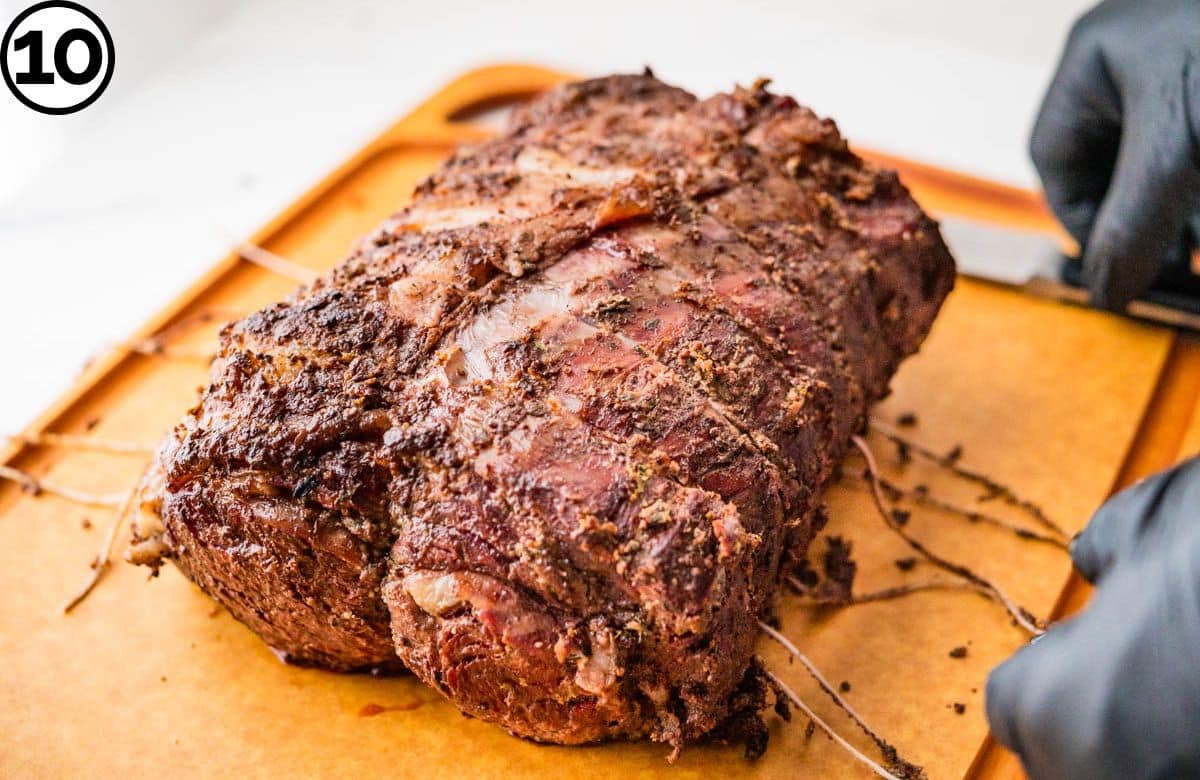
10. Use a knife to cut away the kitchen string and discard.
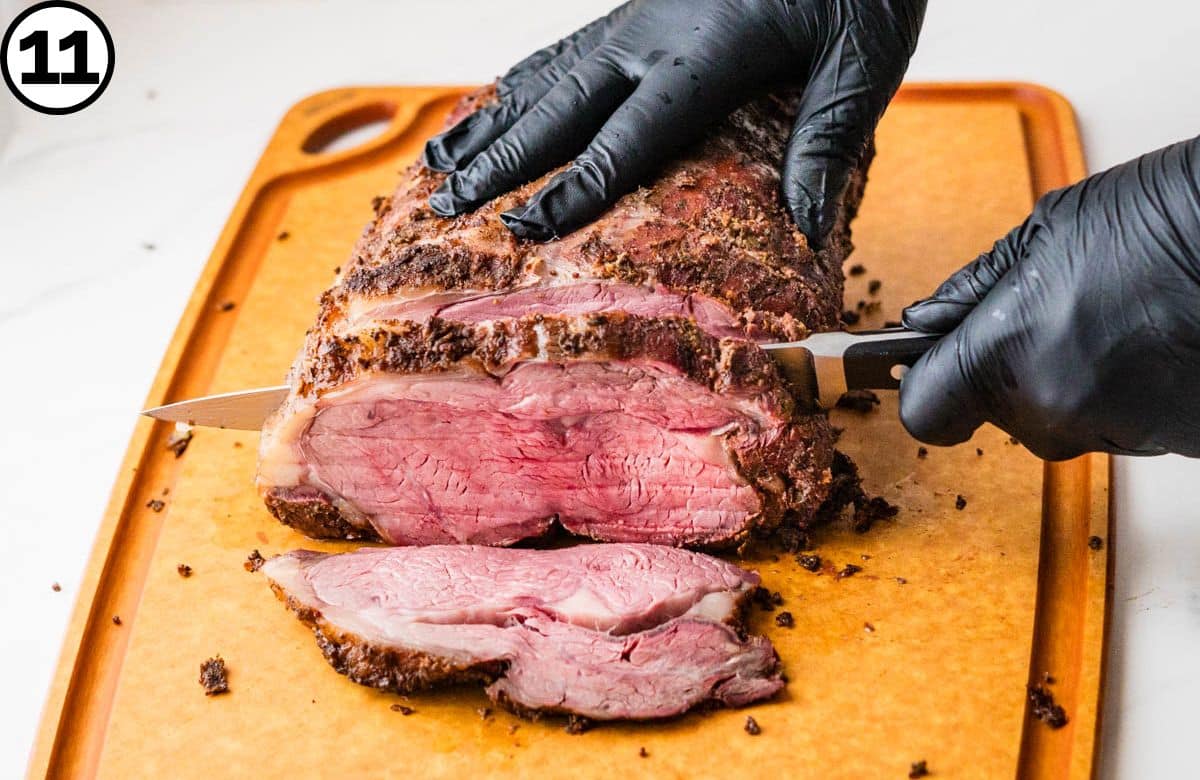
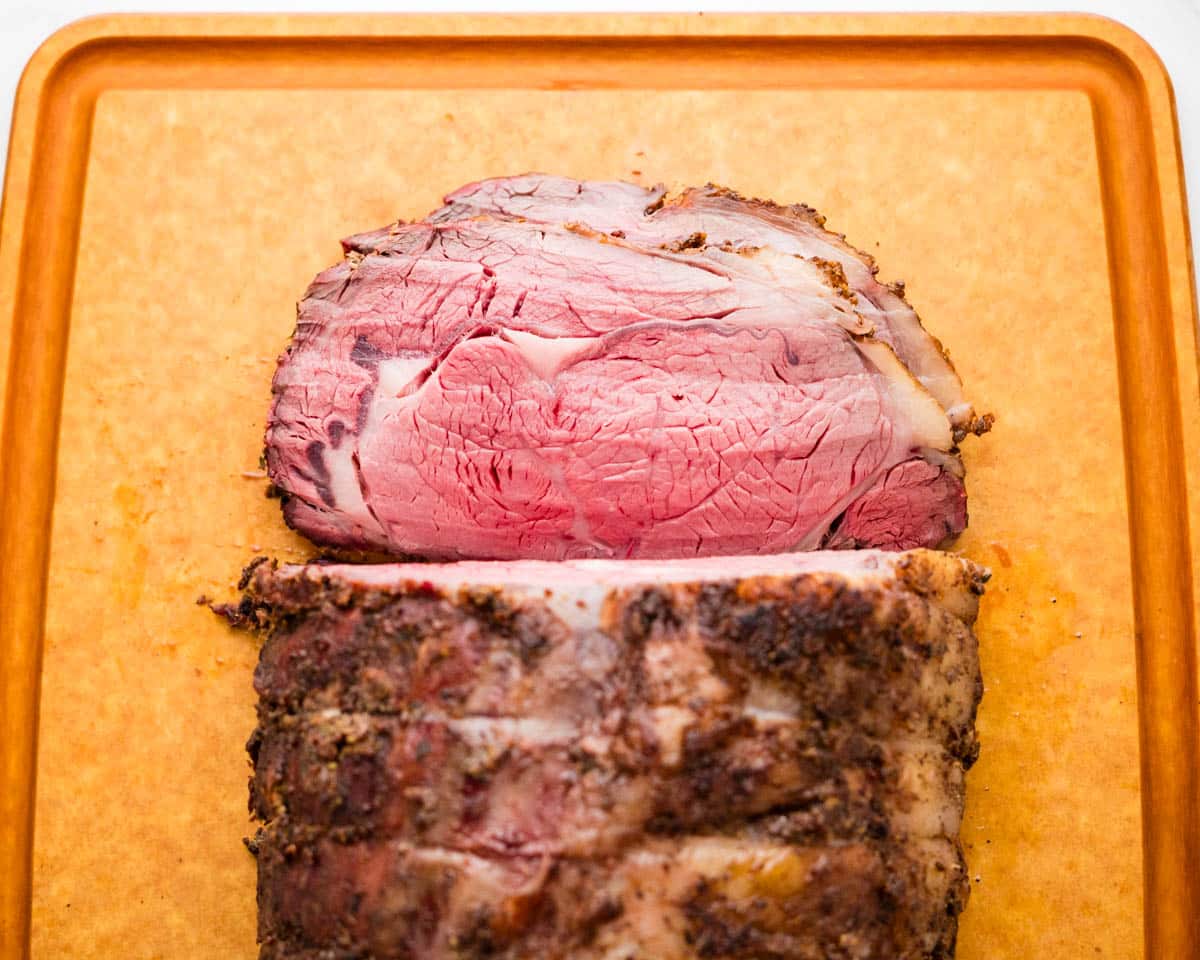
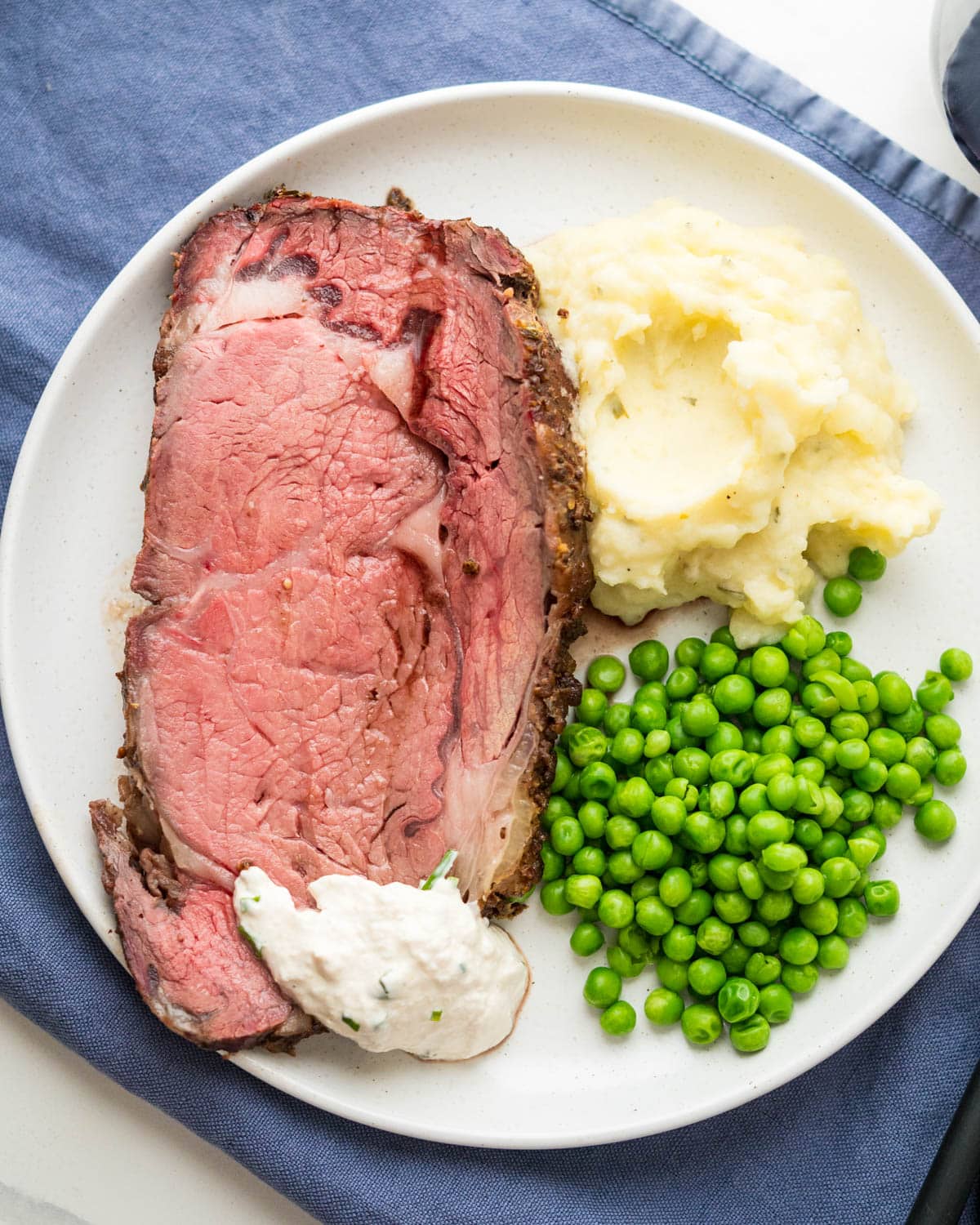
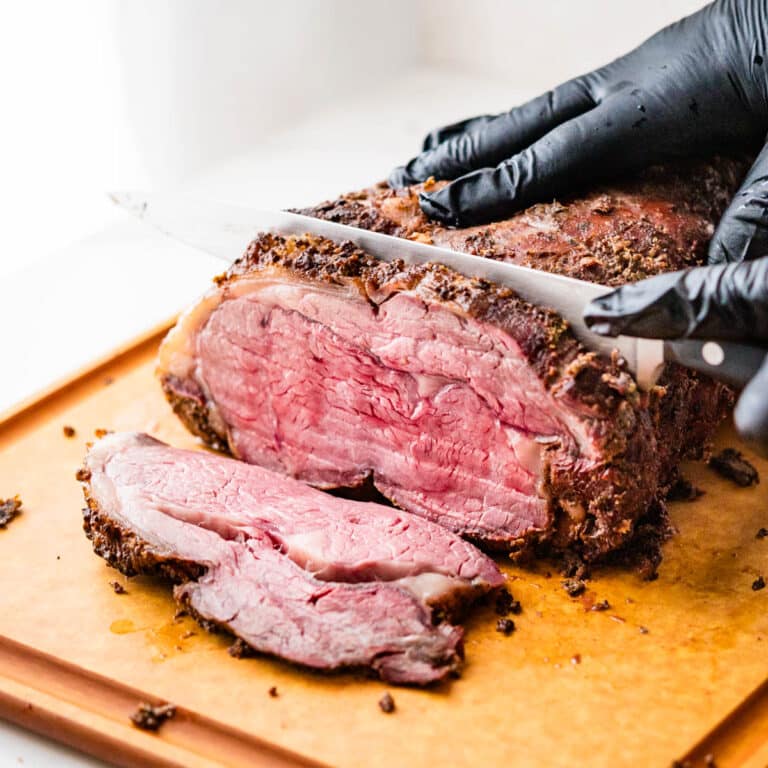
11. Carve the smoked prime rib roast into slices between ½” to 1½”, depending on your guests’ appetites.
Pro-Tips:
- Remove the prime rib roast from the refrigerator about 30-40 minutes before smoking, to remove the chill from the meat.
- If it has a thick fat cap, trim away some of the fat, but leave at least ¼”. Fat is flavor.
- Check the temperature of the meat for the most accurate way to know if it’s done – and done to your liking. Invest in temperature probes that provide a stable reading, or at least a reliable instant-read thermometer. We have both, and it is a good failsafe if you don’t quite trust one or want reassurance. Here’s my affiliate link to my preferred instant-read thermometer, the Thermapen One.
- Let the roast rest once it’s finished searing. If you cut into it prematurely, the juices will end up on your cutting board instead of inside the smoked prime rib.
- Check the weight–I purchased a bone-in prime rib roast, but we cut off the rib bones before smoking. The original weight was 9.5 pounds; without the bones, it weighed 7.3 pounds. If you remove the rib bones, be sure to weigh the roast again before you figure the cooking time.
- If you cut away the rib bones, save them for roasting or smoking later – it’s as hedonistic as eating brontosaurus ribs (á la The Flintstones).
- Post-Christmas and New Year’s–some markets will sell the ribs they’ve trimmed away (at a very reasonable cost). Look for them the week after the holiday and buy!
Swaps and Variations:
- For a simpler preparation, just season the roast liberally with salt and pepper and one to two tablespoons of Worcestershire sauce. Just serve it with au jus (the strained drippings from the roast), mushroom gravy, bordelaise sauce or horseradish sauce.
- For an herb crust–combine 2 tablespoons of minced garlic, 1 tablespoon of minced rosemary, 1 tablespoon of minced thyme and 1 tablespoon of minced tarragon with the salt and pepper. Slather it over the roast and let it rest in the refrigerator overnight before smoking.
FAQs
30-40 minutes per pound is the standard gauge for smoking a prime rib.
For a boneless roast, figure ½ to ¾ pound of meat per person. Bone-in, one pound per person. That said, I would err on the side of more than less. This is a celebration cut, and once that smoked prime rib hits the table, even those who “just want a taste” will plow through a slice faster than you can say Hoover.
Meat comes in several grades from Prime (most marbled, highest quality) to Choice (high quality, less marbling) to Select (leaner, uniform quality). There are Wagyu cuts and dry-aged options. For smoking a prime rib, I recommend sticking to Prime or Choice if you can afford it. They will give you a better texture and flavor than Select. Wagyu and dry-aged are incredible, but those cuts won’t necessarily benefit from smoke.
Make ahead:
- Assemble the mustard-horseradish paste up to a day ahead.
Storage:
- Store leftover prime rib sealed in heavy-duty foil or an airtight storage container in the refrigerator for 3-5 days.
Reheating:
- To reheat the prime rib, preheat the oven to 325° F and remove the meat from the refrigerator about 30 minutes before heating to take off the chill.
- Place the meat on a rimmed baking sheet, lined with foil and lightly tent it.
- Heat for 10-15 minutes just until the prime rib is warmed through, but not cooking further.
- Top a medium-warm slice with a hot gravy or jus rather than over-cooking the tender roast.
Freezing:
- To freeze leftovers, wrap well in plastic wrap, followed by a double-layer of freezer paper to reduce the risk of freezer burn.
- Keep frozen for up to 3 months.
- Defrost in the refrigerator before reheating.
Smoked to perfection with exceptional juiciness, this prime rib works for any portion size—and the leftovers make phenomenal sandwiches. Enjoy this outstanding prime rib roast as the centerpiece for your holiday meal.
More holiday centerpieces:
Smoked Prime Rib
SPECIAL EQUIPMENT:
- kitchen string 10-12 feet
- rubber gloves
- pellet smoker
- grill tongs
- grill spatula
- Wood Pellets we used a combo of hickory and oak, but pecan or cherry work well. For stronger flavor, use mesquite.
INGREDIENTS:
- 8 lbs boneless beef rib roast (or bone-in, just trim away the bones)
- 2 tablespoons kosher salt
- 1 tablespoon black pepper
- 1-2 tablespoons olive oil or other neutral oil
- 2 tablespoons prepared horseradish
- ¼ cup Dijon mustard
- 2 tablespoons whole grain Dijon mustard
- 1 tablespoon fresh thyme
DIRECTIONS:
- Remove the meat from the refrigerator 30 minutes before smoking.
- Use a sharp knife to trim away excess fat cap from an 8 lbs boneless beef rib roast. Save the fat for other uses. If you have a bone-in roast and want to trim it, stand the roast on it's end, so the cut bones face up and use a sharp boning knife (or carving knife) to cut away the bones in one piece, following their natural curve with the blade.
- Use a 10-12-foot length of kitchen string to tie the roast, hold its shape, and ensure the meat cooks at a uniform rate without grey spots.
- To tie the roast, tuck any loose ends under the meat and position the kitchen string under one end of the roast; tie a snug knot around the end (tied off on top of the meat). Pull the long end of the string about 1-1½" further along and hold it with one finger pressed into the roast. Wrap the loose end around the roast. When you bring it up, tuck it under the piece you're holding with the string and pull it, then alternate tucking the string under and over snugly along the top.
- Continue wrapping, tucking and pulling all the way down the roast until you reach the other end. Flip the meat over and alternate tucking the string under and over the string on the underside to hold it in place. Finally, join the two ends together and tie a snug knot.
- You can tie the ribs back onto the bone to remove just before carving, or reserve them for roasting, smoking or grilling later (they are dinosaur bones and they're delicious).
- Combine 2 tablespoons kosher salt and 1 tablespoon black pepper in a bowl and mix well. Drizzle 1-2 tablespoons olive oil over the roast and spread it over the entire thing (top, bottom and sides). Sprinkle the salt and pepper mixture over the meat, rubbing and pressing it in so it's evenly coated everywhere and the seasoning sticks to the meat.
- In a small bowl combine 2 tablespoons prepared horseradish, ¼ cup Dijon mustard, 2 tablespoons whole grain Dijon mustard, 1 tablespoon fresh thyme and stir to combine.
- Slather the wet rub over the meat, coating every part evenly.
- Heat the smoker to 225°F, and when it is smoking, place the prime rib in the center. If your smoker has a tethered thermometer, insert the probe(s) in the center of the meat for the most accurate reading. Close the lid and smoke for 3-3½ hours, until the internal temperature reaches about 118°-122°F.
- If you're using an instant read, start checking the internal temperature after about 2½ hours to see how far along it is. You don't want to keep opening the lid, as it lowers the smoker's temperature, but you also don't want to let the meat go past your desired doneness.
- Once the meat has achieved the temperature range, transfer it to a platter and tent it with foil to rest.
SEAR THE MEAT:
- As the meat rests, turn up the grill to 500°. When it reaches the target temperature, place the roast on the grill to sear the exterior and achieve a burnished crust. Use heat-proof gloves or tongs to roll the roast, so that each part is touched by the high heat.
- If you have sear plates, arrange them on the smoker and turn the heat up to 500°F. (It usually takes 15-20 minutes to come to temperature). Place the roast on the sear plate and rotate it every minute or so, to crust every part of the roast. Some of the mustard-horseradish coating will adhere to the plate; that's fine.
- Degree doneness by internal temperatures:Rare: 130°F; Medium-Rare: 135°F, Medium: 140℉Check the readings on your thermometer to ensure it's cooked to your desired temperature.
- Remove the meat to a platter or cutting board with a deep well to collect juices, and set aside for 20-30 minutes to allow the juices to redistribute throughout the flesh.
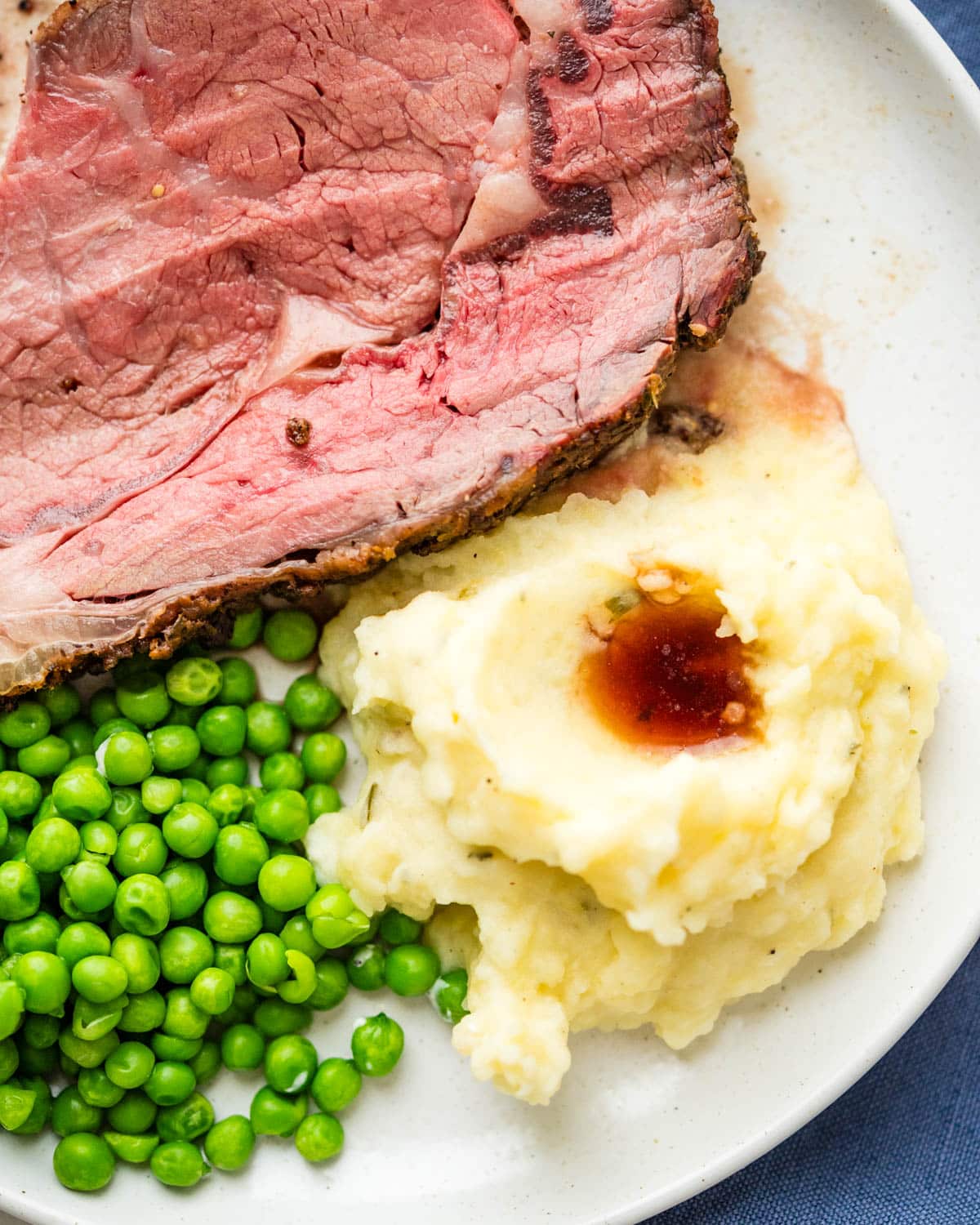
- After the prime rib roast has rested, use a long, thin carving knife to carve slices into ½-1" slices, depending on appetites. Serve with any jus collected from the smoking process or from the meat as it rested, as well as horseradish or bordelaise sauce.
RECIPE VIDEO:
NOTES:
- Store leftover prime rib sealed in heavy-duty foil or an airtight storage container in the refrigerator for 3-5 days.
- To reheat the prime rib, preheat the oven to 325° F and remove the meat from the refrigerator about 30 minutes before heating to take off the chill. Place the meat on a rimmed baking sheet, lined with foil and lightly tent it. Heat for 10-15 minutes, just until the prime rib is warmed through but not cooked further.
- Instead of heating until the roast is hot, top a medium-warm slice (cool in the center) with a hot gravy or jus rather than over-cooking the tender roast.
- To freeze leftovers, wrap well in plastic wrap, followed by a double layer of freezer paper to reduce the risk of freezer burn. Keep frozen for up to 3 months.
- Defrost in the refrigerator before reheating.
NUTRITION:
Nutritional Disclaimer
Nutritional information is an estimate only and is provided as a courtesy. Values are calculated automatically based on the ingredients and quantities in each recipe and may vary depending on specific brands, exact measurements, and substitutions made. For precise nutritional guidance, especially if you have a medical condition or dietary restriction, please consult a registered dietitian or run the ingredients through your own nutrition calculator.Pin It For Later!
Talk about a crowd pleaser! My son in law prepared this for a recent get-together and it was the BEST forkful of meat I’ve ever had! The smoke was gentle and the meat tender, juicy…delicious! The best! Thanks for a such detailed recipe, Lisa!