
Italian Ricotta Pie (Easter Ricotta Cheesecake)
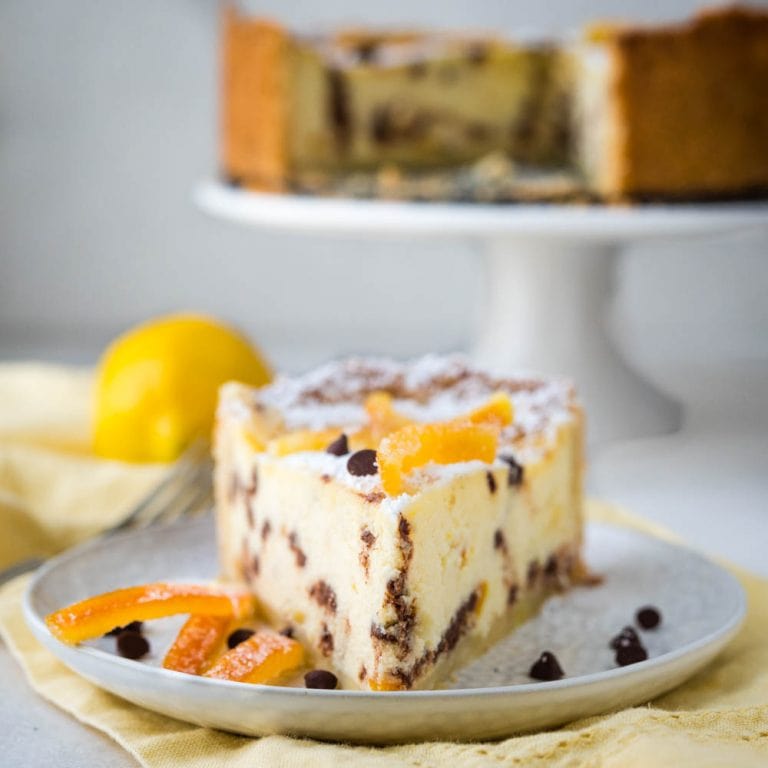
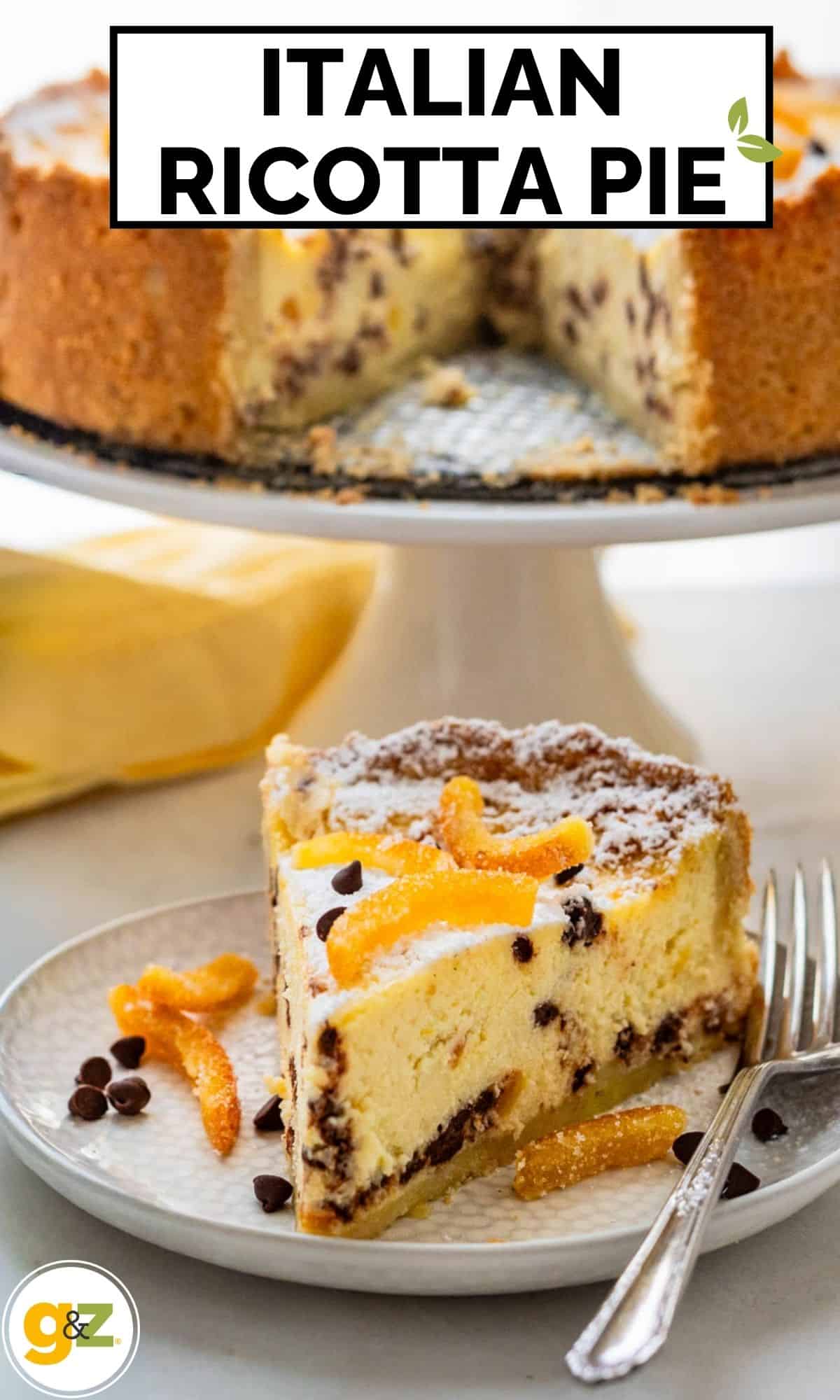
This Italian ricotta pie is the kind of dessert that earns a permanent spot in your rotation — not just for Easter. A buttery pasta frolla crust holds a creamy, lightly sweet ricotta filling studded with candied citron and mini chocolate chips. It’s lighter than cheesecake, far more unique, and the kind of thing people ask you to bring again.
This post contains a sponsored mention of Galbani®. All opinions are my own.
An Italian Easter Tradition (Worth Making Any Day)
My Aunt Rosemarie is Italian by heritage and lived in Italy for years, and she’s the one who taught me that in Italy, Easter isn’t Easter without ricotta cheese. It shows up everywhere on the holiday table — from savory Pizza Rustica (a double-crusted pie packed with ricotta, eggs, meats and cheese) to cannoli to this classic dessert.
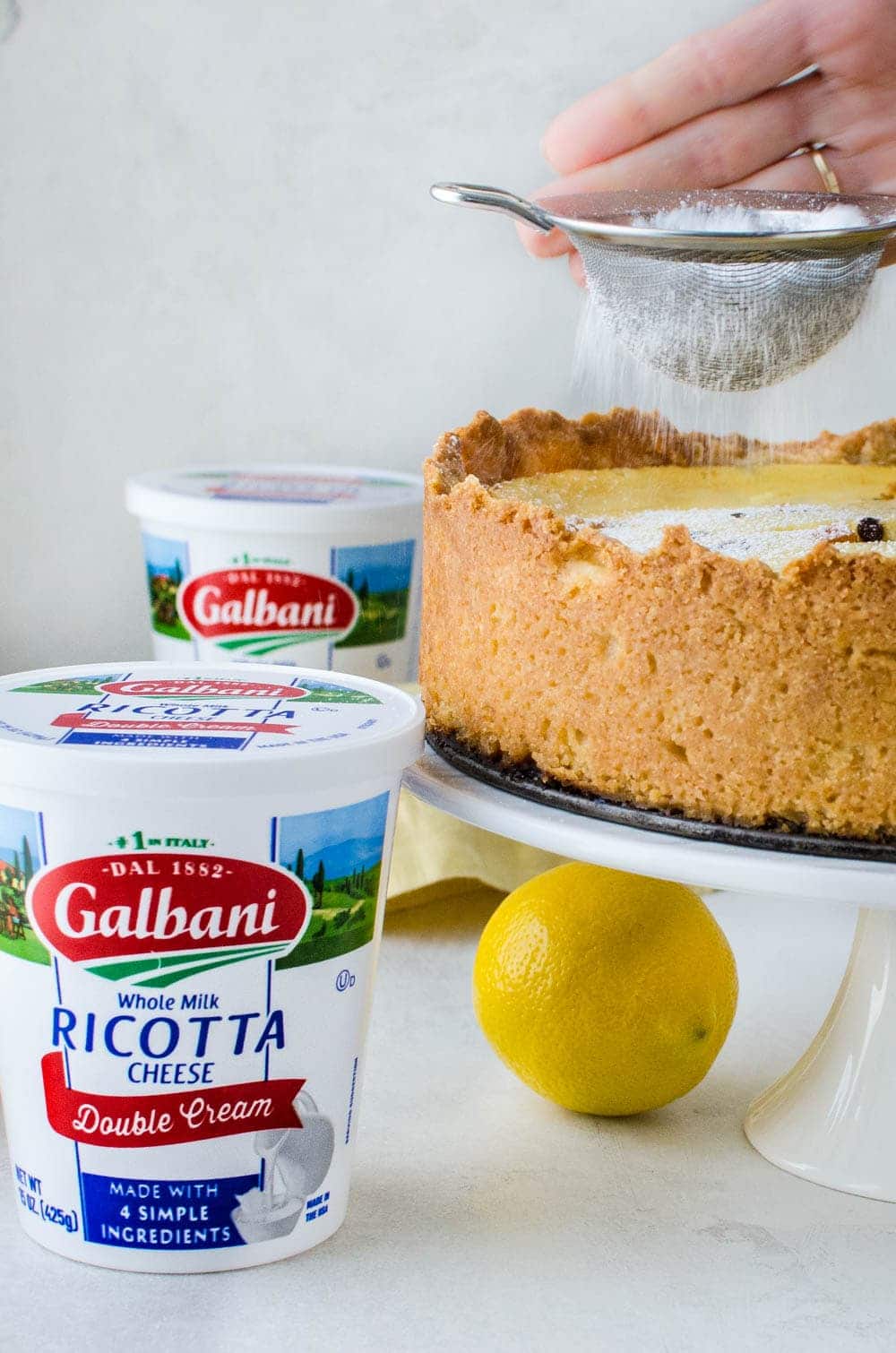
Ricotta pie itself is a lightly sweetened, cheesecake-like dessert studded with mini chocolate chips and candied citrus peel (citron) — lighter in texture than a traditional cheesecake, and a real showstopper whenever you serve it. Galbani® Double Cream Ricotta is what makes the filling this rich; I wouldn’t make it with anything else.
When my Aunt tasted this version, she said it brought her right back to Italy — exactly how she remembered it. Once you taste it, you’ll understand why this pie has stuck around in Italian families for generations, Easter or not.
Ingredients for Pasta Frolla
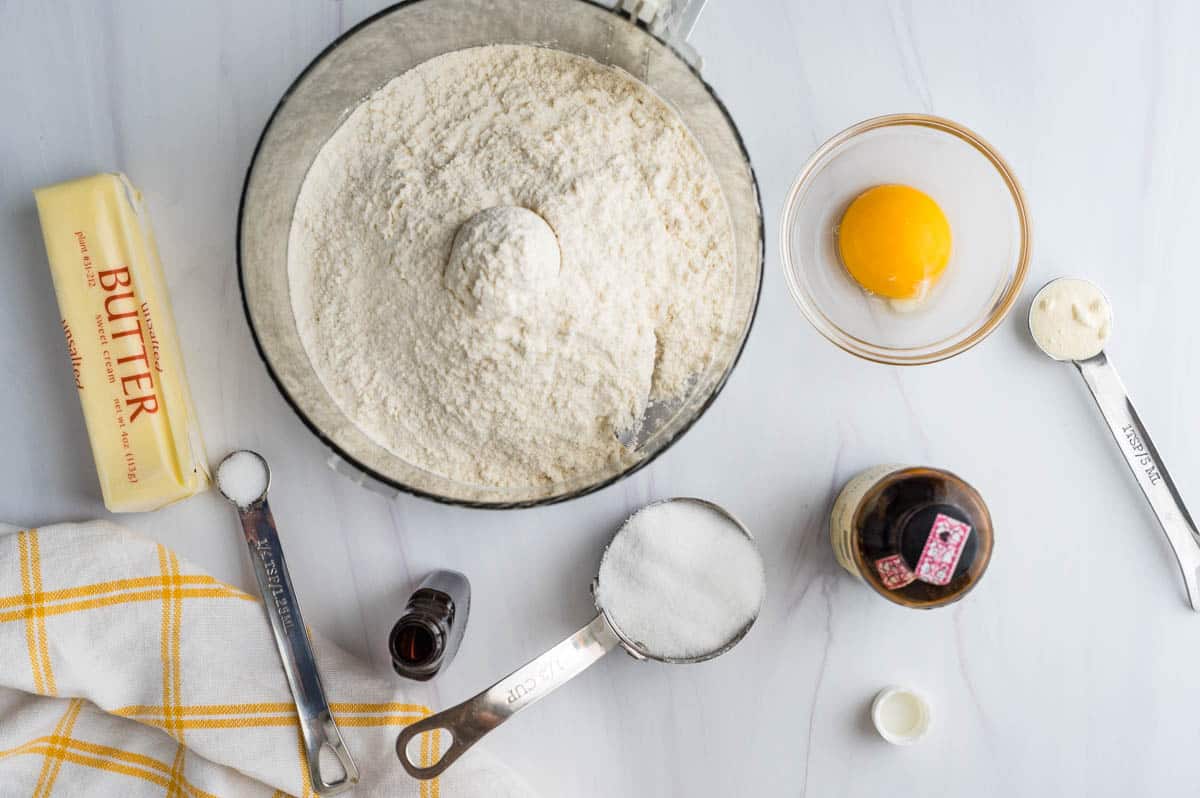
- All Purpose Flour
- Non-Fat Dry Milk Powder (optional) helps to brown the crust and makes the pastry more tender.
- Granulated Sugar
- Salt
- Cold Butter
- Egg Yolk
- Lemon or Orange Extract
- Vanilla Extract
- Water
As with most cheesecakes, this one starts with the crust… but rather than the typical American graham cracker variety, it uses a lightly sweetened shortcrust known as pasta frolla.
Pasta frolla (a.k.a Pate Sucrée) is a lightly sweetened, egg-enriched pastry. It can be a bit fragile to work with, but it makes a delightfully flaky, buttery pastry that’s perfect for nestling the rich ricotta filling in.
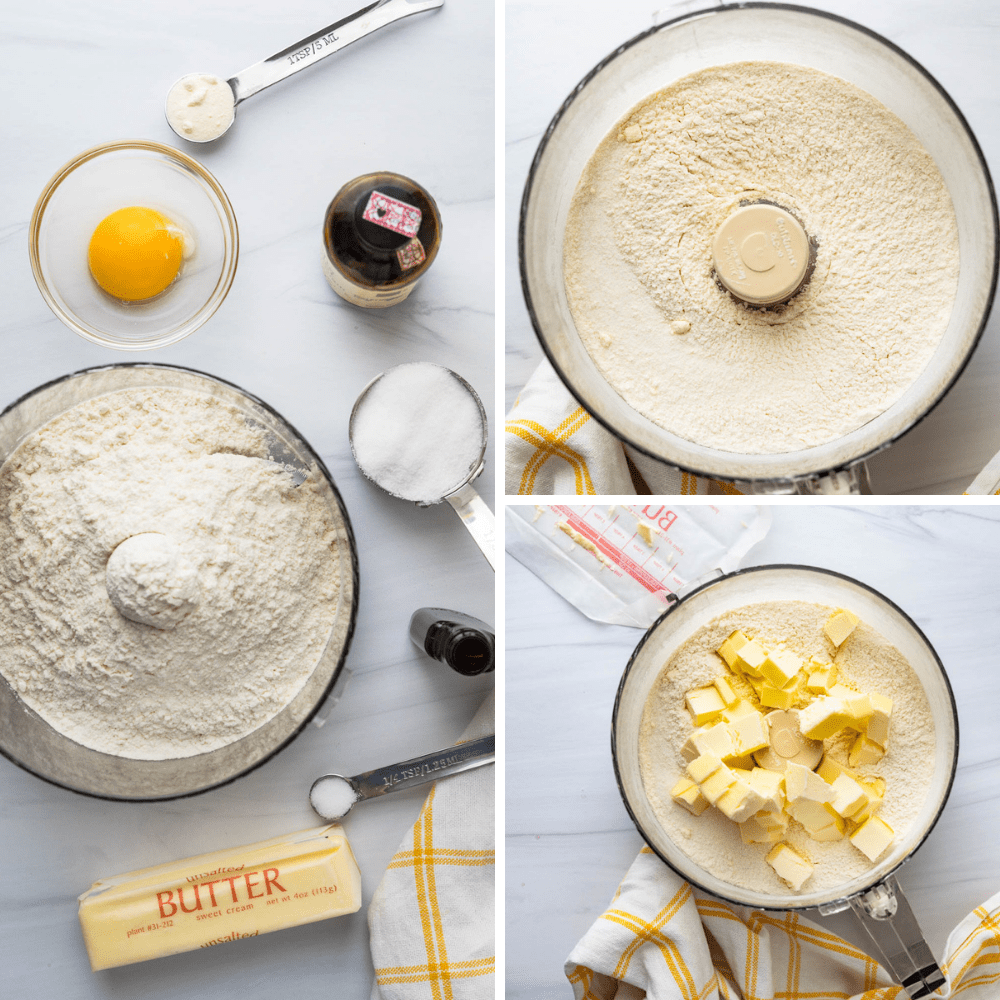
Making pasta frolla in a food processor
- Combine the flour, milk powder (if using), and salt in the food processor and pulse to combine.
- Add cold butter and pulse several times (8-12) until it resembles coarse sand.
- Mix the egg yolk with the extracts and water and pour into the food processor.
- Pulse until the dough starts to clump together.
- Roll the dough into a ball and flatten into a disc.
- Wrap the pastry in plastic wrap and refrigerate for 30 minutes or up to 3 days.
I like to make this pastry in the food processor. It’s faster and less of a workout, but if you don’t have one, you can also make it by hand.
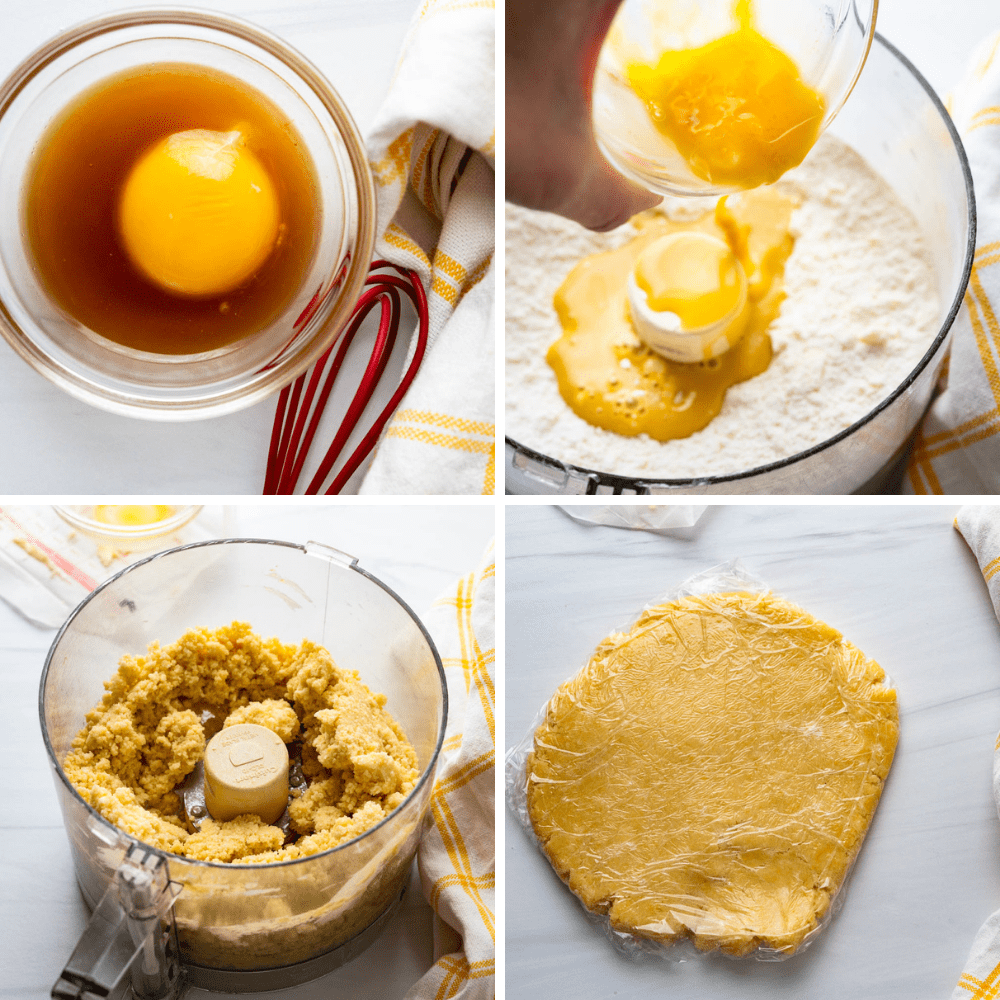
Making pastry by hand
- Combine the dry ingredients in a large bowl and whisk to combine.
- Cut the butter into small cubes and add to the dry ingredients.
- Use a pastry blender or two sharp knives to cut the butter into the flour until it resembles coarse sand.
- Add the wet ingredients, and mix with your hands, until it comes together in a ball.
- Pat into a disc, wrap in plastic and refrigerate.
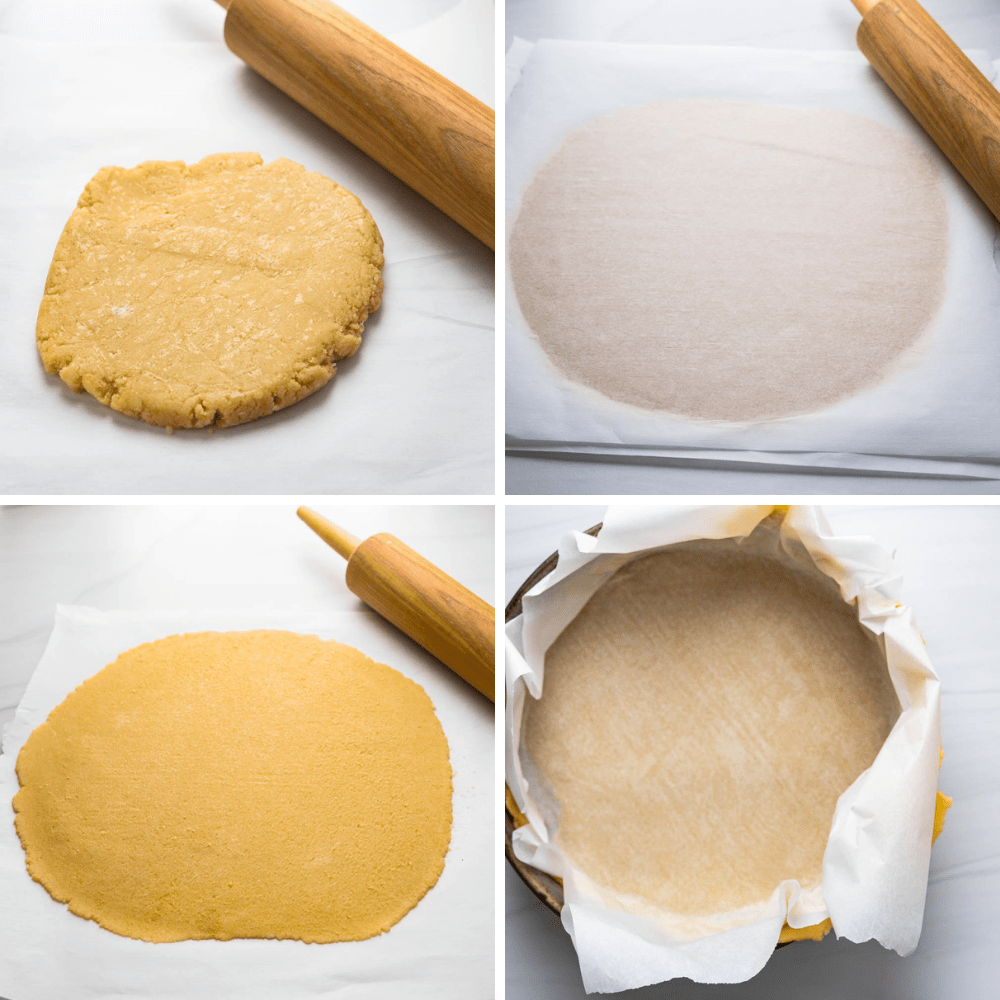
The dough needs to rest and chill before you roll it out. (It’s easiest to work with this dough when its chilled but not ice cold.) I will warn you, that pasta frolla is a fragile pastry, so to avoid any hassles here’s a few pointers.
Tips for working with pasta frolla
- Instead of flouring a workspace, roll out the dough between two large pieces of parchment paper. The benefit is that the parchment doesn’t stick to the pasta frolla and you’ll be able to pick up the crust and put it in the refrigerator to chill, whenever it starts to get too warm to work with.
- Place the dough between the parchment and use your rolling pin to roll from top to bottom and side to side. After two or three passes, gently lift the parchment and place it back down on the dough, so you’re not fighting it.
- Turn the dough 90º after every three or four passes so you’re rolling it into a circle. You want about a 13″ to 14″ pastry disc.
- If/when the dough starts to stick to the parchment, transfer the whole thing (parchment and all) to the refrigerator for 5-10 minute to chill.
- When it come out of the fridge gently peel the parchment back from the pastry just to loosen it and set it back on top of the dough.
How to get the pastry dough into the springform pan
I freely admit that pastry isn’t my thing. I’ve had more than my share of mishaps, especially when trying to transfer a fragile dough to a pie plate or pan. Here’s my tricks for making it work:
- To transfer the dough to the pan, remove the top parchment, and, with your hand beneath the bottom parchment, flip it, dough-side down, into the springform pan.
- Press the dough (through the parchment) firmly to the bottom, sides and corners of the pan, then gently peel back the paper.
You can count on having a few holes or tears in the dough and likely one side of the pastry is hanging off, while the other side doesn’t have quite enough. Don’t fret.
Just cut off any excess or hanging pasta frolla pastry with a sharp knife and use it to patch any tears and fill in the gaps where the dough is missing.
Transfer the springform pan to the refrigerator to chill while you make the ricotta filling.
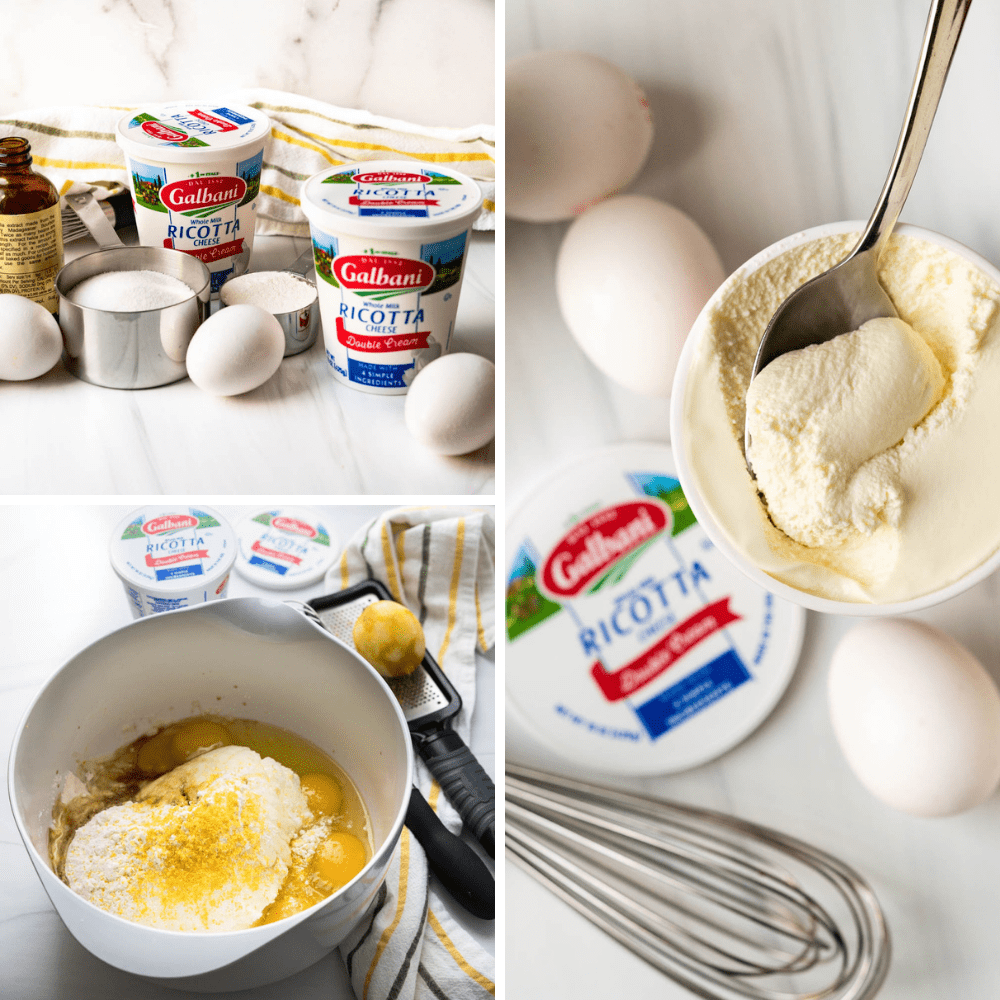
Ricotta pie ingredients:
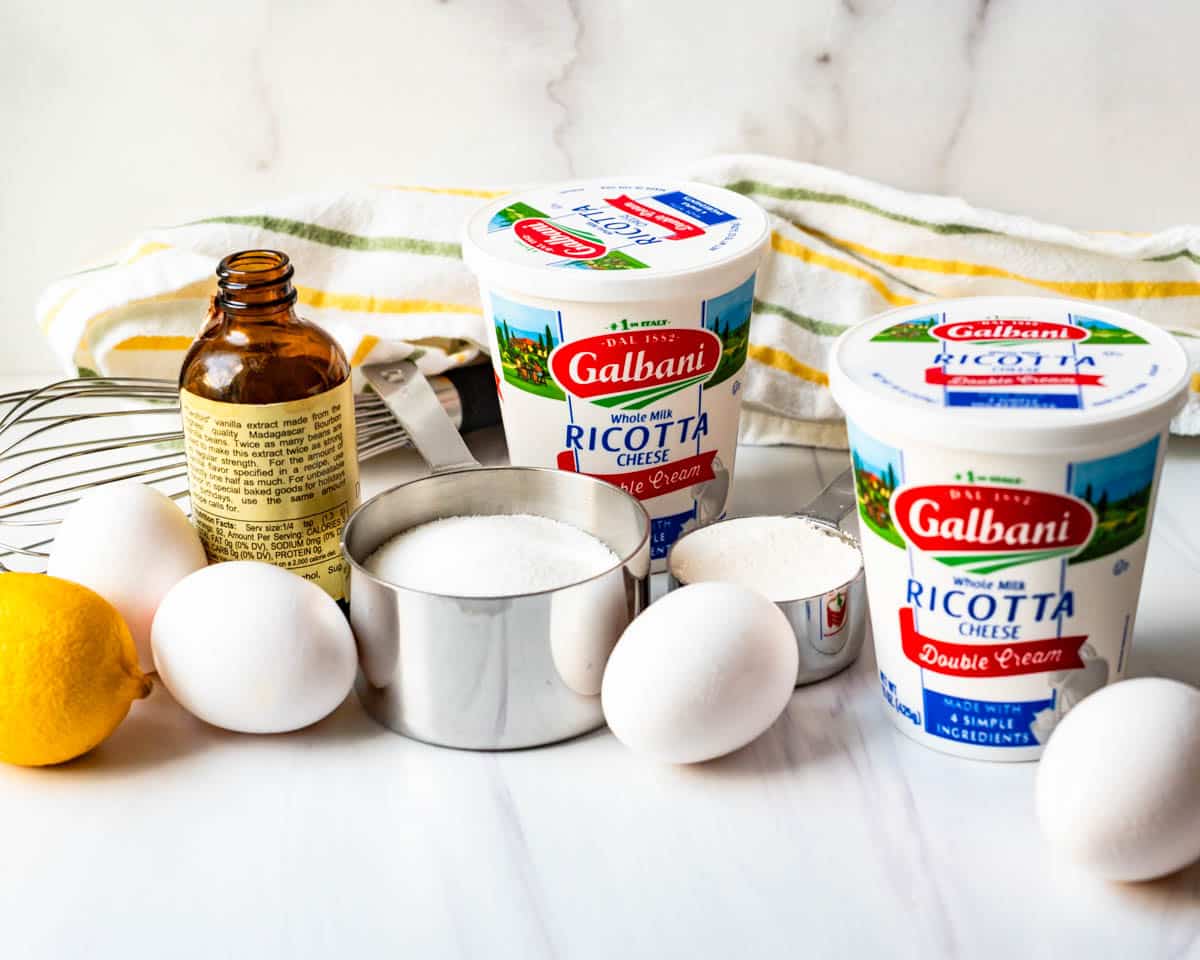
- Galbani® Double Cream Ricotta Cheese
- All Purpose Flour
- Granulated Sugar
- Eggs
- Vanilla
- Lemon Zest
- Mini Chocolate Chips
- Candied Citrus Peel (Citron)
- Milk
What is candied citrus peel?
Candied citrus peel (citron) can come from lemons, oranges, limes even grapefruit and it’s literally the candied peel of the fruit (no flesh). You can find citron sold at the store, but it’s even better when made from scratch.
I think of it like this — the stuff from the store is strictly used as an “ingredient” in something else.
If it’s made from scratch — it’s a snack, a garnish, a treat (as evidenced by my husband who grazed his way through half of my stock and my Aunt Rosemarie who happily nibbled them with a pre-dinner cocktail.)
You can skip the chocolate chips and candied citrus if you want, but they are really delicious in this ricotta pie (especially if you make your own citron).
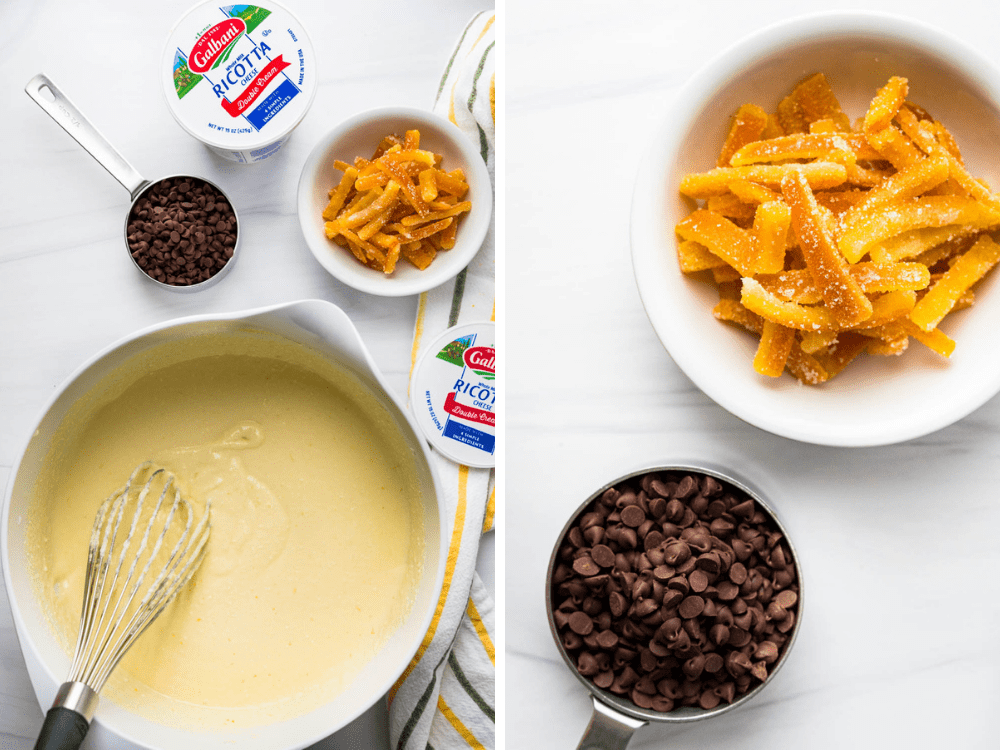
Where the pastry might be a little persnickety… the filling is anything but. This egg and ricotta filling is so simple to assemble, you could have your kids do it for you — except they’d likely pilfer half of the chocolate chips and candied citrus.
Making ricotta filling for Italian pie
- Whisk together the double cream ricotta, flour, sugar, eggs, vanilla and lemon zest until smooth.
- Stir in the chocolate chips and chopped citron.
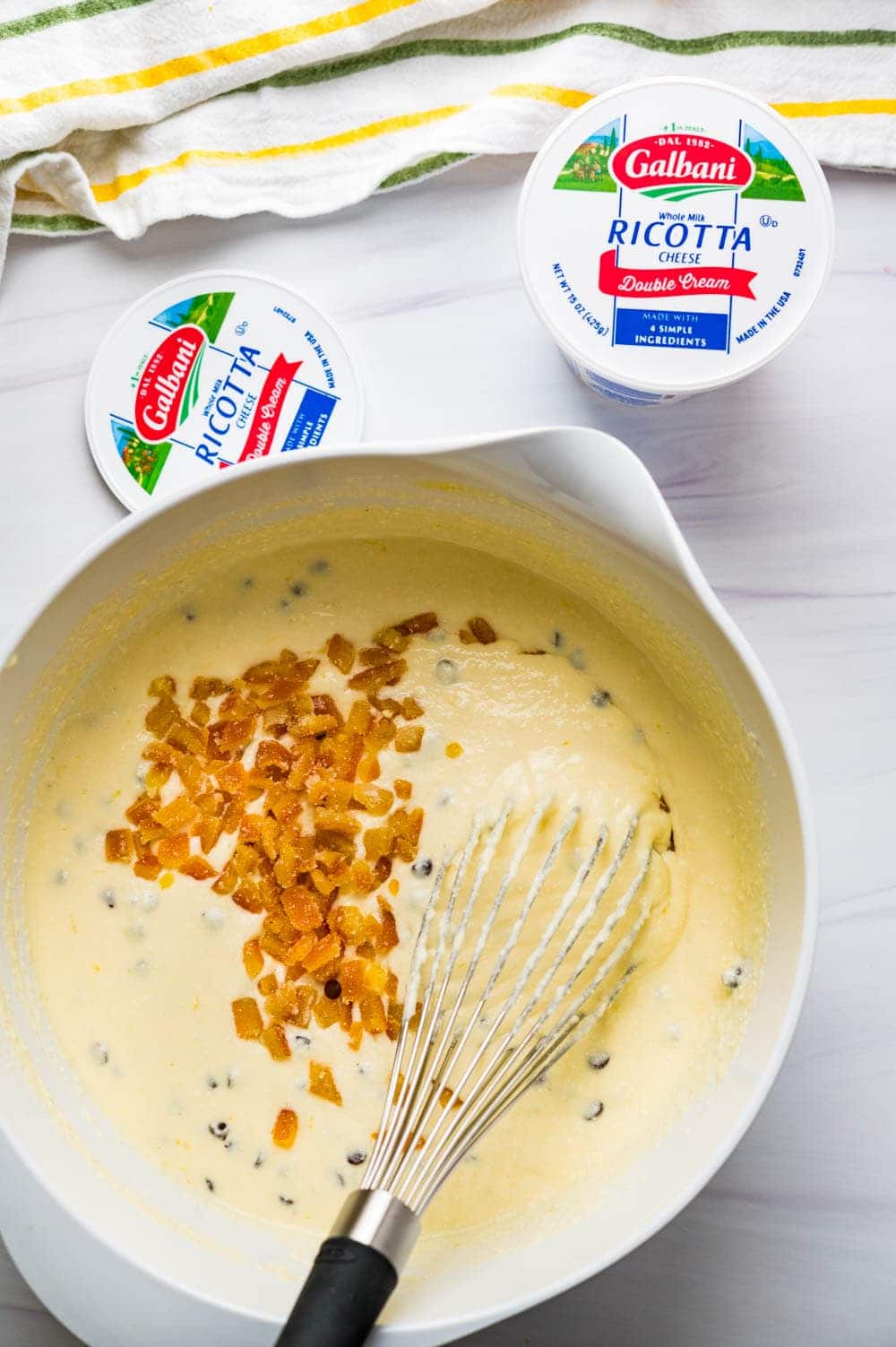
The batter for this Italian ricotta pie is ultra-rich and creamy, thanks to the Galbani ricotta. It makes such a difference in this dessert, it’s worth seeking out.
Many ricotta cheese brands require straining to remove excess liquid.
I found that wasn’t the case with Galbani double cream ricotta. In fact, I did strain it, but after several hours in a mesh strainer lined with a coffee filter, it only yielded about 2 teaspoons of “excess liquid”.
Not enough to make a difference in the outcome of this classic Italian dessert, so be sure to look for Galbani double cream ricotta to save yourself the straining step.
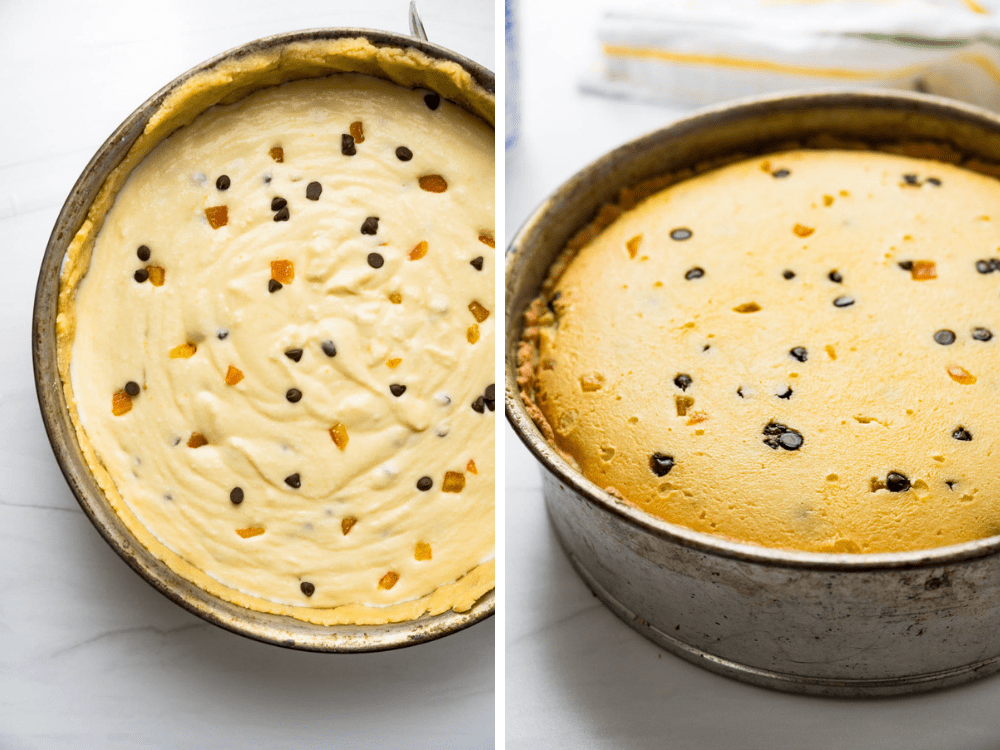
Baking the ricotta pie
There are a few things to pay attention to when baking this dessert.
- First, make sure your oven rack is positioned at the lowest spot in the oven and preheat the oven before baking.
- After you put the pie in the oven — there’s NO PEEKING.
- Bake for one hour, then turn the oven off and let it continue to sit in the oven (again NO PEEKING) for another half an hour.
- Remove the ricotta pie and cool to room temperature.
Pro Tips for Italian Ricotta Pie:
- Strain the ricotta if it’s not Galbani double cream. Most whole milk ricotta carries excess moisture that’ll water down your filling. Set it in a fine-mesh strainer over a bowl for a few hours (or overnight in the fridge) before using.
- Resist the urge to peek while it bakes. The recipe calls for an hour in the oven, then 30 minutes resting inside with the door closed and the oven off. Opening that door drops the temperature and is one of the fastest ways to crack the top.
- Chill the dough between every few rolls. Pasta frolla turns greasy and hard to work with fast. If it starts sticking to the parchment, put the whole thing back in the fridge for 5-10 minutes before continuing.
- Patch, don’t panic. If your crust tears while transferring it to the pan, trim the overhang with a knife and use those scraps to fill any gaps. No one will notice once it’s baked and filled.
Mistakes to Avoid:
- Skipping the chill time on the dough. Pasta frolla needs at least 30 minutes in the fridge before rolling, and another quick chill right before it goes into the pan. Skip either step and the dough will be too soft to handle.
- Overworking the crust. This pastry should come together in 10-12 pulses in the food processor — pulse much longer and you’ll develop the gluten, which makes for a tough crust instead of a tender one.
- Using low-quality or watery ricotta. A thin, loose ricotta will give you a filling that never fully sets. If you can’t find Galbani double cream, strain whatever you’re using first.
- Cutting into the pie too soon. Let it cool fully to room temperature before slicing — cutting it warm will give you a filling that’s still loose in the center, even if it tastes done.
Swaps and Variations
- Ricotta: Whole milk ricotta works if you can’t find Galbani double cream — just strain it first to remove excess liquid.
- Citron: You can buy it pre-made or make your own candied citrus peel (it’s truly delicious). If you want to skip it, you can; you’ll just lose some of the traditional citrus-peel chew and flavor.
- Chocolate chips: Optional. Some traditional versions skip them entirely in favor of just citron, or vice versa.
- Lemon or orange extract: If you don’t have either, swap in 1 teaspoon of grated lemon or orange zest instead — add it to the dry ingredients in the food processor.
- Pan: No springform pan? A 9-inch deep-dish pie plate works, though you’ll lose the clean slice-and-release the springform gives you.
FAQ’s
This dessert is notorious for cracking as it cools (one of the reasons you’ll see so many recipes that include a top crust — to cover the cracks). Personally, I don’t worry so much about the cracks. When you cut it into slices, just try to get one edge of your cut to follow the natural crack. After that, no one will notice.
If you’re still concerned, a dollop of whipped cream will cover any imperfections.
A 9-inch deep-dish pie plate works in a pinch, but the springform pan is worth using if you have one. It gives you a cleaner release and lets you show off the crust on the sides when you serve it.
Whole-milk ricotta is strongly recommended here — part-skim ricotta has a higher water content and a less creamy texture, which affects the final filling. If all you can find is part-skim, strain it well before using. It will work, but the result won’t be as rich.
Yes. The filling holds together fine without it. You’ll lose some of the traditional citrus-peel texture and a bit of the bittersweet complexity, but the pie is still delicious — especially if you lean into the chocolate chips.
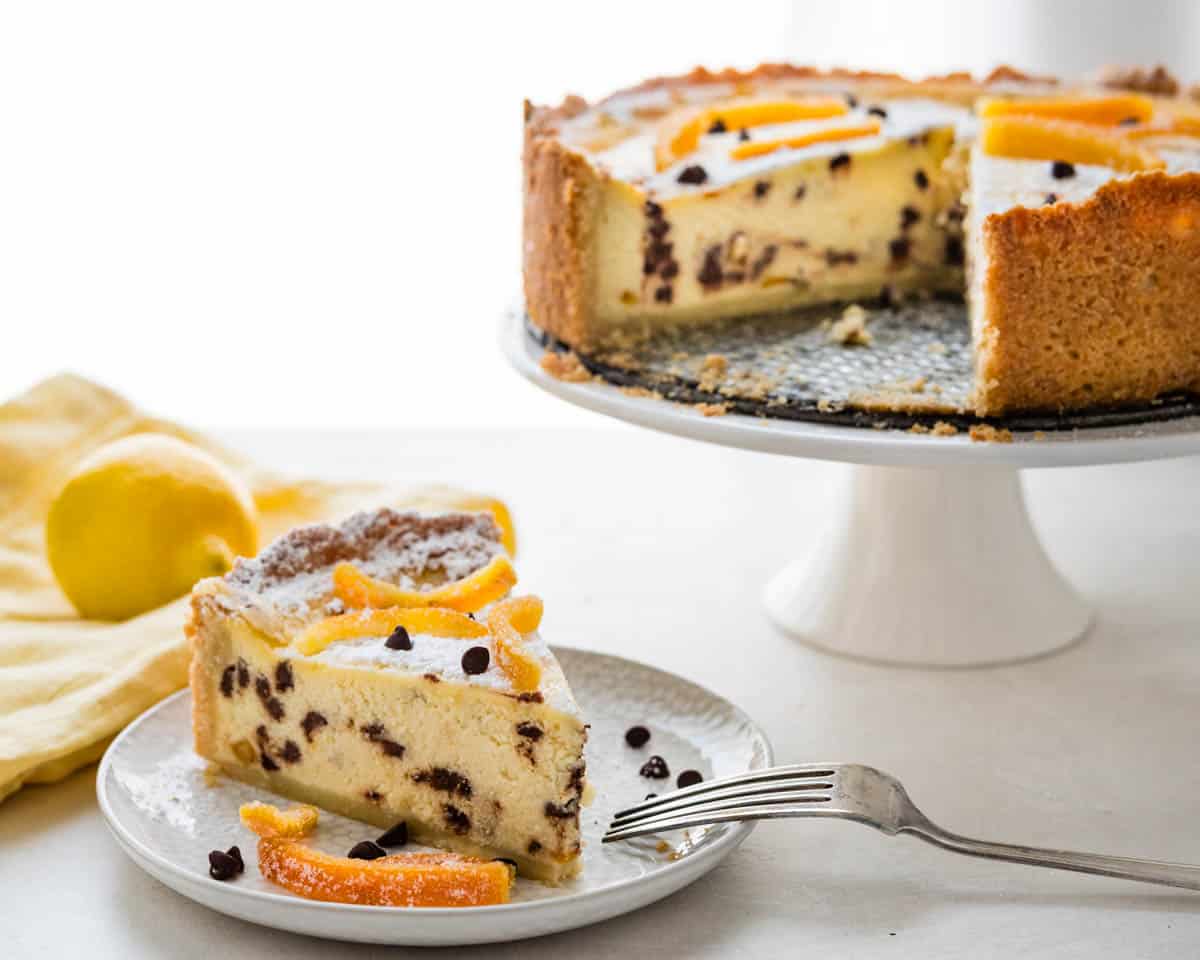
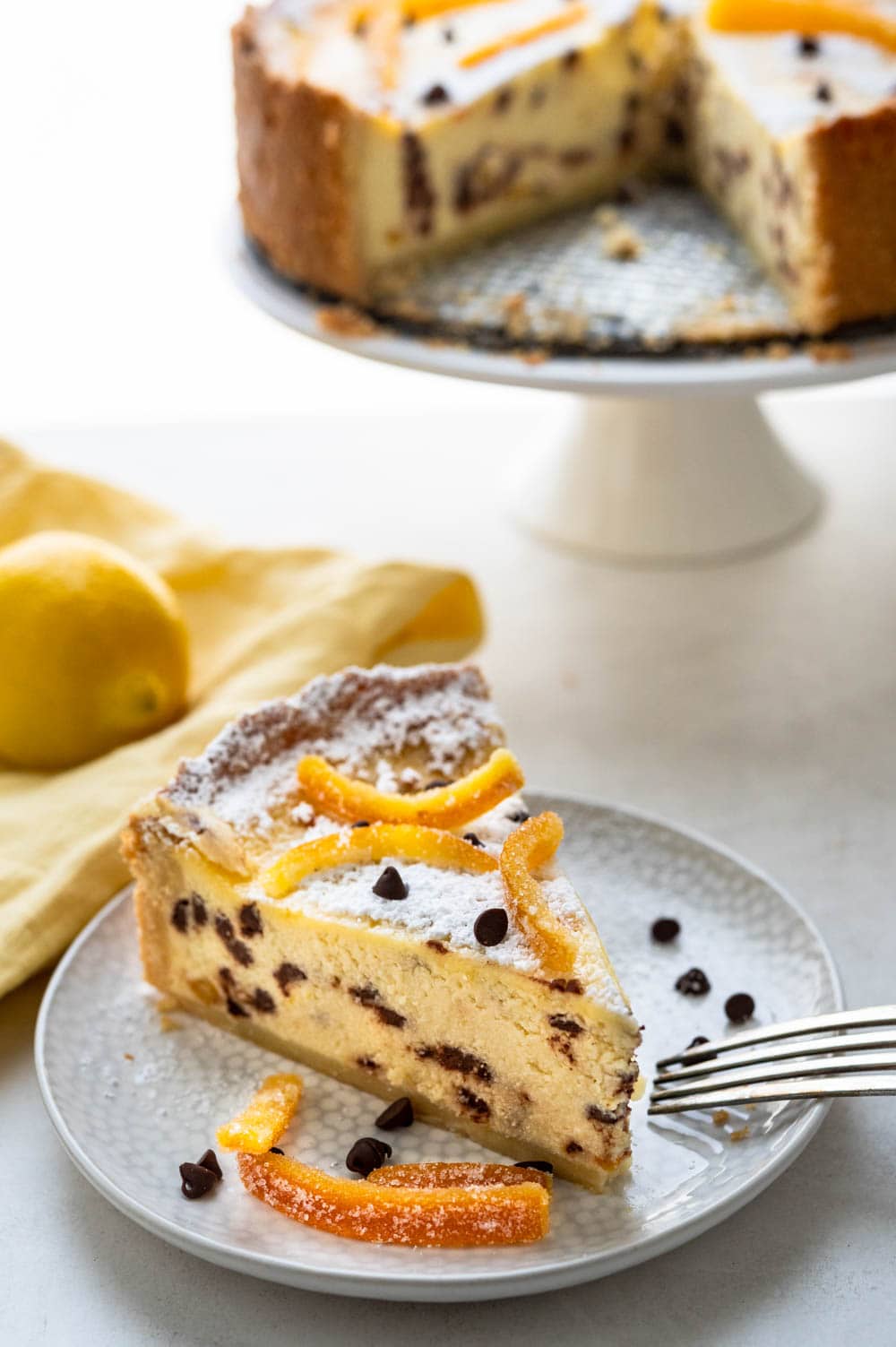
At room temperature or slightly chilled — both work. Remove from the refrigerator about an hour before serving and dust with powdered sugar right before it hits the table. A dollop of whipped cream alongside doesn’t hurt either.
Covered and refrigerated, this pie keeps well for up to 4 days. The crust softens slightly after day one, but the flavor actually improves as it sits.
Make ahead:
- The pasta frolla dough can be made up to 3 days in advance and kept tightly wrapped in the refrigerator. You can also press it into the springform pan ahead of time and refrigerate until you’re ready to fill and bake.
- You can make the pie a day before you want to serve it. Just keep it covered and refrigerated. When you’re ready to serve, remove it from the refrigerator about 1 hour beforehand and sprinkle with powdered sugar just prior to serving.
Storage:
- Store leftovers in the refrigerator, covered in plastic wrap or in an airtight cake container with a lid for up to 3-4 days.
Freezing:
- I don’t recommend freezing. The pie will soften in the freezer, and the ricotta filling isn’t meant to freeze; ricotta can weep when defrosting.
Aunt Rosemarie’s verdict
I knew the real test would be Aunt Rosemarie. When she tried a slice, she didn’t just approve — she said it tasted exactly like the version she remembered from her years living in Italy, candied citron and all.
The rest of the family agreed. Not a crumb was left on anyone’s plate, which is saying something since we’d already worked through a filling dinner of Rosemarie’s pasta bolognese first.
More cheesecakes you might like:
Italian Ricotta Pie
SPECIAL EQUIPMENT:
- Food Processor
- 9" springform pan
INGREDIENTS:
FOR PASTA FROLLA (Pate Sucrée) CRUST
- 1 ¼ cups all purpose flour
- 1 teaspoon nonfat dry milk optional, but makes a tender crust
- ¼ cup sugar
- ¼ teaspoon salt
- 8 tablespoons cold butter cut into small cubes
- 1 large egg yolk
- ¼ teaspoon orange or lemon extract or can use 1 teaspoon of grated lemon or orange zest
- ¾ teaspoon vanilla
- 1 tablespoon cold water
FOR THE RICOTTA PIE:
- ¼ cup all purpose flour
- ¾ cup granulated sugar
- 30 ounces Galbani Double Cream Whole Milk Ricotta Cheese
- 4 large eggs
- 1 teaspoon vanilla extract
- 1 lemon zested
- ½ cup mini chocolate chips
- ¼ cup candied citrus peel (citron)
- 1 tablespoon milk
DIRECTIONS:
MAKE THE PASTA FROLLA:
- Add 1 ¼ cups all purpose flour, 1 teaspoon nonfat dry milk (if using)¼ cup sugar and ¼ teaspoon salt to the bowl of a food processor. Pulse several times to combine the ingredients. (If using zest instead of lemon or orange extract, add it to the flour mixture and pulse to evenly combine.)
- In a small bowl, whisk together 1 tablespoon cold water, 1 large egg yolk, ¾ teaspoon vanilla and ¼ teaspoon orange or lemon extract.
- Add the 8 tablespoons cold butterand pulse until the butter resembles small pebbles and is evenly distributed throughout the flour mixture.
- Add the egg yolk mixture to the flour and pulse quickly, 10-12 times until the dough just starts to clump and it holds together when you press some betweeen your fingers.
- Collect and pat the dough into a ball and transfer to a piece of plastic wrap. Loosely wrap in plastic and pat the dough into a disc about 1" thick. Refrigerate for at least 30 minutes to an hour to chill.
- Place the chilled dough onto a piece of parchment paper and rest another large piece of parchment over it. Gently roll the dough out to a 13" or 14" diameter, lifting and replacing the parchment after every 2-3 turns, so it doesn't stick. (If the dough becomes too soft to work with, place it back in the refrigerator for 5-10 minutes and continue to roll it out using the parchment paper, method). You can also flip the dough over, roll it with the rolling pin, and carefully peel back the parchment and replace it until you get the right size. This dough is fragile, so work quickly and don't be afraid to chill it a few times to make it easier to roll.
- Place the oven rack at the bottom of the oven. Preheat the oven to 350°.
- When the dough is rolled to the right dimension, refrigerate it one last time for about 5 -10 minutes to firm up.
- Carefully peel the top parchment paper off of the top of the Pasta Frolla and discard. In one swift movement, invert the dough into the springform pan (so the dough is pressed into the pan and the parchment is on top.. Press the bottom and sides of the dough through the parchment so it adheres to the bottom and sides of the spring form pan.
- Carefully peel back the parchment paper. There may be some spots that are torn or need patching, while other areas of the dough have spilled over the rim. Use a sharp knife to trim away the excess and use those bits to patch any holes or tears in the dough and make it relatively even all the way around the sides of the pan. Transfer the dough to the refrigerator while you make the filling.
- FOR THE RICOTTA FILLING:
- In a large bowl, combine 30 ounces Galbani Double Cream Whole Milk Ricotta Cheese, ¼ cup all purpose flour, ¾ cup granulated sugar 4 large eggs, 1 teaspoon vanilla extract and 1 lemon. Whisk it together until the mixture is very well combined and there are no dry bits of flour. Do not use a electric beater, as you don't want to beat air into the ricotta mixture.
- Add the ½ cup mini chocolate chips and ¼ cup candied citrus peel and stir to combine.
ASSEMBLE THE RICOTTA PIE:
- Remove the crust from the refrigerator and brush the inside with 1 tablespoon milk to promote browning and prevent the crust from becoming soggy.
- Pour the ricotta mixture into the crust and transfer to the lowest rack setting in the oven. Bake for 1 hour without opening the door. Turn off the oven and let the ricotta pie rest for 30 minutes more inside the oven with the door closed.
- Remove the Italian Ricotta Pie from the oven and let it cool to room temperature to serve. If you're not serving the pie until the next day, cover and refrigerate it.
RECIPE VIDEO:
NUTRITION:
Nutritional Disclaimer
Nutritional information is an estimate only and is provided as a courtesy. Values are calculated automatically based on the ingredients and quantities in each recipe and may vary depending on specific brands, exact measurements, and substitutions made. For precise nutritional guidance, especially if you have a medical condition or dietary restriction, please consult a registered dietitian or run the ingredients through your own nutrition calculator.Pin it for later!
Hello Lisa,
Although there are many Italian Easter pie recipes yours is the most appealing along with so many great successful comments. I would love to make the often used strips on top. I will make more of the frolla to accommodate the add’l need. You mention the use of top strips but not why you prefer not to add them. Can you offer some advice for success or advice as to why you do not use the strips. Thank you for any suggestions. I will make the candied orange strips tomorrow, found good oranges today.
Are you speaking of adding candied citrus strips to the top for garnish, or adding strips of the pasta frolla to bake on top of the cheesecake?
If it’s the candied citrus peel, feel free to add strips to the top for garnish (you can even dip the ends in melted chocolate, set aside to dry and then garnish as you like.
If you’re thinking of doing a solid or lattice crust with the dough, I have to say, I haven’t done that before, so I don’t have experience there. However, I would be careful not to let the crust over-brown. So perhaps 2/3 of the way through cooking, You might want to gently lay a piece of foil over the top of the cheesecake, to prevent the crust from getting too dark.
I am not much of a baker.. but the filling sounds delicious. Could I use a store bought pie crust and make the filling?
The pasta frollo isn’t like a regular pie crust, so swapping for Pillsbury or another brand probably wouldn’t work. That said, the crust (recipe given) isn’t difficult to make.
This recipe is a much easier recipe than my mother’s Easter pie. I must say I believe it is equally as good without the extra work. My mother’s recipe requires whipping the whites & folding them into the batter. I will keep this recipe & use it every Easter. I used the candied fruit along with the chocolate chips for the same traditional pie my family is used to.
What if I can’t get double cream riccota?
You can use plain whole milk ricotta as well.
I can’t get double cream in my area, will whole milk ricotta work?
Yes – that’s perfect.
Can this be made without the Croat?
In order to slice it as a cheesecake, you would need a crust, but I think you could spoon it into some prepared ramekins or custard cups and bake them in a water bath until the ricotta filling sets. Then serve it as a riff on a custard–maybe with a spritz of whipped cream on top.
I meant can this be made without the crust!
Made this tonight replete with homemade citron and homemade ricotta. It got a little burny in spots on the bottom of the crust but that’s on me. I halved the recipe since it’s only two of us and didn’t adjust the time according. Nevertheless this turned out really, really good. I ended up not having a spring form pan that size, so I used a silicone pan instead. Popped right out without any breakage at all. Thanks for sharing the citron and ricotta pie recipe.
So glad you enjoyed it K!
Looks amazing, but is there a recipe to make your own candied citrus peel?
Yes, I link to it in the recipe card.
I was very impressed with the way this recipe turned out the other day. My family and friends thought it was a hit. I will be making this again soon!
Have a great week!
I just love the citrus and chocolate combo happening here! Such a great dessert for Easter. 🙂
I only use Galbani products and haven’t had the pleasure of using this one yet with double cream. I made my mom’s cassata every year for Easter and I will be looking for this, I am excited to try it. This pie looks so creamy and fantastic nice job Bravo!
Wow! This pie sounds so flavorful and just awesome! I need to try this ASAP!