
Seafood Chowder Recipe
Inside: Learn how to make a rich, brothy seafood chowder with your favorite fish and shellfish. I used tender shrimp, flaky fish, clams and mussels—plus the simple technique that keeps the seafood perfectly cooked and the broth full of flavor.
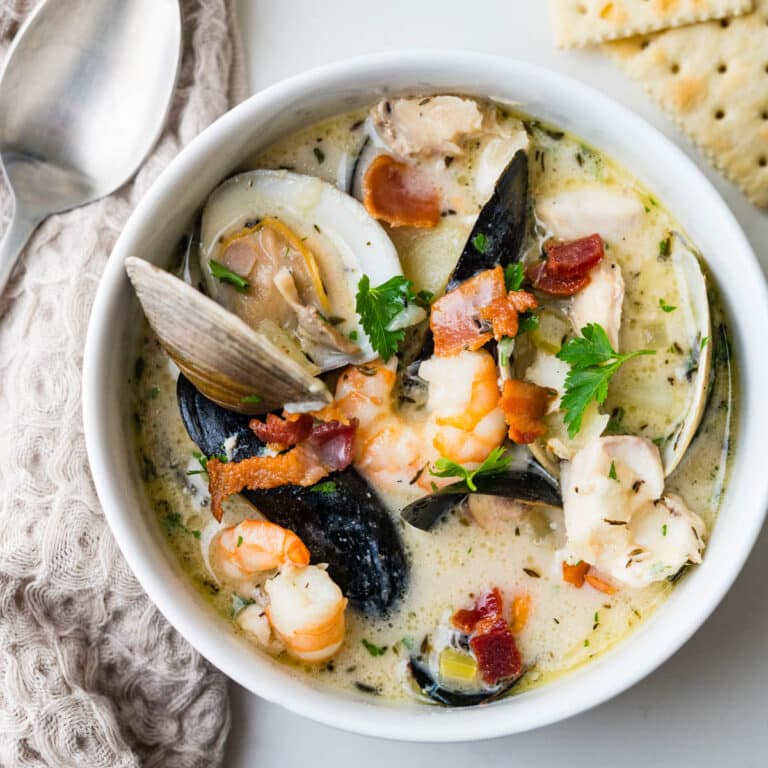
This seafood chowder recipe skips the gluey, stand-a-spoon-up-in-it broth you’ll find in a lot of versions — instead it’s brothy and delicate, built on a real fish stock and finished with just enough cream to make it rich without weighing it down. It’s loaded with shrimp, mussels, clams and tender chunks of fish — and if you’re making your own fish stock, don’t toss those fish heads; simmer them down and pick off the extra meat to fold back into the chowder. Light enough for a summer supper, hearty enough to satisfy.
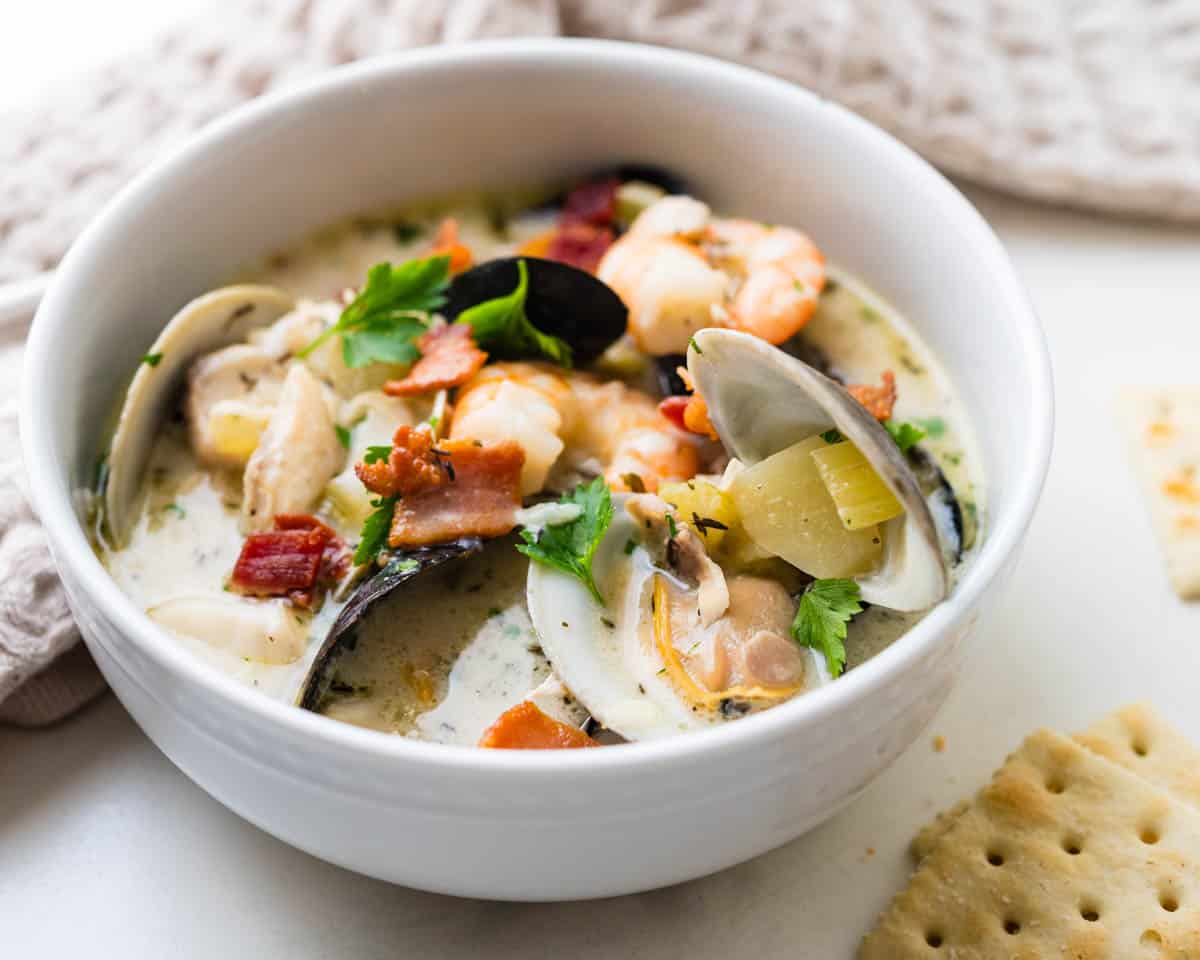
Chowder’s been a fixture in my kitchen for years — I’ve made New England clam chowder the traditional way, gone richer with lobster bisque, and kept it simple with classic oyster stew. This seafood chowder pulls from all of that experience, but it’s its own thing: a lighter, brothier bowl that lets the seafood — not the roux — be the star.
The backbone of this recipe is a homemade fish stock — it gives the broth a depth and clean, delicate seafood flavor that’s hard to replicate. Short on time? Diluted clam juice (noted below) is a solid swap.
I make this one with whatever’s freshest at the fish counter — tilapia, mussels, clams and shrimp here, but it’s genuinely forgiving. Swap in cod, halibut, scallops or whatever looks good that day. The technique stays the same; only the seafood changes.
Why this recipe works:
- Real fish stock for maximum depth — homemade fish stock gives the broth a clean, delicate seafood flavor; diluted clam juice is a great shortcut when you’re short on time.
- Brothy by design — the flour is just enough to lightly body the broth, not turn it into a stand-a-spoon-up stew, so the seafood flavor comes through clean.
- Bacon fat as the flavor base — cooking the vegetables in rendered bacon fat (instead of starting cold with butter alone) builds a smokier, more savory foundation before the cream even goes in.
- Quick-cooking seafood, added last — the fish, mussels, clams and shrimp go in at the very end and simmer for just 5 minutes, so nothing turns rubbery or overcooked.
- Endlessly adaptable — built to work with whatever’s freshest at the fish counter that day, so you’re never stuck if one ingredient isn’t available.
Ingredients for the seafood chowder recipe:
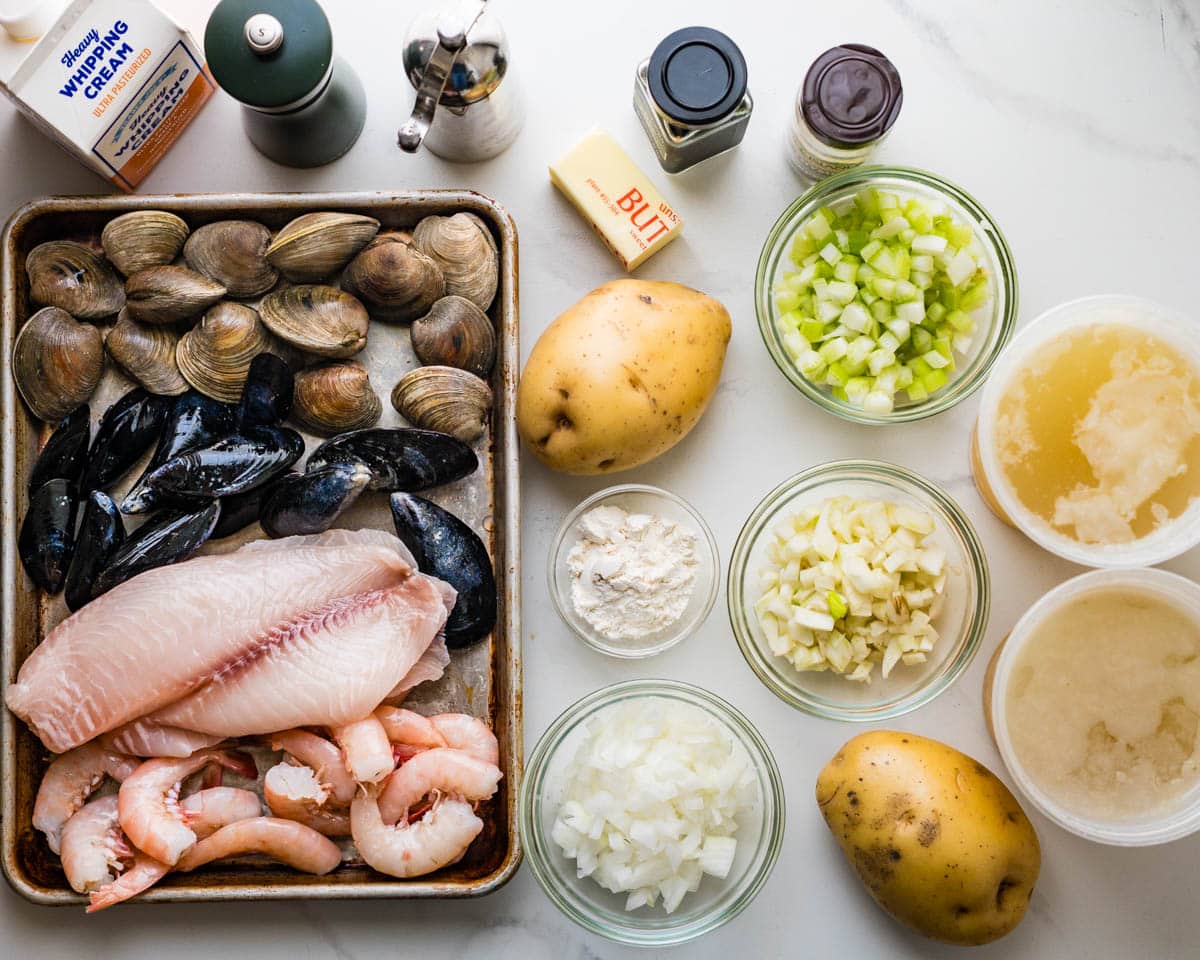
- Bacon — adds a smoky base; leave it out for a lighter, pescatarian-friendly version (just start with the butter).
- Celery, onion, fennel — the aromatic base; fennel is optional but adds a subtle anise note that pairs well with seafood. Skip it if you’re not a fan.
- Flour — lightly thickens the broth without making it heavy. For gluten-free, swap in a 1:1 gluten-free flour blend.
- Fish stock — the flavor foundation; diluted clam juice (1 quart clam juice + 1 quart water) works as a swap.
- Yukon Gold potatoes — hold their shape well and add body without becoming mushy.
- Cream — don’t substitute milk or half-and-half here; the higher fat content is what keeps the broth silky instead of splitting once it hits the heat.
- Fish — tilapia here, but any firm, mild white fish works: cod, halibut, snapper.
- Shellfish– Mussels, clams, shrimp, lobster, scallops, crab; whatever your preference.
- Italian parsley — fresh, for brightness at the end; don’t skip it, it cuts through the richness of the cream.
Step-by-step instructions:
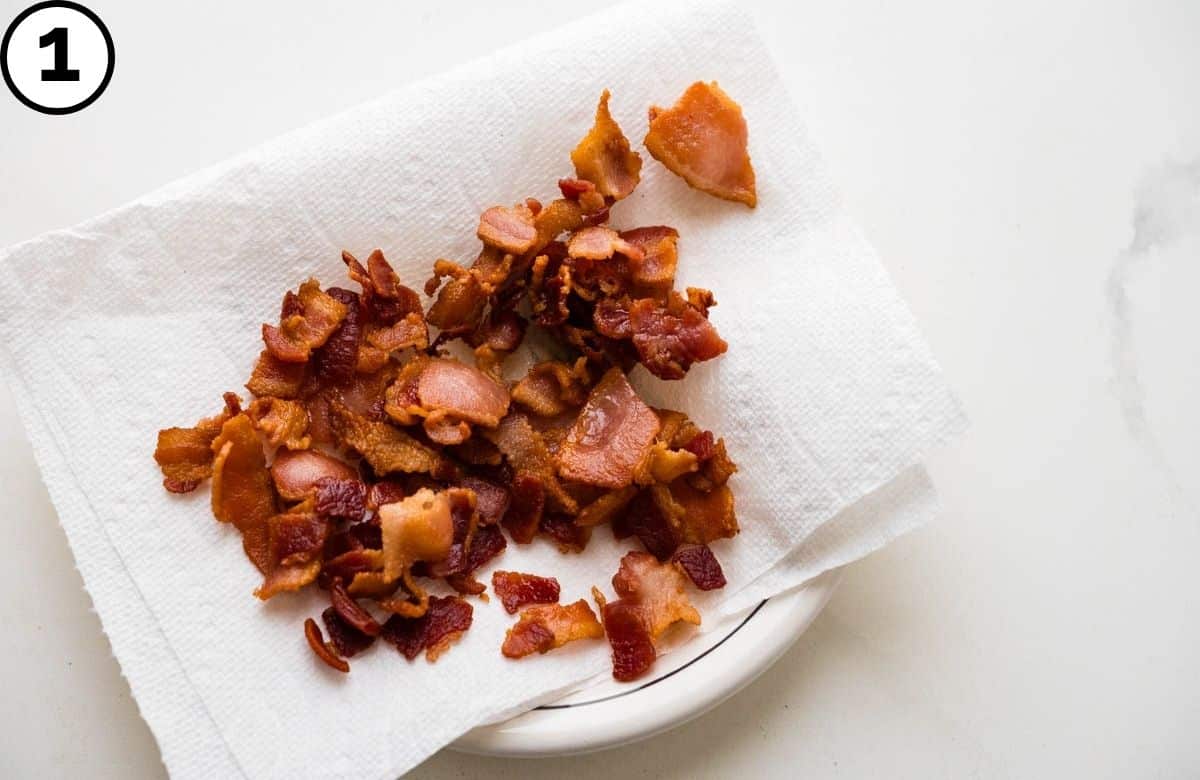
- Crisp the bacon. Cook the bacon in a Dutch oven or stockpot over medium-high heat until crispy, then transfer to a paper towel-lined plate to drain.
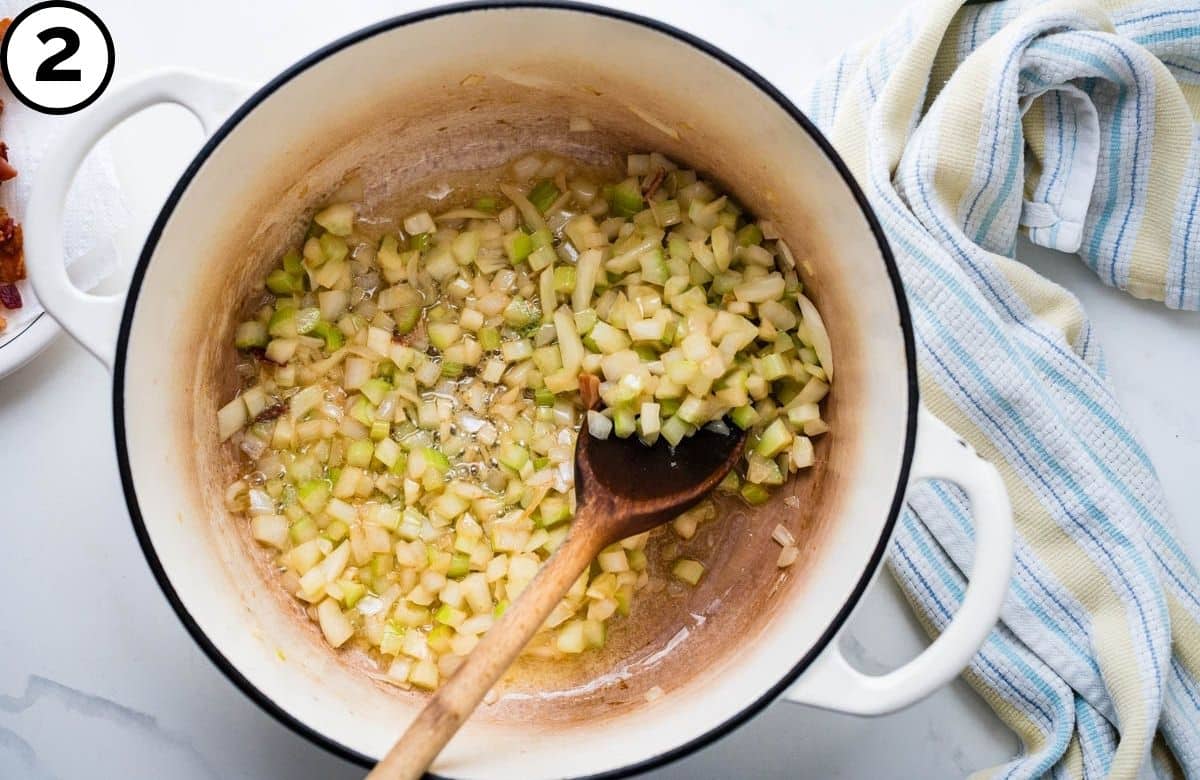
2. Sauté the aromatics. Add the butter to the pot and, once melted, add the celery, onion and fennel. Cook, stirring, until tender and slightly translucent, 3-5 minutes.
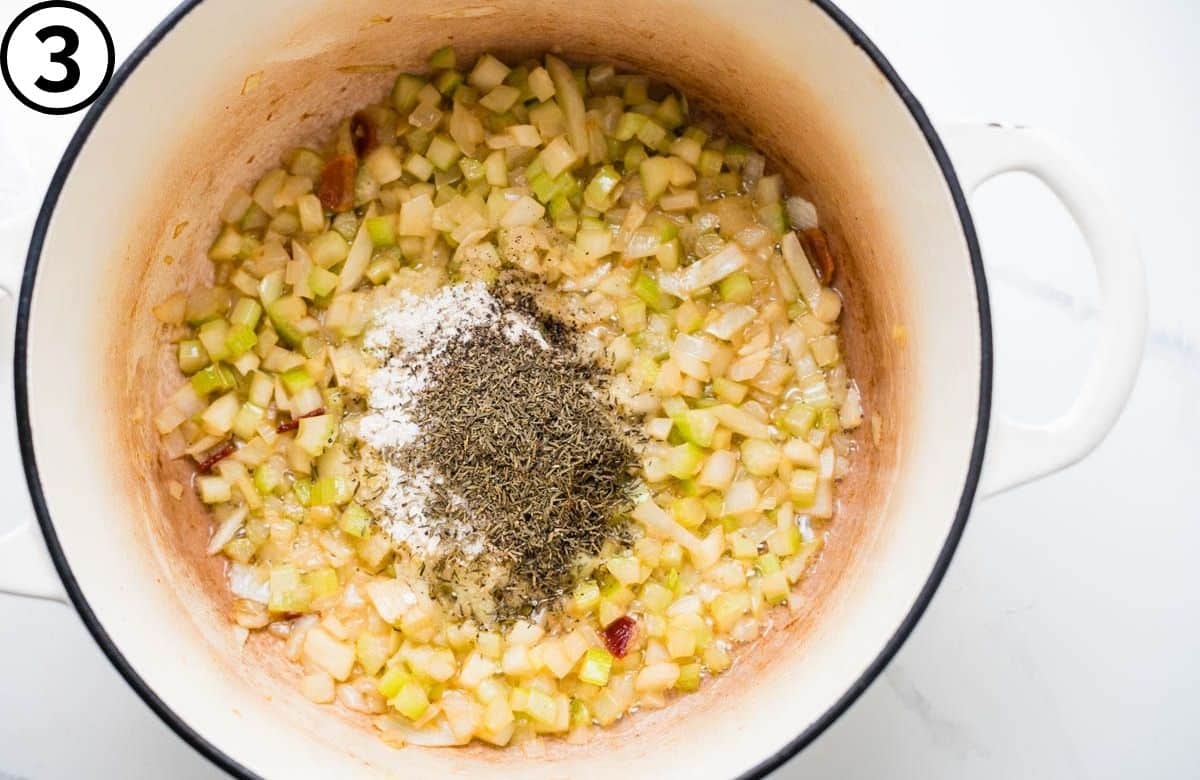
3. Season and make the roux. Add the flour, salt, pepper and dried thyme.
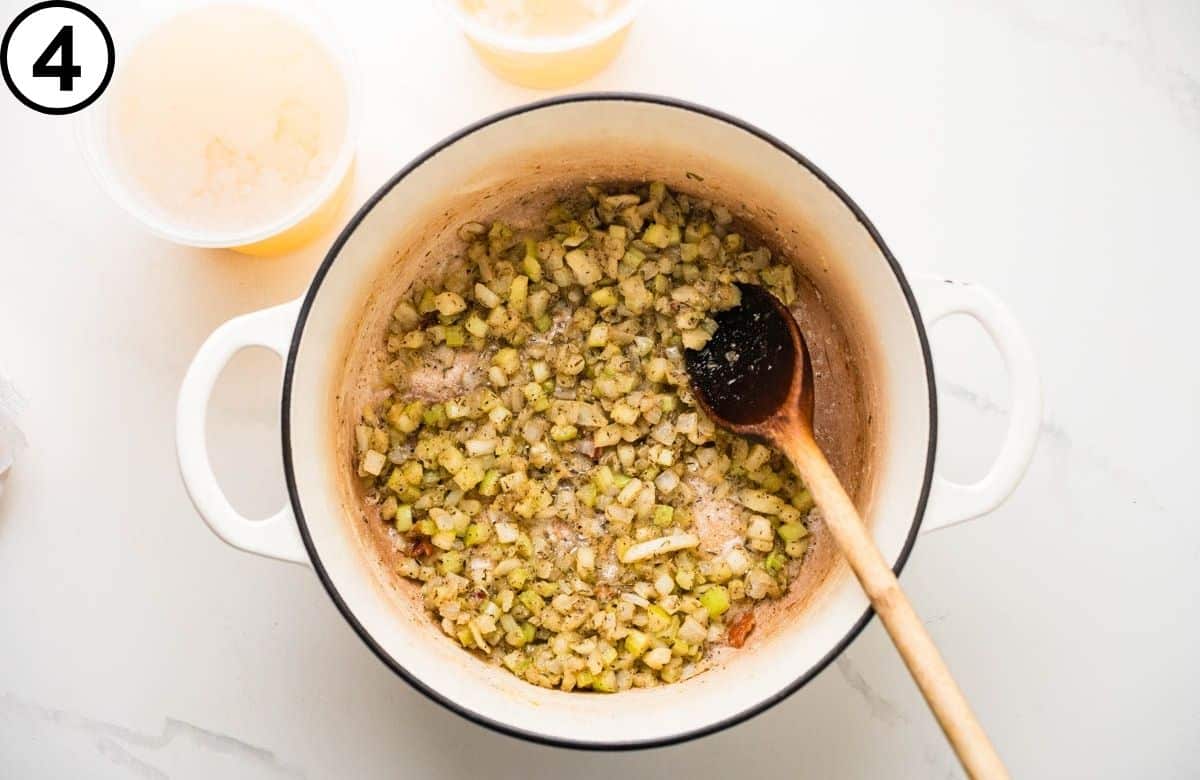
4. Stir the mixture until blended, and there are no dry bits of flour left; the vegetables should be coated with the roux.
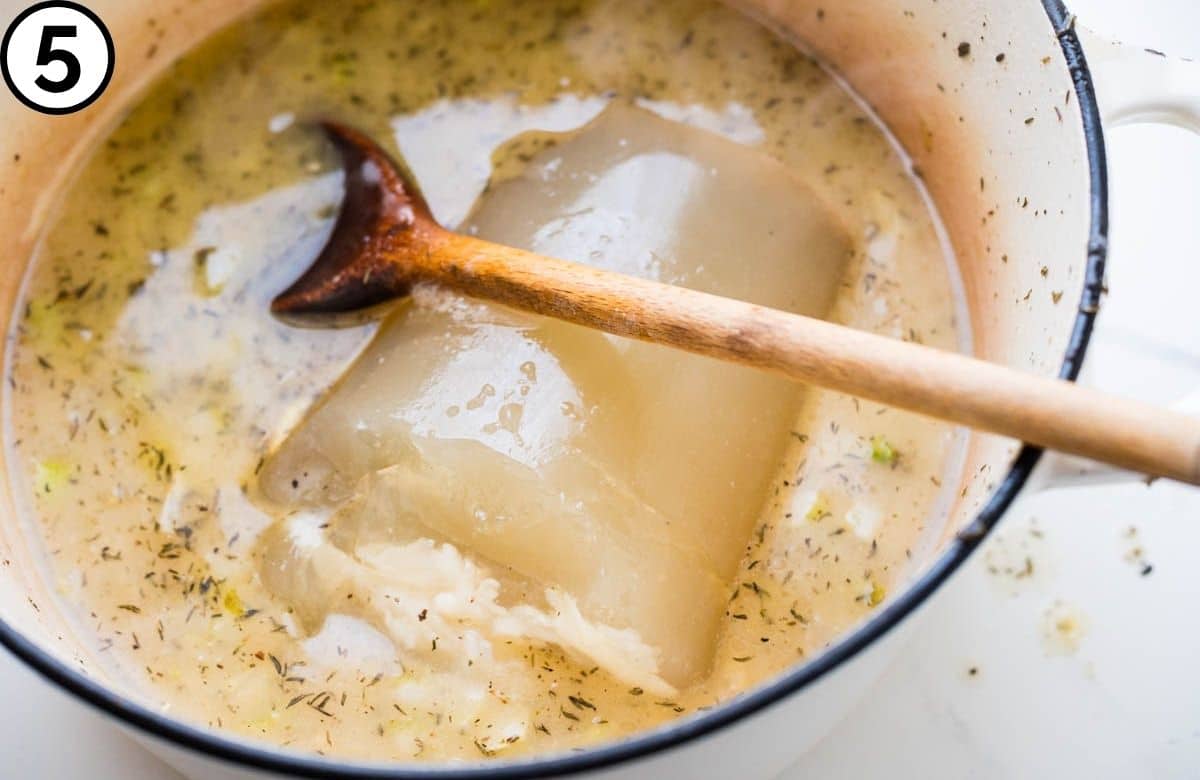
5. Add the stock. Pour in the fish stock — if it’s gelatinized (as in the photo above), don’t worry; it melts back into a liquid almost instantly when it hits the heat. Bring to a boil.
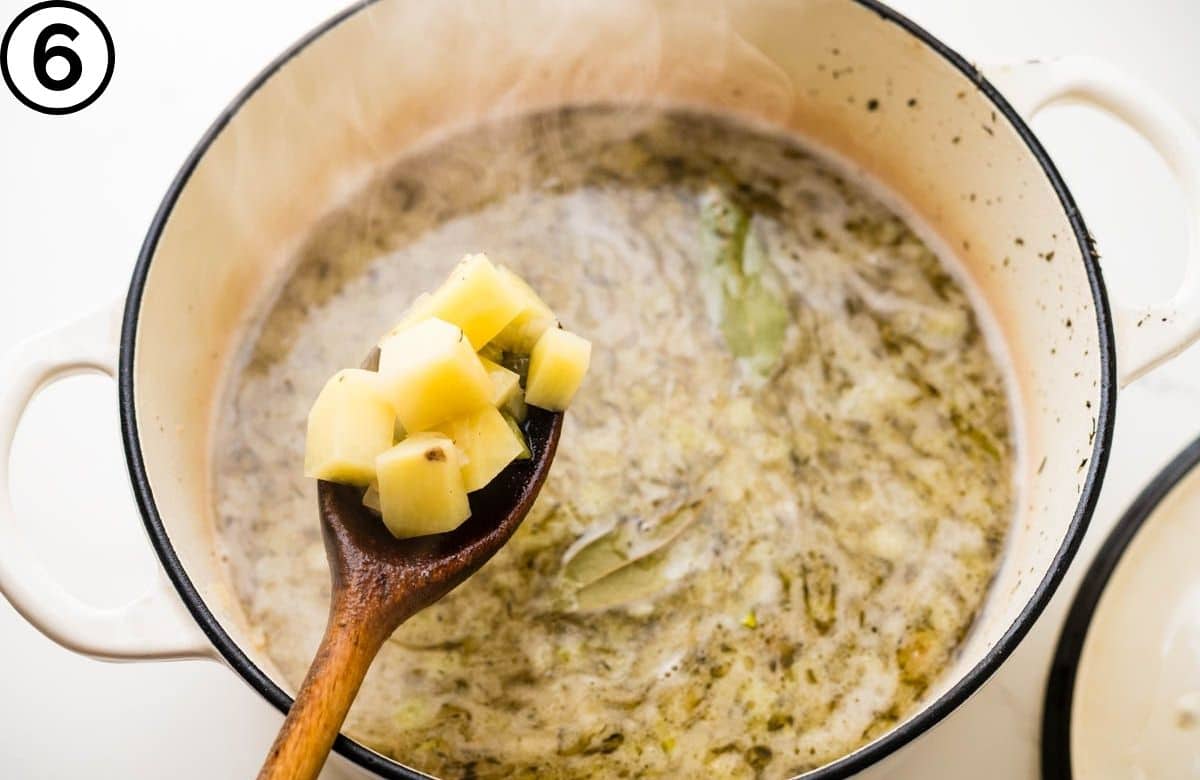
6. Simmer the potatoes. Add the potatoes and bay leaves and cook for about 10 minutes, until the potatoes are fork-tender.
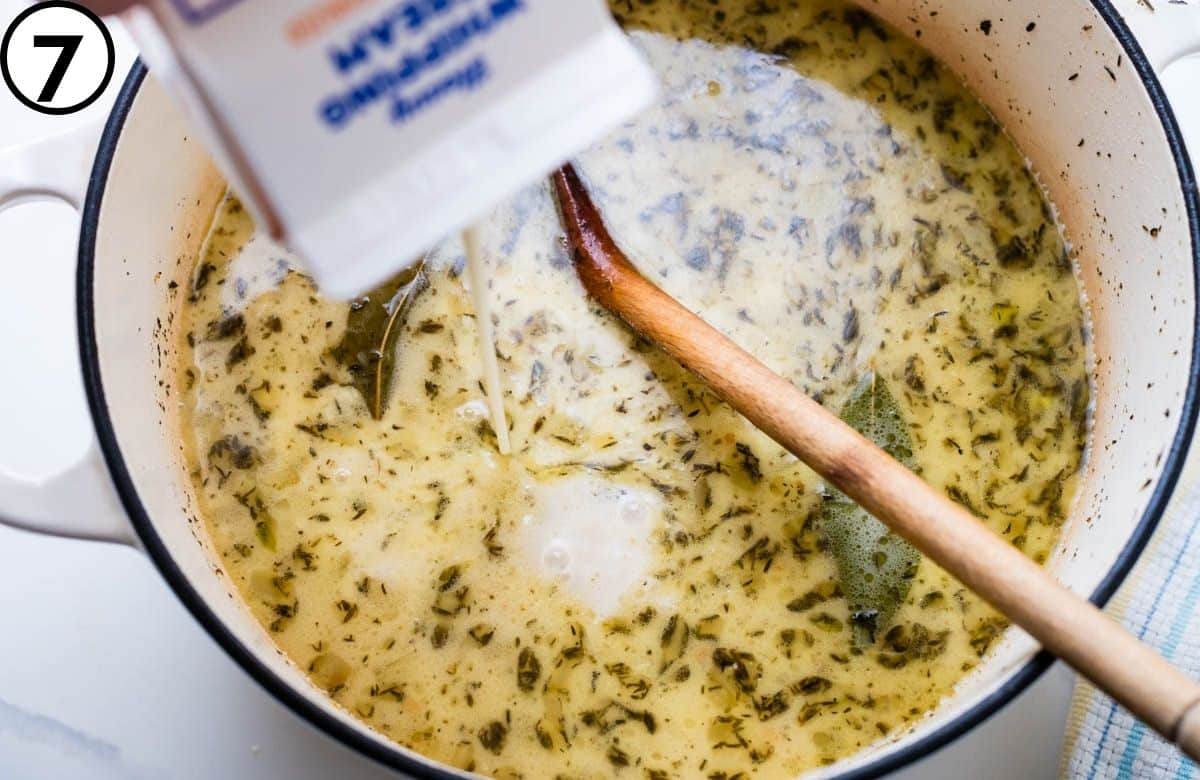
7. Stir in the cream. Add the cream and bring back to a boil.
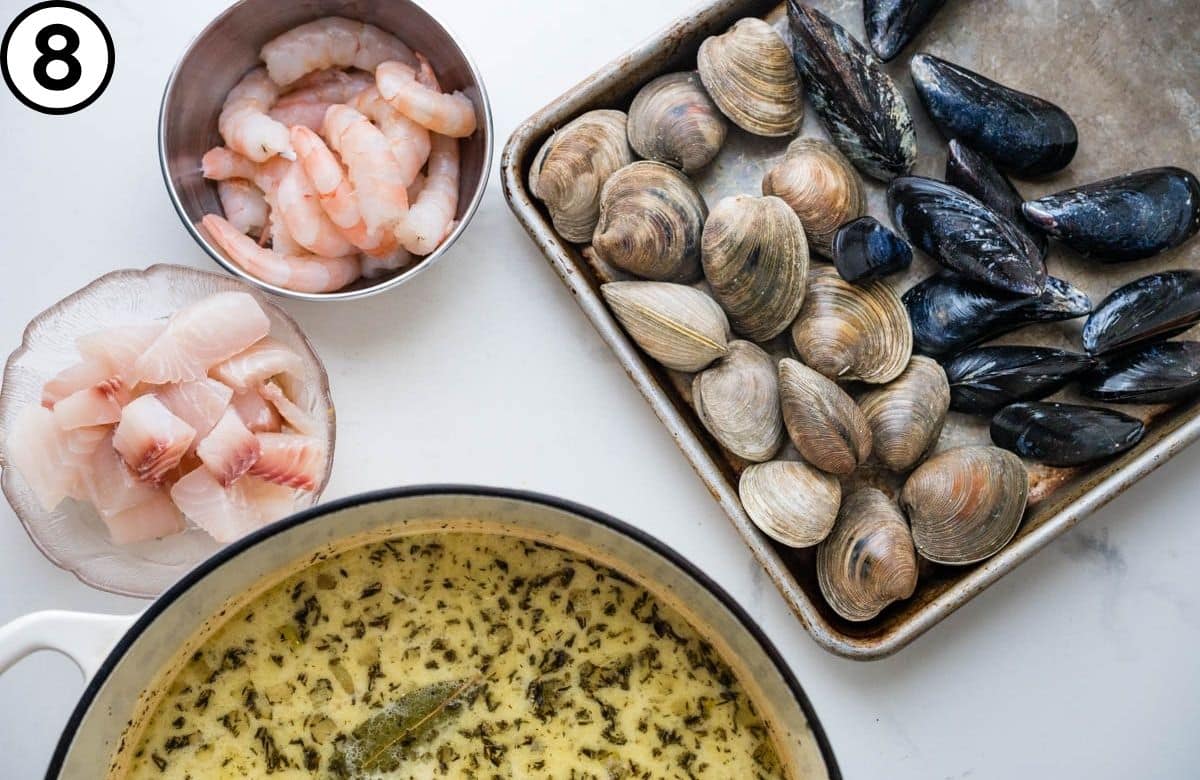
8. Prep the seafood; trim fish into bite-sized chunks, peel shrimp and scrub the mussels and clams to remove any grit.
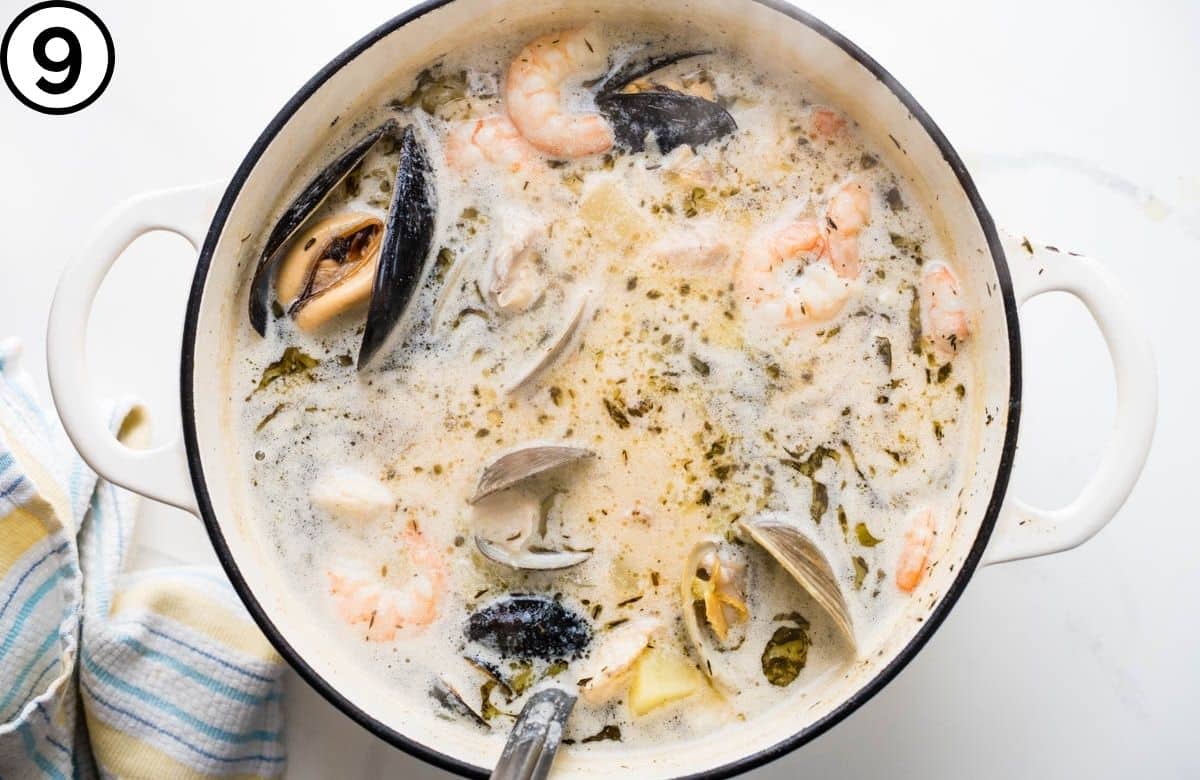
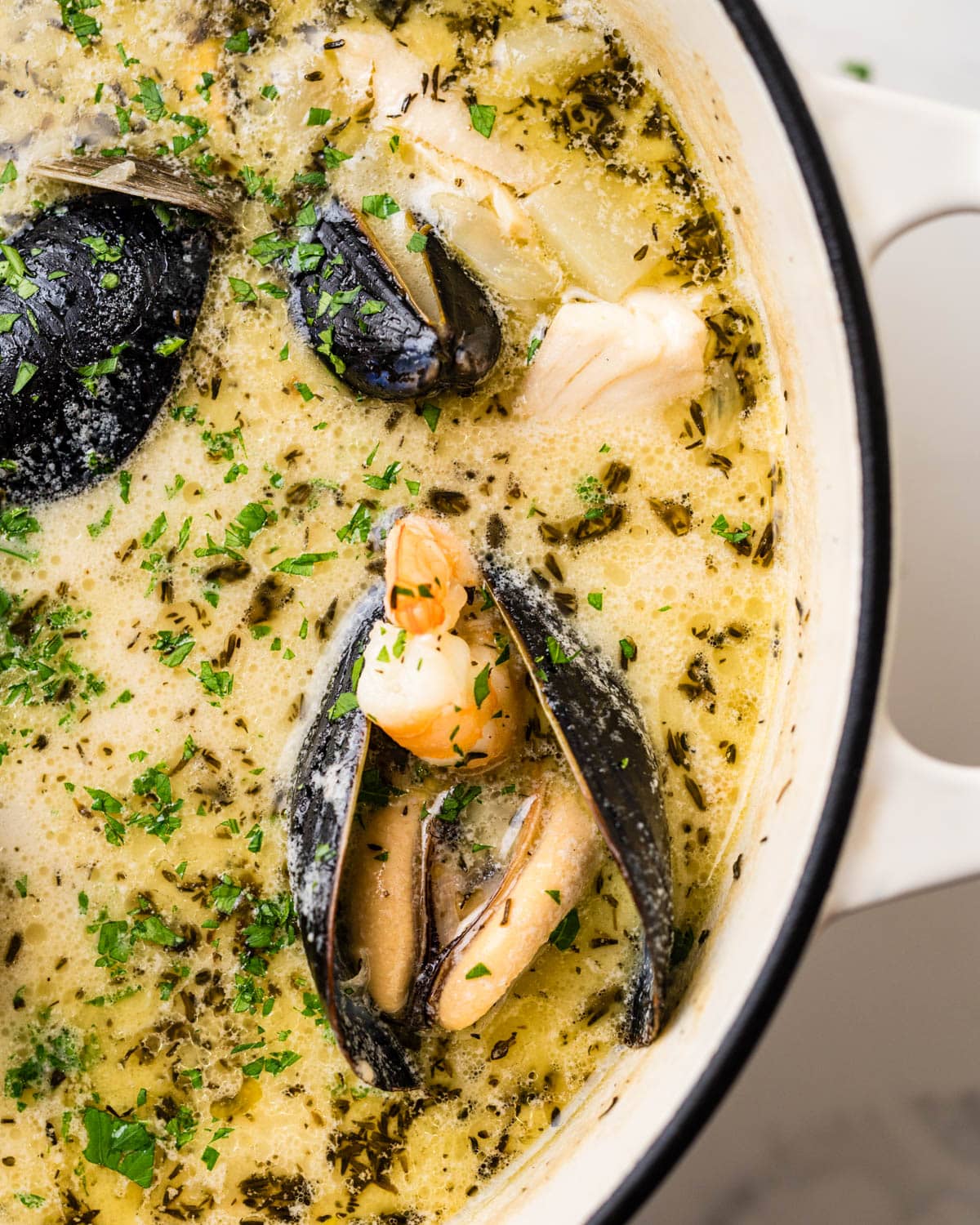
9. Add the seafood. Stir in the fish, mussels, clams and shrimp. Simmer for 5 minutes, or just until the seafood is cooked through and the shells have opened.
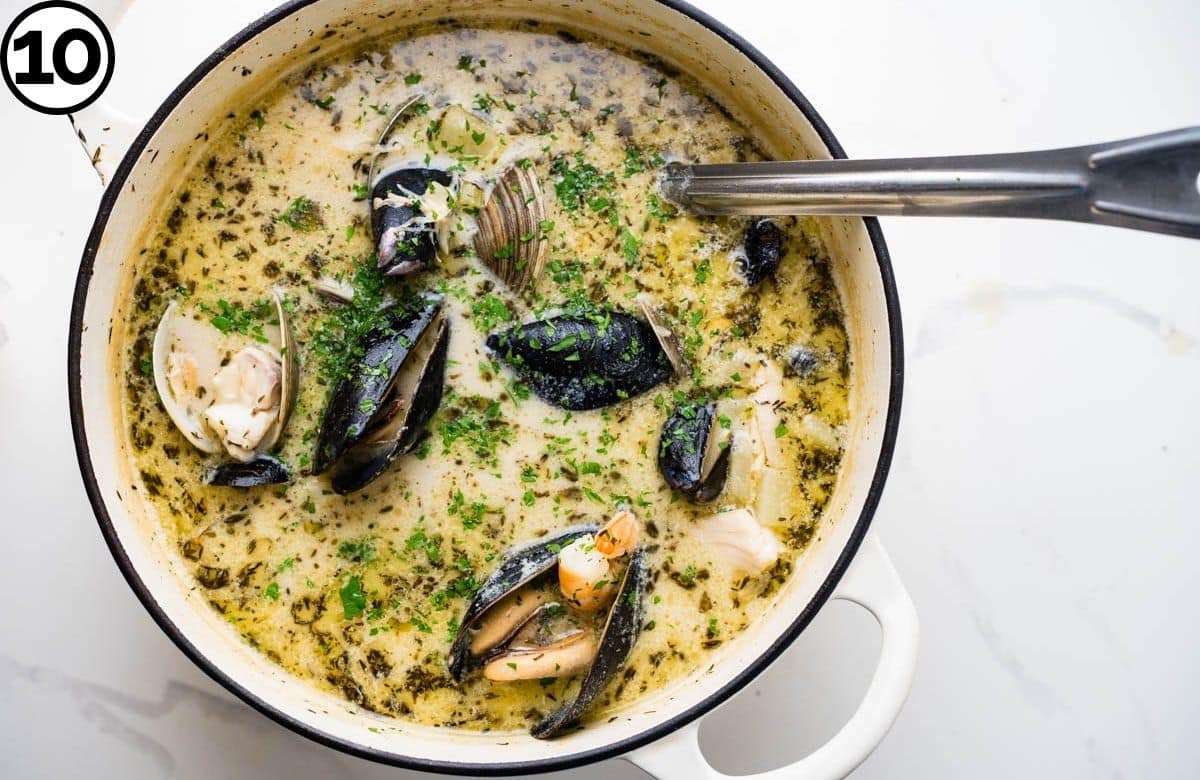
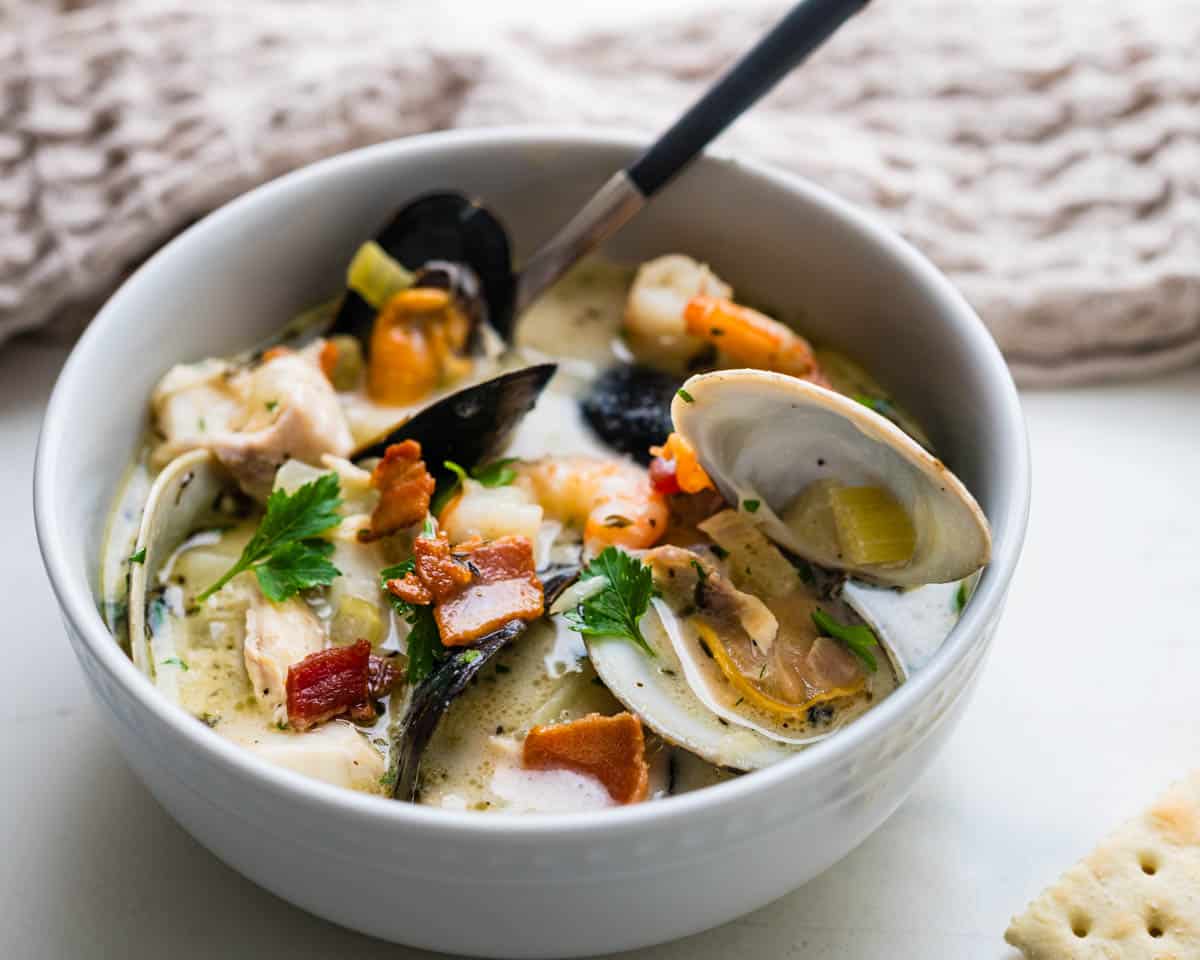
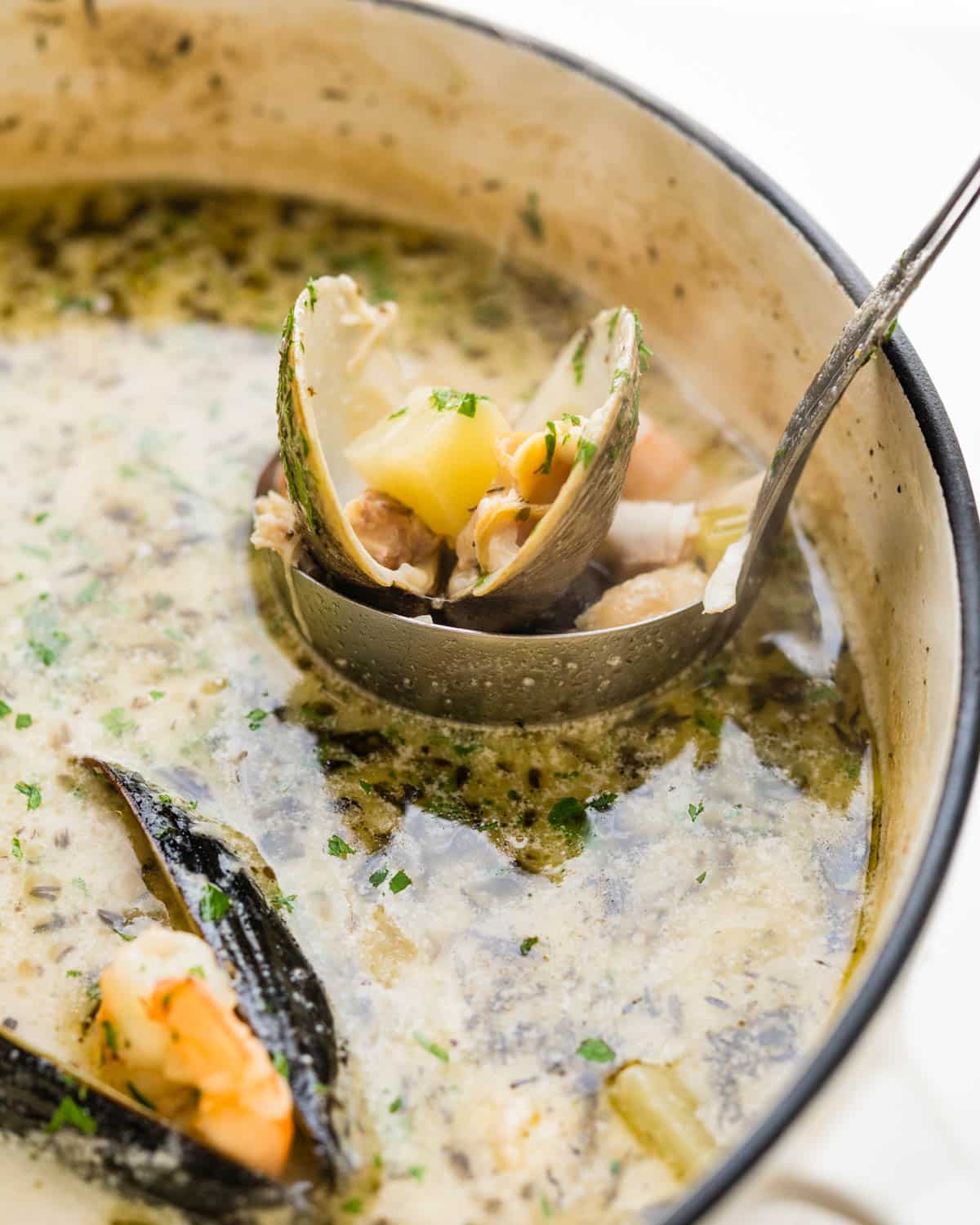
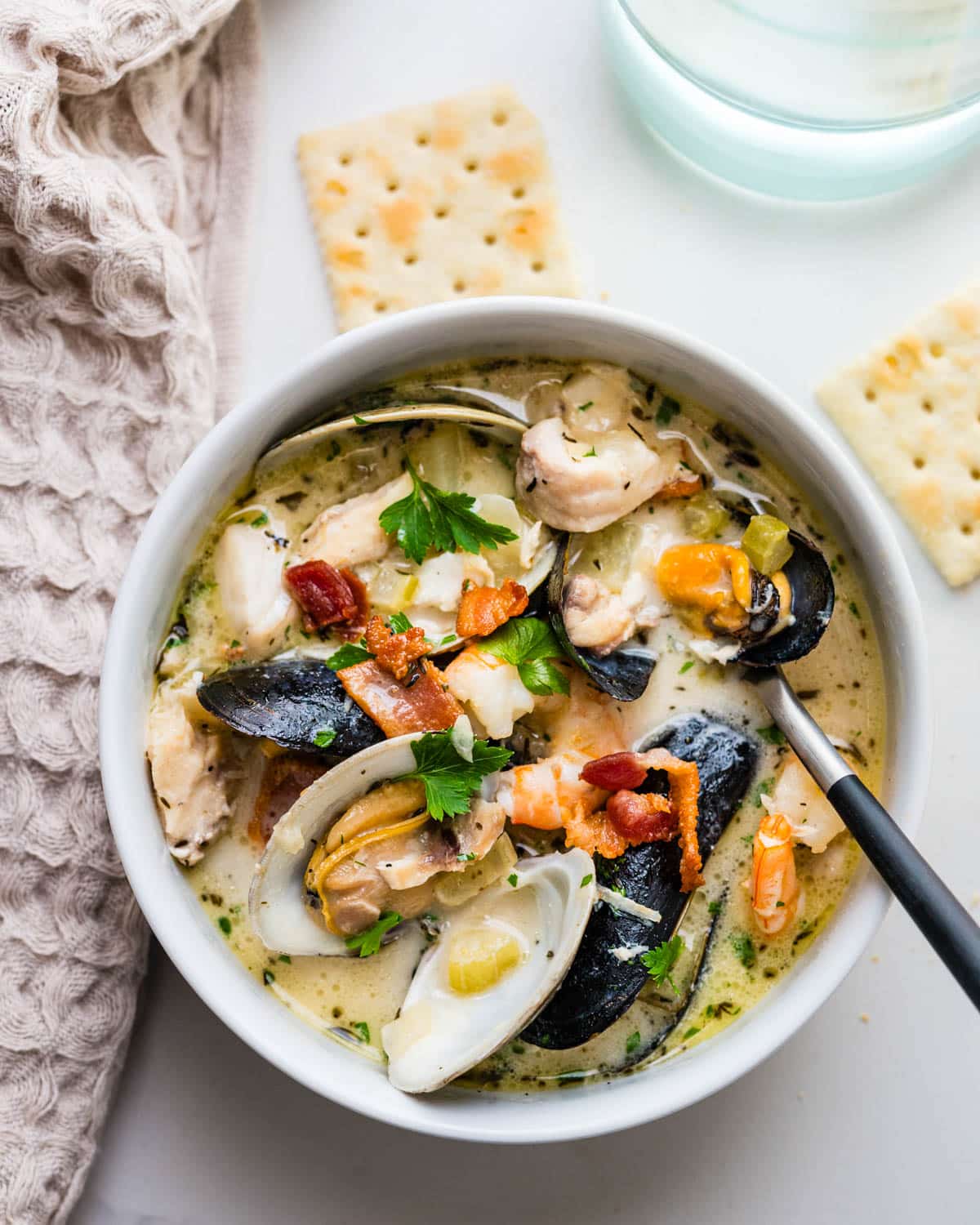
Finish and serve. Sprinkle with parsley and ladle into bowls. Garnish with reserved crumbled bacon.
Pro-Tips:
- Scrub shellfish thoroughly. Mussels and clams can hide grit — scrub them well under cold running water right before cooking, and discard any that don’t close when tapped.
- Watch the cream once it’s in. Once you add the cream, keep the heat at a gentle simmer rather than a hard boil to avoid it breaking or scorching on the bottom of the pot.
- Don’t overcook the seafood. Five minutes is usually enough — mussels and clams are done once they open, shrimp turns opaque, and fish flakes easily. Pull the pot off heat as soon as everything’s cooked through.
- Taste before serving. Fish stock and clam juice vary in saltiness, so taste the broth after the cream goes in and adjust salt and pepper before adding the seafood.
Mistakes To Avoid:
- Using milk or half-and-half instead of cream. Lower-fat dairy is more likely to break or curdle when it hits the hot broth — stick with cream for a silky result.
- Skipping the bacon fat step. The rendered bacon fat adds another dimension to the vegetables as they sweat. Don’t skip it.
- Overcooking the seafood. Adding it too early or simmering too long turns shrimp rubbery and fish mushy — it only needs about 5-8 minutes. Keep in mind that the soup is hot, so the seafood continues to cook even after you take it off the heat.
- Not scrubbing the shellfish. Skipping this step means grit ends up in the finished broth — for mussels and clams, a few extra minutes under running water prevent a gritty bowl.
- Boiling hard after the cream goes in. A vigorous boil can cause the cream to separate; keep it at a gentle simmer instead.
Swaps and Variations:
- Make it dairy-free. Swap the cream for full-fat coconut milk — it’ll add a slight sweetness but keeps the broth rich and silky.
- No fennel? No problem. Leave it out entirely, or swap in a small diced leek for a milder allium note.
- Switch up the seafood. Scallops, crab, lobster or a firmer white fish like cod or halibut all work well in place of what’s listed — just keep the cook time in mind for delicate proteins like scallops.
- Spice it up. Add a pinch of cayenne or a few dashes of hot sauce to the pot for a little heat.
- Bulk it up with corn. Stir in a cup of fresh or frozen corn kernels with the potatoes for a touch of sweetness, nodding to a corn chowder base.
- Smoky variation. A diced smoked sausage (like andouille) added with the bacon brings a Cajun-leaning flavor profile.
FAQs
Chowder is typically a thicker, cream- or milk-based soup, often built with a roux and potatoes, and chunkier overall — though this version leans lighter and brothier than a classic thick chowder.
Yes — just thaw it fully and pat it dry before adding it to the pot, so excess water doesn’t dilute the broth.
Crusty bread or oyster crackers for dipping, and a simple green salad to round out the meal.
Not as written, since it uses all-purpose flour for the roux — but swapping in a 1:1 gluten-free flour blend works well.
Yes — diluted clam juice (1 quart clam juice + 1 quart water) is a good substitute if you don’t have fish stock on hand.
Make ahead:
- You can make the broth base (through the potatoes) up to a day ahead and refrigerate it. Add the cream and seafood fresh when you’re ready to serve, since the seafood is best cooked just before eating.
Storage:
- Store leftover chowder in an airtight container in the refrigerator for up to 3 days.
Reheating:
- Warm gently on the stovetop over low heat, stirring occasionally. Avoid boiling, which can cause the cream to break and the seafood to overcook.
Freezing:
- I don’t recommend freezing this soup; Cream-based chowders don’t freeze particularly well — the dairy tends to separate once thawed, and the seafood can develop a chewy texture once frozen and thawed.
More seafood chowders and soups to try:
- Conch Chowder
- Homemade Lobster Stock
- Shrimp Stock
- Spanish Salmorejo Recipe (Cold Tomato Soup) with shrimp
Seafood Chowder Recipe
SPECIAL EQUIPMENT:
- 1 6-8 quart Dutch oven or stock pot
INGREDIENTS:
- 4 slices bacon chopped
- 4 tablespoons butter
- 2 stalks celery diced
- ½ large onion diced (about ½ cup)
- ½ fennel bulb diced (optional)
- 4 tablespoons all purpose flour
- 1 teaspoon kosher salt
- ½ teaspoon black pepper
- 1 teaspoon dried thyme
- 2 quarts fish stock or dilute 1 quart of clam juice with 1 quart of water) They sell it at most fish markets
- 2 large Yukon Gold potatoes peeled and diced
- 2 bay leaves
- 1 cup cream do not substitute milk or half and half.
- 1 pound fish cubed, I used tilapia
- 1 dozen mussels scrubbed under running water to remove grit.
- 1 dozen littleneck clams scrubbed under running water to remove grit.
- ½ pound shrimp
- 2 tablespoons Italian parsley chopped
DIRECTIONS:
- Heat a Dutch oven or stock pot over medium high heat and add 4 slices bacon. Cook until it's crispy, then transfer the bacon to a dish lined with paper towels to soak up excess grease.
- Add 4 tablespoons butter to the pot and as it melts add 2 stalks celery, ½ large onion, ½ fennel bulb; stir and cook until the vegetables are tender and slightly translucent, about 3-5 minutes.
- Add 4 tablespoons all purpose flour, 1 teaspoon kosher salt, ½ teaspoon black pepper, 1 teaspoon dried thyme. Cook, stirring constantly until all of the dry ingredients are moistened and there are no dry bits remaining. Continue to cook for a minute longer, stirring constantly to cook out the flavor of the raw flour.
- Stir in 2 quarts fish stock and bring the pot to a boil. Add 2 large Yukon Gold potatoes and 2 bay leaves. Cook for about 10 minutes or until they're tender.
- Add 1 cup cream and once it comes to a boil, add 1 pound fish, 1 dozen mussels, 1 dozen littleneck clams, ½ pound shrimp. Stir well to combine and bring the chowder up to a simmer. Cook for 5 minutes. Taste the broth and adjust with seasonings as you like.
- Sprinle 2 tablespoons Italian parsley over the chowder and garnish with the crumbled bacon.
NOTES:
Storage:
- Store leftover chowder in an airtight container in the refrigerator for up to 3 days.
- Reheat gently on the stovetop over low heat, stirring occasionally. Avoid boiling, which can cause the cream to break and the seafood to overcook.
- Don’t freeze this soup; Cream-based chowders don’t freeze particularly well — the dairy tends to separate once thawed, and the seafood can develop a chewy texture once frozen and thawed.
NUTRITION:
Nutritional Disclaimer
Nutritional information is an estimate only and is provided as a courtesy. Values are calculated automatically based on the ingredients and quantities in each recipe and may vary depending on specific brands, exact measurements, and substitutions made. For precise nutritional guidance, especially if you have a medical condition or dietary restriction, please consult a registered dietitian or run the ingredients through your own nutrition calculator.Pin it for later!
This looks fabulous!!!! I wish I could get fresh mussels…