
Corned Beef Brisket Recipe
Inside: Skip the store-bought version and learn how to make corned beef brisket from scratch using a classic brining method that transforms an ordinary brisket into flavorful, sliceable corned beef.
This homemade corned beef brisket recipe shows you exactly how to make corned beef brisket from scratch using a simple corned beef brine. Instead of the pink vacuum-packed meat, you’ll cure a fresh beef brisket in a brisket brine of curing salt, sugar, and pickling spices, then cook it for a classic corned beef and cabbage dinner. The process takes a few days, but it’s mostly hands-off — and the flavor of homemade corned beef is far better than anything from a package.
For years, my corned beef and cabbage dinners started the same way most people’s do — with a cryovac package of brisket floating in that bright pink liquid from the grocery store.
Eventually, I started wondering where it came from and how the meat gets that distinctive flavor and color.
The answer is surprisingly simple: the brisket is cured in a seasoned brine for several days in the fridge. The curing salt in the brisket brine is critical for inhibiting bacterial growth, but it’s also responsible for the unique color. Once you see how easy it is, making corned beef at home feels a lot less mysterious.
If you’ve brined meat before, this process will feel familiar. I regularly use my pork chop brine for pork and my basic chicken brine for chicken breasts that always grill up tender and juicy, and a bourbon turkey brine for roast turkey, so curing a brisket felt like the natural next step.
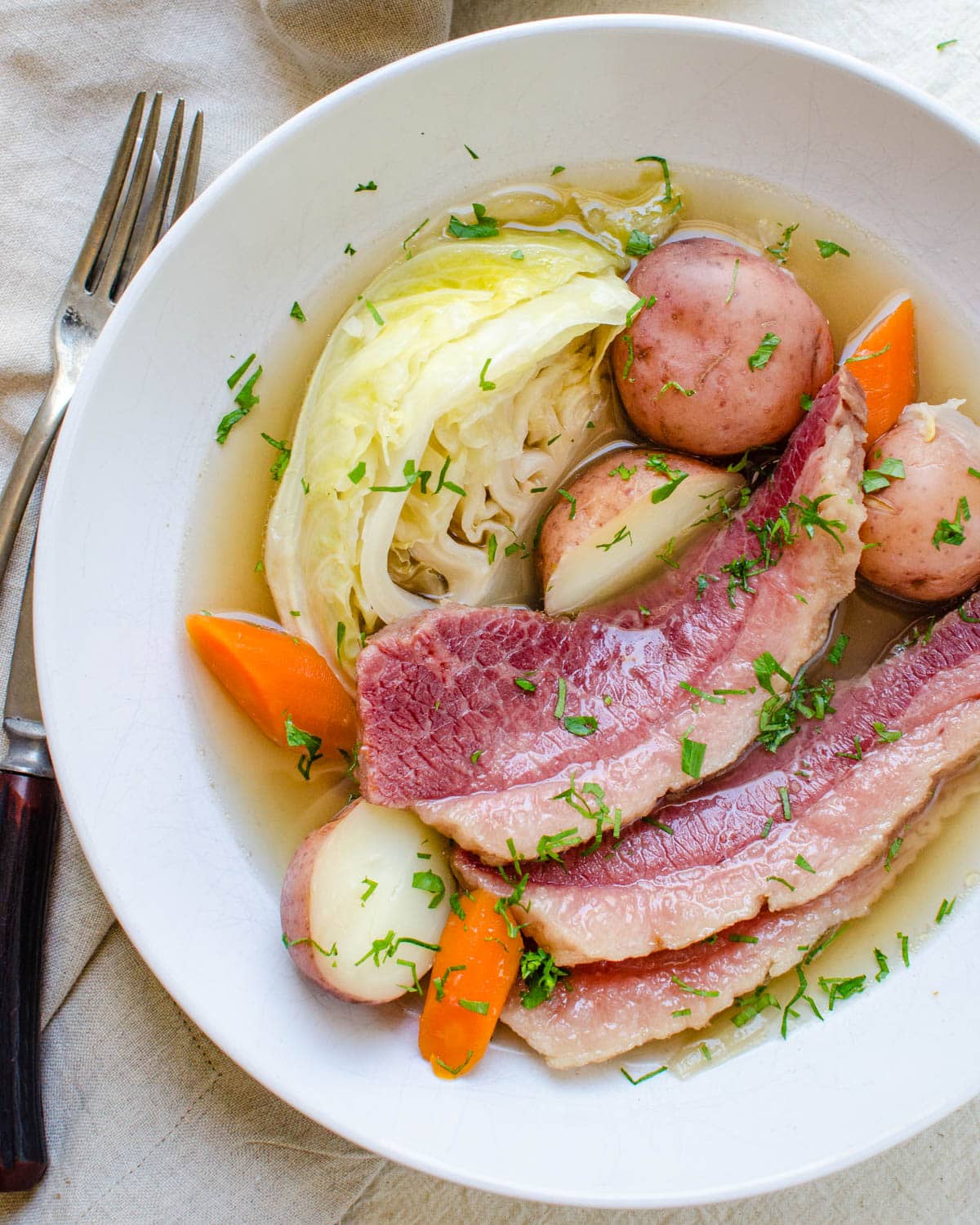
Once it’s done brining, you can cook the corned beef brisket the traditional way with cabbage, potatoes, and carrots (recipe given), or in a myriad of other recipes.
Before diving into this recipe, I also leaned on Michael Ruhlman and Brian Polcyn’s book Charcuterie: The Craft of Salting, Smoking & Curing to make sure the curing process follows good food-safety practices — an essential step whenever you’re working with raw meat.
Why you’ll love this recipe:
- Brining transforms the brisket. The salt in the brine penetrates the meat through osmosis, seasoning it and keeping it moist.
- Pink Curing Salt (a.k.a. Prague powder) gives corned beef its signature color and flavor. A small amount of sodium nitrite reacts with the meat’s proteins, producing that familiar rosy color and distinctive taste.
- The spice blend infuses the meat slowly. Pickling spices steep in the brine and gradually flavor the brisket over several days, creating a deeper, more complex taste than a quick seasoning.
- It’s mostly hands-off. Once the brisket is submerged in the brine, the refrigerator does most of the work while the curing process develops flavor and texture.
- The result rivals store-bought corned beef. You control the seasoning, the quality of the brisket, and the cooking method — which makes for a better St. Patrick’s Day boiled dinner (instructions included).
- Your friends will think you’re a culinary wizard… because you are.
Ingredients:
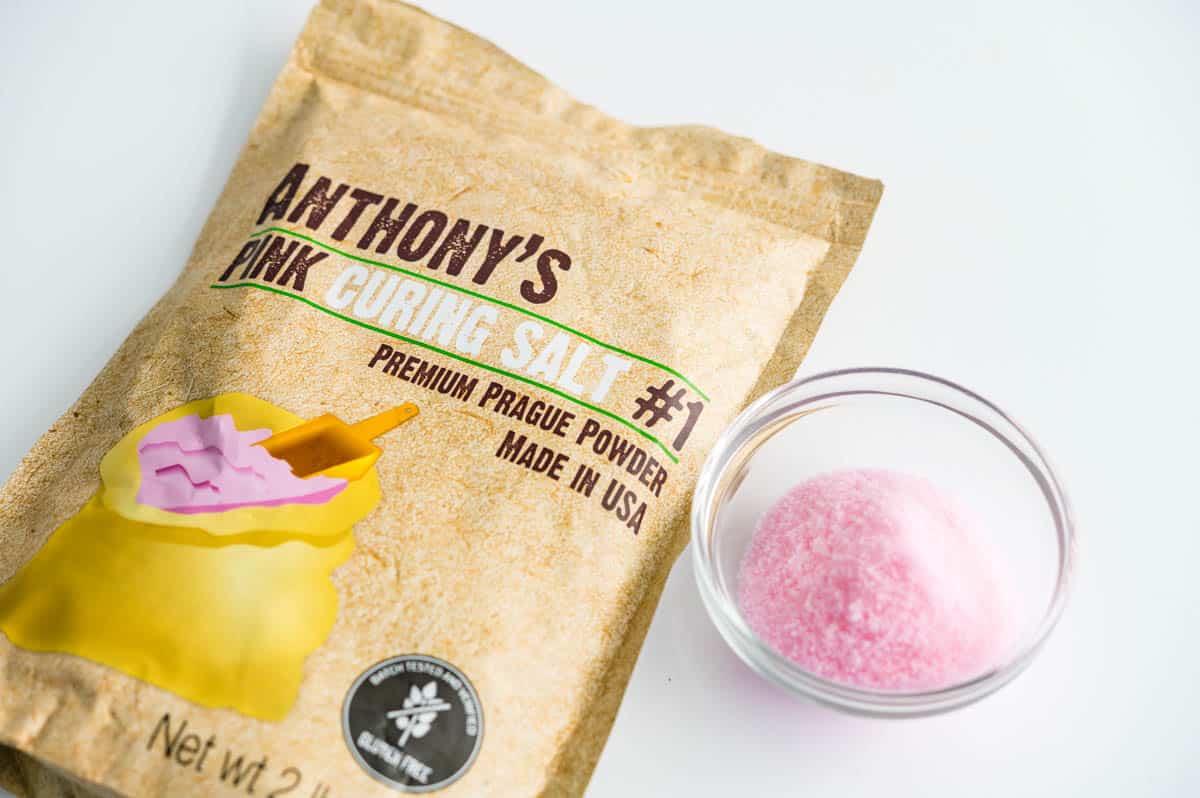
- Prague Powder #1 (Instacure #1) – This pink curing salt contains sodium nitrite and is essential for both food safety and color. It prevents the growth of harmful bacteria during the curing process and reacts with the meat’s proteins to create the traditional rosy color and distinctive cured flavor. (Note: This is not the same as Himalayan pink salt.)
- Kosher Salt – The primary seasoning in the brine. Salt draws moisture from the meat and then allows the seasoned brine to penetrate back in, which flavors the brisket all the way through. I use Morton’s kosher salt. If using Diamond Crystal, increase the amount by about ⅓ cup because its flakes are lighter and less salty by volume.
- Granulated Sugar – Balances the sharpness of the salt and spices while subtly enhancing the natural flavor of the beef. Sugar also helps round out the brine so it tastes savory rather than aggressively salty.
- Garlic – Fresh garlic adds aromatic flavor to the brine. Crushing or chopping it releases the natural oils that infuse the brisket as it cures.
- Bay Leaves – Bay leaves add a subtle herbal background flavor that complements the pickling spices and beef. As the brisket cures in the brine, the bay slowly releases its oils and rounds out the overall flavor of the corned beef.
- Black Peppercorns – Peppercorns provide gentle heat and aromatic spice that balance the richness of the brisket. Lightly crushing them before adding to the brine helps release their essential oils so the flavor infuses the meat more effectively.
- Pickling Spice – A blend typically made with mustard seed, coriander, peppercorns, bay leaf, and other warm spices. As the brisket cures, these spices slowly infuse the meat with the classic flavor you expect.
Step-by-step instructions:
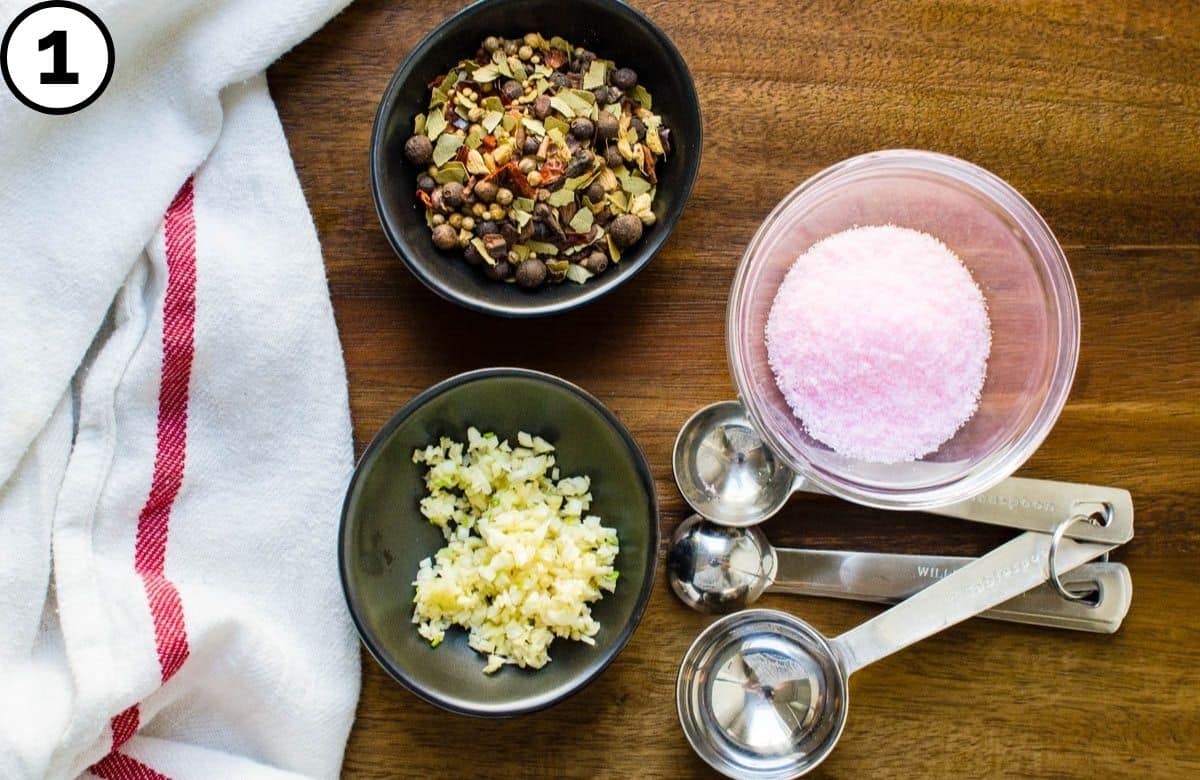
- In a large stockpot combine the sugar, kosher salt, pickling spice and Instacure (a.k.a. Prague powder).
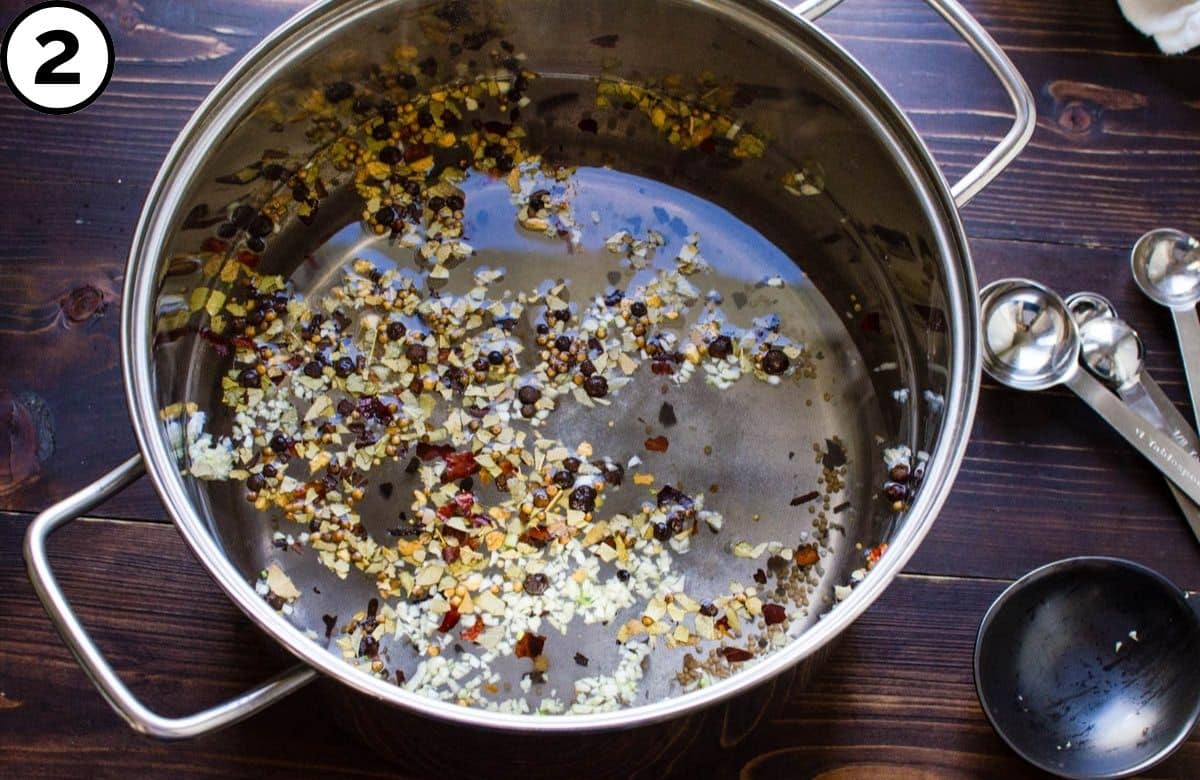
2. Simmer on the stove until the salt, sugar and Instacure are dissolved. Cool the mixture to room temperature and refrigerate for several hours or until it’s cold. The brisket brine needs to be chilled because you don’t want to add raw meat to hot liquid otherwise it can begin to cook.
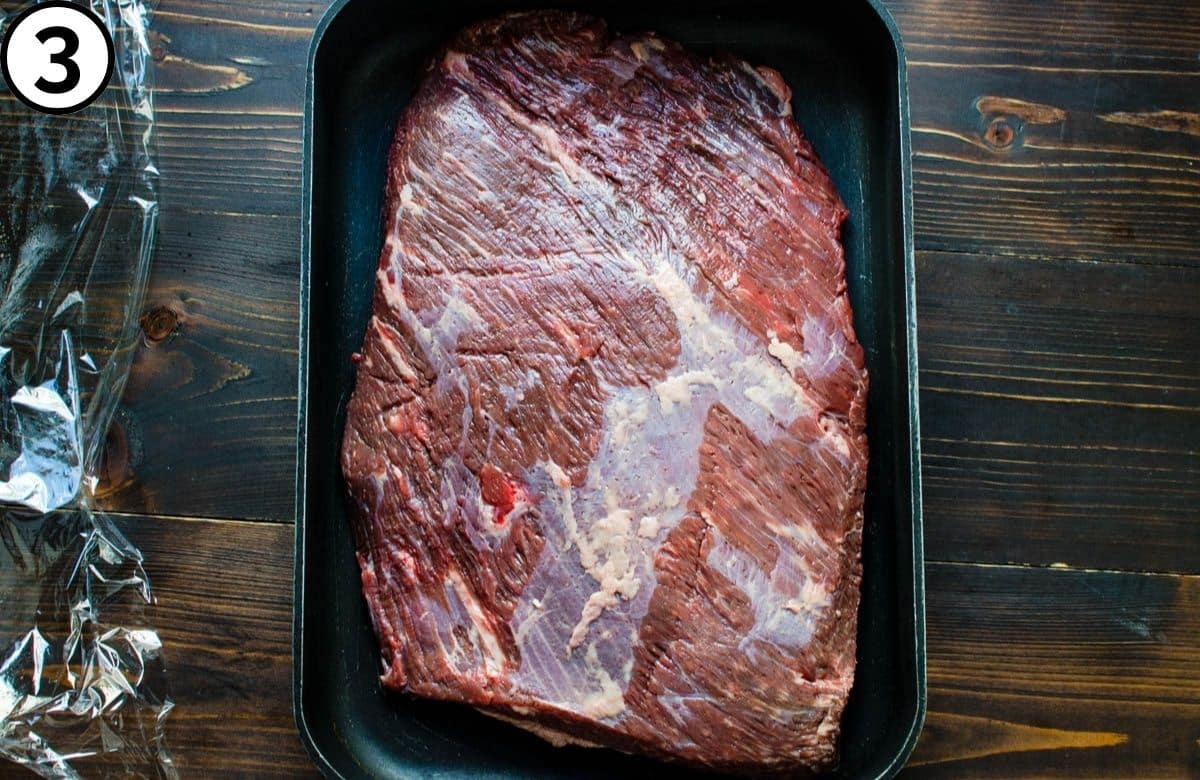
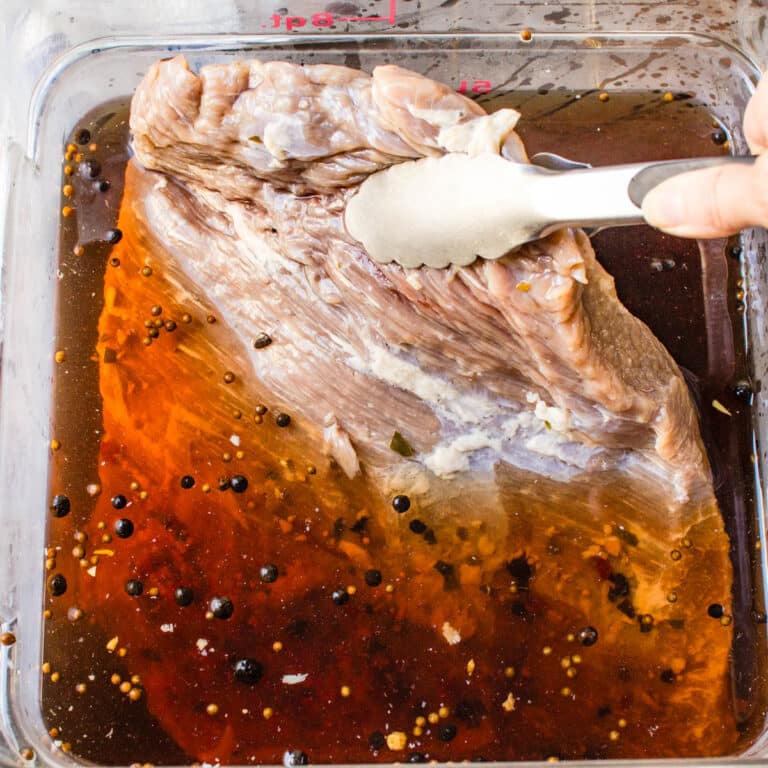
3. If the brisket has a thick fat cap, trim away some of it before brining. Cover the brisket with the chilled corned beef brine and refrigerate for five days, turning the meat daily to ensure it brines evenly.
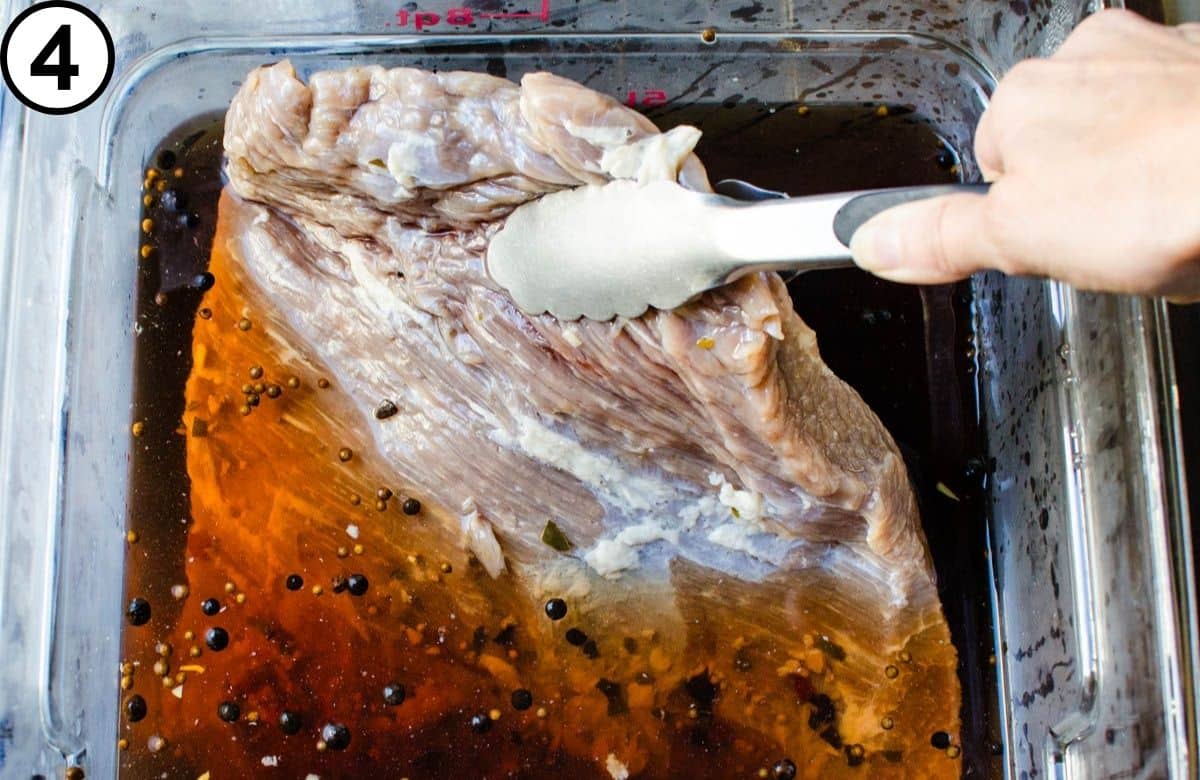
4. Remove the meat from the brine and rinse well under cold water. Discard the brining solution.
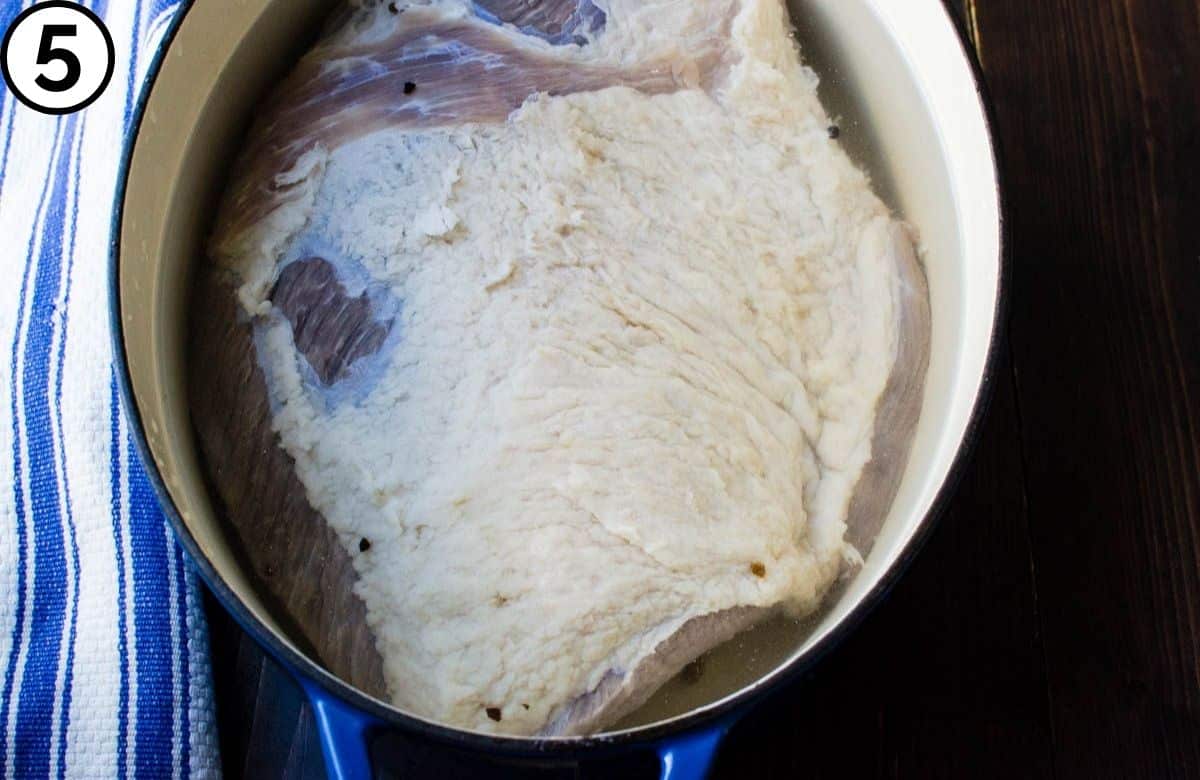
5. Place the brisket in a large heavy pot or Dutch oven and cover with cool water. Bring the pot to a boil.
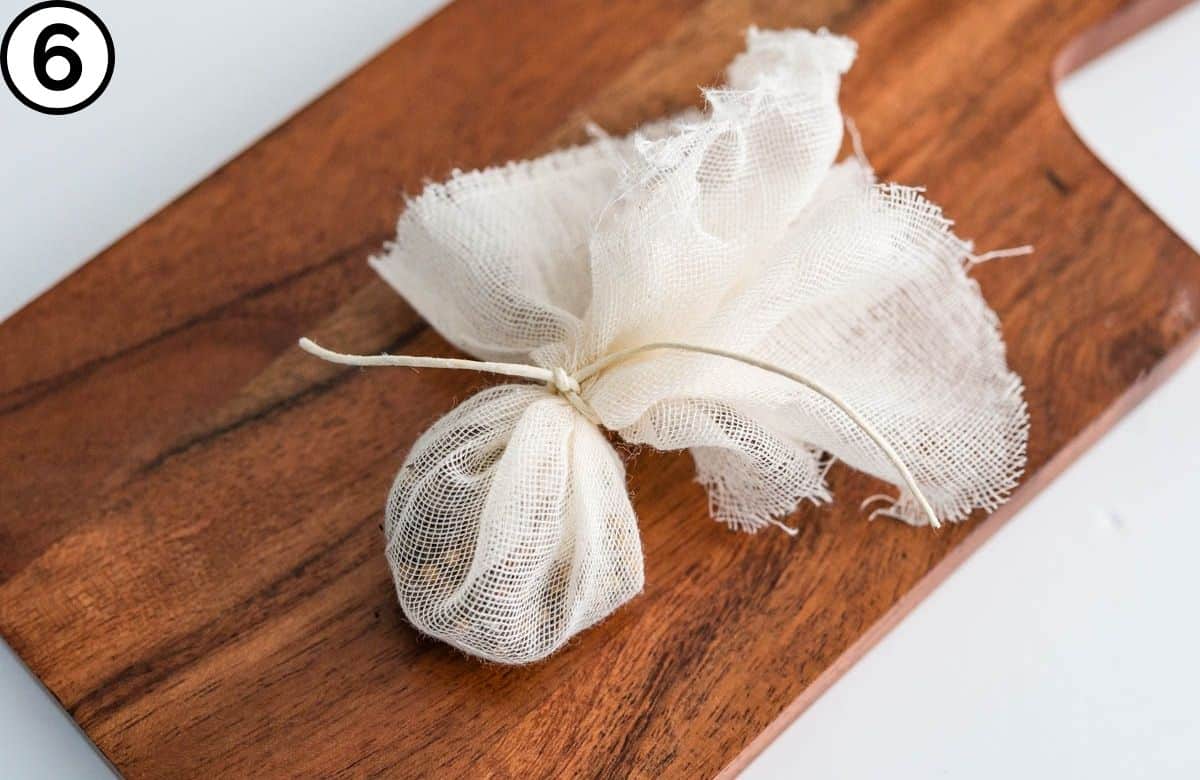
6. While you’re heating the water and brisket, assemble the pickling spice in cheesecloth so that it can’t escape from the pouch and tie it with a piece of kitchen twine. Add the pickling spice to the brined beef and reduce the heat to a simmer. Cover and simmer for 3 hours or until the meat is tender.
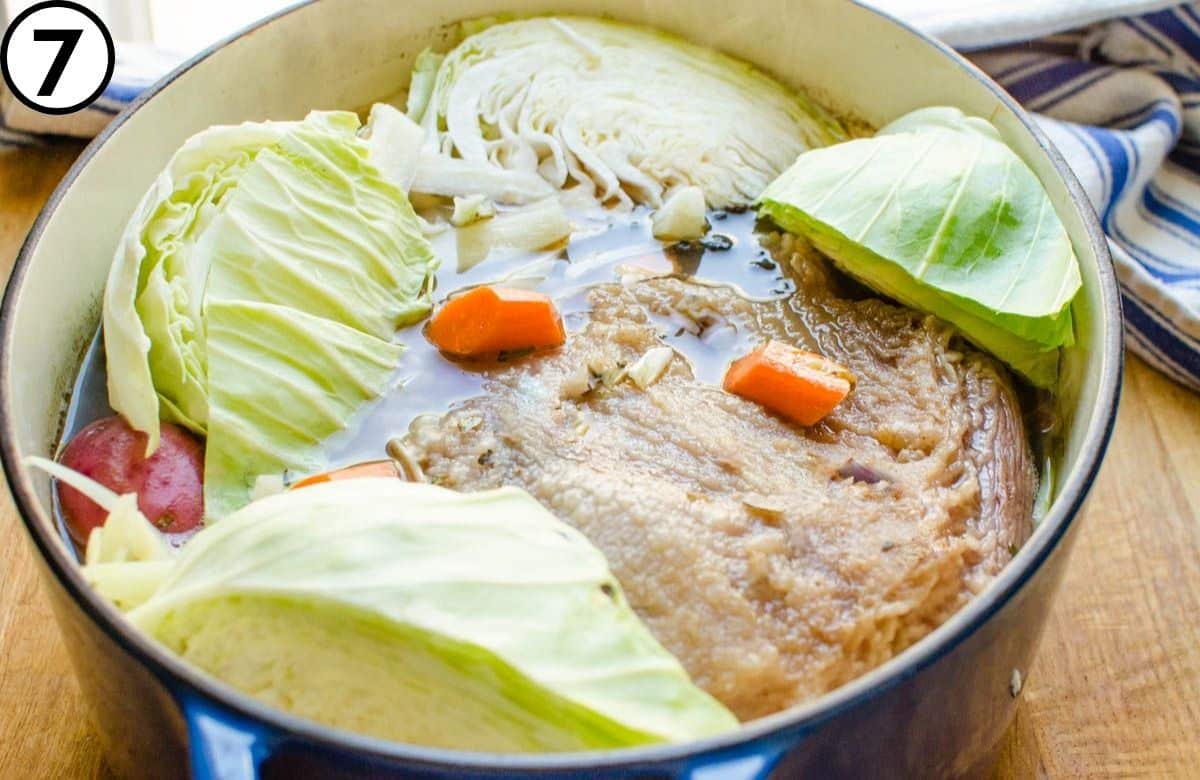
7. For corned beef and cabbage boiled dinner, add the vegetables (cabbage, carrots, and potatoes) to the pot at the 2-hour and 15-minute point. Continue to simmer for 45 minutes longer with the lid on the pot. The meat should be fork tender.
Pro-Tips:
- Use the right tools–The most difficult thing about the brisket brine is finding a receptacle large enough to hold a gallon of the brining solution, a five-pound brisket and space for it in the refrigerator. You can use a large stock pot or go to a restaurant supply house for a food-safe storage container (preferably one with a lid). This plastic container with a lid holds 12 quarts {affiliate link}.
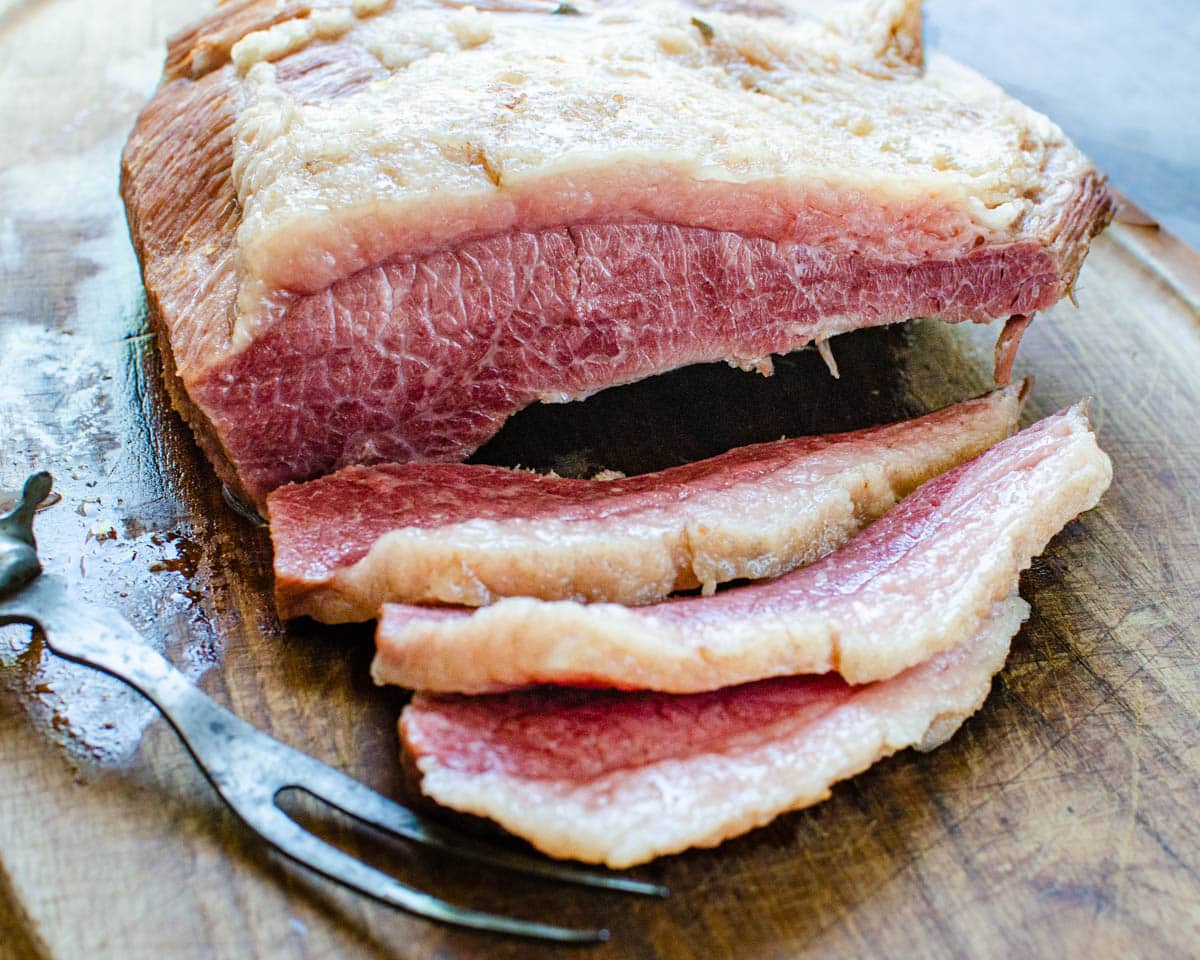
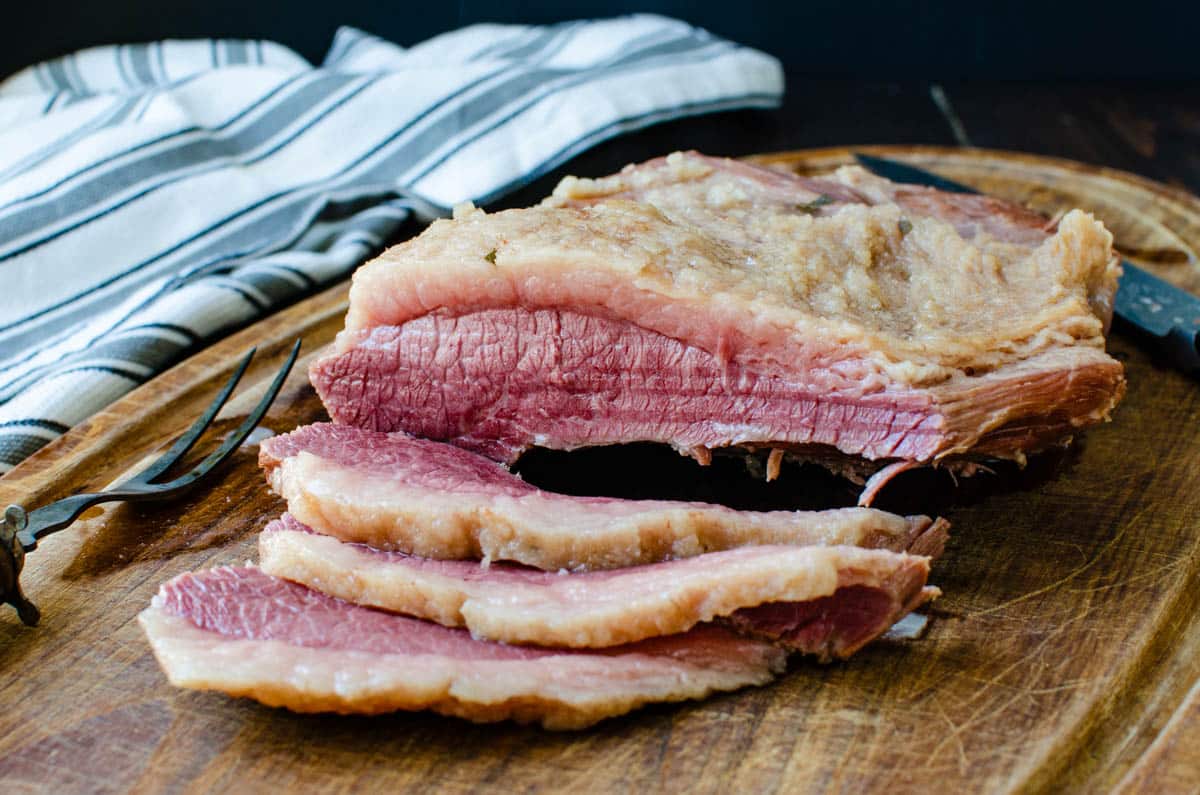
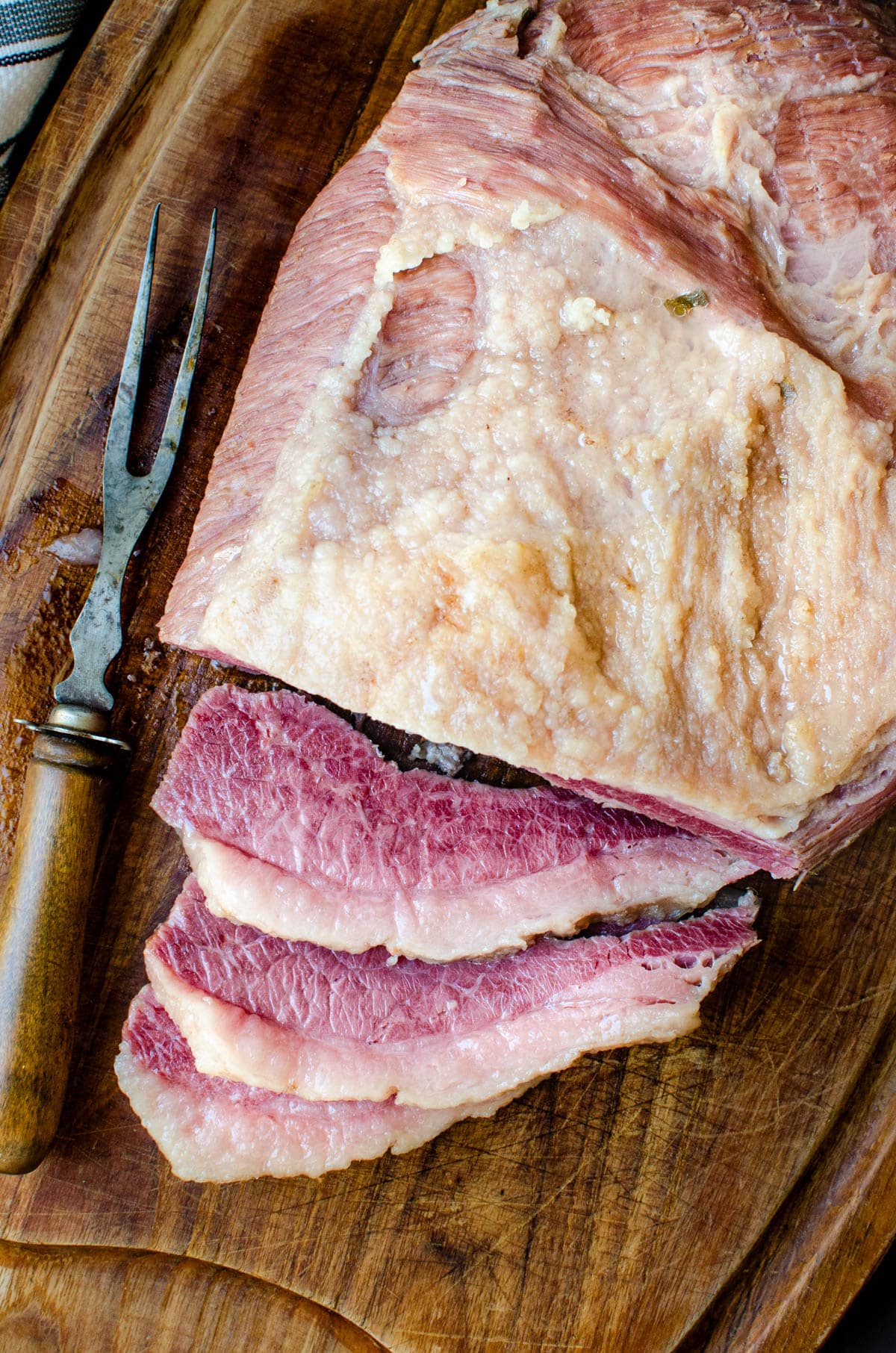
- Slice against the grain–This will ensure your brisket is tender and easy to chew. The photo below shows the longer strands stacked upon one another on the right side of the image, while the left looks like small nodules.
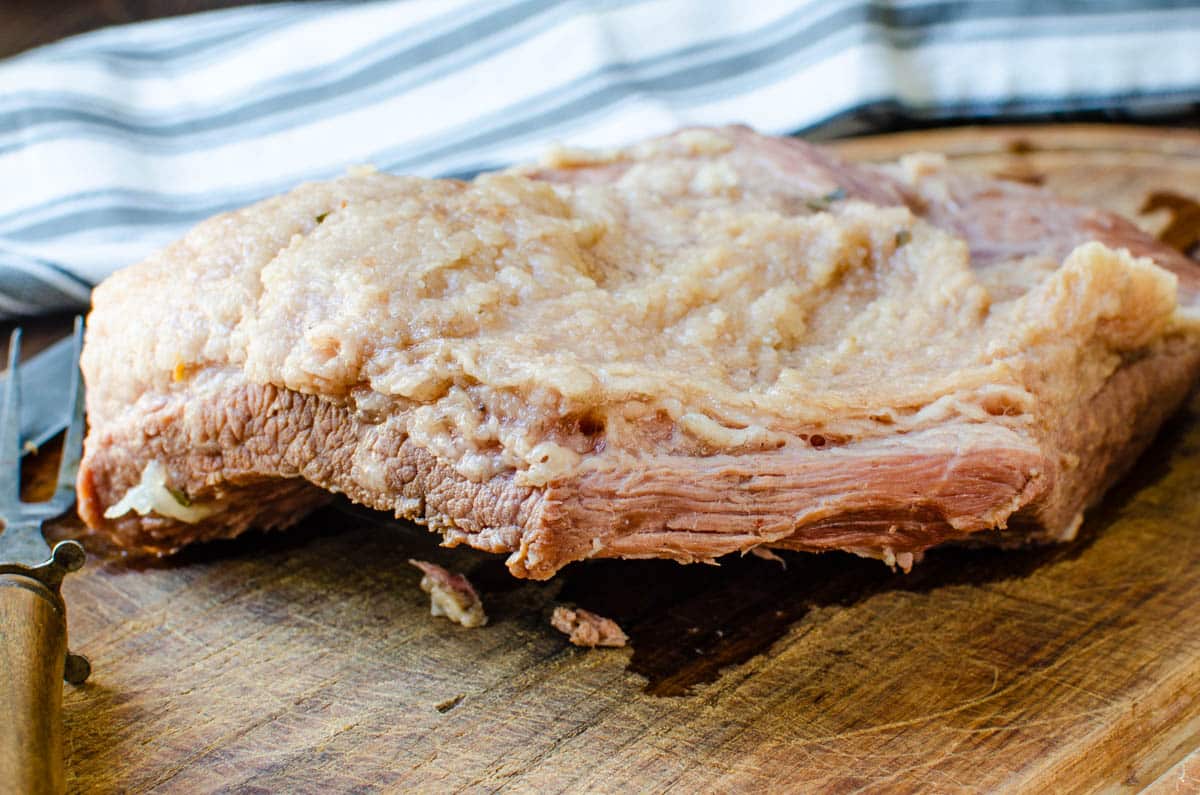
Make your slices perpendicular to the long, ropy muscle fibers; this will make the brisket easier to chew because you’ve already sliced them. It’s another smart way to make the meat taste more tender.
Swaps and Variations:
- Make your own pickling spice mixture by combining two tablespoons whole mustard seeds, one tablespoon whole allspice berries, two teaspoons whole coriander seed, one teaspoon red pepper flakes, one teaspoon fennel seed, one teaspoon black peppercorns, two bay leaves (crumbled), two whole cinnamon sticks, seed, and six whole cloves.
- Cook it the way you like– You can use a slow cooker, instant pot, grill or even the oven to cook the corned beef brisket. After the meat has brined for 5 days, rinse it and pat it dry, then make the corned beef using your preferred method.
- This is my method for Baked corned beef –with tangy glaze made with horseradish, brown sugar and Dijon mustard.
- Add fresh herbs to the brine and/or during the cooking process. Try thyme or parsley for color and a pop of freshness.
- Use your smoker to make a smoked version. Hey Grill, Hey smokes hers for 3 hours before slicing and serving.
FAQ’s
Instacure or Prague powder is a curing salt mixture of 93.75% table salt and 6.25% sodium nitrite.
Curing salt acts as a preservative. Through osmosis, it not only pulls water out of the meat’s cells but also kills some types of bacteria. Sodium nitrite in the curing salt prevents the growth of bacteria.
Curing salt is sometimes called Instacure, Prague powder, pink salt, tinted curing mixture (TCM) or tint cure.
The pink coloring is added so that it won’t be confused with table salt, but that color also gives corned beef its distinctive hue.
More Irish dinner recipes:
- Irish Bangers and Mash Recipe
- Colcannon Cakes (Leftover Mashed Potato Pancakes)
- Lamb Stew Recipe
- Traditional Cottage Pie
- Soda Bread Recipe
- Irish Stout Braised Chicken Thighs
More corned beef recipes to try:
Corned Beef Brisket Recipe
INGREDIENTS:
FOR THE BRISKET BRINE:
- 2 cups Morton’s kosher salt
- 1 gallon water
- ½ cup sugar
- 2 tablespoons pickling spices Use store-bought or a homemade recipe (given in the Variations above).
- 4 teaspoons pink curing salt (prague powder)
- 3 cloves garlic minced
FOR MAKING CORNED BEEF:
- 5 pounds beef brisket
- 2 tablespoons pickling spice
- 3 bay leaves
- 1 tablespoon black peppercorns lightly crushed
- water
FOR TRADITIONAL CORNED BEEF AND CABBAGE
- ½ pound small red potatoes
- 1 head cabbage cut into eighths, vertically through the core
- 1 large onion peeled and sliced vertically, root to tip in ½" strips
- 3 large carrots Peeled and cut into 2" pieces
DIRECTIONS:
MAKE BRISKET BRINE:
- In a large pot, combine 2 cups Morton’s kosher salt, 1 gallon water, ½ cup sugar, 2 tablespoons pickling spices, 4 teaspoons pink curing salt , 3 cloves garlic, and simmer until the salt and sugar are dissolved. Cool to room temperature and refrigerate for several hours until cold.
BRINING BEEF BRISKET:
- Place 5 pounds beef brisket in a pot or receptacle large enough to hold both the brine and the meat. (I purchased an industrial restaurant container with a 12-quart capacity — and filled it about halfway up).
- Pour the chilled brine over the meat and refrigerate for 5 days. If the meat isn't completely submerged in the brine, place a plate on top to press it into the liquid. Flip the meat every day or so.
COOKING THE BRINED CORNED BEEF
- Remove the brisket from the brine and rinse well under cold running water. Discard the brining solution.
- Place the brisket in a large, heavy pot or dutch oven and cover with cool water.
- Place 2 tablespoons pickling spice, 3 bay leaves, and 1 tablespoon black peppercorns, in the center of the cheesecloth. Bring the ends together in a bundle and secure it tightly with the kitchen string. Add the bouquet to the pot.
- Bring the pot just to a boil, reduce the heat to a simmer and cover with the lid slightly askew. Cook for 3 hours or until the beef is very tender.
- Remove the pickling spice bundle from the pot and discard. Transfer the corned beef to a cutting board and slice thinly across the grain to serve.
FOR TRADITIONAL ST. PATRICK'S DAY BOILED DINNER:
- Proceed with cooking the meat as described above, but scale back the simmer to 2 hours and 15 minutes — then add ½ pound small red potatoes, 1 head cabbage, 1 large onion, and 3 large carrots to the pot and continue the simmer with the lid tightly secured for an additional 45 minutes or until the vegetables are very tender.
- Remove the pickling spice bundle. Transfer the brisket to a cutting board and slice thinly. Arrange a few slices of meat in a shallow bowl, adding potatoes, carrots and a wedge of cabbage. Spoon the liquid over the the dish to serve.
RECIPE VIDEO:
NOTES:
NUTRITION:
Nutritional Disclaimer
Nutritional information is an estimate only and is provided as a courtesy. Values are calculated automatically based on the ingredients and quantities in each recipe and may vary depending on specific brands, exact measurements, and substitutions made. For precise nutritional guidance, especially if you have a medical condition or dietary restriction, please consult a registered dietitian or run the ingredients through your own nutrition calculator.Pin “Corned Beef From Scratch” For Later!
My son gets migraines, and nitrates are one of his major triggers. For those of you who are sensitive to nitrates, this can be done without the curing salt, just replace it with regular salt. Warning, if you do, you don’t want to let it sit for too long, and you need to make sure it is thoroughly cooked, since it won’t have nitrates as a preservative. Also, it won’t have that pretty pink color, it’ll be more greyish brown. But it WILL be delicious.
I did a trial run of this recipe with a 2lb chuck roast and homemade picking spice. It’s impossible to find pickling spice at our local groceries this time of year, but my homemade one was pretty good. I used regular salt (with much deliberation on whether I should) but I used about 1/3 of the proportion as kosher. I brined it for 2 days. The beef was awesome, true to color, texture, and flavor, and I’m making my real St.Patrick’s day corned beef with a bone-in 2.5lb roast. Fingers crossed it’s just as good or better than the first attempt!
That sounds amazing Selena! Good luck and Happy St. Patrick’s Day!
I have an 11lb brisket. How should I adjust the brine recipe. Thanks.
You can double or even triple the brine, but the bigger concern is finding a receptacle large enough to hold the 11 pound brisket and keep it refrigerated. As long as the brisket is submerged in the brine, that’s fine. You may need to cut your brisket in half depending on whether or not it fits in your receptacle.
I used this recipe for brine and spices directions. Started with a 3.7 lb. beef “arm roast” (pretty lousy cut of meat) Carefully boned it and removed all fat to a net weight of 2 lbs. Tied the pieces tightly into a 2″ thick flat piece. Reduced brine contents to match the weight difference between the recipe and my 2 lbs. except pickling salt reduced per instructions found on Amazing Ribs.com. Used homemade pickling spices per the same source. Cured 4 days in fridge. Cooked 1 hour in pressure cooker but like a dummy forgot the spice packet. Disaster? Heck NO. The meat was WONDERFUL! I doubt that we’ll ever buy corned beef again. Plan to try it with a rump roast next.
That is fantastic! So glad it turned out well for you! I think brining your own is a game-changer!
Just finished cooking this, and had to leave a comment. Purchased a large 6 lb brisket on sale-and decided to try this recipe. Already had the curing salt, since I had planned to this a while ago. I usually bake it in the oven, even though the recipe calls for boiling. After 6 1/2 hours, it was done-but still salty. Put them (had to cut in half) in a large pot, and simmered for another hour. Took a lot of the saltiness away, but it’s now just falling apart. That’s fine-less “chewing”. Tender, great flavor. We now have enough to eat, along with another couple of pounds to put in the freezer, for the next time the cravings hit!
I envy you having more in the freezer — it didn’t last that long in our house — of course, you had a bigger brisket!
I love corned beef. This is such a great recipe. Perfect to feed a crowd, and great to celebrate St. Paddy’s Day. Seriously I would eat this all year long. Great sandwiches with leftovers too.
I haven’t even gotten to the sandwiches… yet…
I love how easy it is to turn brisket into corned beef!! And I didn’t know curing salt wasn’t just salt!!! As a scientist I should know this!
Your finished dish looks sensational, I just want to grab a slice of that beef!!!
Honestly you are making me hungry and it is almost midnight here!!!
Glad you like it, Claire! It’s really a simple process — just takes time — and a large receptacle for the beef and brine.
This post was a wealth of information Lisa! I learned so much – pink salt = prague powder being chief of them! And the amount of time and love that goes into making corned beef. No wonder people are so possessive of their versions!
Yes Pink Salt = Prague Powder — that one’s important.
Pink HIMALAYAN salt is NOT pink salt (Prague Powder, InstaCure), just FYI.
I just CAN’T seem to be able, mentally, to use anything with “table salt (VERY unhealthy!) and added nitrites( they cause cancer!!).
A lot of organic items that would normally contain InstaCure or Prague Powder are using celery juice powder instead. I believe, since I REALLY want to make this, I’ll try using the celery juice powder and adding to it my combination of Himalayan, Celtic and Real salt (in equal portions), Adding some beet powder for color, will cure for only 5 days in the fridge, and hopefully have a nice looking healthy and SAFE meal.
I do thank you for the great recipe.
Can’t wait to hear how it turns out!
That looks perfect and I love the addition of veggies with it. It would make a great weeknight meal and transition into yummm leftovers 🙂
I admit, we have a lot of leftovers…
This is awesome. I absolutely love corned beef, but am always disappointed that it seems I can get it this time of year. Silly me, I never considered making it from scratch! And this looks so easy! I’m def going to try this!