
Oysters on the Half Shell — How to Buy, Shuck and Serve Them at Home
Inside: A free-downloadable guide for how to buy, clean and shuck fresh oysters in their shell with photos and tutorial video, plus tips for serving and different garnishes.
If you’ve ever slid a cold, briny oyster off its shell at a restaurant and thought I wish I could do this at home — you can. Raw oysters on the half shell are one of those things that look intimidating and are actually straightforward once you know a few basics.
I grew up on the Chesapeake Bay, and those bivalves were part of life — served at backyard roasts, holiday tables, and any occasion worth celebrating. This post will walk you through everything: how to buy them, how to store them, how to shuck them safely, and how to serve them. Plus a classic mignonette that takes five minutes to make and makes every oyster taste more like itself.
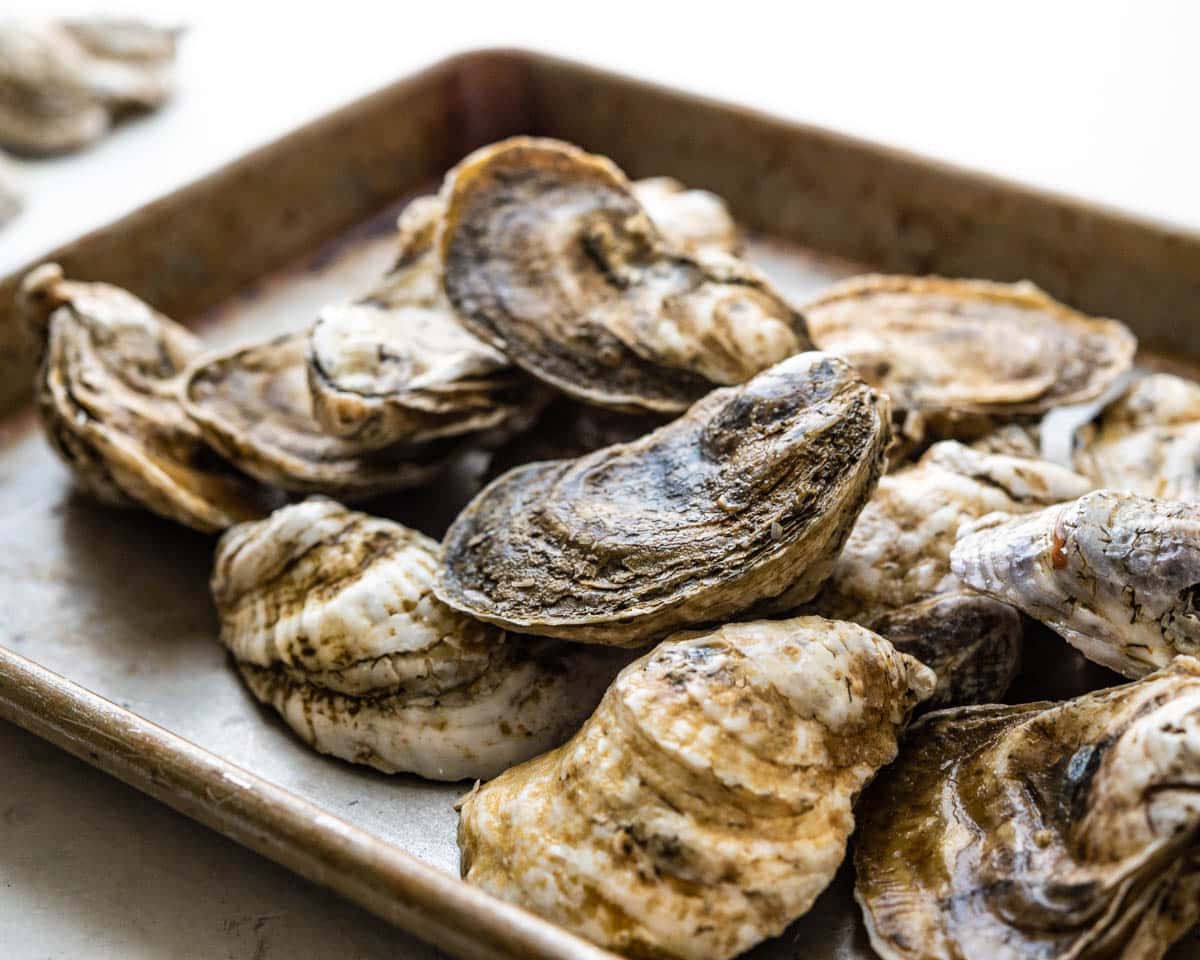
What are oysters on the half shell?
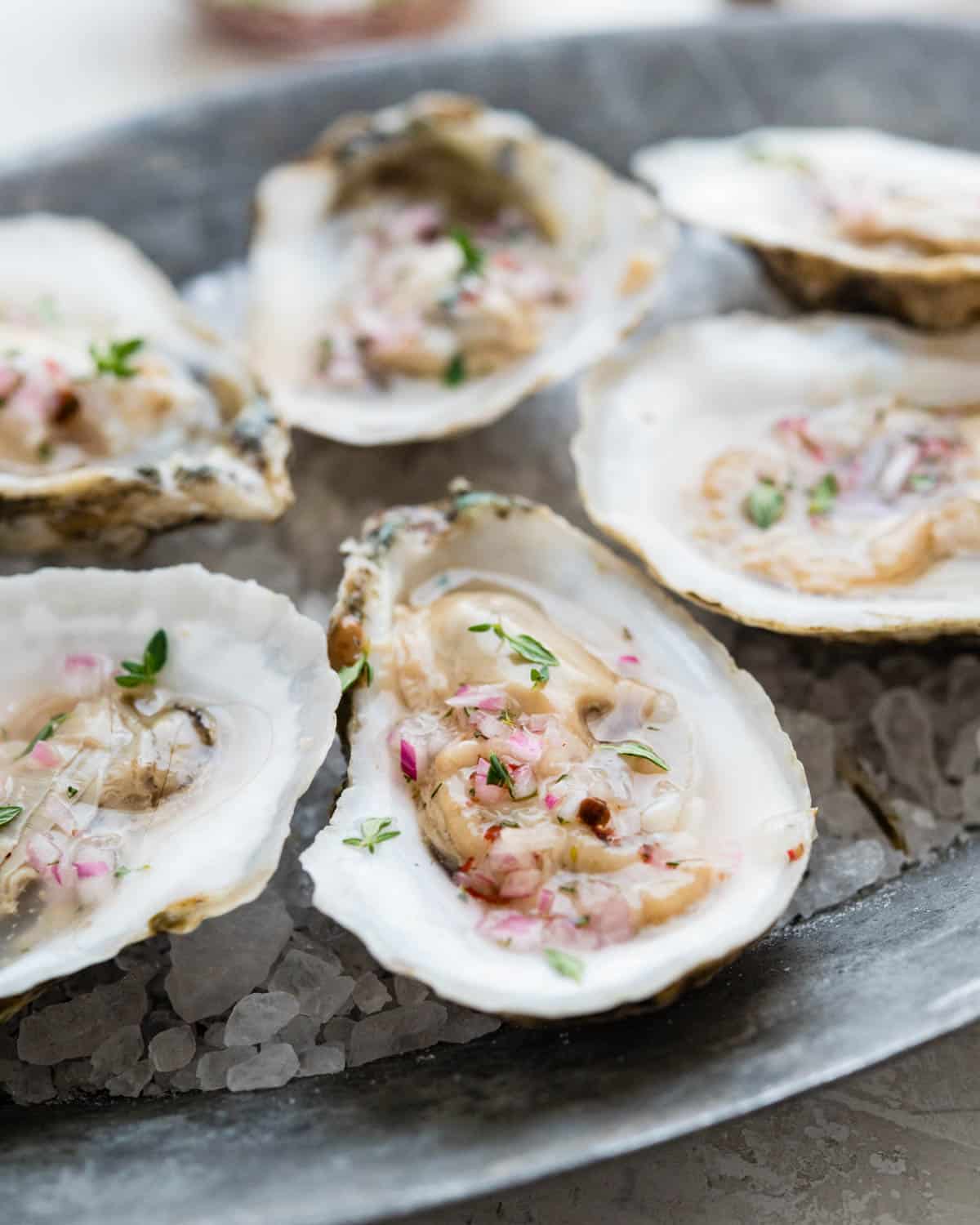
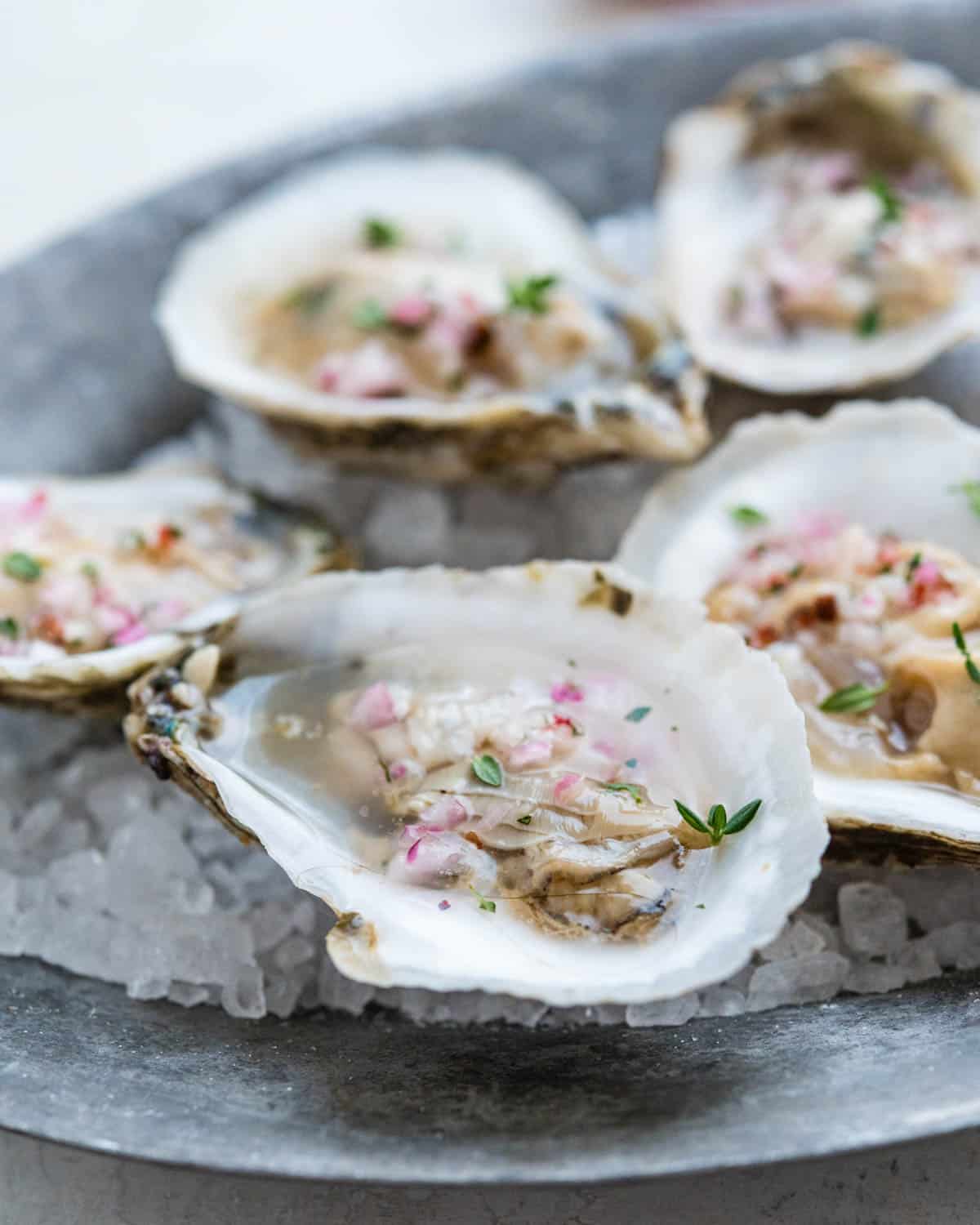
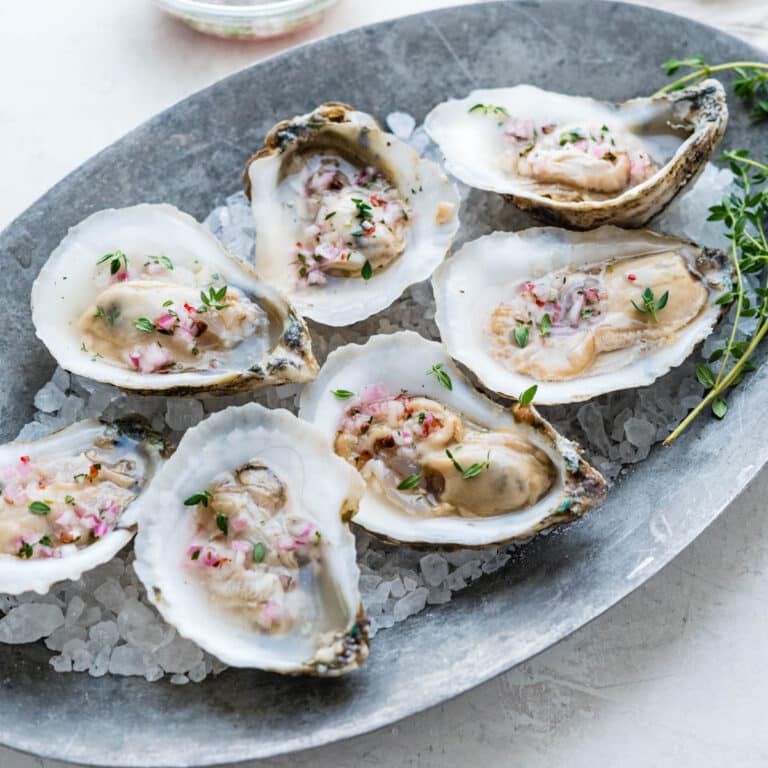
Oysters on the half shell are raw oysters served in their bottom shell, chilled on ice, with whatever sauces you like alongside. No cooking involved — just shucking, chilling and serving. That’s the beauty of them.
If you want your oysters cooked, that’s a whole other (delicious) conversation. I’ve got recipes for chargrilled oysters, Oysters Rockefeller, smoked oysters and pan fried oysters oreganata if you want to go that direction.
But raw on the half shell? That’s where they are at their most pure — cold, briny and tasting exactly like the water they came from.
Why you can do this at home
- Raw oysters require almost no cooking skill–because there’s no cooking. What they do require is knowing how to buy them, store them and shuck them safely. Once you’ve got those three things down, the rest is just assembly.
- Know-how and the right tools–The shucking is the part that intimidates most people. It shouldn’t. You need the right tool, a cut-proof glove, a thick towel and a little patience the first few times through.
- The payoff–a platter of cold, briny oysters on ice with a bright mignonette — looks like something from a raw bar and costs a fraction of the price.
Want all of this in one place? Download my free Indispensable Oyster Guide — buying tips, storage guidelines, shucking techniques and bonus recipes in one easy reference you can pull up anytime.
How to buy oysters
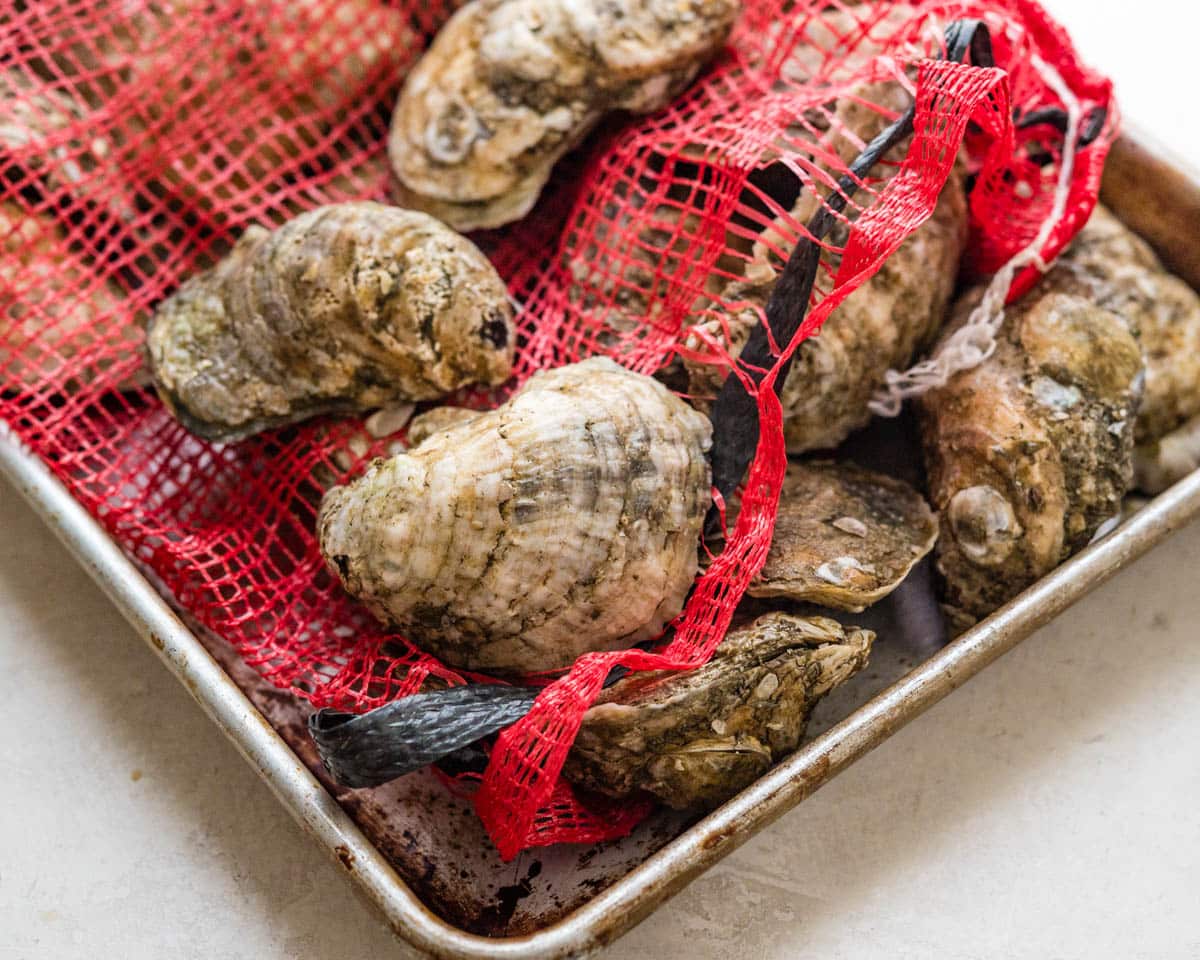
The best place to buy oysters is a fishmonger or seafood market with high turnover — you want to know those oysters haven’t been sitting around. I
f you don’t have a good local fish market, ordering online is a completely legitimate option. We get ours from Rappahannock Oyster Co., and they arrive in mesh bags packed in styrofoam coolers, cold and ready to go.
A few things to look for:
- They should smell like the ocean. Fresh, briny, clean. If they smell fishy or sulfurous, walk away.
- The shells should be closed — or close shut when tapped. An oyster that’s gaping open and won’t close is dead. Don’t buy it, don’t eat it.
- They should feel heavy. A light oyster has lost its liquor, which means it’s been sitting too long.
- How many to buy: Plan on 6 oysters per person as an appetizer, 12 if oysters are the main event. For a party spread where they’re one of several options, 4-6 per person is usually plenty — though in my experience, people always eat more than you expect.
- East Coast vs. West Coast oysters: This deserves its own section, and I’ll cover it further down — but the short version is that East Coast oysters tend to be brinier and more mineral, while West Coast varieties are creamier and sweeter. Both are excellent on the half shell; they just taste like different oceans.
How to store oysters:
Oysters are alive when you buy them, which means storage matters. The good news is they’re not as fragile as people think — handled correctly, they’ll keep for up to a week or more.
Do this:
- Store them cup-side down in a bowl, covered with a clean damp towel. Run the towel under cold water daily and wring it out — this keeps the oysters alive and fresh. Using this method you can keep them for up to a week, sometimes two.
- Keep them cold — between 35°-45°F, ideally in the coldest part of your fridge.
- Got a cold garage? My parents kept bushels of oysters in their Virginia garage during winter months when the temperature hovered around 40°F — they’d last several weeks to a month. Just make sure you actually know the temperature. No guessing.
Don’t do this:
- Don’t submerge them in fresh water — it will kill them.
- Don’t store them in an airtight container — they need to breathe.
- Don’t rest them on melting ice — pooling fresh water has the same effect as submerging them.
Once they’re shucked: Shucked oysters should be eaten immediately or used in a cooked recipe. Don’t eat raw shucked oysters that have been sitting in the refrigerator for several days — cook them instead. Try Deep Fried Oysters with Remoulade.
If an oyster is gaping open before you shuck it and won’t close when tapped, it’s dead. Toss it.
Ingredients:
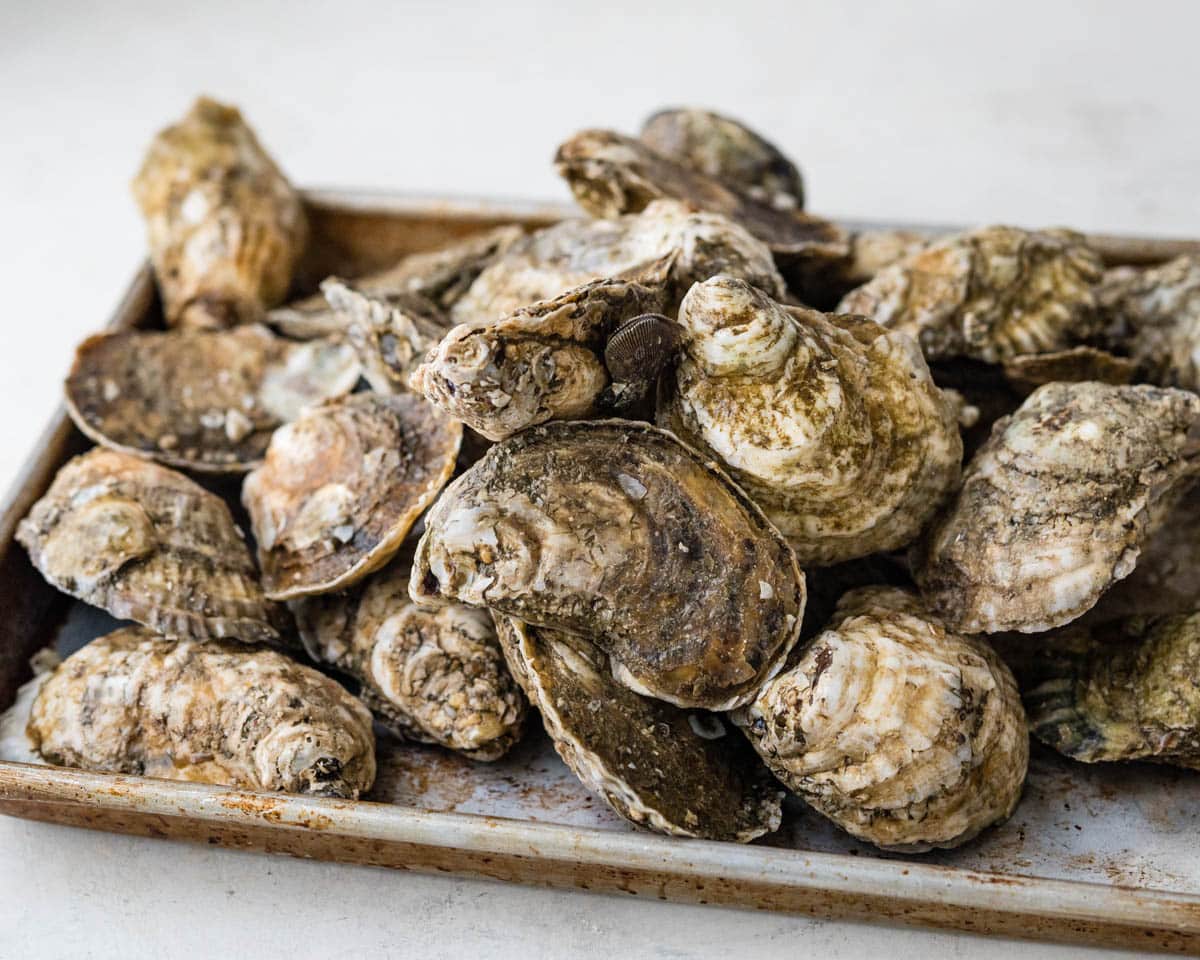
What you’ll need for the oysters:
- Fresh oysters in the shell (see buying guide below).
- Crushed ice or rock salt for serving.
- A rimmed platter or serving tray (the ice will melt, and you don’t want it running all over your table).
- Oyster knife–(or shucker).
- Cut resistant glove with a rubber grip for no-slip confidence.
- Kitchen towel –not one of your good ones.
This post contains affiliate links. If you buy something through my links, you’ll pay no more and I make a small commission — which helps keep Garlic & Zest going. I only recommend things I actually use.
What you’ll need for the mignonette:
- Shallot – a cross between onion and garlic, this punchy allium gives a fresh bite to the mignonette recipe.
- Whole Pink Peppercorns – when crushed these pretty pink peppercorns add a fruity peppery quality to the oyster mignonette.
- Champagne Vinegar – is softer and lighter than other vinegars but brings a bright tangy quality to the oyster sauce recipe.
- Rice Wine Vinegar – made from rice fermented into wine, and then to vinegar, it adds a clean, bracing flavor to the mignonette recipe.
- Sugar – you don’t need much sugar, but a little takes the sharp bite out of the mignonette.
- Kosher Salt – I recommend Diamond Crystal kosher salt, which is less salty by volume than Morton’s.
- Fresh Thyme Leaves – look for tender, bright green thyme as opposed to aged, green-gray leaves.
How to choose oysters for serving raw on the half shell:
- Go to a reputable fishmonger or order oysters online. We get our Chesapeake Bay oysters from Rappahannock Oyster Co. (not an affiliate, just a fan). They come in mesh bags packed in styrofoam coolers and are delivered between 35°-45°F.
- Other oysters to try are Atlantic Blue Point or Malpeques and Kumamoto, Hog Island Sweetwater, Olympia or other Pacific oysters,
- Oysters should have a fresh, briny smell, like the ocean. Any unpleasant odor from a bivalve may mean it’s dead and should be discarded.
- Try to find smaller oysters that come from colder waters for this preparation. I prefer to use the Gulf oysters for cooked recipes, as they tend to be larger.
- Raw oysters are alive, and sometimes their shells will crack open just slightly; however, when you touch them, the mollusk inside will tighten up, and the shell will close. If you have an oyster whose shell remains open, even after being handled, it has likely died and should be discarded.
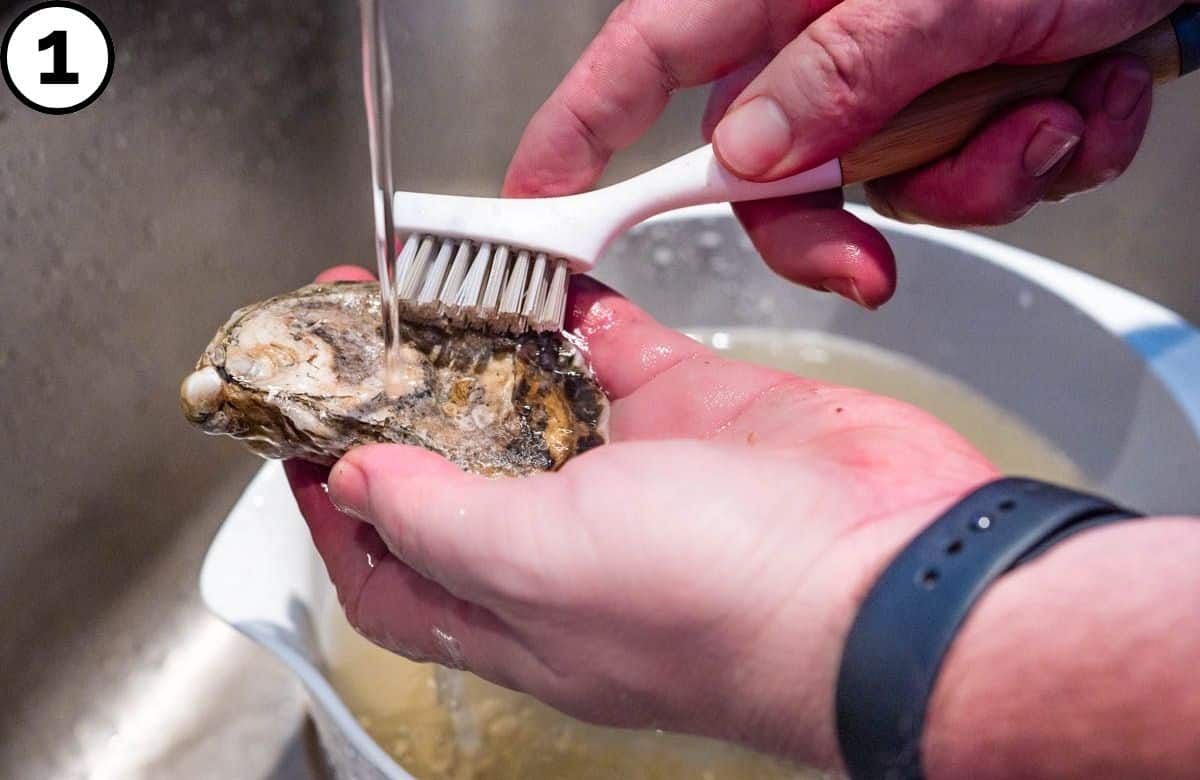
Oysters live clustered together in the silty bottom of salty and brackish waters. Consequently, when they’re harvested, the shells can be caked with mud and detritus and they need to be well cleaned, especially if you’re serving raw oysters on the half shell. No one wants a mouth full of silt.
1. How to clean oysters to serve on the half shell
- First, check to see that the oyster has closed its shell tightly, to indicate that it’s fresh and alive.
- Run cold, fresh water over the oyster and use a hard-bristled brush to remove any sand, caked-on dirt or grime. Rinse several times with cold running water to be sure you’ve removed all the grit.
- Continue in this fashion until you’ve cleaned the oysters you will eat. Do not clean any oysters that you’re saving for later. They don’t need the trauma.
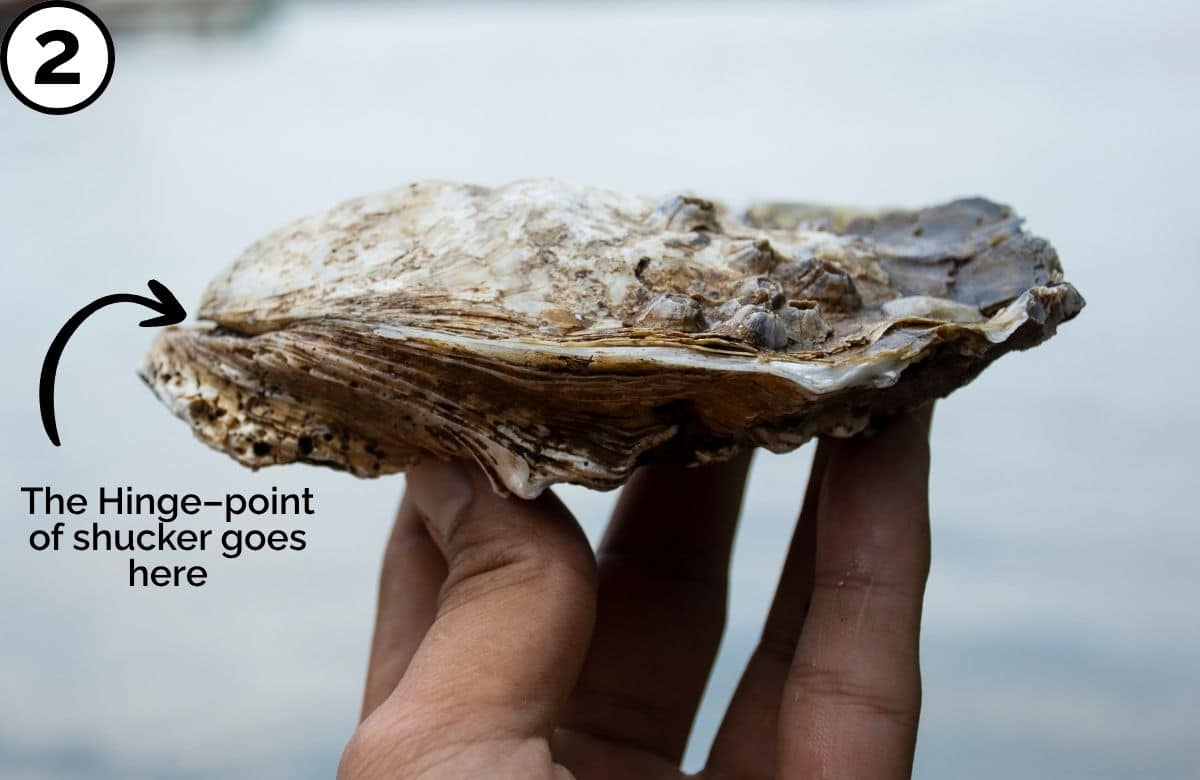
2. Find the hinge
Before you start, get familiar with your oyster. Hold it cup-side down and flat-side up — this is important. The cup holds the oyster liquor, and if you flip it the wrong way you’ll lose it before you even get the shell open.
Look for the hinge — the narrow pointed end where the two shells meet. That’s where your knife goes in. Not the wide end, not the side — the hinge.
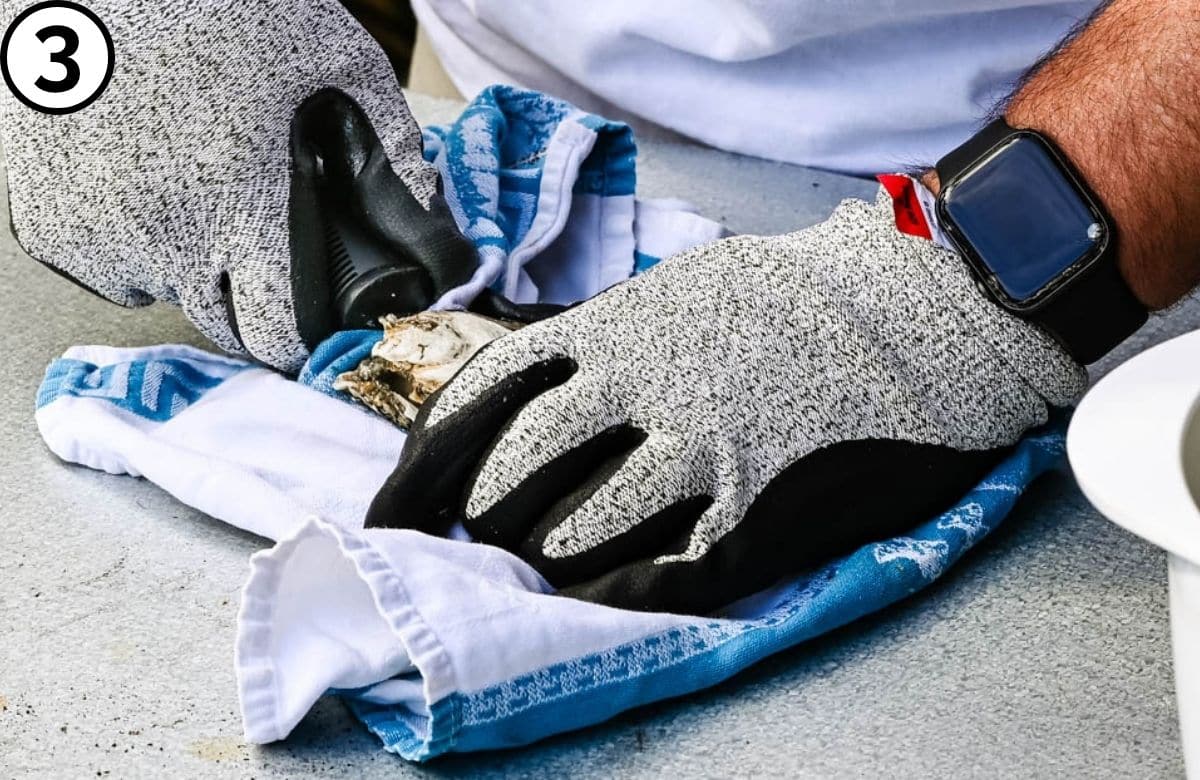
3. Insert the knife (oyster knife, not a household knife)
Grip the oyster firmly in your towel-wrapped hand, cup-side down. Place the tip of your oyster knife at the hinge and apply firm, steady pressure — you’re working the tip into the tiny gap between the two shells.
This may take a few tries, especially the first time. Don’t force it straight in — it’s more of a wiggle and twist than a stab. You’ll feel it give when the hinge pops.
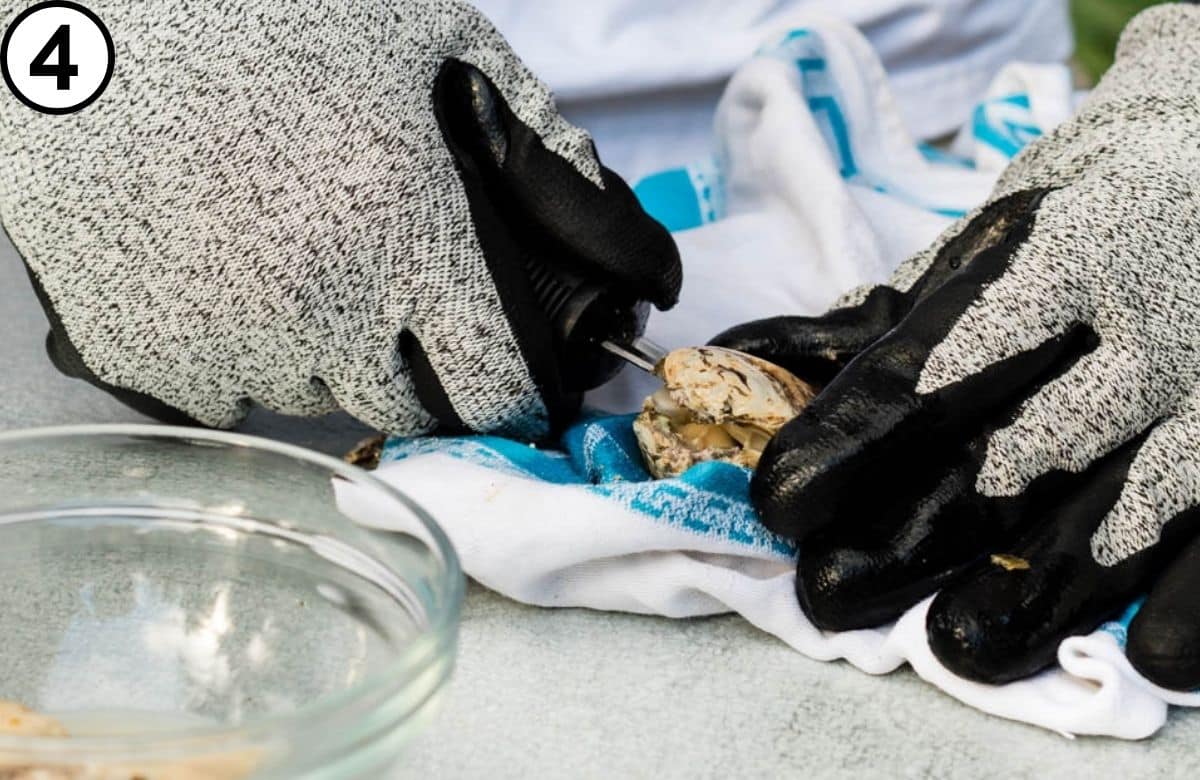
Step 4: Twist to Break the Seal
Once the tip is seated in the hinge, twist the knife like you’re turning a key. You’ll hear and feel a small pop — that’s the seal breaking. Don’t pry yet, just twist until the shells separate slightly.
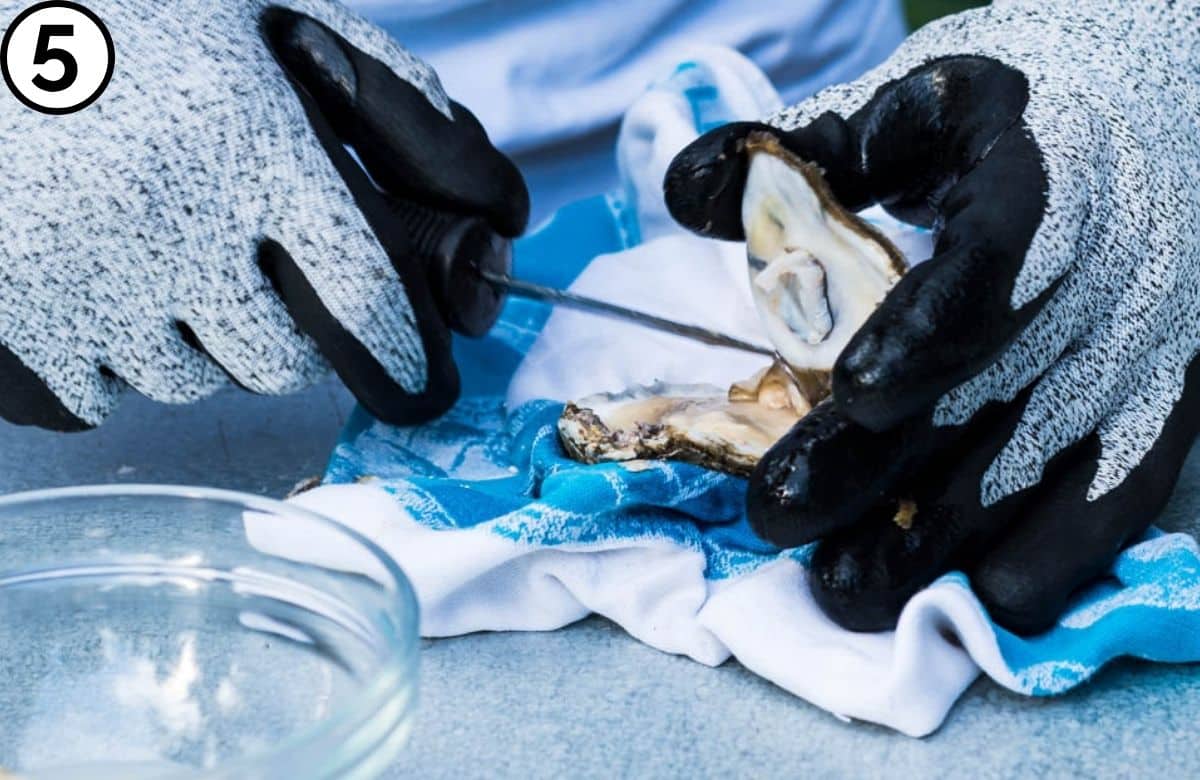
Step 5: Open the Shell and Disconnect the Muscle
Wipe the blade on your towel before going any further — this removes any shell fragments that could end up in the oyster–’cause they’re not good to eat.
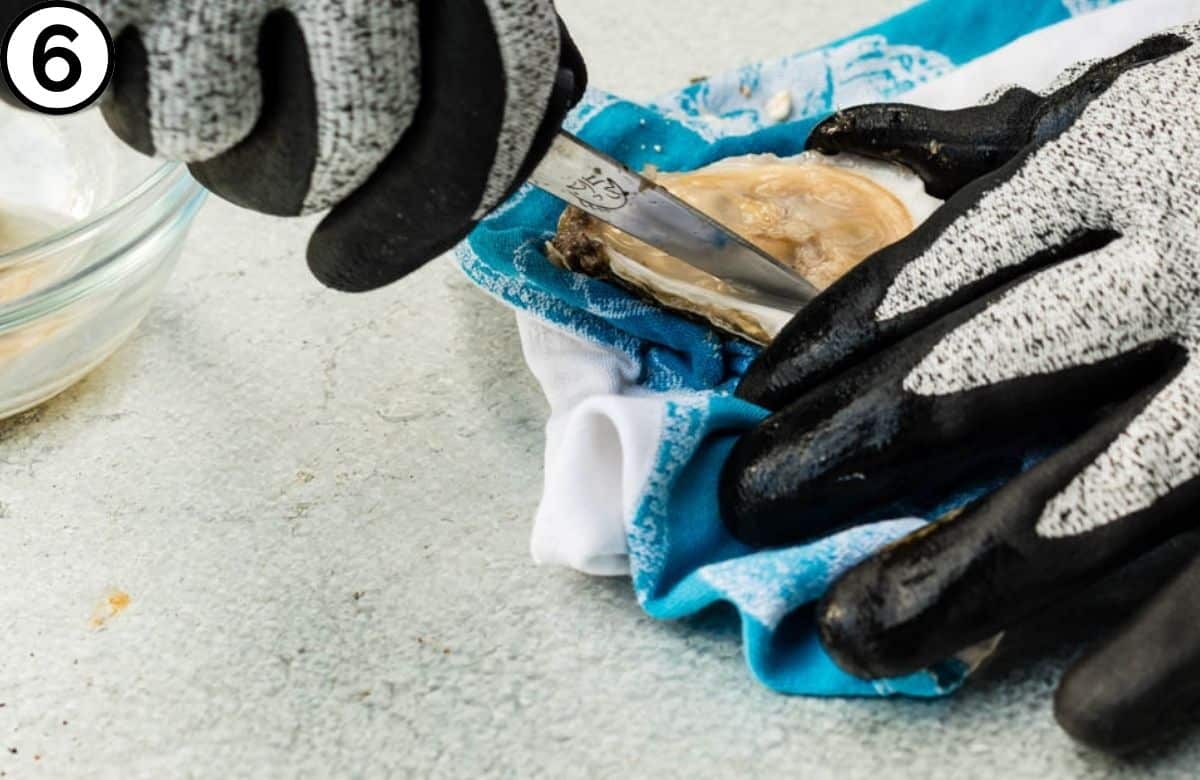
Slide the knife along the inside of the flat top shell, keeping the blade parallel to the shell to disconnect the adductor muscle. This is what’s holding the two shells together. Once it’s released, lift off the flat shell and discard it.
Free the oyster
Slip the knife beneath the oyster and run it along the bottom of the cup to sever the muscle holding it in place. This is the step most people skip — and then wonder why the oyster won’t slide off the shell cleanly.
Take care to keep the blade level so you don’t spill the liquor. When it’s done right, the oyster should slide freely in its shell, liquor intact, ready to tip straight into your mouth.
How to serve oysters on the half shell
Once your oysters are shucked, the goal is simple — keep them cold and get them to the table.
- Crushed ice works, but shaved ice is better. Shaved ice molds around each shell precisely, keeping every part of the oyster equally chilled — not just the bottom. If you have access to shaved ice, use it.
- Rock salt works in a pinch and won’t melt, but it won’t keep things as cold.
- Arrange the oysters on the ice on a rimmed platter, set your sauces alongside, and let people dress their own.
Pro-Tips:
- If you’re shucking them before guests arrive, refrigerate them for up to an hour or so until you’re ready to serve.
- Don’t dress the shucked oysters with the champagne mignonette until just before you eat them.
- Don’t stretch yourself thin. Until shucking becomes second nature, keep your crowd small — 2 to 4 people is plenty. Think of it as an amuse bouche, not a main event. There’s no shame in starting small, and nobody’s having fun if the host is sweating over a pile of oysters while everyone waits.
Want all of this in one place? Download my free Indispensable Oyster Guide — buying tips, storage guidelines, shucking techniques and bonus recipes in one easy reference you can pull up anytime.
How to make the mignonette:
Mignonette is a classic French oyster sauce — and one of the simplest things you’ll ever make. It’s just vinegar, shallot, peppercorns and herbs, but the combination is bright, sharp and perfectly suited to a cold raw oyster.
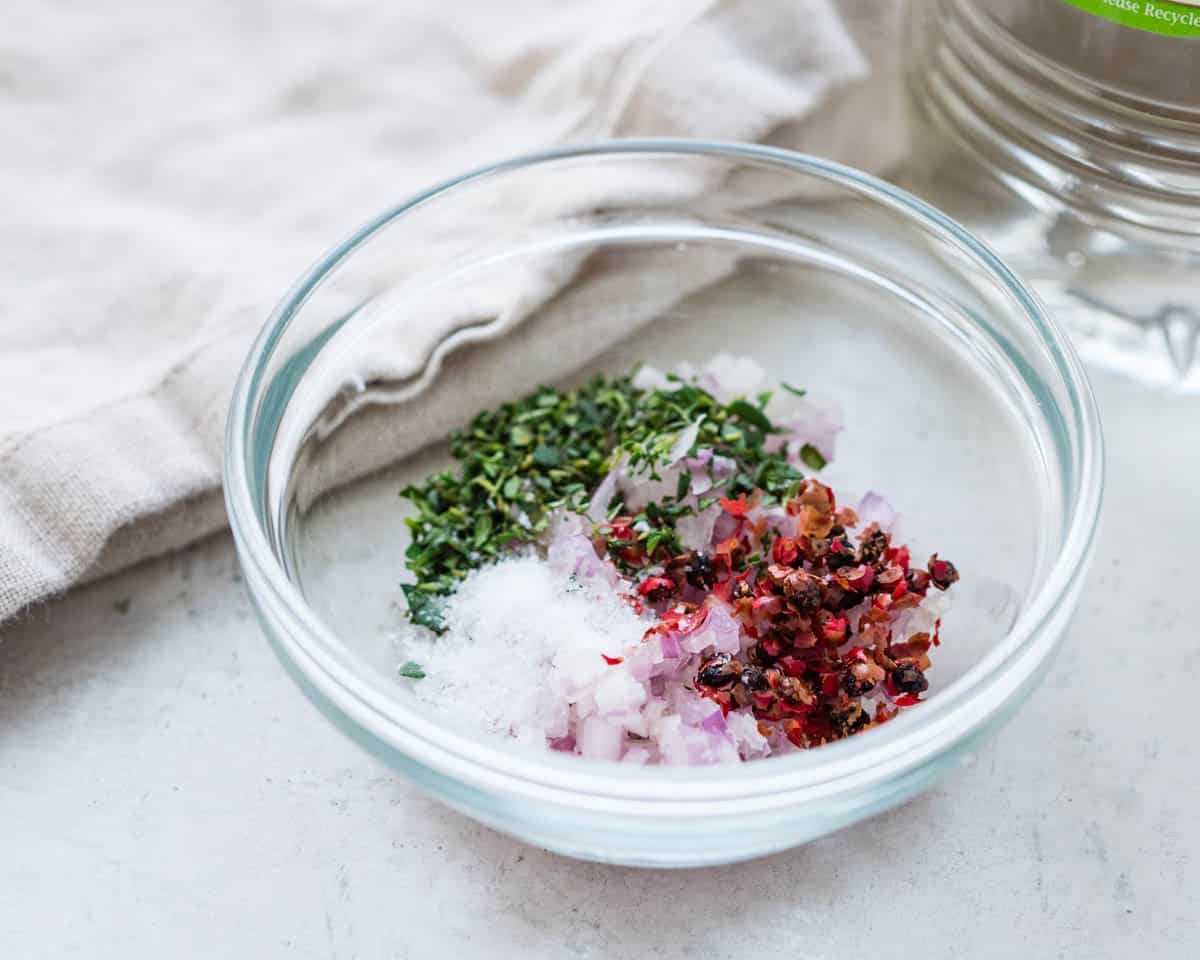
Step 1: Combine the dry ingredients Add the shallot, crushed pink peppercorns, thyme, sugar and salt to a small bowl. Give it a quick stir to distribute everything evenly.
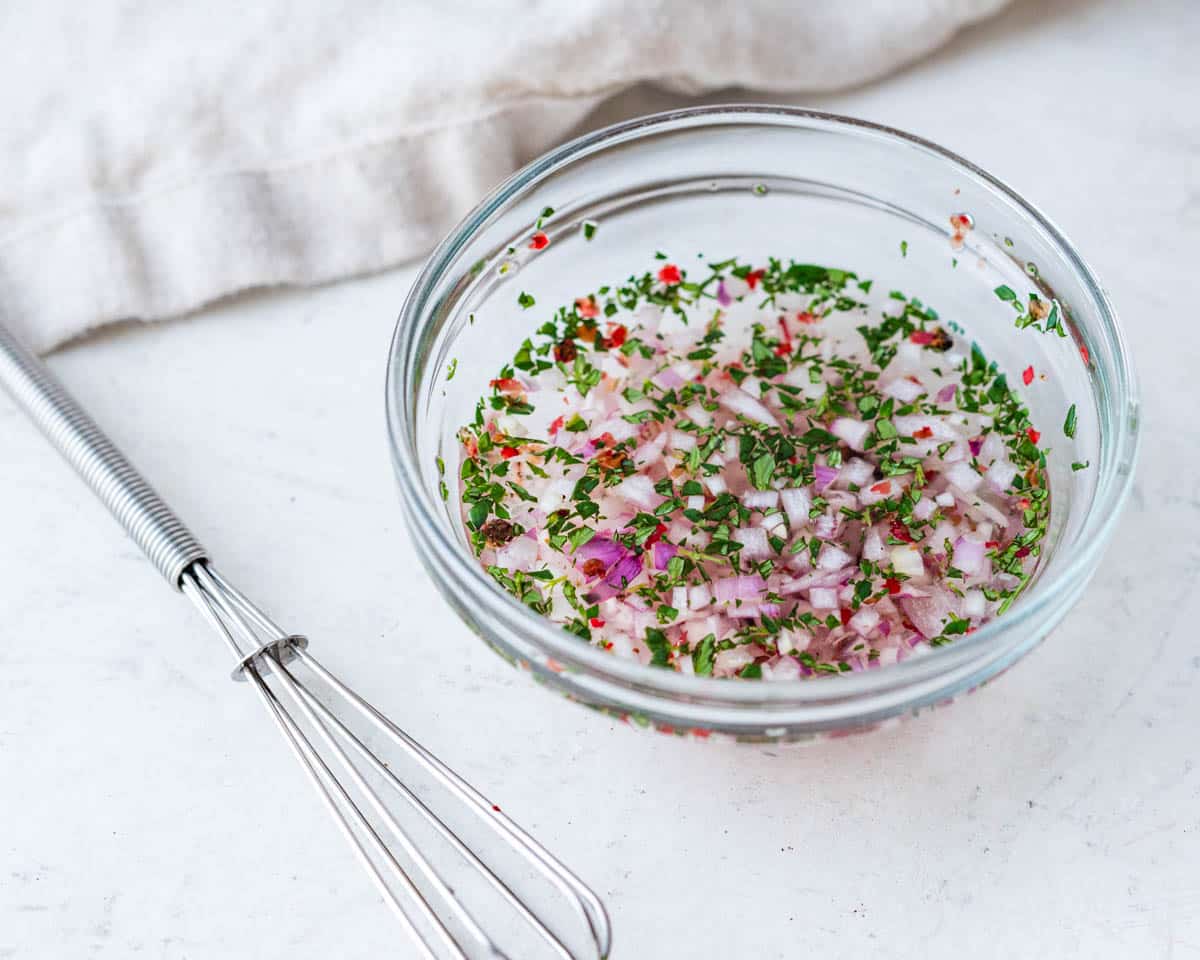
Step 2: Add the vinegar Pour in the champagne vinegar and rice wine vinegar and stir until the salt and sugar are fully dissolved. That’s it. You’re done.
The mignonette will keep in the refrigerator for up to a week, and honestly gets better after a day as the shallot mellows into the vinegar. Make it ahead if you can.
Variations:
- Swap the vinegar: No champagne vinegar? Red wine vinegar or white wine vinegar both work well as substitutes. The flavor will be slightly sharper but still delicious.
- Keep it simple: A squeeze of fresh lemon over a cold oyster is all some people want — and honestly, it’s hard to argue with. Have lemon wedges on the table regardless of what else you’re serving.
- Add a cocktail sauce: Set out a small dish of ketchup and fresh or prepared horseradish alongside the mignonette. Or make a quick cocktail sauce by combining ⅓ cup ketchup with a heaping tablespoon of prepared horseradish, a squeeze of lemon and a few dashes of Worcestershire. Two minutes, done.
- Hot sauce: A few drops of your favorite hot sauce — Crystal is my pick — adds a tangy heat that plays nicely against the brininess of the oyster. Put the bottle on the table and let people decide for themselves.
FAQs
Shucked oysters last for up to 5 days. However, I consume raw oysters the day — if not the hour — they are shucked.
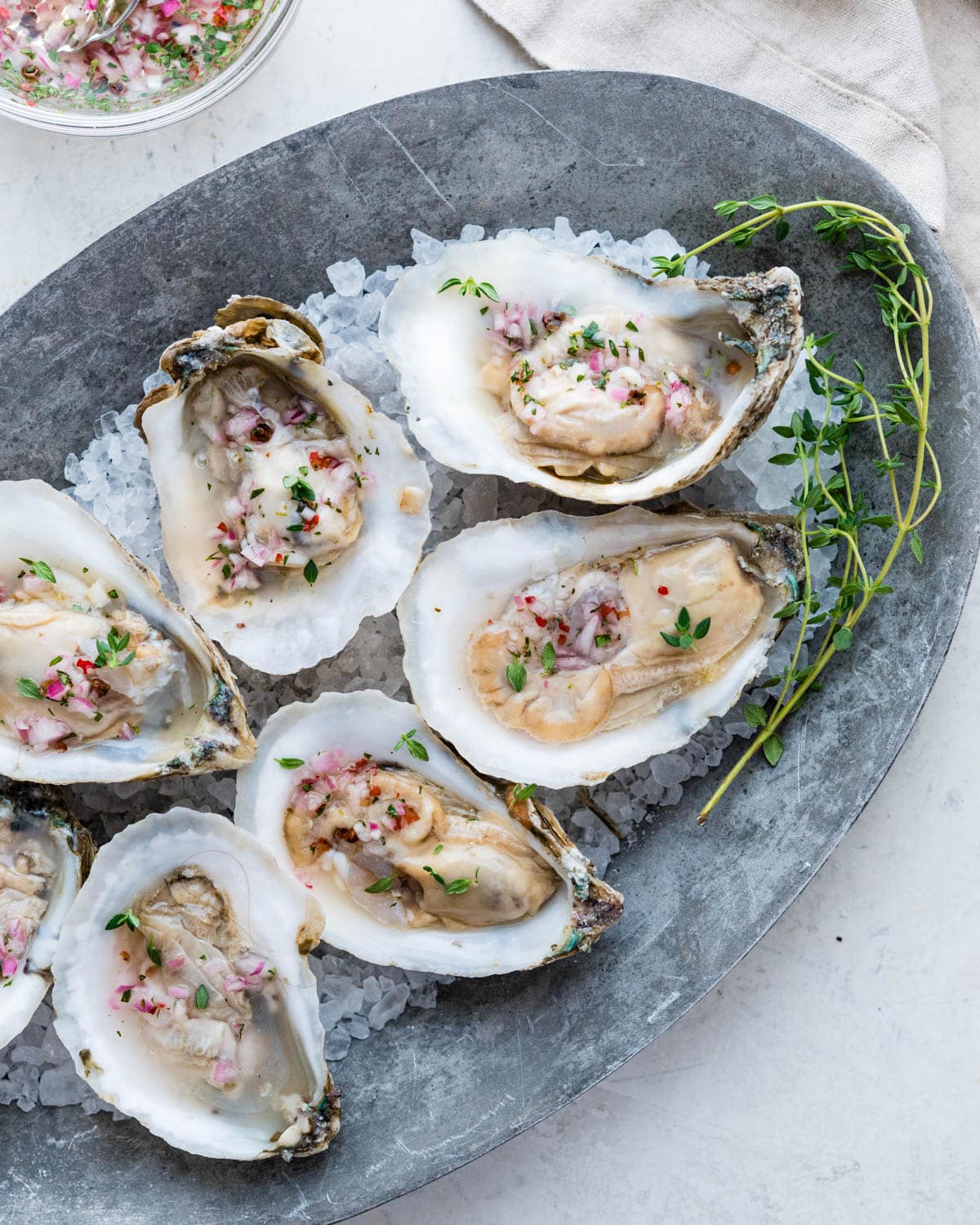
They are typically served on a bed of ice or rock salt to hold them upright and prevent the liquor from leaking out. Top the oyster with mignonette sauce or other condiments, tip the shell to your mouth and slurp the oyster out.
Many people swallow them whole, but if you want to experience the full briny flavor, give them a few chews before swallowing. You’ll taste more that way.
Cold, briny and fresh — like a sip of clean seawater with a mineral finish. East Coast oysters tend to be saltier and more assertive; West Coast oysters are creamier and sweeter. Both are excellent raw.
Plan on 6 per person as an appetizer, 12 if oysters are the main event. For a party spread where they’re one of several options, 4-6 per person is usually enough — though in my experience people always eat more than you expect.
Yes, when purchased from a reputable source and kept properly refrigerated. Look for oysters with a current harvest tag from your fishmonger. People with compromised immune systems, liver disease or who are pregnant should avoid raw shellfish.
The natural liquid inside the shell — it’s not added water, it’s produced by the oyster itself. It’s briny, slightly sweet and full of flavor. Losing it when you shuck is a shame, which is why keeping the oyster cup-side down throughout the process matters.
Crisp, dry whites are the classic pairing — Muscadet, Chablis, or a dry Champagne or Prosecco. The acidity mirrors the mignonette and cuts through the brininess beautifully. A cold lager works too if wine isn’t your thing.
Yes — an oyster knife is not optional. A regular knife can slip and cause a serious injury. A basic oyster knife costs $10-15 and is worth every penny. See my affiliate link above for my favorite oyster shucker.
East Coast vs. West Coast–what’s the difference?
Not all oysters taste alike — and if you’ve ever had a Kumamoto from the Pacific Northwest and a Blue Point from Long Island in the same sitting, you know exactly what I mean. Where an oyster grows determines almost everything about how it tastes.
East Coast oysters tend to be brinier, more mineral and firmer in texture. The cold, salty waters of the Atlantic produce an oyster that tastes assertively like the sea. Some of my favorites:
- Chesapeake Bay — where I grew up. Medium brine, clean finish, deeply familiar to me
- Blue Point (Long Island, New York) — classic, reliable, medium-briny
- Wellfleet (Cape Cod, Massachusetts) — intensely briny, firm, a raw bar staple
- Malpeque (Prince Edward Island, Canada) — clean, light brine, slightly sweet finish
West Coast oysters grow in cooler, nutrient-rich Pacific waters and tend to be creamier, sweeter and more delicate — with flavor notes that lean toward cucumber, melon or butter rather than straight brine. Some favorites:
- Kumamoto — small, deep-cupped, buttery and sweet. A great entry point for oyster newcomers
- Hog Island Sweetwater (Tomales Bay, California) — creamy, mild, slightly sweet
- Olympia (Washington State) — tiny, intensely flavored, a Pacific Northwest original
Gulf oysters are larger, milder and softer than either coast — IMO better suited to cooking than eating raw, though plenty of people enjoy them on the half shell too.
Which should you buy? For raw oysters on the half shell, I lean East Coast — the brine and minerality are what I grew up with and what I love. But if you’re new to raw oysters, a West Coast variety like Kumamoto is a gentler introduction. Less intimidating, more approachable — and genuinely delicious.
If you’ve caught the oyster bug, you’re in good company. Check out my complete oyster recipe guide for every preparation from raw to chargrilled to smoked.
What to serve with oysters on the halfshell:
Raw oysters on the half shell are a natural starter — elegant enough to set the tone for a special meal, casual enough for a backyard gathering with cold drinks. Here’s what works well alongside them:
As part of an appetizer spread:
- Smoked Salmon Canapés
- Grilled Shrimp Cocktail
- Oyster Shooters — for the adventurous
As a first course before:
- Grilled Snapper or seafood
- A simple roasted chicken
- Grilled Flank Steak — the contrast of cold, briny oysters before a rich, charred piece of meat is a classic for a reason
Drinks: Crisp, dry white wine is the classic pairing — Muscadet, Chablis or a dry Champagne. A cold lager is equally good and honestly more backyard-appropriate. If you want to lean into the occasion, Oyster Shooters with vodka and cocktail sauce are festive and fun.
More appetizer oyster recipes you’ll love:
- Citrusy Grilled Oysters–how we make ’em in Florida.
- Oysters Bienville–a New Orleans classic.
- Classic Oyster Stew –more of a soup starter than a stew.
Oysters on the Half Shell with Mignonette
SPECIAL EQUIPMENT:
- 1 Level 5 Cut Resistant Gloves preferably with nitrile, non-slip grip
- a clean dishtowel to rest the oysters on so they don't slip off the work surface.
INGREDIENTS:
- 1 shallot finely minced
- 1 teaspoon pink peppercorns crushed with a mortar and pestle or pulsed in a coffee grinder
- 4 tablespoons champagne vinegar
- 4 tablespoons unseasoned rice wine vinegar
- ½ teaspoon sugar
- ¼ teaspoon kosher salt
- 1 teaspoon fresh thyme leaves minced
- 3 dozen oysters shucked, on the half shell
ADDITIONAL OYSTER TOPPINGS AND SIDES:
- fresh lemon wedges to squeeze over the seafood
- horseradish freshly grated or from a jar.
- tomato ketchup (to mix with the horseradish for an impromptu cocktail sauce)
- your favorite hot sauce try Tabasco, Crystal's or your favorite brand.
- saltines
DIRECTIONS:
MAKE THE MIGNONETTE RECIPE:
- Before you start, don't forget to grab your free copy of The Indispensable Oyster Guide.
- Combine 1 shallot, 1 teaspoon pink peppercorns, 4 tablespoons champagne vinegar,4 tablespoons unseasoned rice wine vinegar, ½ teaspoon sugar, ¼ teaspoon kosher salt and 1 teaspoon fresh thyme leaves in a small bowl. Stir until sugar and salt are dissolved. Set aside.
SHUCK THE OYSTERS:
- Hold the oyster with a clean dish towel and insert the oyster knife into the hinge of the oyster, twist until it pops. Run the blade of the knife along the top and bottom of the shell to dislodge the oyster, being careful to preserve the liquor in the shell.
TO SERVE OYSTERS ON THE HALF SHELL:
- Line a serving platter with crushed ice. Nestle the oysters in the ice to keep them chilled and upright so you don't lose any oyster liquor.
- Another option for serving is using a bed of rock salt. The coarse salt will create a shallow cavity to hold the oysters upright so the liquid doesn't leak. However, it won't keep the oysters cold. I recommend using this for smaller quantities of a dozen or fewer so they can be eaten quickly.
- Spoon a little mignonette onto an oyster in its shell, or serve with other optional condiments.
RECIPE VIDEO:
NOTES:
NUTRITION:
Nutritional Disclaimer
Nutritional information is an estimate only and is provided as a courtesy. Values are calculated automatically based on the ingredients and quantities in each recipe and may vary depending on specific brands, exact measurements, and substitutions made. For precise nutritional guidance, especially if you have a medical condition or dietary restriction, please consult a registered dietitian or run the ingredients through your own nutrition calculator.Pin it for later!
Delish
I’d never shucked oysters before, and it took me a few tries to get the hang of it… Some of those suckers are tough to get open — but I dominated. Love the fresh mignonette — it’s tangy and bright and balances well with the raw oysters.
Love oysters and definitely will be a challenger for me but I will try to make them.
G’day All, your oysters look a touch different to ours but the anatomy is the same. To be a touch indelicate , yours look like they squeezed out of a ferrets bum !! When you open the oyster and free it from the adductor muscle use the blade to flip over the oyster. You should find it will be more attractive to the eye and a better presentation on the platter.
Bon Appetit !!!
From the Land Downunder !!
That is the funniest description! I’ll take your suggestions under advisement!
I am seriously not a sea food fan, but this looks amazing! Maybe, at some point in my life…I will allow this haha!
I know not everyone likes oysters — but for people who do — this is a classic!
These oysters look so tasty! I just might have to make them for Christmas!
I just received a shipment from Rappahannock Oyster Co. I’m so excited!!!!
I think my friends are gonna think I’m amazing if I serve these. You’re going to make me look LEGIT! 🙂 So beautiful and perfectly festive.
You are legit – and I’m sure you’re friends think so too!
I’ve never had oysters, so these sound like fun. Your presentation looks marvelous. Thanks for the recipe.
Debi – oysters are one of my all time favorites. Give ’em a try!
We too, served the same oysters with a mignonette sauce for Christmas; and are serving them “Rockefeller” style for New Year’s. Yum!
I live in Hampton, Virginia, and am thrilled with your regional recipes!
Wow! Small world! I’m glad you are enjoying them! I was thrilled to receive these oysters as a Christmas gift!