
Chicken Brine Recipe
Inside: How to make a basic wet brine — salt, sugar, peppercorns, bay leaf, water, ice — that you can use on chicken breasts, thighs, drumsticks, or wings, plus three ways to cook it once it’s brined: grilled, baked, or air-fried.
A chicken brine recipe is just a ratio you keep in your back pocket: salt and sugar dissolved in hot water, cooled down fast with ice, poured over chicken, and left alone for a couple of hours. That’s it. What you get back is chicken that seasons itself all the way through, not just on the surface, plus enough insurance against overcooking that a few extra minutes on the grill won’t ruin dinner. This brine recipe is sized for a pound or two of boneless, skinless chicken breasts, but the same brine works for thighs, drumsticks, or wings—more on timing for those below.
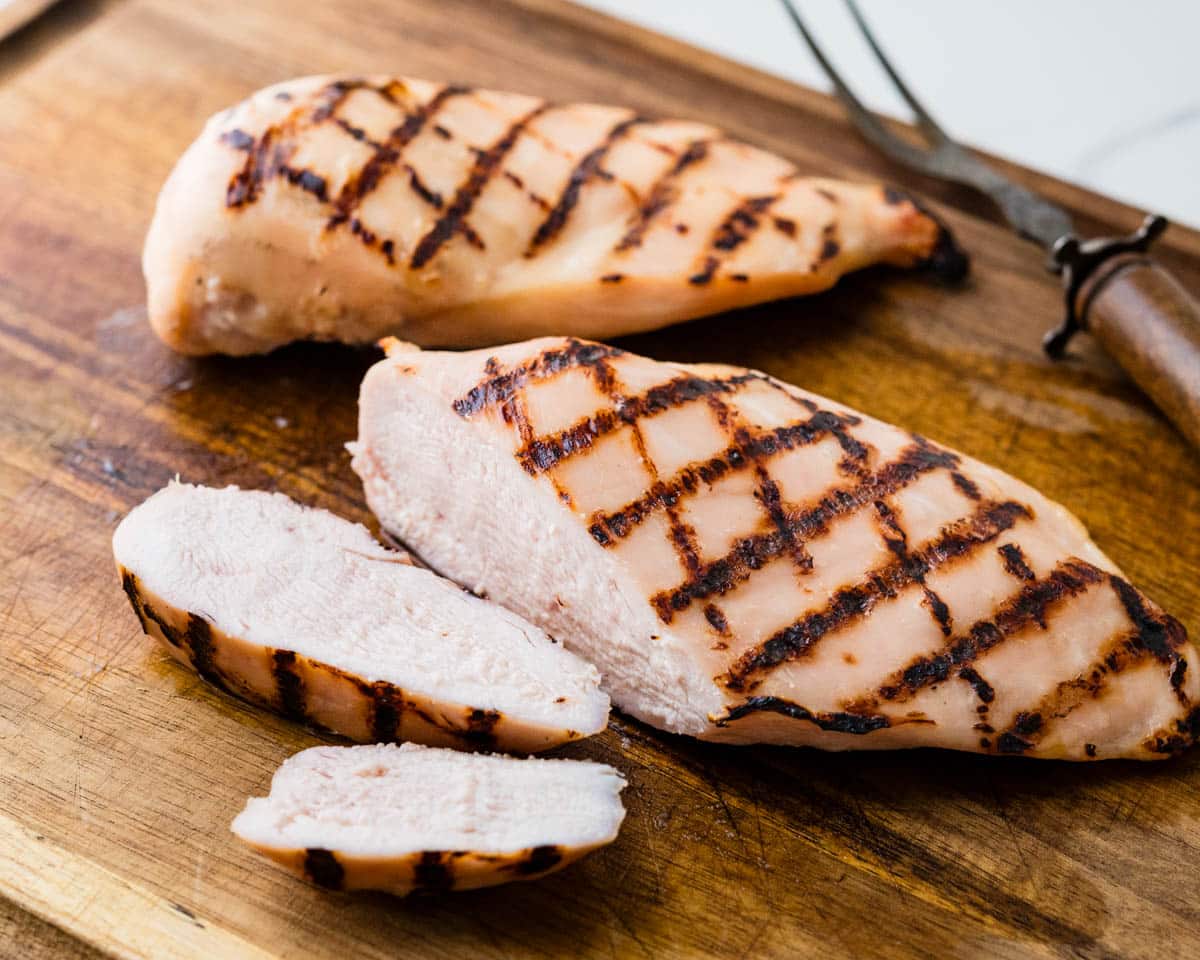
Brining works as salt moves into the meat and alters its proteins, helping them retain moisture so the cooked meat stays juicy and tender. I think of it not only as a failsafe againsty dry mealy chicken, but also as a flavor enhancer.
This same salt-and-sugar ratio is the base for a lot of what comes off my grill. If turkey’s on the menu, my Bourbon Turkey Brine scales it up for a whole bird, and my Pork Chop Brine Recipe uses the same basic technique on chops.
Why this recipe works:
- A brine you can scale by eye — the ratio here (roughly equal parts salt and sugar to water) holds whether you’re doing a pound of breasts or doubling it for a crowd.
- No specialty ingredients — kosher salt, sugar, peppercorns, a bay leaf. Nothing you don’t already have.
- Grill insurance — Chicken, especially boneless, skinless breasts, are notorious for being dry and sometimes mealy. This chicken brine recipe is the answer. It works beautifully on the grill, and you’ll also have success in the oven (baking or roasting) or even the air fryer.
- Built-in margin for error — brined chicken stays well-seasoned and holds its texture even if it’s on the heat a few minutes longer than planned.
- Works on all cuts — the same brine, in the same proportions, seasons everything from boneless skinless breasts to bone-in thighs, drumsticks, and wings; only the cooking times vary.
Chicken Brine Ingredients:
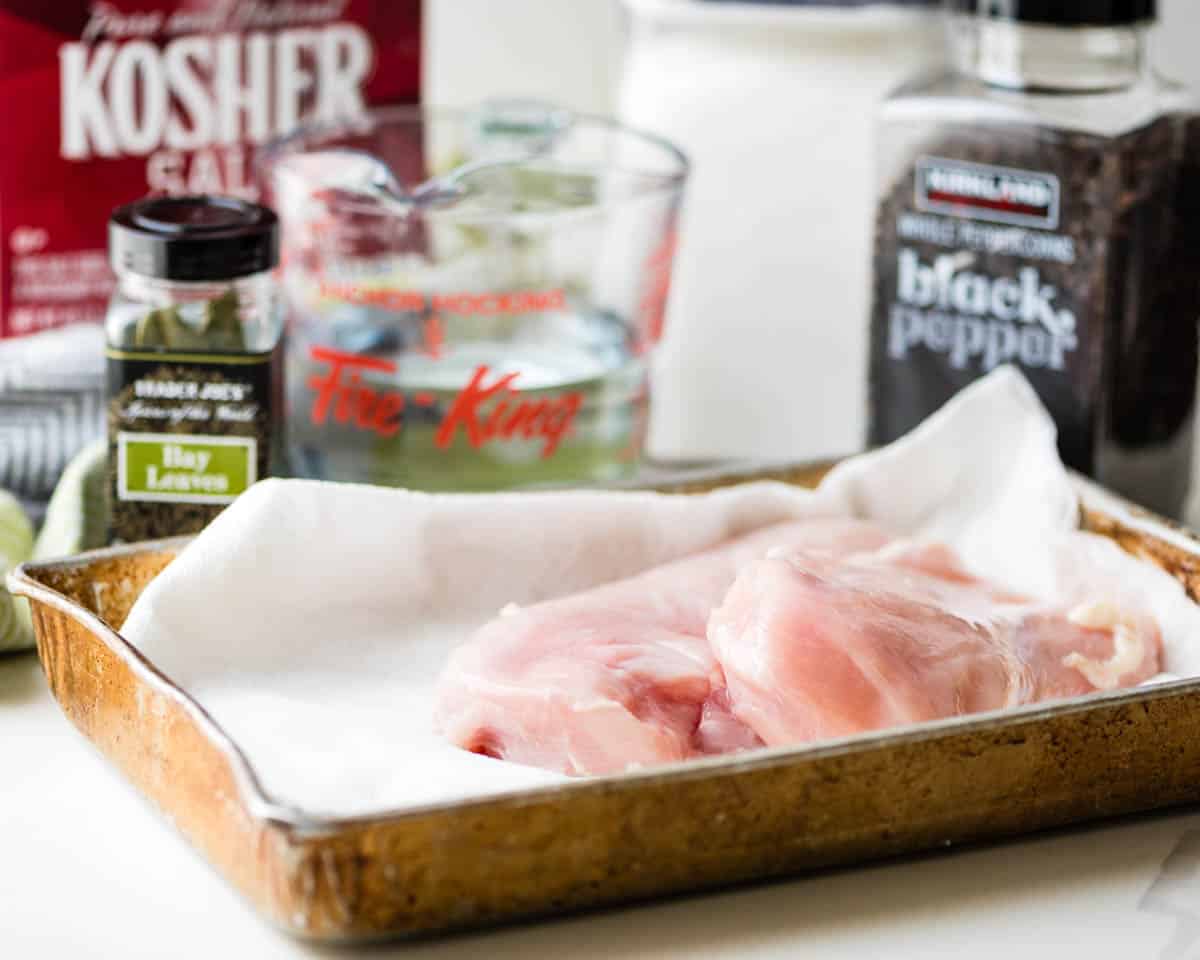
- Kosher Salt–Salt is a key component in a brine. I use Diamond Crystal, which is less salty by volume and also flakier than Morton’s; I find it dissolves quicker. Morton’s works fine too, just may take a bit longer to dissolve. Stick with kosher salt rather than table salt, which is denser and will oversalt the batch at the same measurement.
- Granulated Sugar–balances the salt and helps the exterior brown once it hits the grill, oven, or air fryer. You could also substitute brown sugar.
- Whole Peppercorns–background spice; they infuse the brine without turning it peppery; do not use ground pepper.
- Bay Leaf–adds subtle piney flavoring to the brine.
- Hot Water–If you have particularly hot tap water, you can use it; otherwise, heat water on the stove or microwave it for a few minutes until it’s steaming.
- Ice–to rapidly cool the chicken brine so you can add the protein. Never add raw protein to a hot brine; you’ll poach the chicken. It must be refrigerator temperature first.
- Cool Water–just enough to bring the brine level up to cover the chicken.
- Chicken–use boneless, skinless or bone-in, skin-on chicken breasts. This recipe also works for chicken pieces, such as thighs (with or without the bone and skin), drumsticks and wings.
Step-by-step instructions:
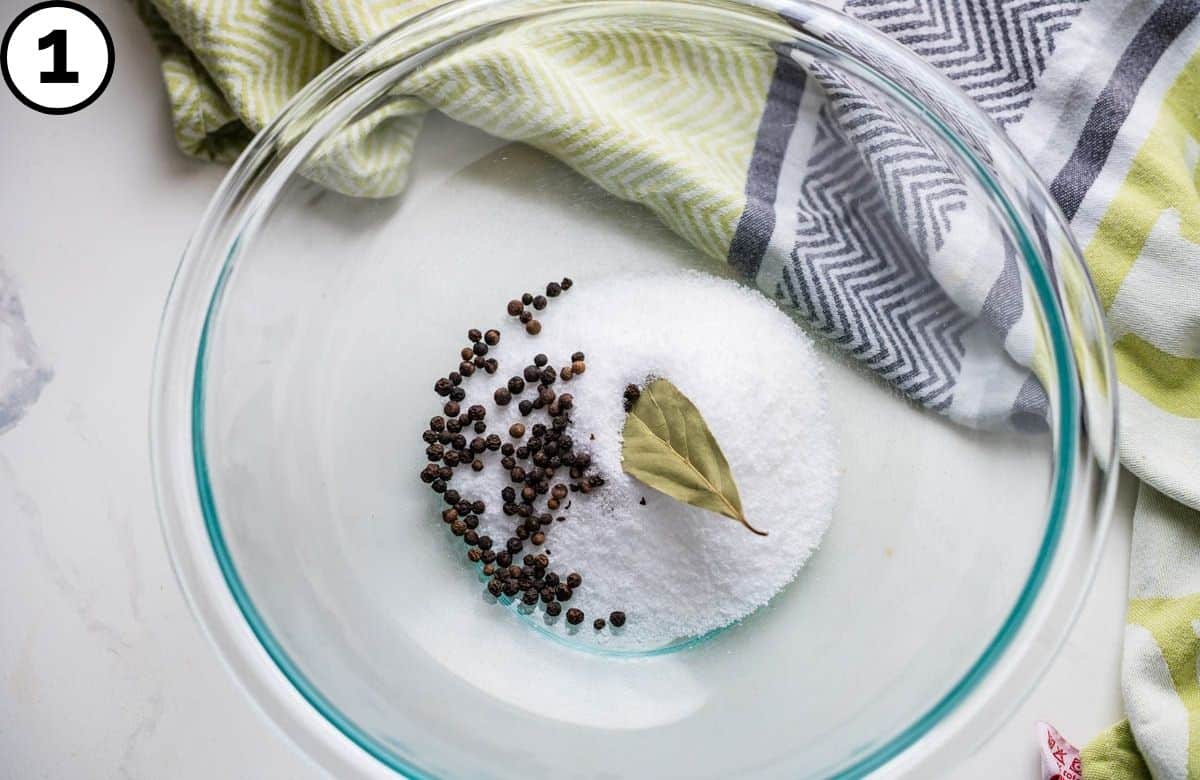
- Mix kosher salt, granulated sugar, black peppercorns and bay leaf in a mixing bowl.
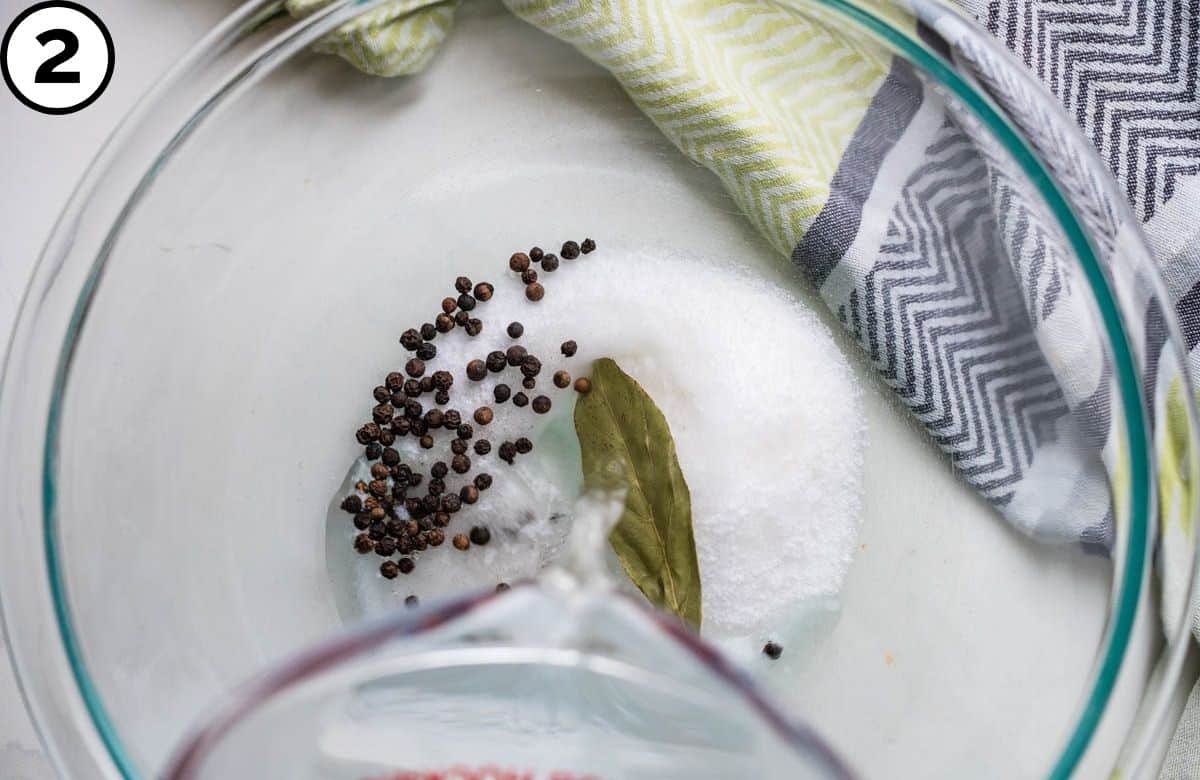
2. Pour boiling or hot water into the bowl.
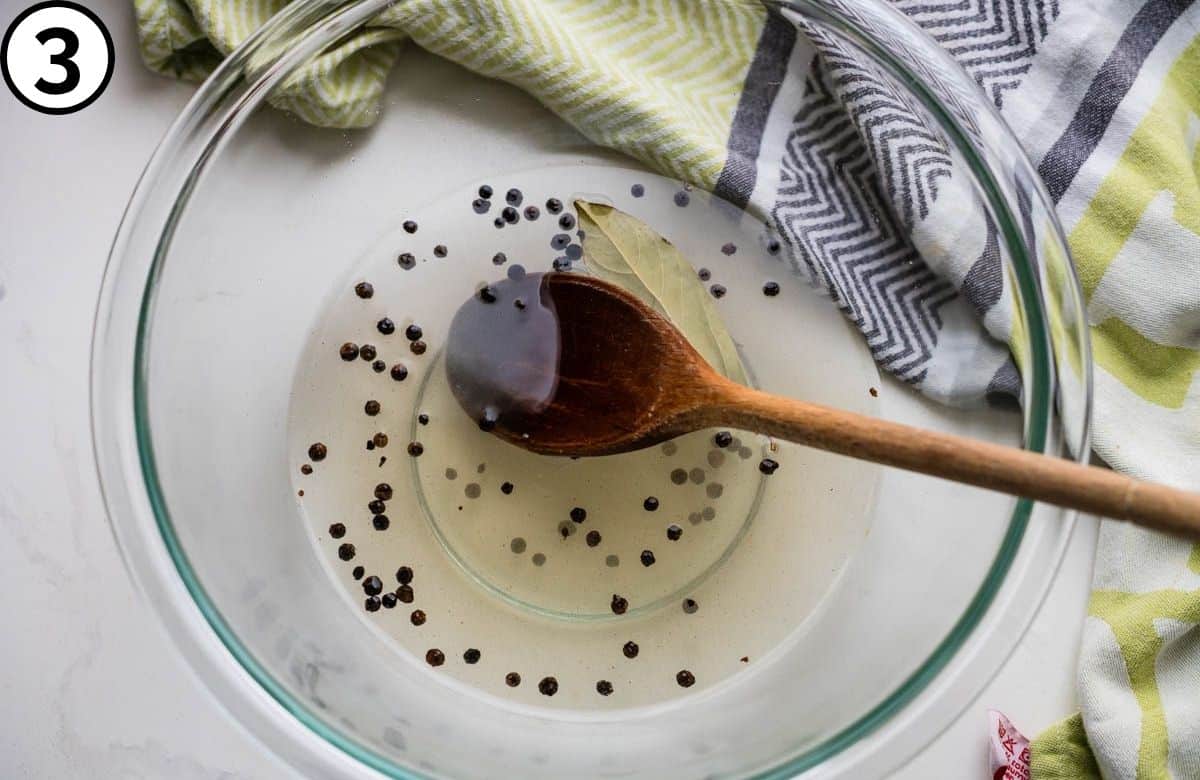
3. Stir until the salt and sugar dissolve completely.
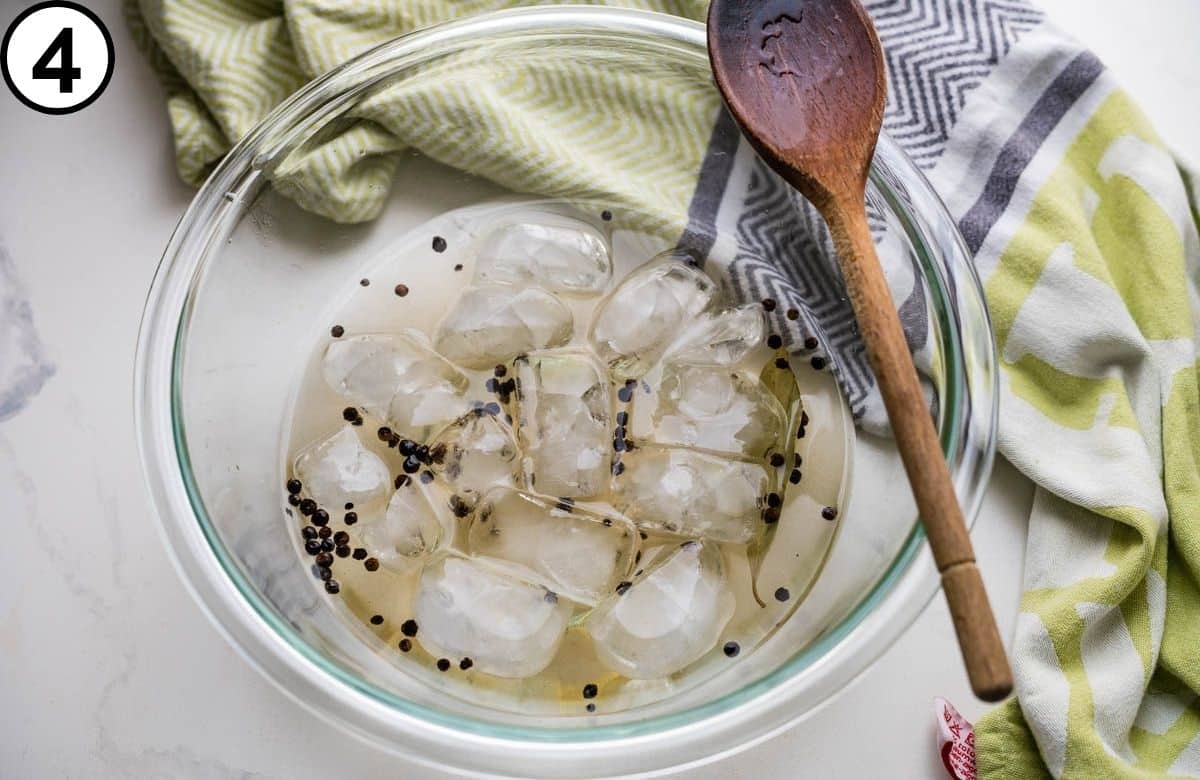
4. Add ice to the chicken brine and stir until it’s completely cold and most of the ice has melted.
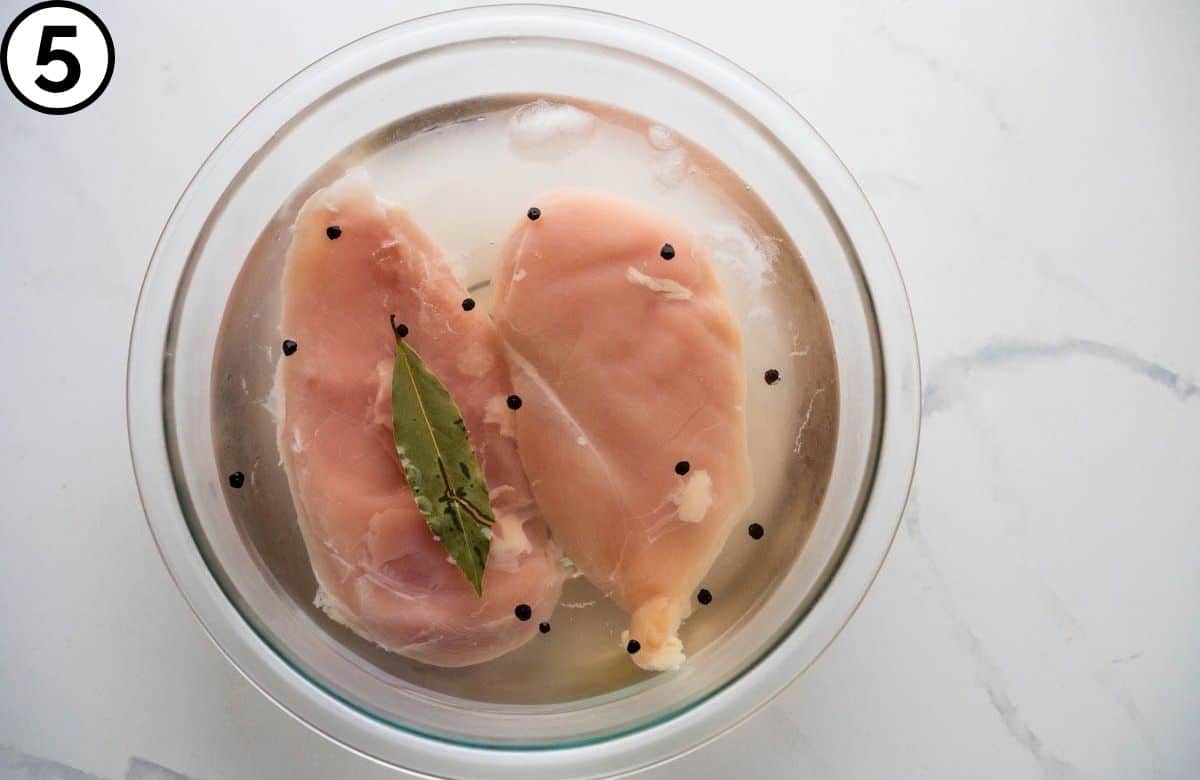
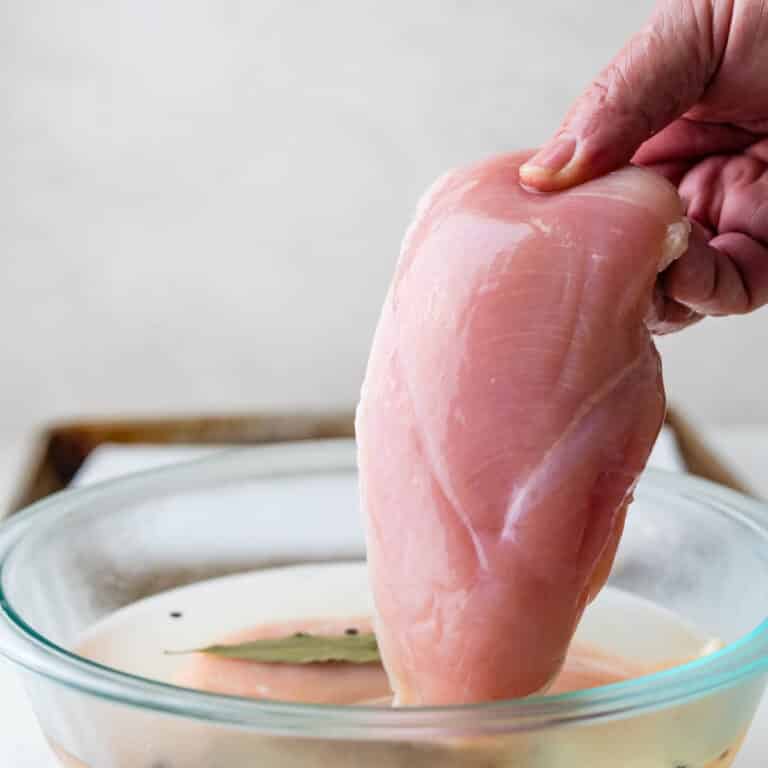
5. Add the chicken breasts or pieces to the brine so that they’re submerged. Transfer to the fridge for 2 hours.
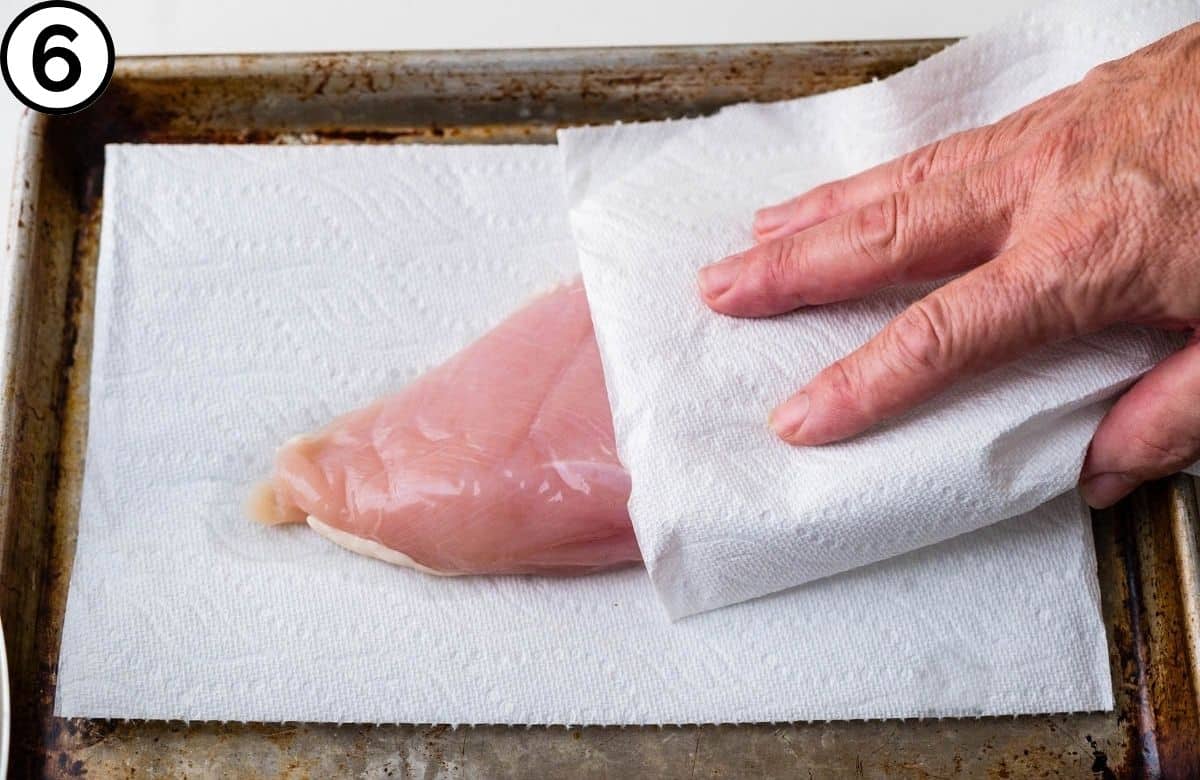
6. After brining, pat the chicken dry with paper towels.
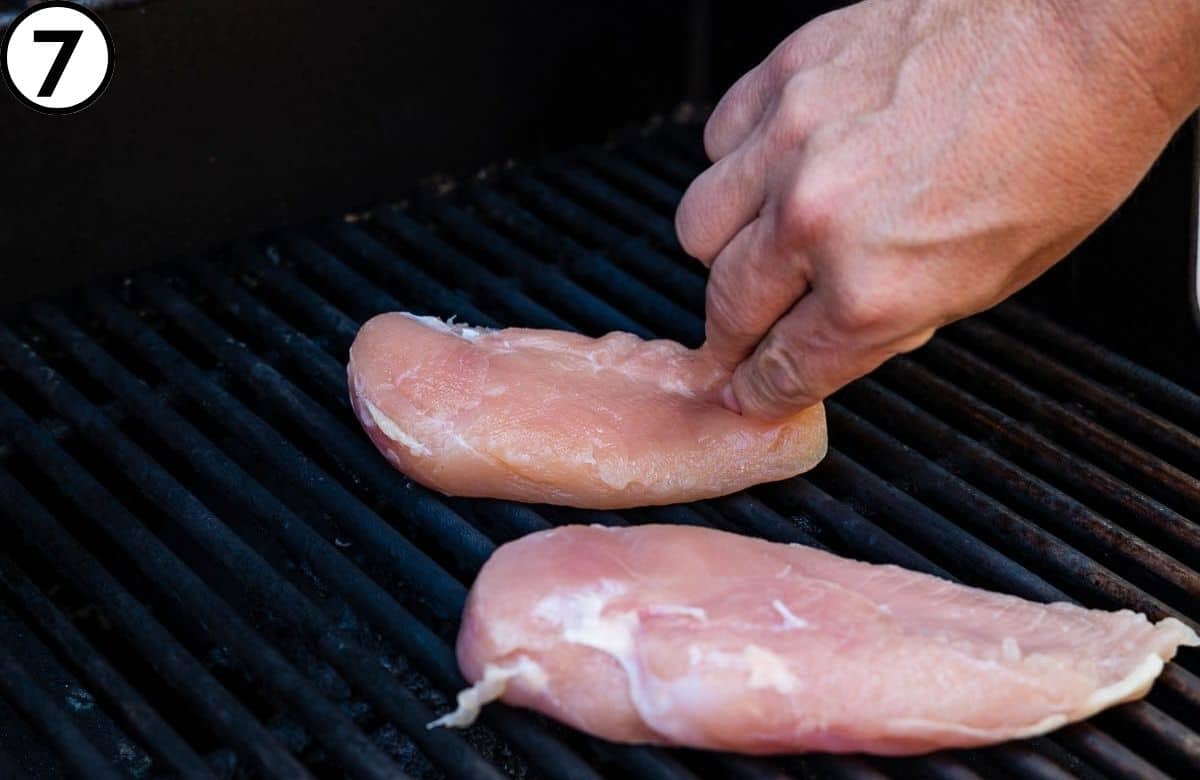
7. Cook the chicken as you like. We grilled these breasts on a preheated 450°F gas grill.
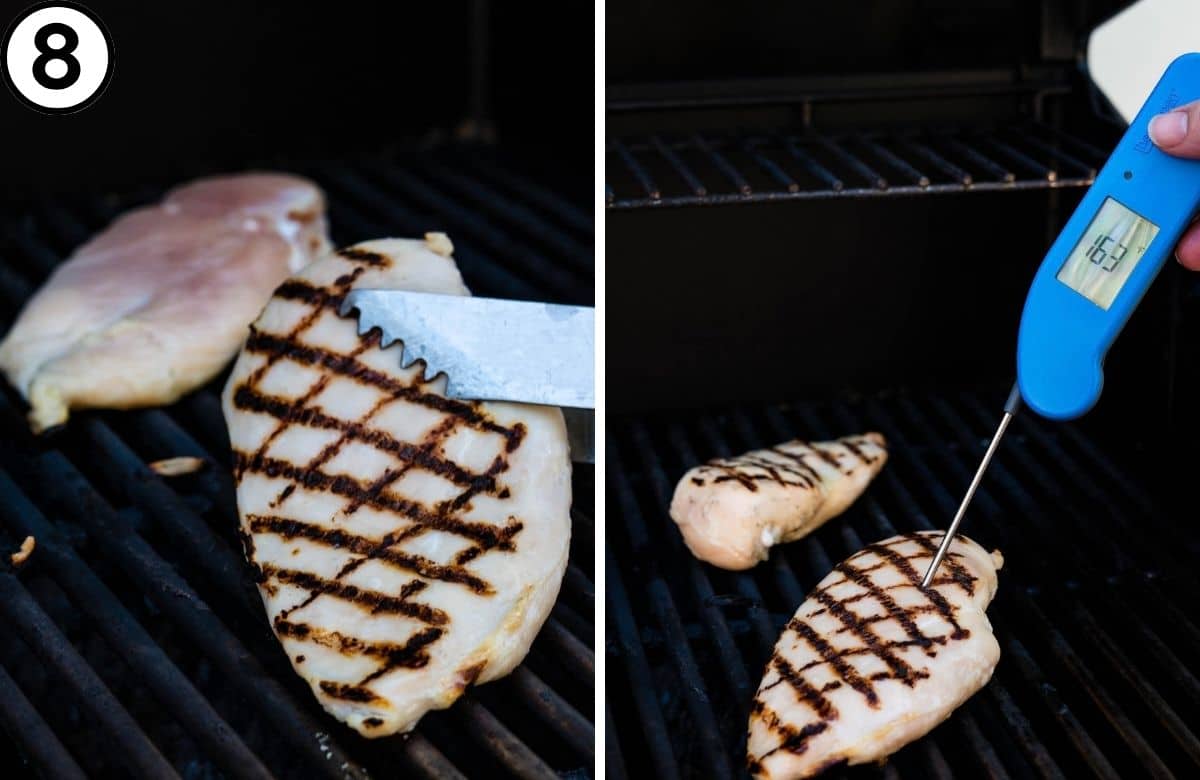
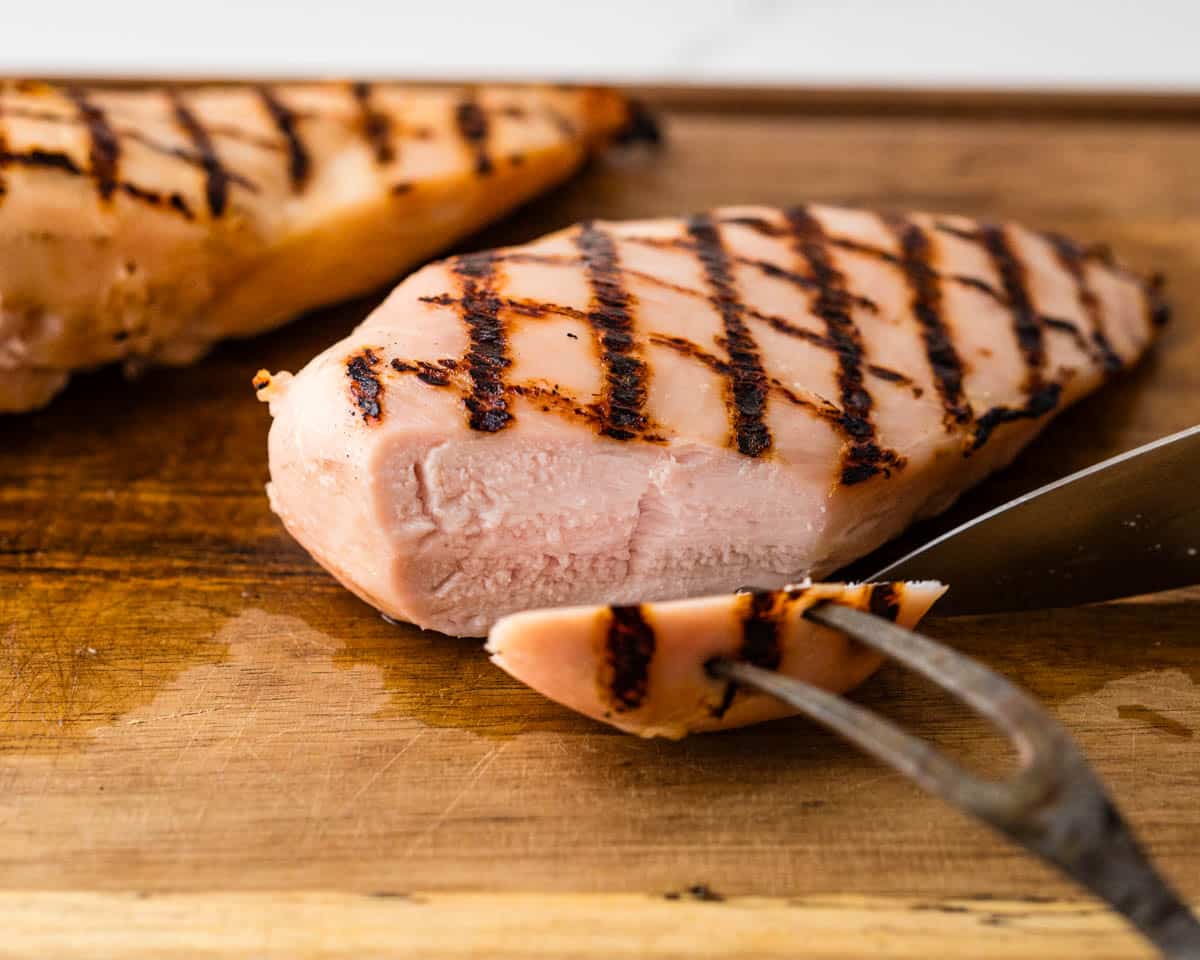
8. To make cross-hatch patterns, grill the chicken breasts, place the meat on the grates at an angle, and after 4-5 minutes, rotate them 90° and continue to cook until the pattern is marked, about 3-4 minutes more. Flip and continue to cook on the other side. Use an instant-read thermometer to check for doneness. Safe internal temperature for chicken is 165°F.
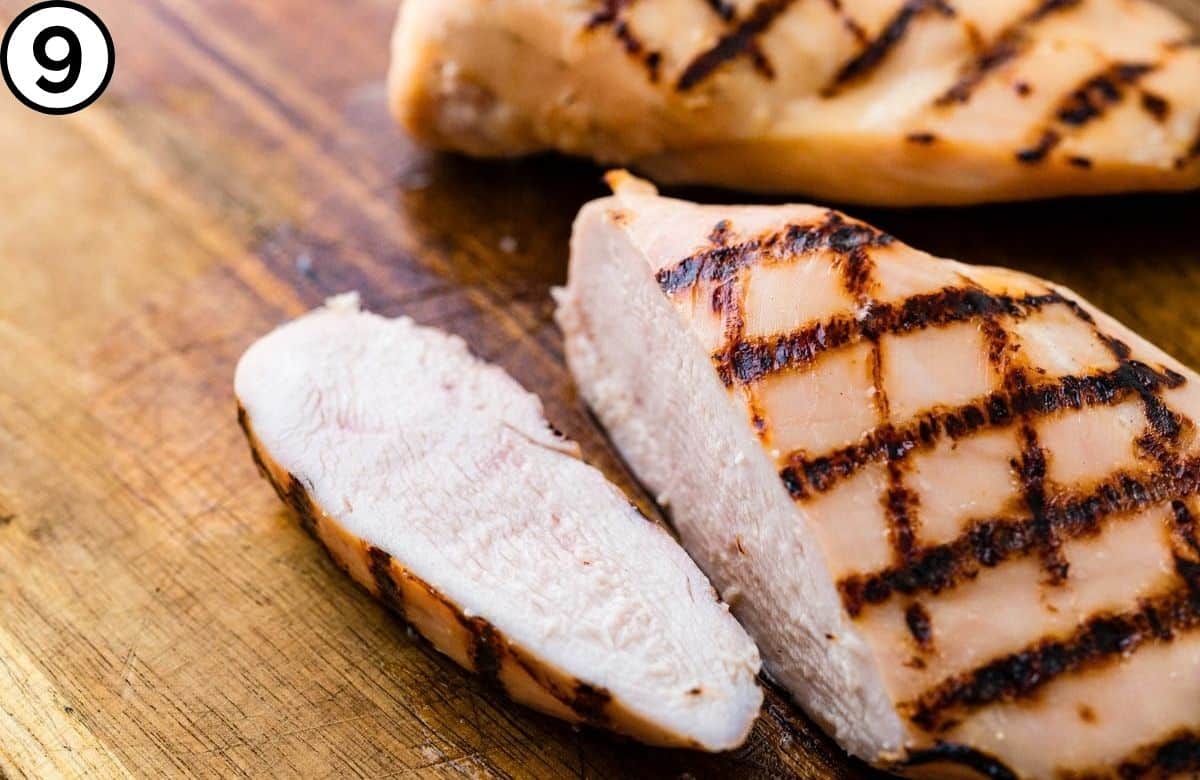
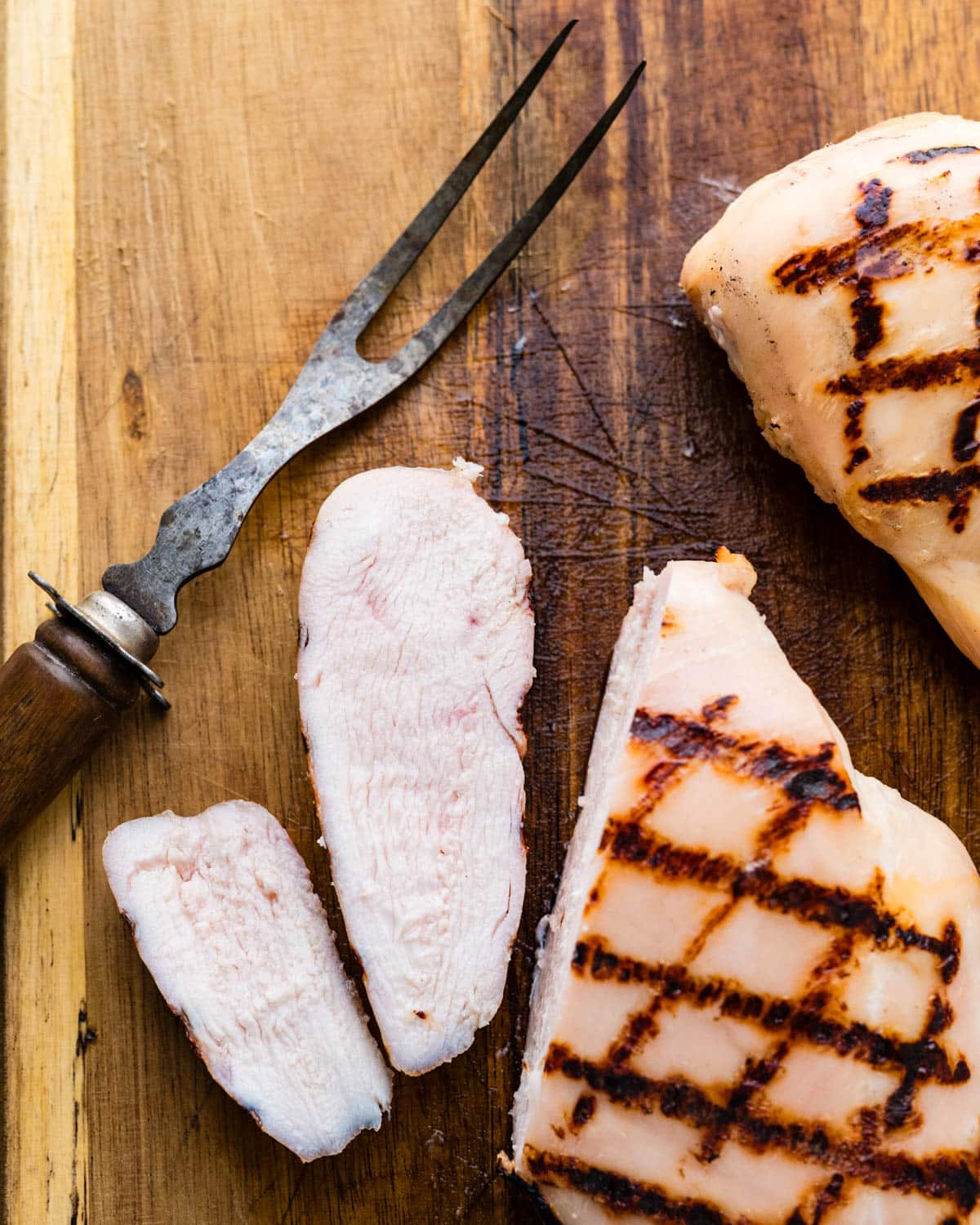
9. Serve the chicken breasts whole, or slice them into chunks for salads or bowls. Look at how juicy it is!
Pro-Tips:
- Don’t skip the ice. Pouring warm brine over raw chicken puts it in the food-safety danger zone. The ice brings it down to fridge-safe temperature before it ever touches the chicken.
- Two hours is the sweet spot for breasts this size. Longer isn’t better here — over-brining can make the texture spongy, mushy and soft rather than perfectly plump.
- Pat the chicken dry before cooking. A wet surface steams instead of browning, no matter the method. Use paper towels to remove excess surface moisture.
- An instant-read thermometer is the only way to know it’s done. Pull it at 165°F in the thickest part — not by time alone, since grills, ovens, and air fryers all run a little differently.
- It’s already seasoned–Brining imparts flavor to the chicken, so be mindful of that when you’re seasoning or salting later. It may not need as much to be just right.
Swaps and Variations:
- Brined chicken thighs: Use the same brine as written. Bone-in, skin-on thighs can go a little longer in the brine (up to 4 hours) since they’re a denser cut; grill or bake until they hit 165°F, which usually runs slightly longer than breasts. My Crispy Oven Baked Chicken Thighs is a good landing spot for cook times once they’re brined.
- Brined chicken drumsticks: Use the same brine and the same 2-hour window, since drumsticks are smaller. They’ll cook faster than breasts on the grill or in the oven — start checking with a thermometer a few minutes early.
- Brined chicken wings: Cut the brine time to 1 hour — wings are small enough that they’ll pick up plenty of seasoning fast, and skin can turn overly salty if they sit longer. My Baked Chicken Wings has crisping tips for after they come out of the brine.
- More whole spices: Adding a few whole allspice berries, whole cloves, star anise, or whole cinnamon sticks is optional in the chicken brine (don’t worry, it won’t make your meat taste like a bakery).
- Want it spicier? A smashed garlic clove or a few red pepper flakes can go into the brine alongside the peppercorns — it’s a base recipe, not a fixed formula.
FAQs
Two hours is plenty for a pound of boneless, skinless breasts. Much longer than 4 hours can make the texture spongy and unpleasant rather than more flavorful. Remember, a brine is not the same as a marinade.
No — pat it dry with paper towels instead. Rinsing doesn’t remove salt that’s already absorbed into the meat, and it just adds a step.
Not this ratio, and not for breasts — 2-4 hours is the range to stay in. Over-brining breaks down the meat’s cells and makes the texture mushy instead of moist.
This one uses equal parts — ¼ cup kosher salt to ¼ cup sugar per 1½ cups water, before the ice goes in.
Yes — see Swaps & Variations above for cut-specific timing.
Storage:
- Cooked brined chicken keeps in an airtight container in the fridge for 3-4 days.
- Do not reuse or store the unused brine liquid —discard it since it’s been in contact with raw poultry.
Reheating:
- Reheat cooked chicken gently, covered, in a 300°F oven until warmed through, or in the microwave in short bursts. It reheats well because it holds moisture better than unbrined.
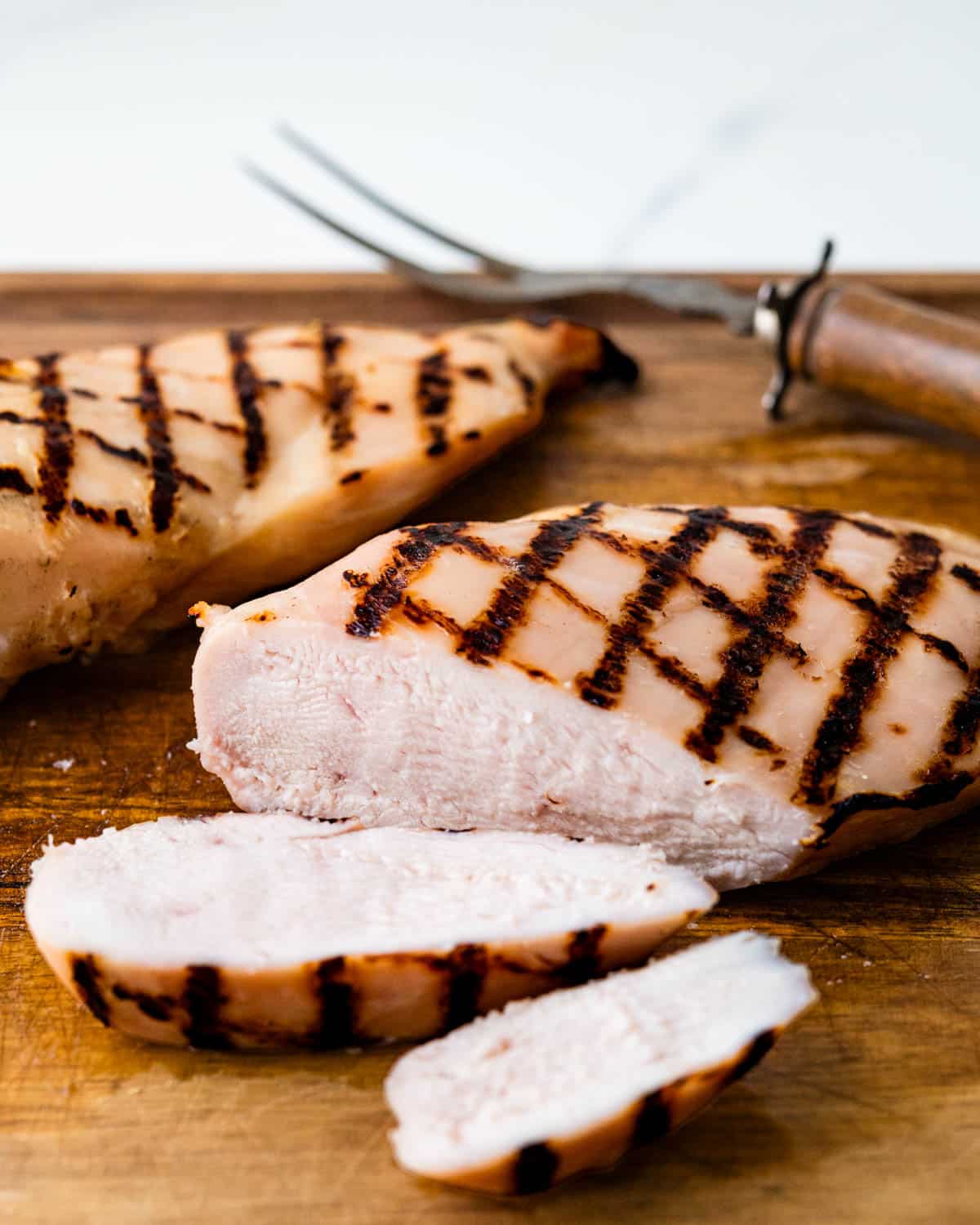
Once you start brining chicken, it stops being a recipe and starts being a habit — five ingredients, a couple of hours of hands-off time, and a juicy yardbird that tastes seasoned instead of just cooked. Keep it in rotation for weeknight breasts, and reach for it again the next time it’s thighs, wings, or a whole bird on the menu.
More brined and marinated recipes:
Chicken Brine Recipe
INGREDIENTS:
- ¼ cup kosher salt
- ¼ cup sugar
- 1 teaspoon whole peppercorns
- 1 bay leaf
- 1½ cups hot water
- 2 cups ice
- 1 pound boneless skinless chicken breasts
DIRECTIONS:
- Combine ¼ cup kosher salt, ¼ cup sugar, 1 teaspoon whole peppercorns, and 1 bay leaf in a large bowl. Add 1½ cups hot water and stir until the sugar and salt have dissolved.
- Add 2 cups ice and stir until the sugar-salt solution is very cold (Feel the outside of the bowl).
- Add 1 pound boneless skinless chicken breasts to the brine so they're submerged and refrigerate for 2 hours.
- Remove the chicken from the brine and pat dry with paper towels.
TO GRILL:
- Preheat the grill to 450°F. Place the chicken on the hot grates and cook for 15-18 minutes, flipping halfway through until an instant-read thermometer reaches about 165°F. Let it rest for 5-8 minutes before serving to allow the juices to redistribute; otherwise, they'll run out once you cut into the meat.
TO BAKE:
- Preheat the oven to 400°F. Spray a baking sheet with non-stick vegetable spray and lay the meat on the pan. Bake for 22-25 minutes or until an instant-read thermometer reads about 165°F in the thickest part. Set aside to rest for 5-8 minutes, so the juices can redistribute. Serve.
TO AIR FRY:
- Heat the air fryer to 375°F. Spritz or brush the outside of the poultry with a bit of vegetable spray or oil. Cook for 12-15 minutes, flipping halfway through. Once it reaches 165°F internally, it's done. Let it rest for 5-8 minutes before slicing to allow the natural juices to settle in the flesh.
RECIPE VIDEO:
NOTES:
- Store cooked brined chicken in an airtight container in the fridge for 3-4 days.
- Do not reuse or store the unused brine liquid —discard it once the chicken comes out, since it’s been in contact with raw poultry.
- Reheat brined cooked chicken gently, covered, in a 300°F oven until warmed through, or in the microwave in short bursts. It reheats well because it holds moisture better than unbrined chicken.
- Chicken only absorbs a fraction of the salt and sugar in the brine.
- The nutrition information on the recipe card is based on boneless, skinless chicken breasts.