
French Pâté Recipe (Chicken Liver & Pork Terrine)
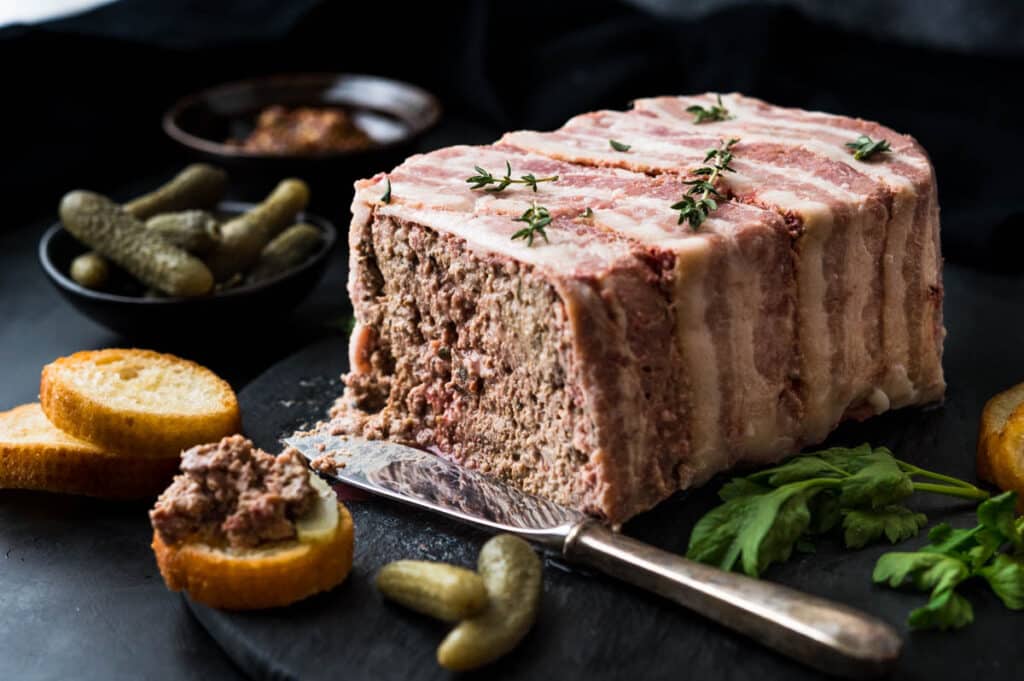
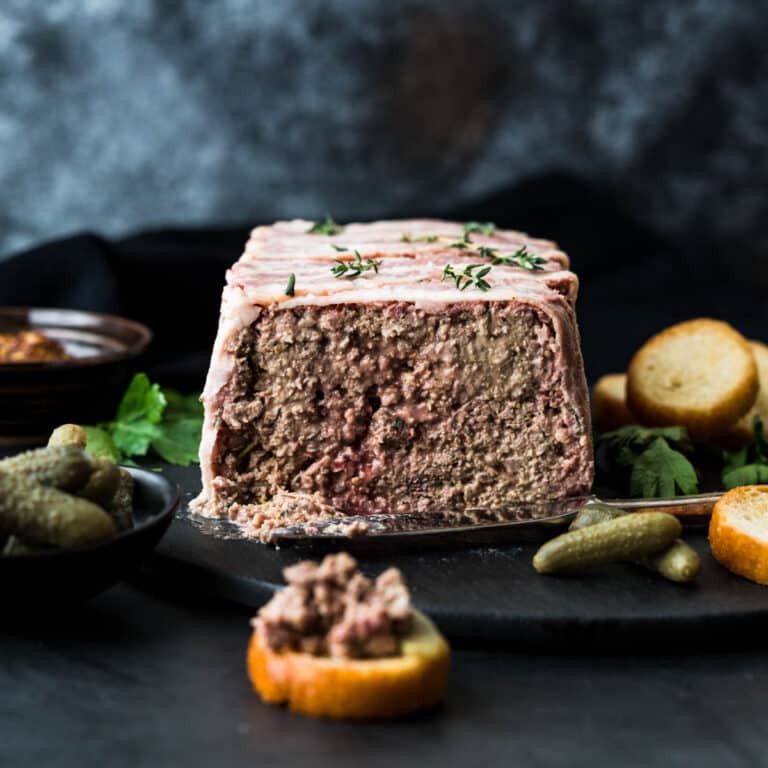
This classic French pâté recipe comes from my French grandmother, and it’s truly the BEST. It’s a traditional pâté de campagne made from chicken livers and pork sausage, wrapped in bacon and baked in a water bath. Her recipe makes the most unforgettable liver and pork terrine — perfect to serve with crackers as an hors d’oeuvre or as a first course, alongside toasted French bread rounds and cornichons. And if you’ve never made pâté at home before, this is the recipe to start with. It’s far easier than it looks, comes together in just 20 minutes of hands-on time, and can be made a full week ahead.
When I need an impressive appetizer for a special occasion, I turn to classic recipes like Oysters Rockefeller, Stuffed Shrimp or this French pate.
What is pâté?
Pâté is a seasoned mixture of finely ground or chopped meat — most often liver, pork, poultry, or game — that’s cooked and served as a spread or sliceable terrine. It can be silky smooth (like a mousse) or coarse and rustic (like this one).
Pâtés can take many forms, from fattened goose liver (foie gras) to duck, beef, and pork liver. They can comprise small cubes of rabbit, pheasant, wild boar, or other wild game.
Pâté can be encased in a pastry or crust (pâté en croûte), doused with spirits such as sherry, Armagnac, or cognac, seasoned with herbs like thyme, parsley, and garlic cloves, or enriched with cream.
In other words, there’s no right or wrong way to pâté.
A note on spelling: You’ll see pâté, paté, pate, and even patte used interchangeably online. They all refer to the same thing — the accent marks are the French touch.
More reasons you’ll love this French pate:
- A quick method–You can assemble it in about 20 minutes.
- No last-minute prep–It’s an easy, make-ahead hors d’oeuvres or appetizer — ideal for holidays and entertaining.
- No specialty store run–Uses everyday ingredients you can find at any grocery store.
- Ideal for home cooks–This country pâté freezes well. No special equipment required — a standard loaf pan works perfectly, but if you have a terrine mold, so much the better.
What others think about this pâté recipe:
This pâté never fails to win over a crowd. I brought one to a party last Christmas and watched four guests stand vigil around the dish — sampling, nibbling, and scarcely letting other revelers near the platter. Chafing dishes filled with ziti, chicken fingers, and other conventional offerings sat virtually unnoticed while this French country pâté was picked clean. Not an exaggeration.
Whether you’re hosting or lucky enough to be a guest this holiday season, you’ll want one of these. As a host, it’s your hors d’oeuvre anchor. As a guest, wrap one up as a hostess gift — I guarantee they’ll love it.
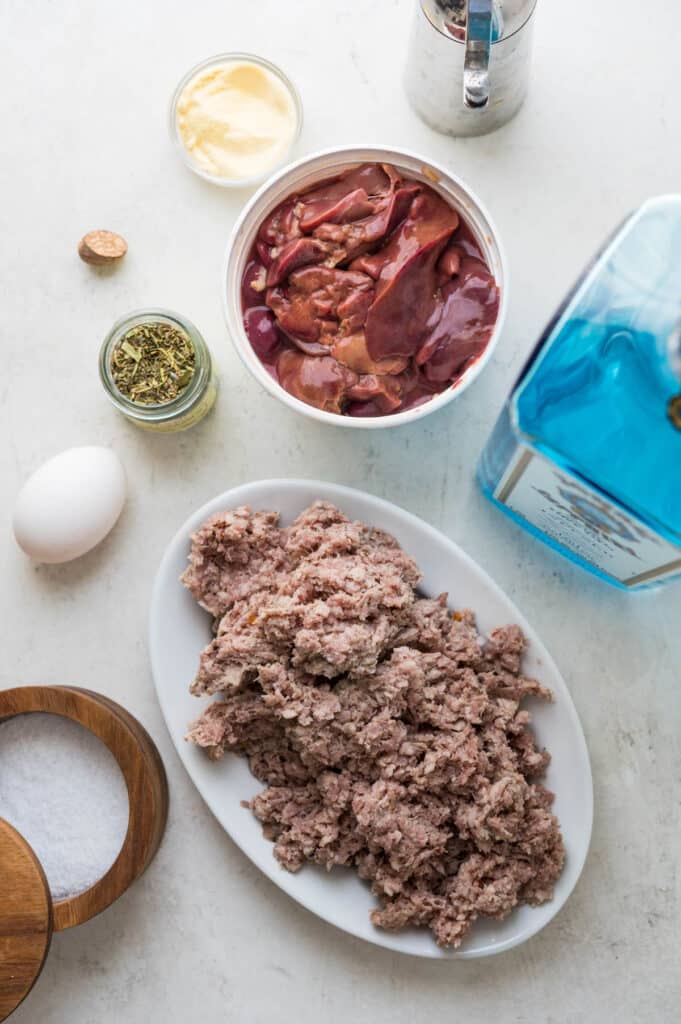
Ingredients for Madou’s French pate recipe:
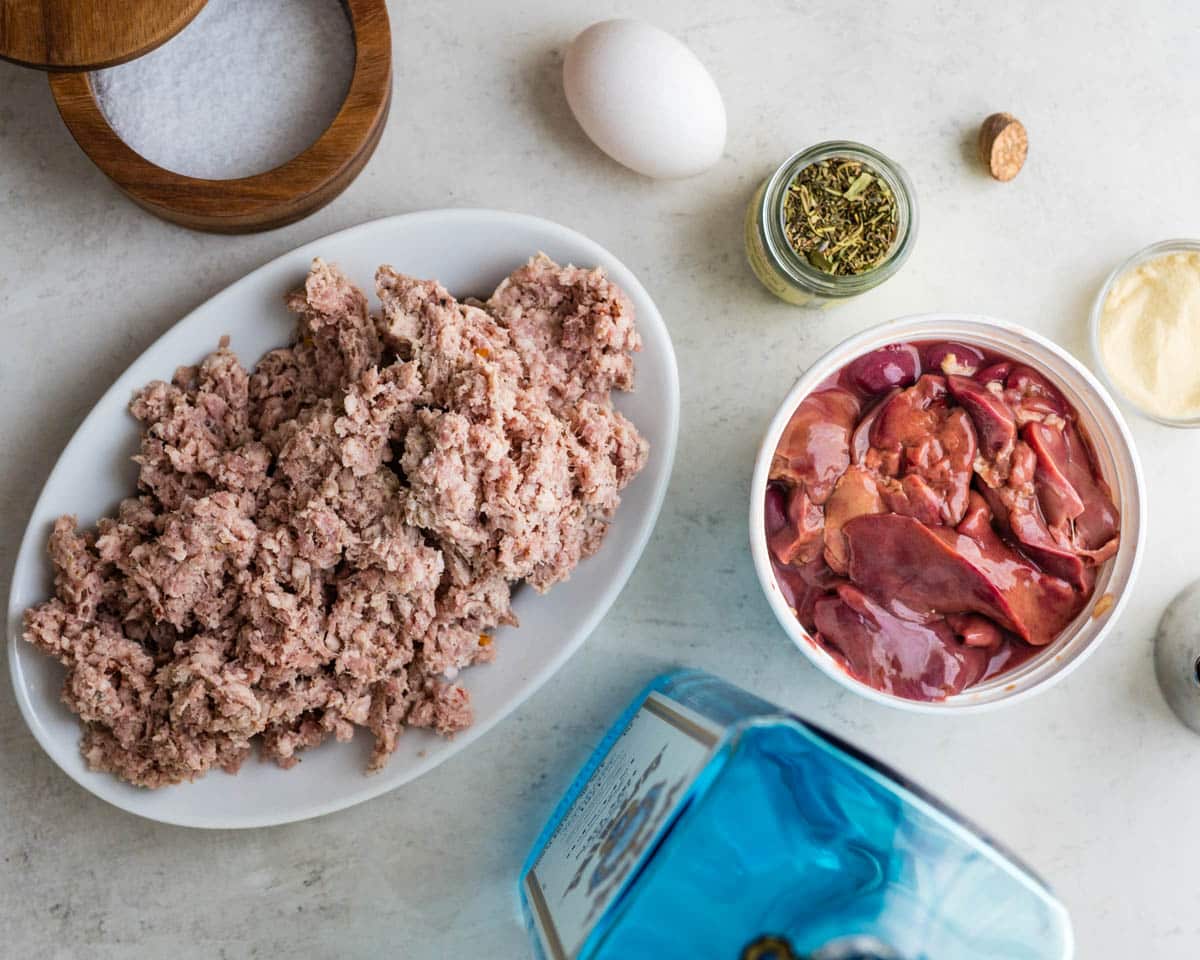
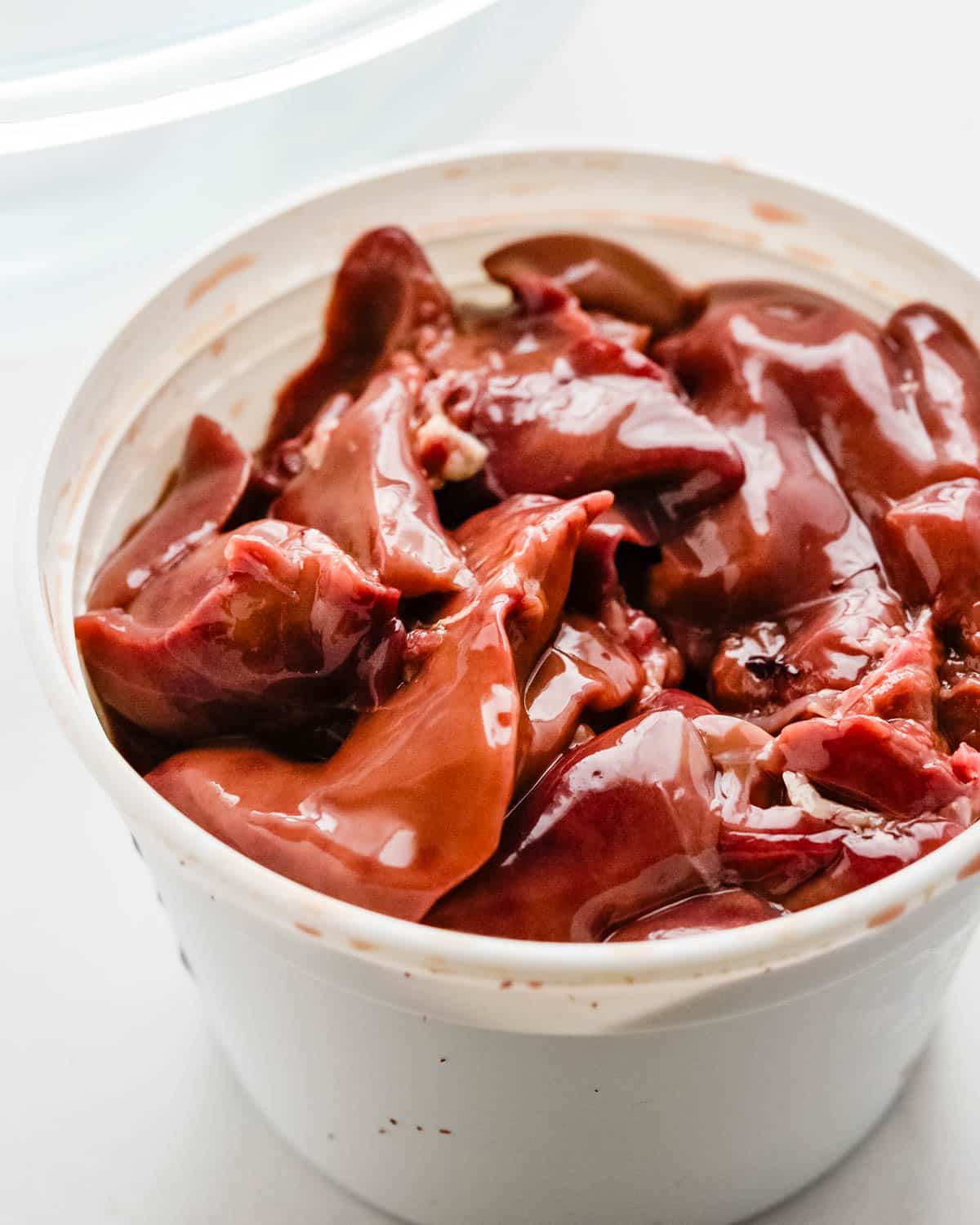
- Chicken Livers–We use Murray’s. It’s the flavor backbone of the pâté; look for antibiotic-free, vegetarian-fed if possible (more on this below).
- Pork Sausage–We use Jimmy Dean regular; it balances the liver flavor and provides the bulk of the texture.
- Eggs – Acts as a binder, holding the pâté together so it slices cleanly.
- Powdered Milk–I use Carnation; adds subtle richness and helps bind the mixture.
- Gin–No need for an expensive bottle; the alcohol tenderizes the liver and adds botanical depth. Don’t skip it.
- Dried Herbes De Provence–or Fines Herbes (affiliate links). The classic French herb blend that defines this pâté’s flavor.
- Ground Nutmeg–(fresh grated if possible). Adds warmth; freshly grated makes a noticeable difference.
- Kosher Salt–I use Diamond Crystal, which has less sodium by volume than Morton’s. If you have Morton’s, reduce the amount you use by about a third.
- Black Pepper–freshly ground gives you the best flavor.
- Bacon–use thin-sliced; it drapes and folds more easily than thick-cut.
Swaps and Variations:
- No Herbes de Provence or Fines Herbes? Use dried thyme instead.
- Gin substitute: Vodka works as a 1:1 swap. Don’t skip the alcohol entirely — it does real work here.
- Sausage: Try Jimmy Dean Sage instead of plain breakfast sausage for a slightly different flavor profile. Don’t substitute Italian sausage or smoked sausages — entirely different flavor and the pâté won’t taste right.
- No terrine mold? An 8″ × 4″ loaf pan works perfectly. See the FAQ below for exactly how to adapt it.
How to make a French country pate:
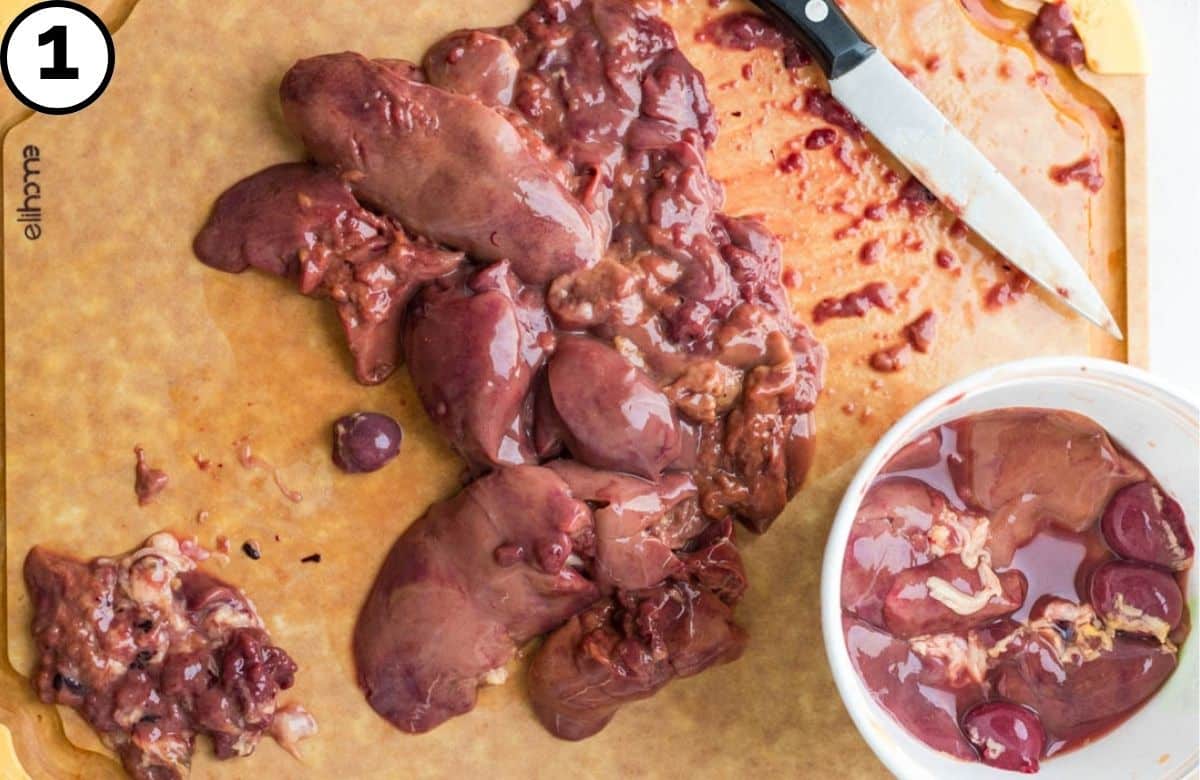
- My grandmother always instructed me to clean the chicken livers before chopping them. “Cleaning” doesn’t mean rinsing under the faucet — it means trimming away excess fat and connective tissues that can make the terrine chewy or difficult to slice.
- Place the livers on a cutting board and look for globules of fat and visible veins. Trim them away with a small sharp knife. Livers are vascular, so you’ll notice a lot of veins — remove them as best you can, but don’t stress about perfection. It’s not a science.
- My grandmother hand-chopped her livers, but 8–10 pulses in a mini food processor does the job faster. You want them well chopped but not completely smooth — some texture is part of what makes this a country-style pâté.
I found this video that shows how to trim the livers.
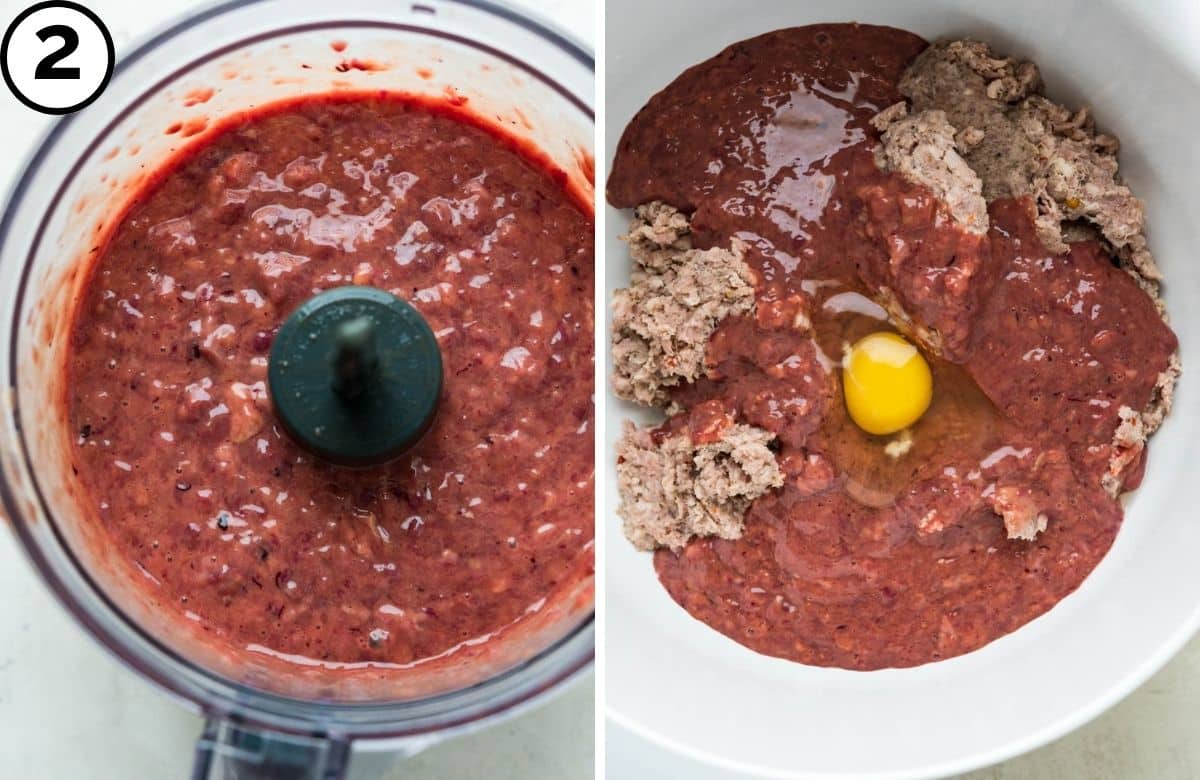
2. Finely chop them (by hand or with a few pulses in the food processor). In a large bowl, combine the chopped chicken livers, pork sausage and egg. Use your hands — not a spoon — to blend them together until well combined with no large chunks.
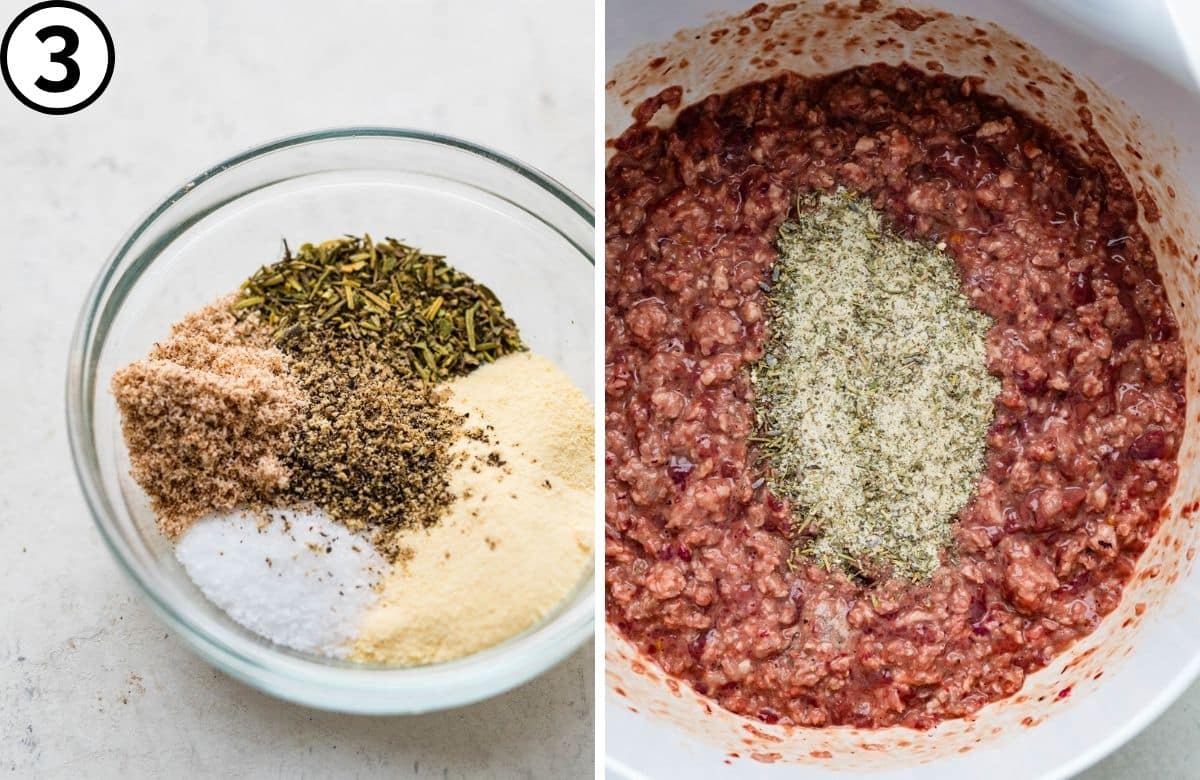
3. Assemble the spice mix with Herbes de Provence, dry milk powder, nutmeg, kosher salt, and black pepper. Add the gin and spices to the pate mixture. Work everything together with your hands until completely uniform.
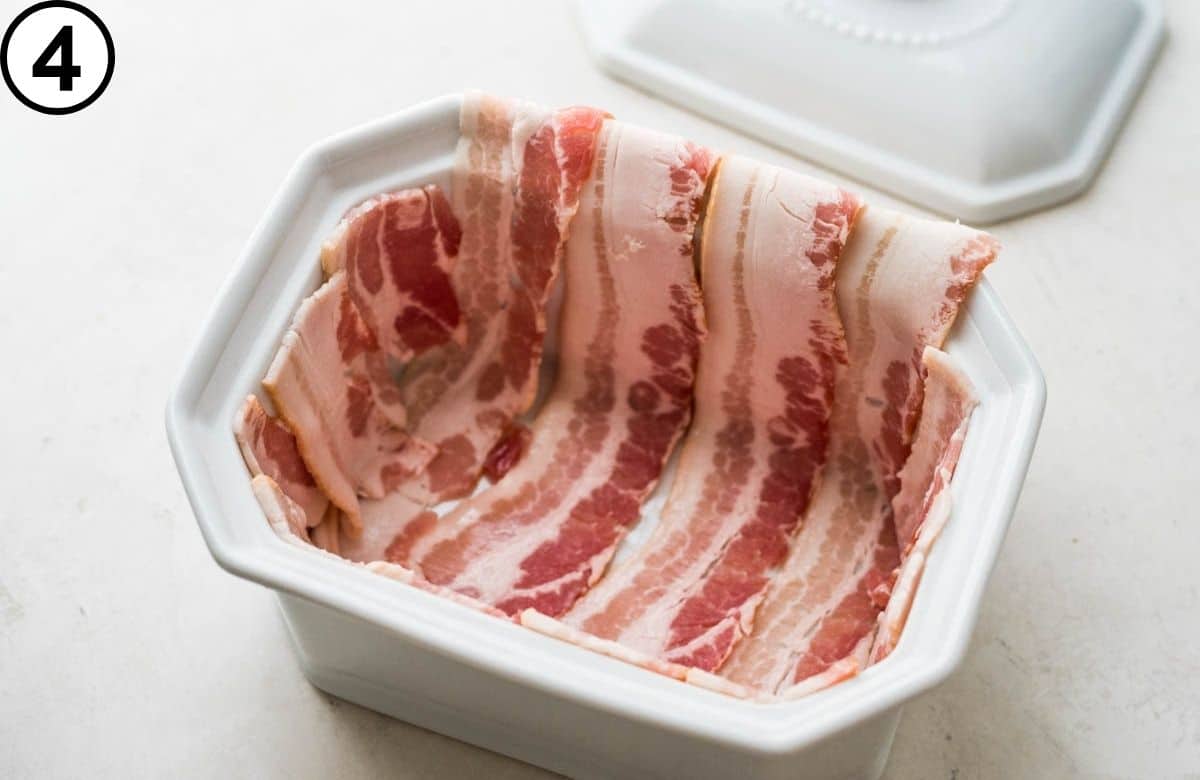
4. Prepare your pâté mold or loaf pan by lining the bottom and long sides with thin, uncooked bacon strips, letting the excess drape over the sides — this overhang will fold over the top to seal the pâté. Cut additional strips to press against the two short sides. Thin bacon is important here; thick-cut tends to crack rather than drape.
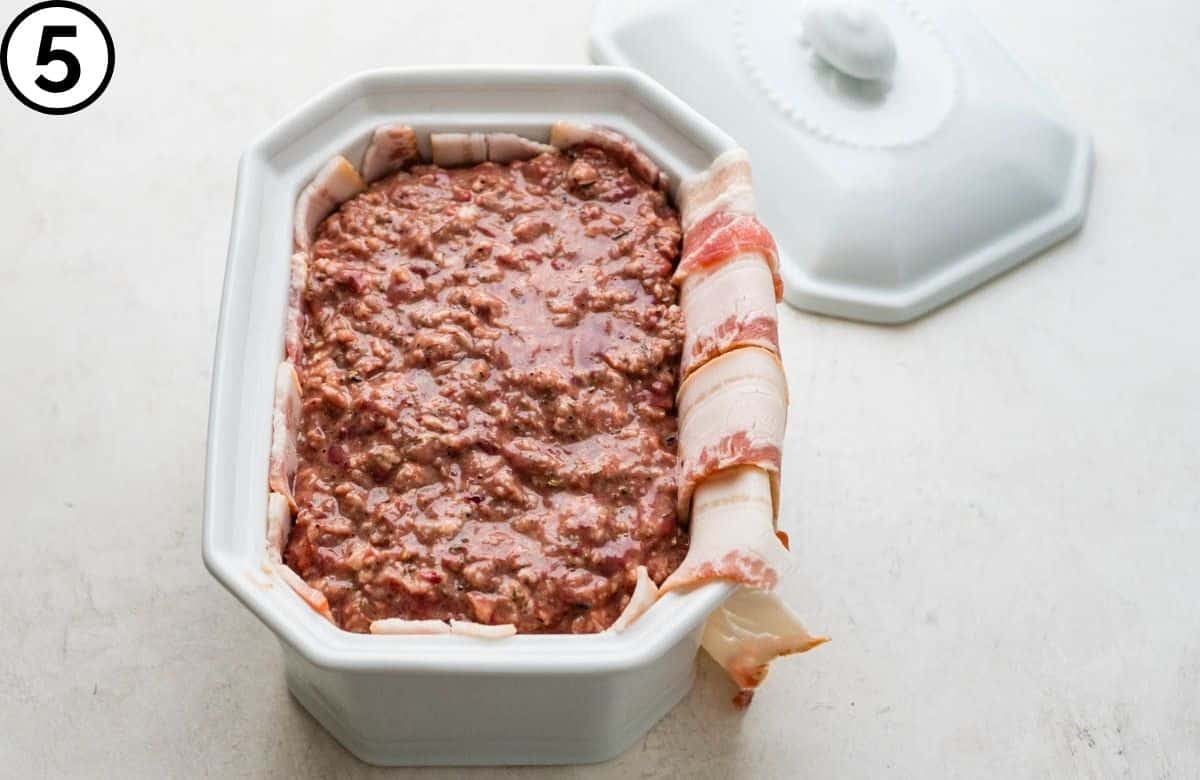
5. Transfer the liver and pork sausage pate mixture to a bacon-lined terrine or pate mold.
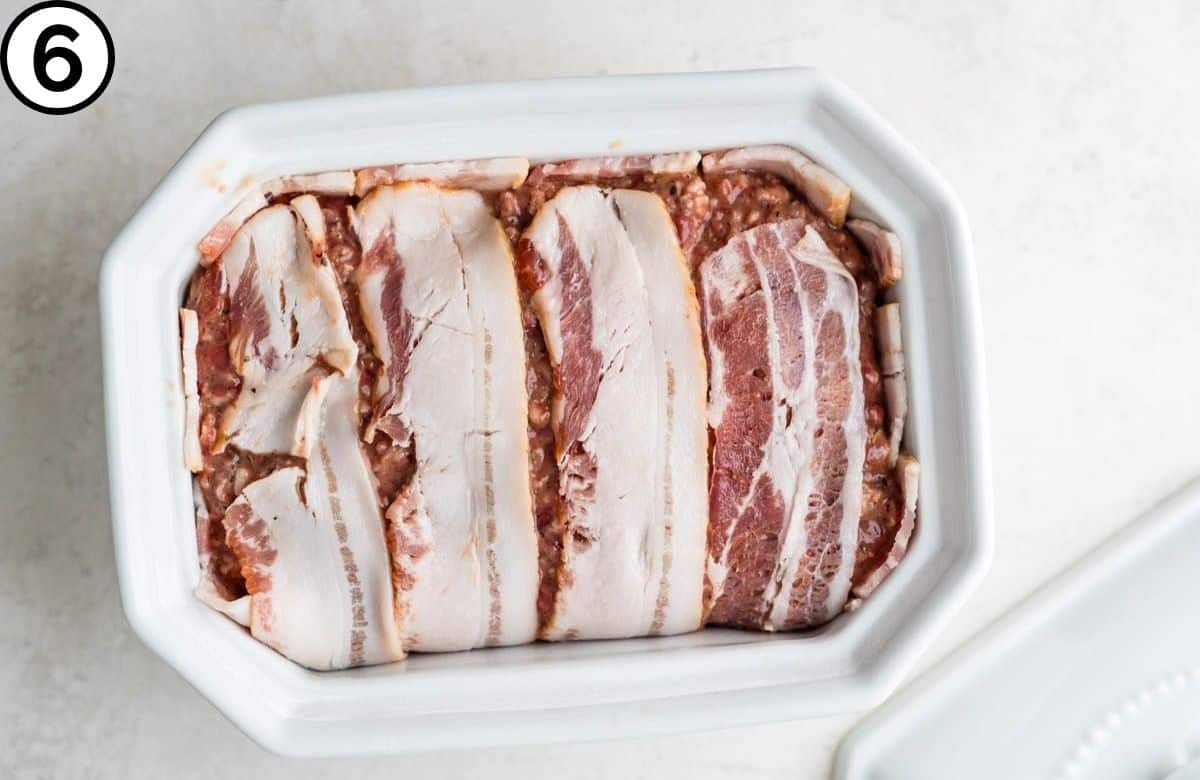
6. Fold hanging pieces of bacon over the top of the pate.
Cover tightly with the terrine lid or aluminum foil. If using foil, cut several slits with a sharp knife so steam can escape.
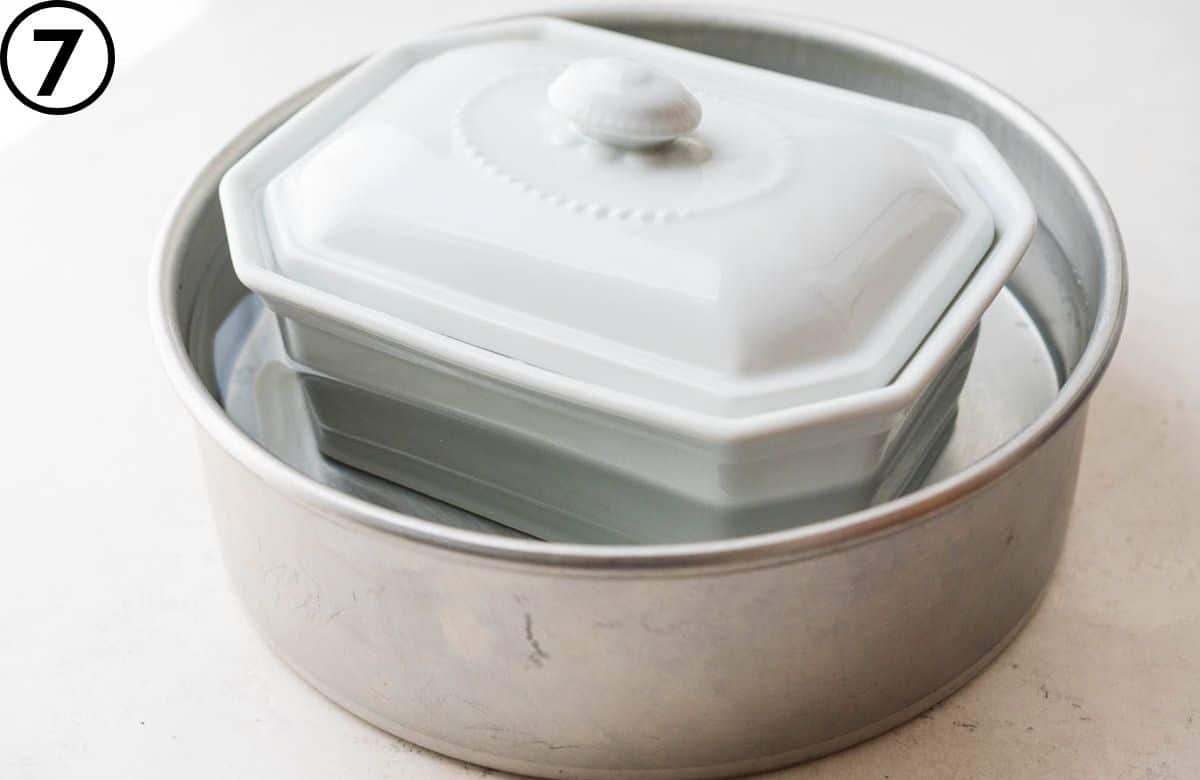
7. Place the terrine in a larger baking pan with high sides. Set the pan in the oven, then carefully pour hot water around the terrine until it comes halfway up the sides of the mold. This water bath (bain-marie) is what gives the pâté its silky, even texture — it prevents the exterior from drying out or cracking while the interior cooks gently.
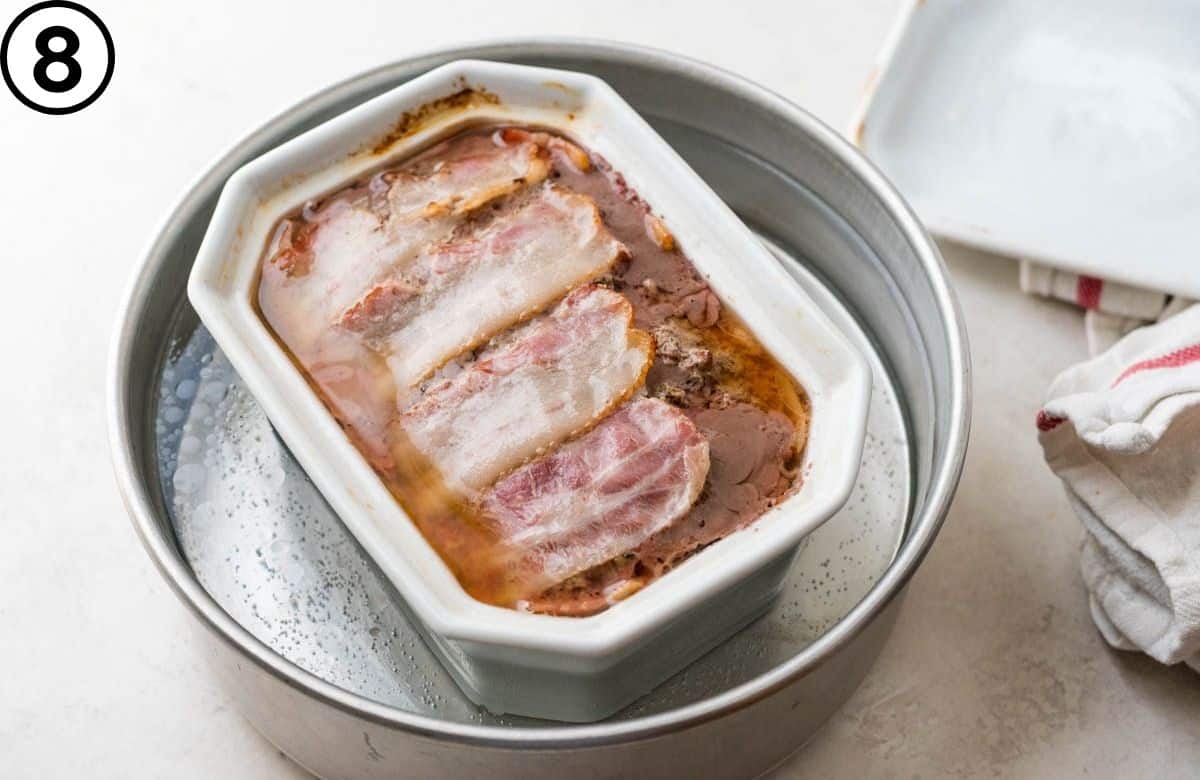
8. Bake at 350°F for 1 hour and 10 minutes. The pâté is done when it reaches an internal temperature of 160°F. After baking, let it rest in the hot water bath for 30 minutes before removing.
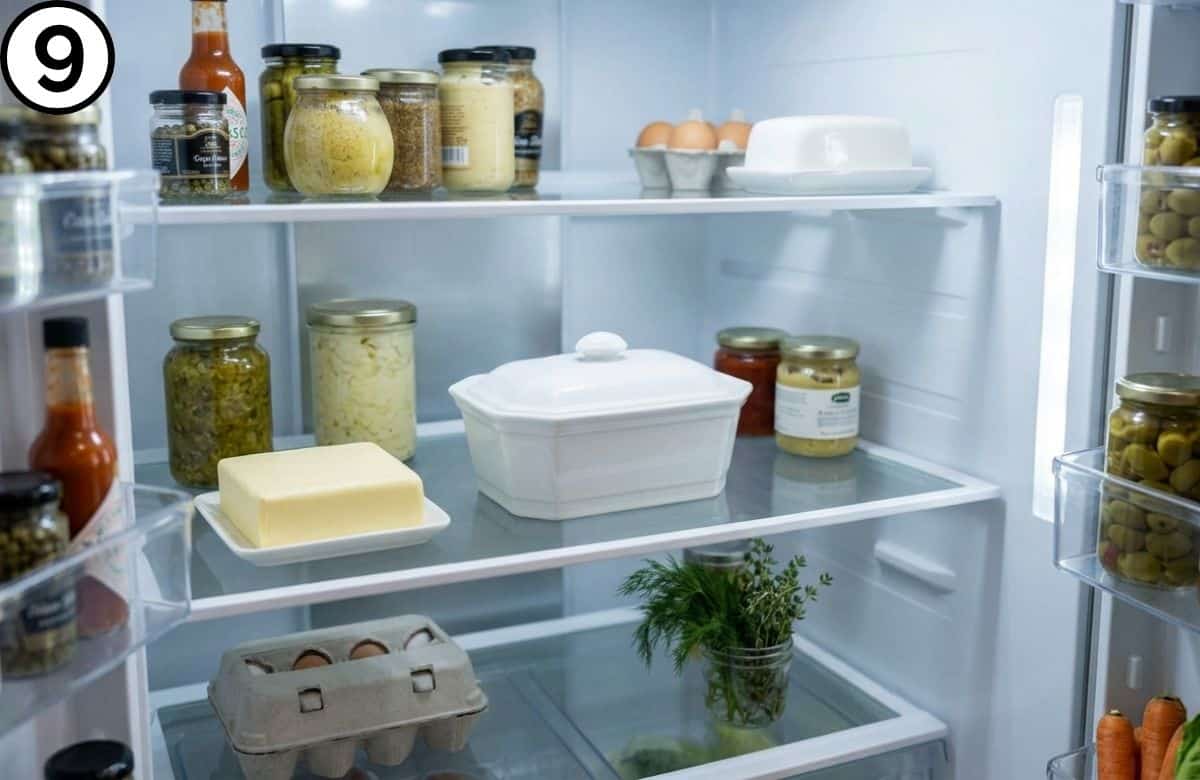
9. This step is where Madou’s pâté becomes extraordinary, and it’s the one most people skip.
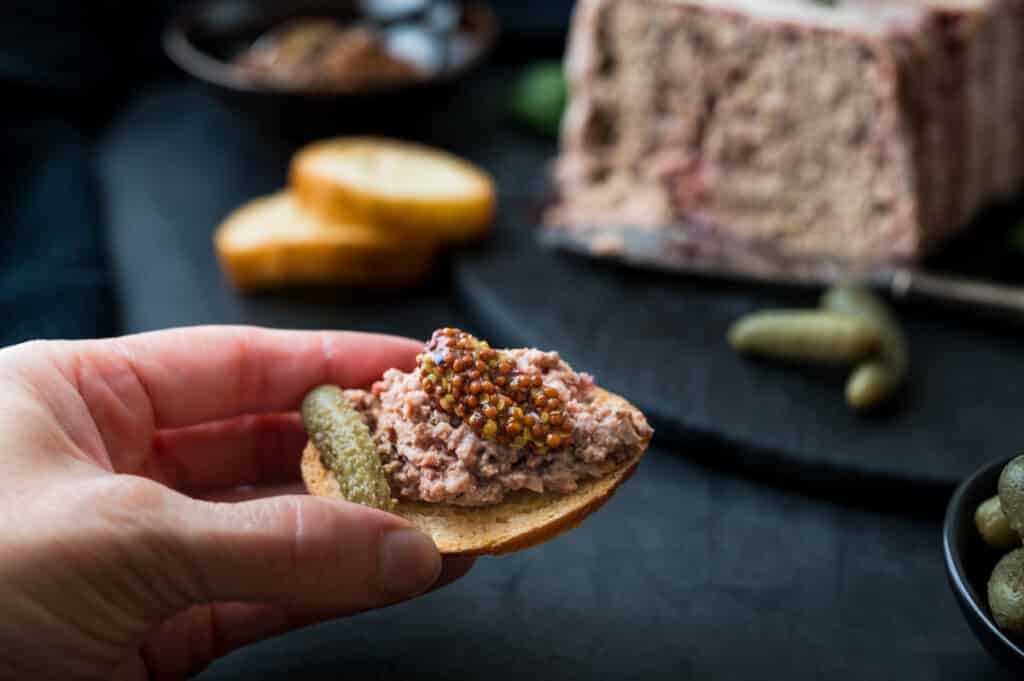
After the pâté comes out of the water bath and cools to room temperature, cover it and refrigerate. The minimum is overnight — but two to four days is better, and a full week is ideal.
As it rests, the flavors marry and deepen in a way that simply doesn’t happen if you serve it the same day. Madou always made hers a week before Christmas. Trust the process.
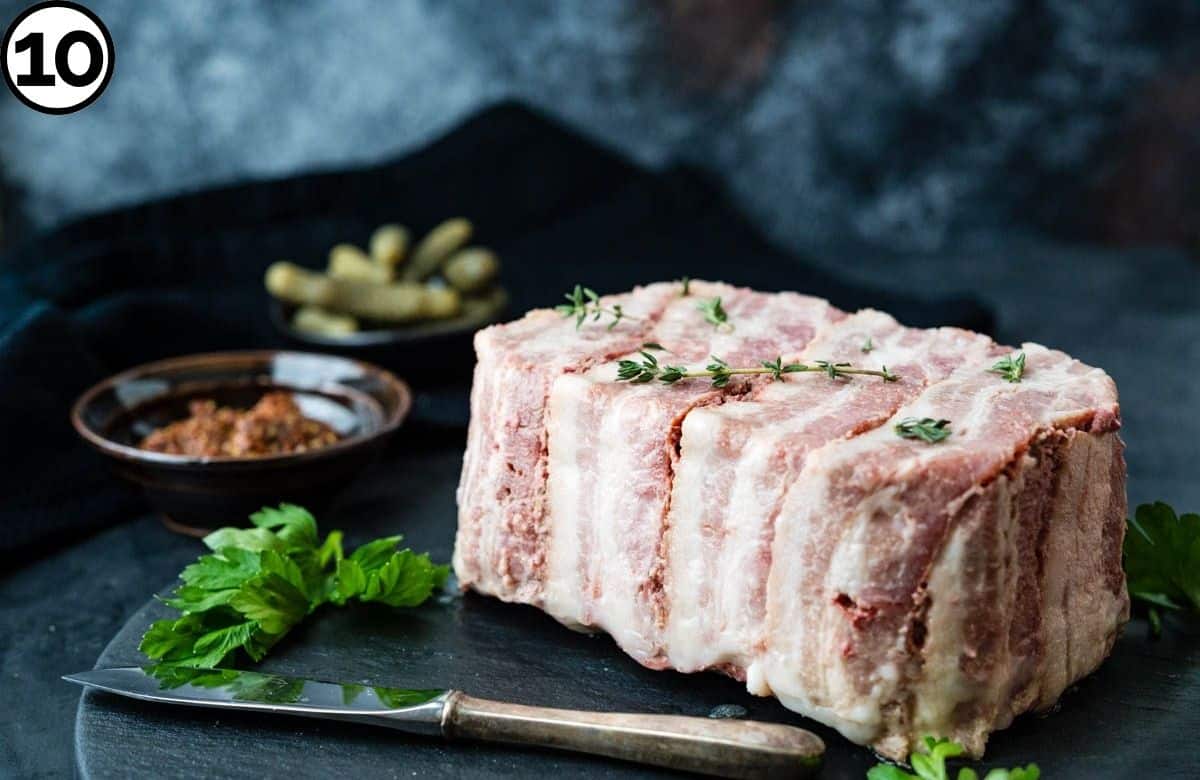
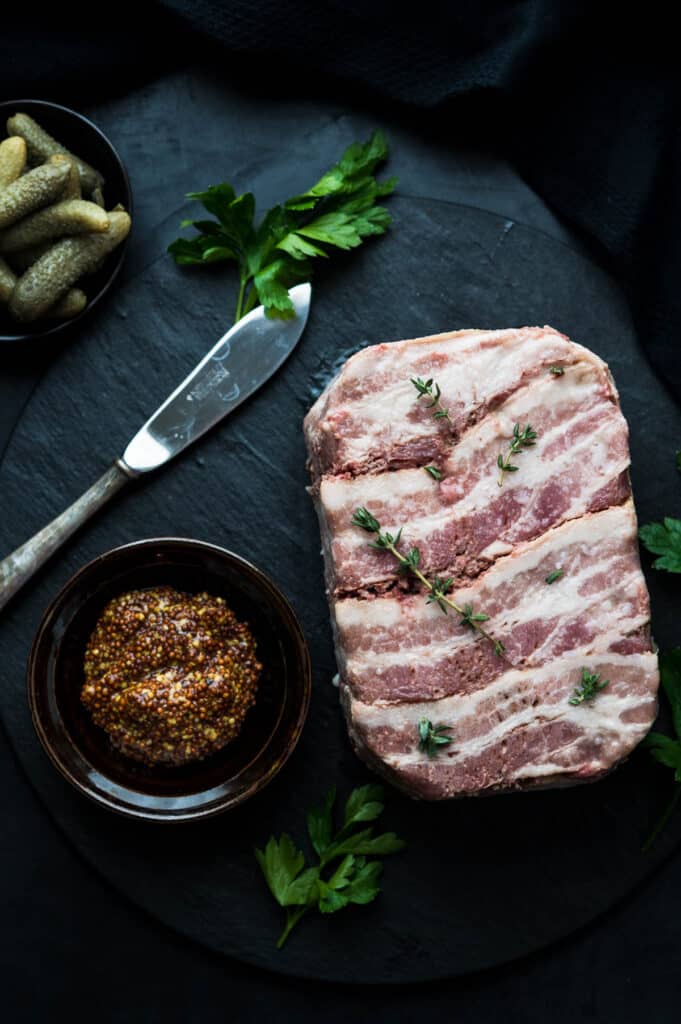
10. When you’re ready to serve, fill a baking pan (larger than your terrine) halfway with hot tap water. Set the terrine in the water and let it rest for about 10 minutes to loosen. Run a sharp knife around the edges, then turn the pâté out onto a serving platter. If it sticks, give it a few more minutes in the hot water — don’t force it.
Pro-Tips for the best French Pâté:
- Source quality chicken livers. I look for antibiotic-free, vegetarian-fed livers. Antibiotics are metabolized in the liver, so you want to be as clean as possible with offal. Murray Farms is my go-to (not an affiliate, just a fan).
- Use thin-sliced bacon for lining the mold. Thick-cut cracks when you try to drape and fold it.
- Don’t rush the chill time. It’s the most important step. Two days minimum; a week is better.
- Cut slits in the foil before baking so steam can escape.
- Scrunch the foil edges away from the water bath if using a loaf pan — water getting into the terrine is a real risk if the foil sits flat.
- Slight pinkness is normal. The interior of a properly cooked pâté often looks pink because of liver pigments and the low-oxygen cooking environment — not because it’s raw. As long as it hits 160°F internal, it’s safe.
FAQs
An 8″ × 4″ loaf pan works perfectly. Cover tightly with aluminum foil, cut several slits for steam to escape, and — importantly — scrunch the foil edges up against the sides of the pan so the foil doesn’t rest in the water bath. (I’ve had water sneak in when I forgot this step.)
“Campagne” means “country” in French. Pâté de campagne is a rustic, coarse-textured country-style pâté made with pork, liver, and aromatics — as opposed to a smooth, refined mousse like this Creamy Chicken Liver Pâté. This recipe is a classic pâté de campagne, and the name Madou used.
No. While liver is common, many pâtés are made primarily from pork, poultry, or game with little or no liver. This recipe uses chicken livers for depth of flavor, but they’re balanced by pork sausage so the liver flavor is present but not overwhelming.
Technically, a terrine is the vessel — the rectangular mold in which the pâté is cooked. Pâté is what goes inside it. The terms are used interchangeably, and that’s perfectly fine.
Fully cooked. It’s baked in a water bath in the oven. The interior may look slightly pink when sliced, which is normal — that’s from the liver pigments, not undercooking. A properly cooked pâté reaches an internal temperature of 160°F.
Vodka works as a 1:1 substitute. Don’t skip the alcohol entirely — it tenderizes the liver and adds important depth of flavor.

Make ahead:
- Make this pâté recipe up to one week ahead.
- The longer it rests in the refrigerator, the better it tastes.
- This is the ideal make-ahead appetizer for holidays.
Storage:
- This country pâté will last up to two weeks, tightly wrapped.
- Madou kept hers chilled for a full week before serving to let the flavors marry. It genuinely gets better with time.
Freezing:
- Double-wrap in plastic wrap, then freezer paper. You can freeze it whole or pre-slice it into 1″ portions — the slices are convenient for pulling out just what you need.
- Keeps for up to 2 months.
- Thaw overnight in the refrigerator; don’t microwave it.
What to serve with French pate
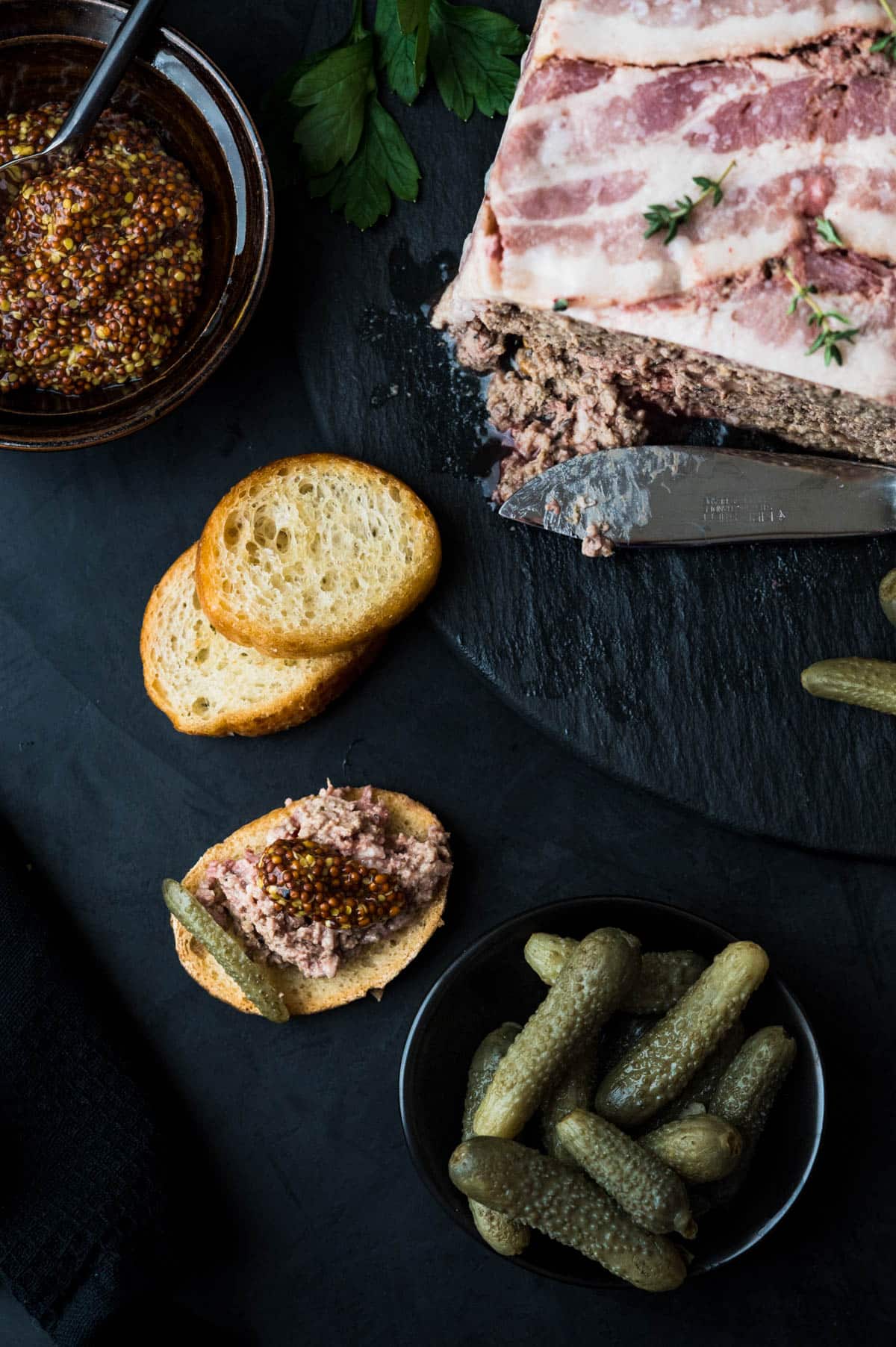
- Toasted baguette rounds or crostini — the classic pairing. Slice a baguette thin, brush with olive oil, and toast until golden.
- Good quality crackers — water crackers or Carr’s let the pâté shine without competing.
- Cornichons — these are small French-style sour pickles (not sweet gherkins). Their acidity cuts through the richness of the pâté perfectly. Find them near the specialty condiments at most grocery stores.
- Whole-grain Dijon mustard — the grainy texture and sharp bite are a natural bridge with the herbes de Provence in the pâté.
- Dressed frisée — for a plated first course, serve thin slices of pâté on a small bed of frisée with a simple vinaigrette and a warm baguette alongside. Very bistro.
- Pickled cocktail onions — another classic accompaniment alongside or instead of cornichons.
- Banh Mi — one of the best uses for leftover pâté. Spread it on a crusty roll with pickled daikon, jalapeños, cucumber, and cilantro. Don’t knock it until you’ve tried it.
- Wine — a light, fruit-forward red works beautifully: Beaujolais, Pinot Noir, or a dry Alsatian Riesling if you prefer white. Nothing too tannic.
More French pâtés and spreads you’ll love:
- Creamy Chicken Liver Pâté
- Aromatic Duck Rillettes Recipe
- Veal and Pork Country Pâté
- Pork Rillettes
- Homemade Deviled Ham Spread
French Pâté Recipe (Chicken Liver & Pork Terrine)
SPECIAL EQUIPMENT:
- 1 pate or terrine mold with lid (or use a loaf pan).
- 1 baking pan or sheet pan with 2-3" high sides that will hold the terrine. for baking the French pate in a water bath.
INGREDIENTS:
- 1 pound chicken livers
- 1 pound country sausage I use Jimmy Dean- regular
- 1 egg
- 1 tablespoon nonfat dry milk
- 1 teaspoon kosher salt
- 1 teaspoon black pepper freshly ground
- 1 teaspoon nutmeg freshly grated
- 1 ounce gin about 2 tablespoons
- 1 tablespoon fines herbes or herbes de provence
- ⅓ pound bacon
- 3½ – 4 cups hot water
DIRECTIONS:
- Preheat the oven to 350 degrees.
- Clean the chicken livers, by removing any excess fat and cutting away any large veins. Transfer livers to a mini-prep food processor and pulse several (8-10) times until the livers are well chopped, but not completely smooth.
- In a large bowl combine the chicken livers and the sausage. Use your hands to blend the sausage into the chicken livers until they are well combined and their are no large chunks. Add the egg, nonfat dry milk, herbs, salt, pepper, nutmeg and gin. Use your hands again to completely combine the ingredients together. Set aside.
- Prepare the pate mold (or 8x 4.5" loaf pan) by lining it with slices of uncooked bacon, draping the excess over the side. Cut slices of bacon and press them to the other three sides of the terrine or loaf pan.
- Ladle the pate mixture into the terrine mold and cover tightly with the lid or aluminum foil. If using aluminum, use a sharp knife to make several slits in the aluminum so steam can escape.
- Place the terrine in a pan with high sides and set the pan in the oven. Carefully pour the hot water into the pan until the water comes up about halfway on the pate mold. Bake for one hour and ten minutes. After baking, let the liver and pork terrine rest in the water bath for 30 minutes.
- Carefully remove the pâté from the water bath and let cool to room temperature. Cover and refrigerate overnight. Pâté is best when the flavors marry for several days before serving.
- To unmold the pate, fill the high-sided pan with hot tap water and rest the terrine in the water for several minutes to loosen the pate from the mold. Use a sharp knife to loosen the edges. Turn the pate out onto a platter or dish.
- Serve with crackers,crostini and/or crudite, cornichons and whole grain dijon mustard.
NOTES:
- Make this pâté recipe up to one week ahead.
- This country pâté will last up to two weeks, tightly wrapped.
- To store: Double-wrap in plastic wrap, then freezer paper.
- You can freeze it whole or pre-slice it into 1″ portions — the slices are convenient for pulling out just what you need.
- Keeps for up to 2 months, frozen.
- Thaw overnight in the refrigerator; don’t microwave it.
NUTRITION:
Nutritional Disclaimer
Nutritional information is an estimate only and is provided as a courtesy. Values are calculated automatically based on the ingredients and quantities in each recipe and may vary depending on specific brands, exact measurements, and substitutions made. For precise nutritional guidance, especially if you have a medical condition or dietary restriction, please consult a registered dietitian or run the ingredients through your own nutrition calculator.“Pin It” For Later!
Hello,
I’m so sorry to ask this, but is the bacon safe to eat too, or is it’s only function to make it easier to remove the pâté from the terrine?
Yes, the bacon is perfectly safe to eat. The key here is that the “cooked food-safe temperature has been reached. It has, but since the bacon isn’t fried, it’s not what you may be accustomed to. It’s cooked through though, so enjoy it!
Fabulous recipe! Hugs to you and your grandmother
We love pate and this was a hit
Lynda in Tucson Az
Would shallots throw this whole thing off? My first pate so will probably stick with it as is but curious as to your thoughts?
You could use shallots, but it really isn’t necessary. This pâté has a lot of flavor.
So much of thus pate I want to try and make, but so much of yhe instructions are unclear, vague and difficult to follow. Please explain a little better ( as for morons like me, that just don’t know how to do it.) Maybe a few pics may help.
Made this for Easter. It was delicious! However, it didn’t cook in just 1.10 hours. I had to leave it in the oven for an extra hour. Served with french dijon mustard and french bread. It also makes delish sandwiches!
Hi Christine – how did you realize that it wasn’t fully cooked? Did you use a thermometer? I made this yesterday and followed the directions exactly. I won’t know if it’s cooked until tomorrow when I slice into it.
The interior of the pate may be slightly pink, but it’s cooked. When you cook a liver and sausage pâté in a water bath (bain-marie), the gentle, even heat keeps the exterior from browning while the interior stays pink. That pink color doesn’t always mean it’s raw — it can come from liver’s natural pigments, and a low oxygen environment (how it’s cooked) which limits browning.
What determines safety is the internal temperature of the pate. For chicken it’s usually about 150-155°F and for pork about 160° F.
I’ve found that it usually has some pinkness in the center when cooked, but it’s food-safe.
When I was younger, I worked as a chef at a French restaurant, and this dish was a customer favorite. I could not remember some of the fine details of the recipe, so I went searching for a recipe for French country pate with the same ingredients. This one was perfect! It was the owner’s mother’s recipe to a “T”.
Minor tweaks, I use a tiny bit more chicken liver, because the standard container sold is 20 oz. Most of the extra is discarded as trimmed veins and connective tissue. I add a tiny bit more kosher salt since I have a bit more liver. Pro hint, I use my KitchenAid on low with a flat beater with silicone scrapers to mix everything up. Also use your washed coffee grinder to convert fresh nutmeg to powder. It saves you a bunch of elbow grease hand grinding the nutmeg. Personal preference, I use Vlasic tiny dill pickles instead of Cornichon, because I am not a fan of sweet pickles.
Cornichons are sour pickles
I am a little surprised. Most terrine/ paté recipes I have seen say to line the dish with bacon or other fats to make the loaf unmold easier. Does your recipe really come out in one piece without the fatty lining?
I’ve never had an issue getting the pates out of the pan, just run your knife around the edges. If it does stick, dip the bottom of the vessel in hot water for a minute or two and it will definitely loosen up.
Is it possible to freeze it and then defrost for a future party?
I’ve never frozen this pate before, however, you can make it a week in advance and keep it well covered and refrigerated. The flavors actually improve and get deeper.
I love pate, and usually eat it by the spoonful. To be honest, I am quite intimidated to make it this looks so easy and delicious! Will definitely be making this soon for myself – Uhm, I mean – all the parties and festivities! 😉
I’ve never tried making pate but this may just motivate me. It’s a great option to take to Christmas or New Years parties!
When I’ve brought this pate, there is literally a hoard of people who hover over it and eat it hand to mouth. No lie.
This is definitely pate season! I’ve loved it for a while but have never attempted to make it. Great idea to get this recipe on your blog! Thanks for sharing 🙂
It’s a good time of year to serve pate to guests. I must make some soon. A good reminder.
Can always trust the French in the kitchen! I am sure your grandmothers recipe is divine!
That’s true, Vicky!
I’m going to use this pate recipe for a baby shower! It sounds delicious for up here in the frozen north.
It’s one of our family’s go-to recipes! Enjoy!
Madou made snd served this every Christmas! A family favorite!