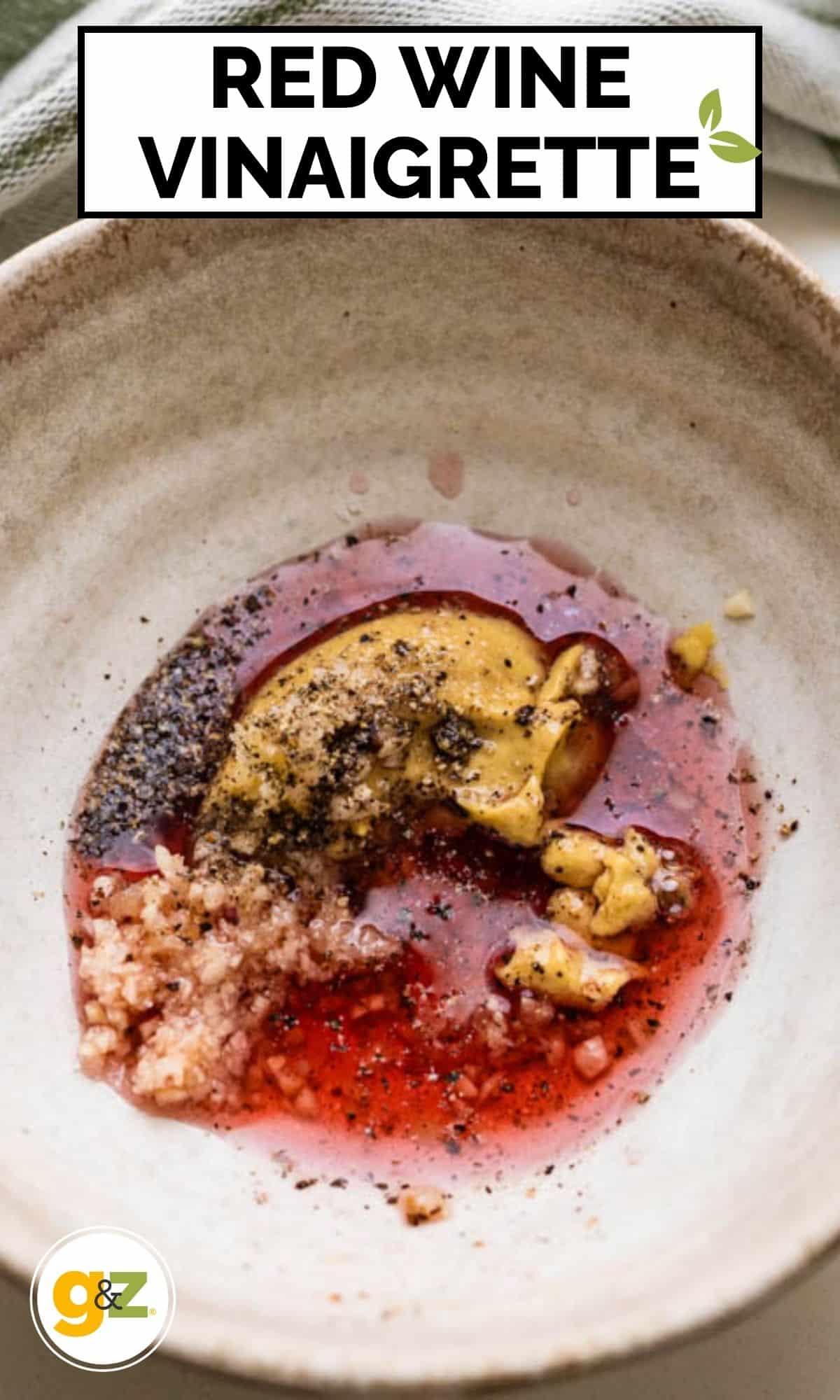
Red Wine Vinaigrette (Classic French Recipe)
Inside: The classical French 3:1 ratio that makes any vinaigrette actually work · why this version skips the sweetener most recipes lean on · the one whisking mistake that causes separation + how long it keeps in the fridge.
This is the recipe worth memorizing: Red wine vinaigrette made with three parts good olive oil to one part red wine vinegar, whisked with garlic and Dijon mustard until it emulsifies into a creamy plush dressing that actually clings to salad greens instead of pooling at the bottom of the bowl. No sweeteners, just the classic French recipe- tangy and well-balanced. It’s ready in about five minutes with six ingredients you probably already have on hand.
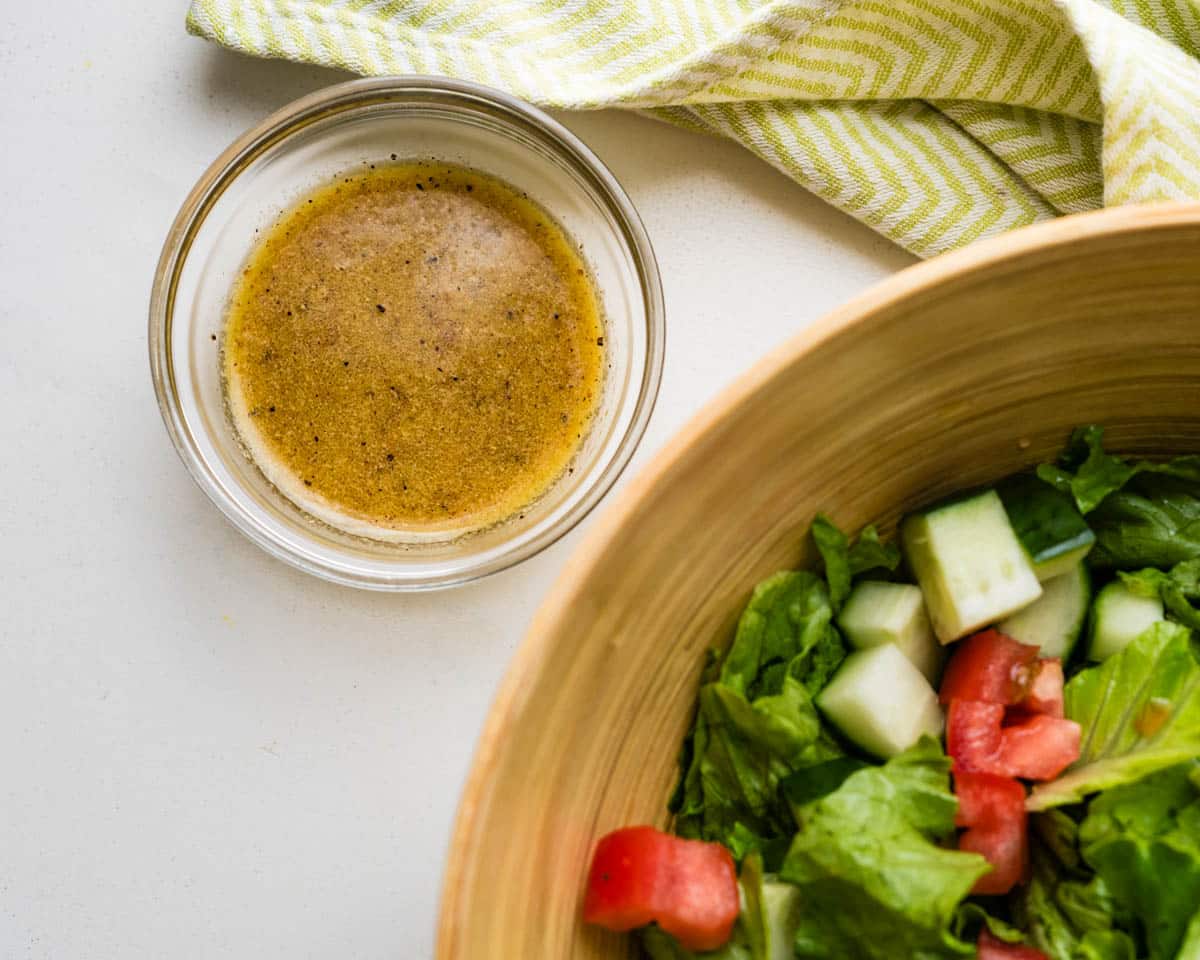
You know those “recipes” that you just know by heart? You don’t need instructions. You don’t need an ingredient list. You JUST KNOW. This red wine vinaigrette recipe is that for me. I learned it from my French mother, who learned it from her French mother, and, of course, my daughter learned it from me.
In my opinion, a red wine vinegar dressing is an essential recipe. It uses pantry staples, takes 5 minutes to make and is so far superior to bottled vinaigrettes that you’ll wonder why you ever bothered with them. Plus, they’re easily scalable for 1 person or a crowd. You can make a big batch and keep it in the fridge to enjoy all week–or make just enough for your lunch salad.
The key is the RATIO. Three parts olive oil to one part red wine vinegar. Add a spoonful of creamy Dijon mustard to bring it together, and a few simple seasonings. Once you have the ratio for this French red wine vinaigrette, you’ll never reach for a bottle again.
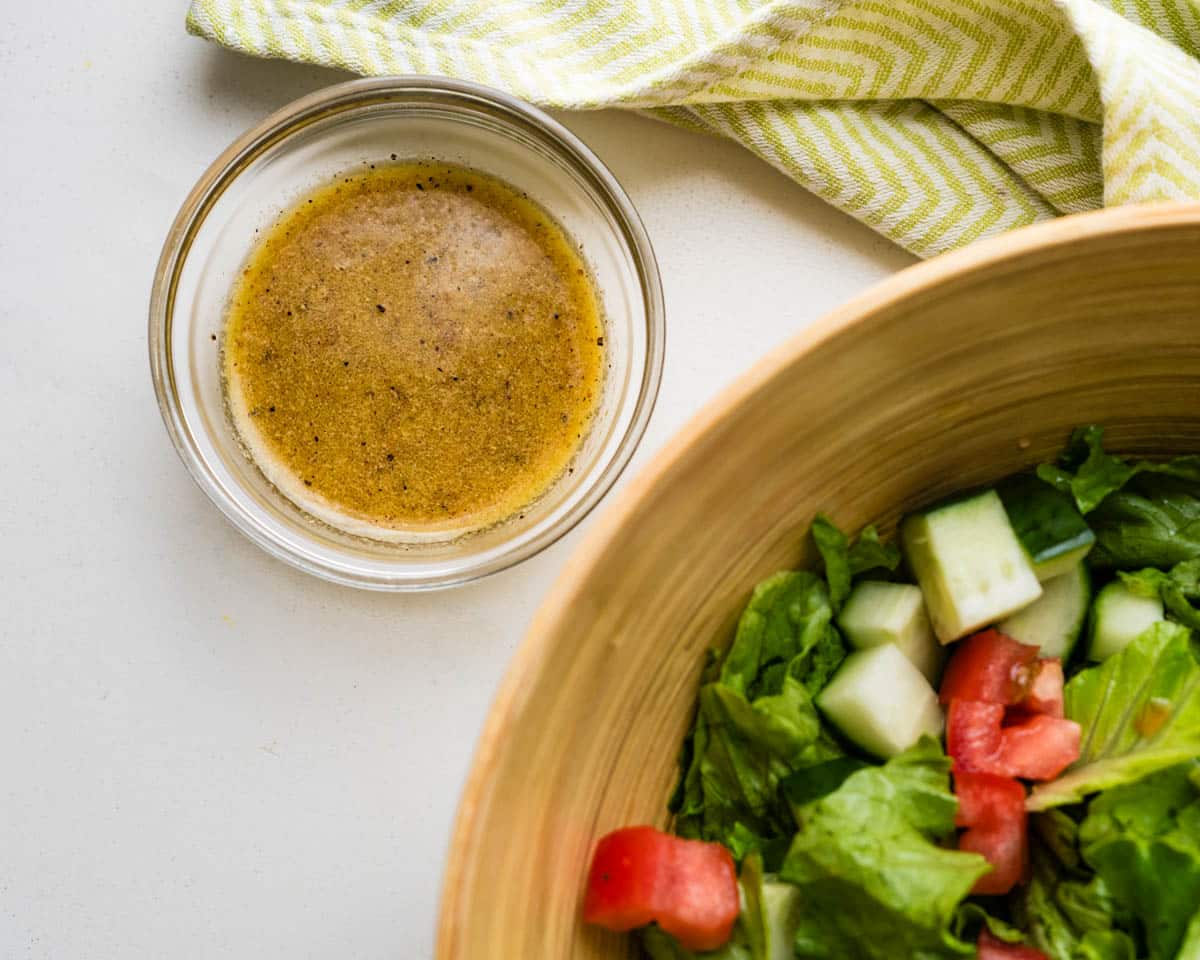
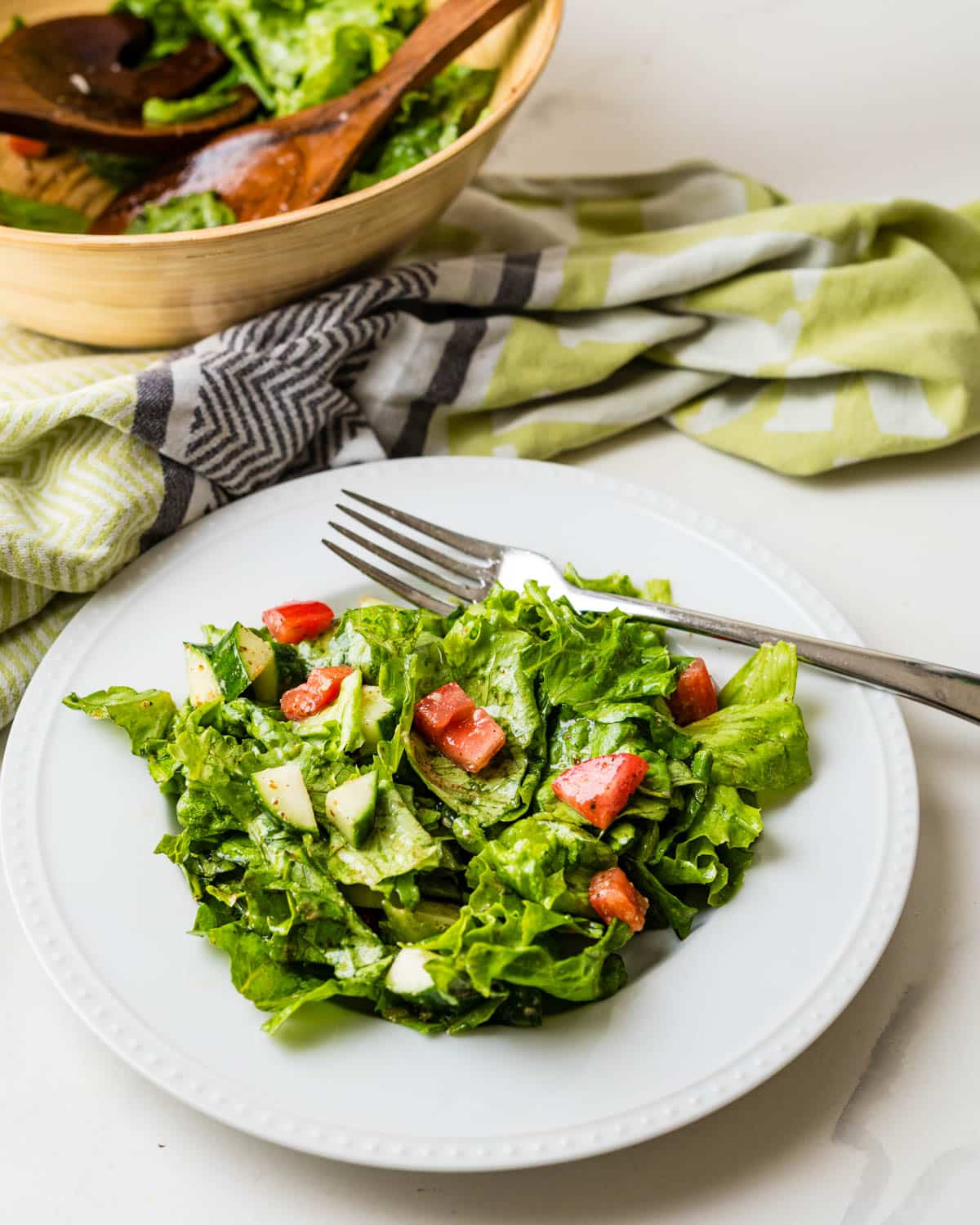
This dressing comes together in the time it takes to wash your salad greens, and all you need is a bowl and a whisk. It’s a versatile French bistro vinaigrette that’s perfect for dressing lettuce, fresh and steamed vegetables or chopped salads.
You don’t need much, because the creamy dressing clings to whatever you toss it with and the bracing tanginess of the vinegar and garlic means you don’t have to drown your lettuce in dressing.
If you like this one, you’ll probably also want my Balsamic Vinaigrette Recipe in your back pocket. If French bistro flavors are your thing, my French Potato Salad (No Mayo) uses a similar dressing method.
Why This Recipe Works:
- 3:1 ratio is the standard. Three parts oil to one part acid is the classical French ratio for a reason — it’s the point where the dressing coats greens without drowning them, and where the vinegar’s sharpness is felt but not front-loaded.
- Dijon does double duty. It’s not just flavor — the mustard emulsifies the oil and vinegar into something that clings to a leaf rather than pooling at the bottom of the bowl.
- No sweetener, on purpose. A lot of versions of this recipe add honey or sugar to round out the acid. This one doesn’t need it — the whisking technique below builds enough body that you won’t miss it, and it keeps the dressing sharper and more versatile for savory applications like steamed vegetables or grain bowls.
- It scales without a recalculation. Because it’s a ratio, not a fixed formula, you can make a spoonful for one salad or a jar for the week using the same proportions.
Ingredients:
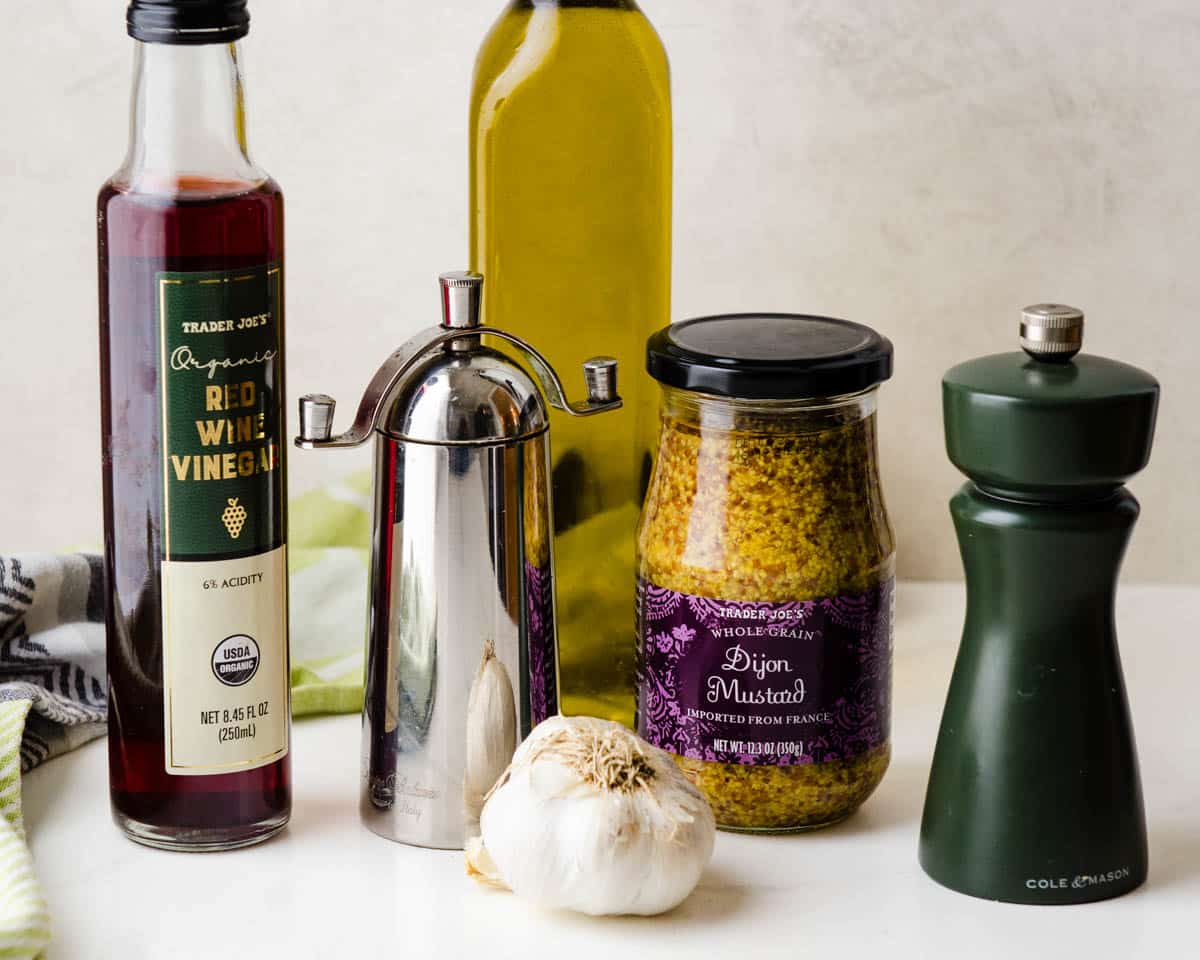
- Garlic — one small clove, minced fine. This is a raw application, so the garlic’s bite is more pronounced than in a cooked dish; if you’re sensitive to raw garlic, use a smaller clove or let the minced garlic sit in the vinegar for a few minutes before adding the rest, which mellows it slightly.
- Dijon mustard — Dijon contains a bit of white wine, which gives this creamy mustard a softer flavor; it’s the emulsifier for the red wine vinegar dressing, and chefs swear by it.
- Red wine vinegar — the backbone of the whole recipe. Use whichever brand you prefer; I’ve used Pompeiian, Regina and the store-brand from Trader Joe’s with good results.
- Extra virgin olive oil — since it makes up the bulk of the dressing’s volume and flavor, use a good one. You don’t need anything rare, just something you like the taste of on its own.
- Sea salt and black pepper — freshly ground pepper makes a noticeable difference here; the flavor is much sharper and more aromatic than pre-ground.
How to make red wine vinaigrette:
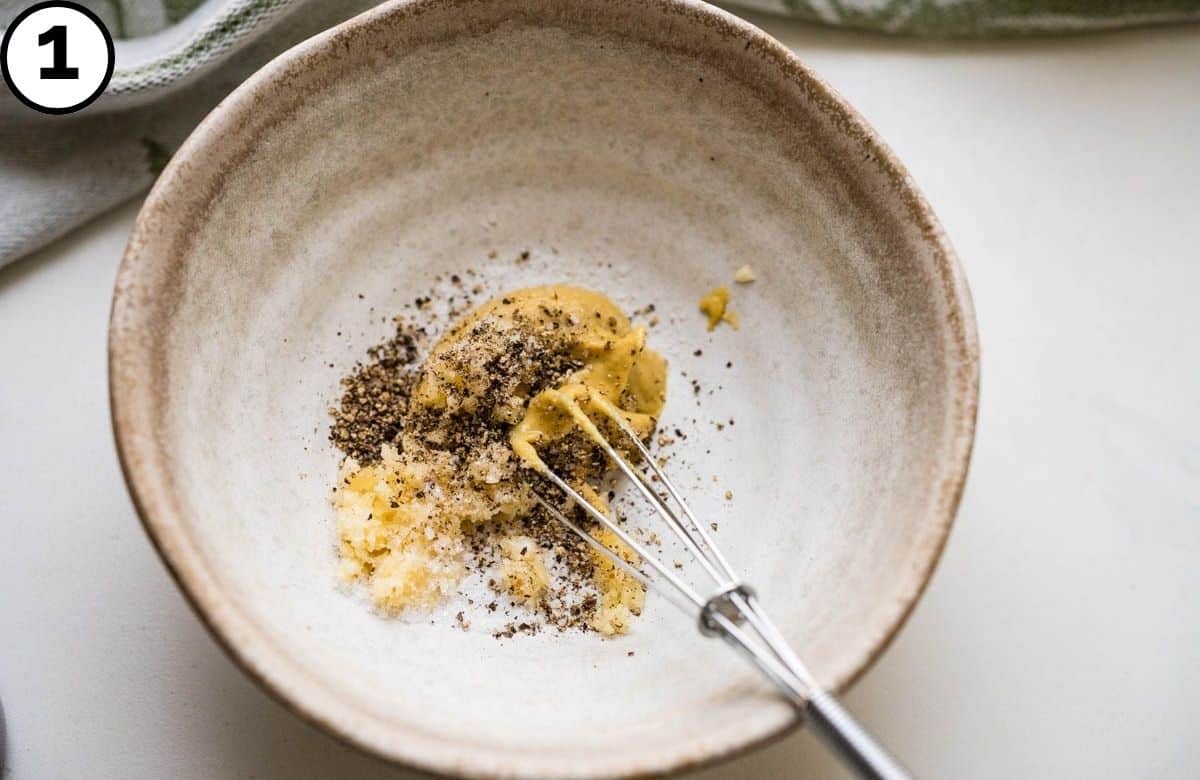
- In a small bowl, combine the minced garlic, Dijon mustard, kosher salt and black pepper.
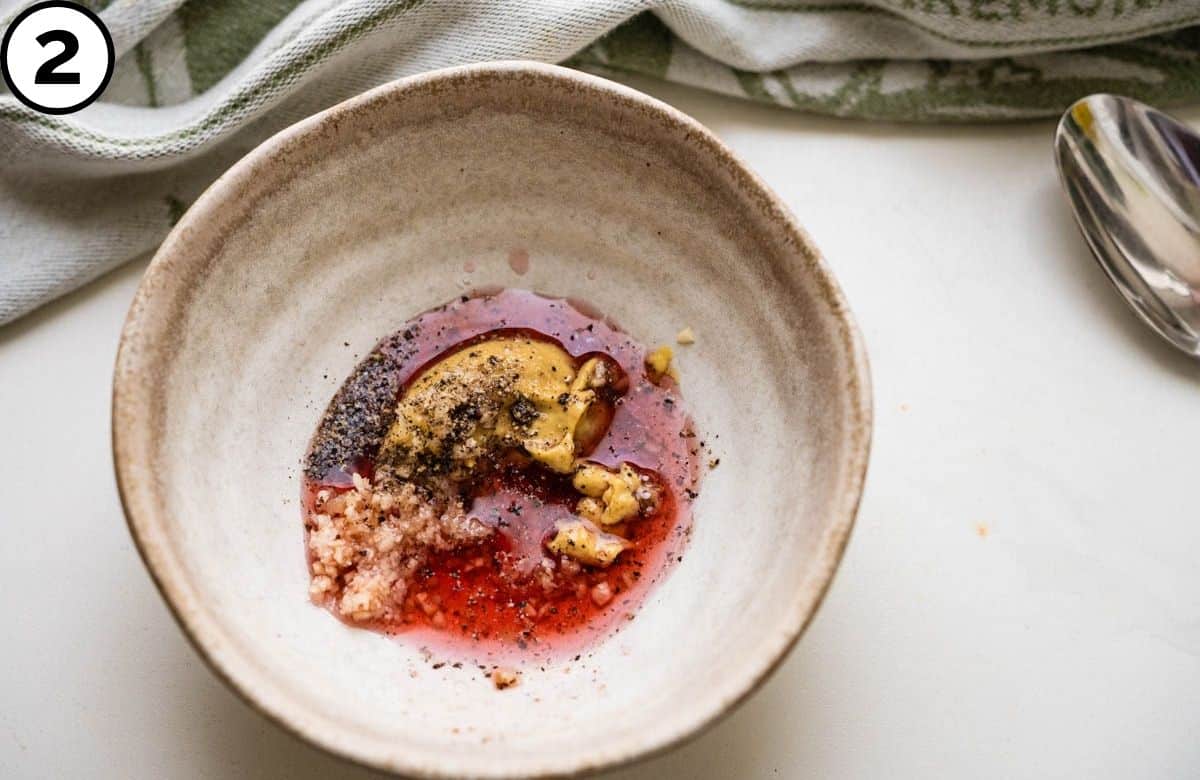
2. Measure out one tablespoon of red wine vinegar and add it to the bowl.
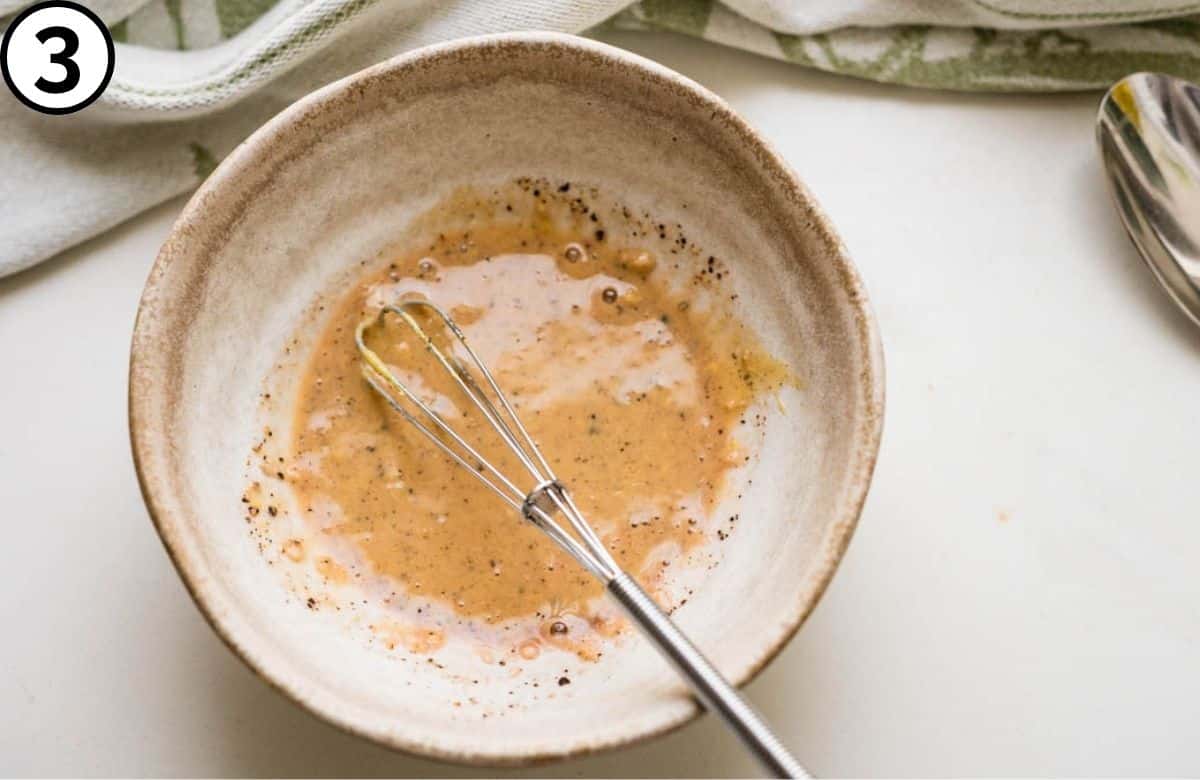
3. Whisk to combine the ingredients until they’re evenly blended.
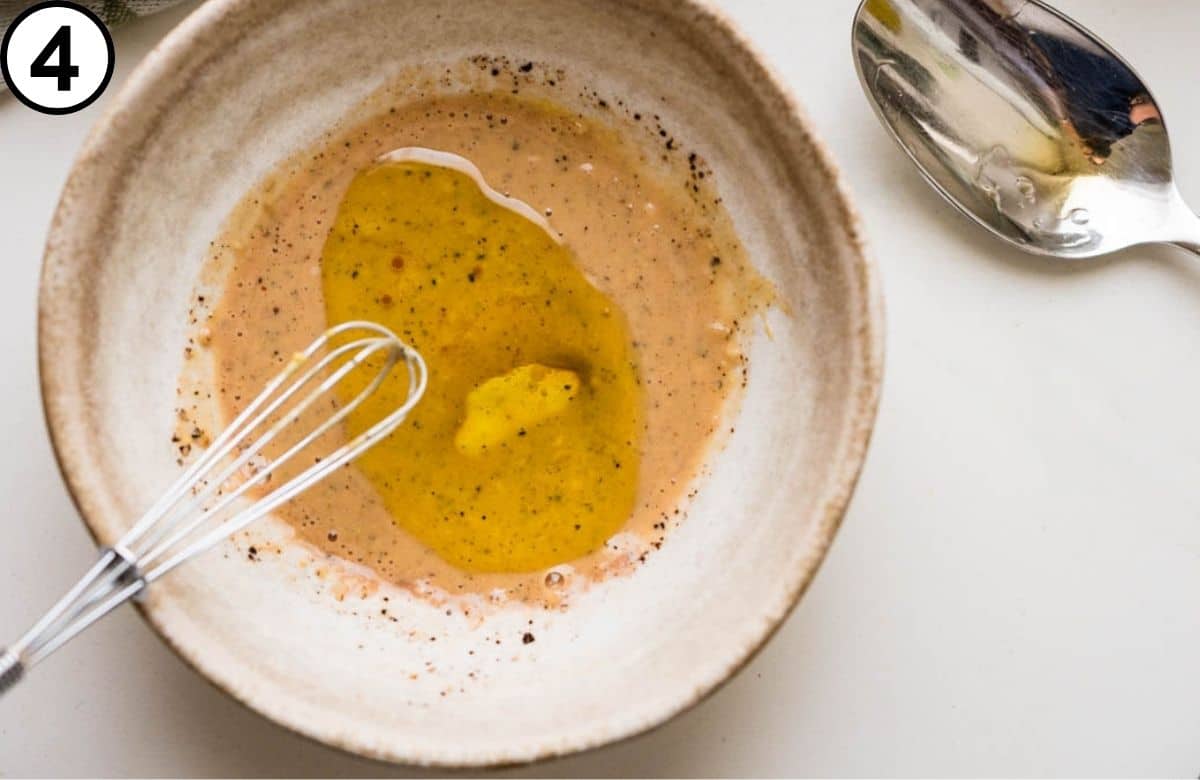
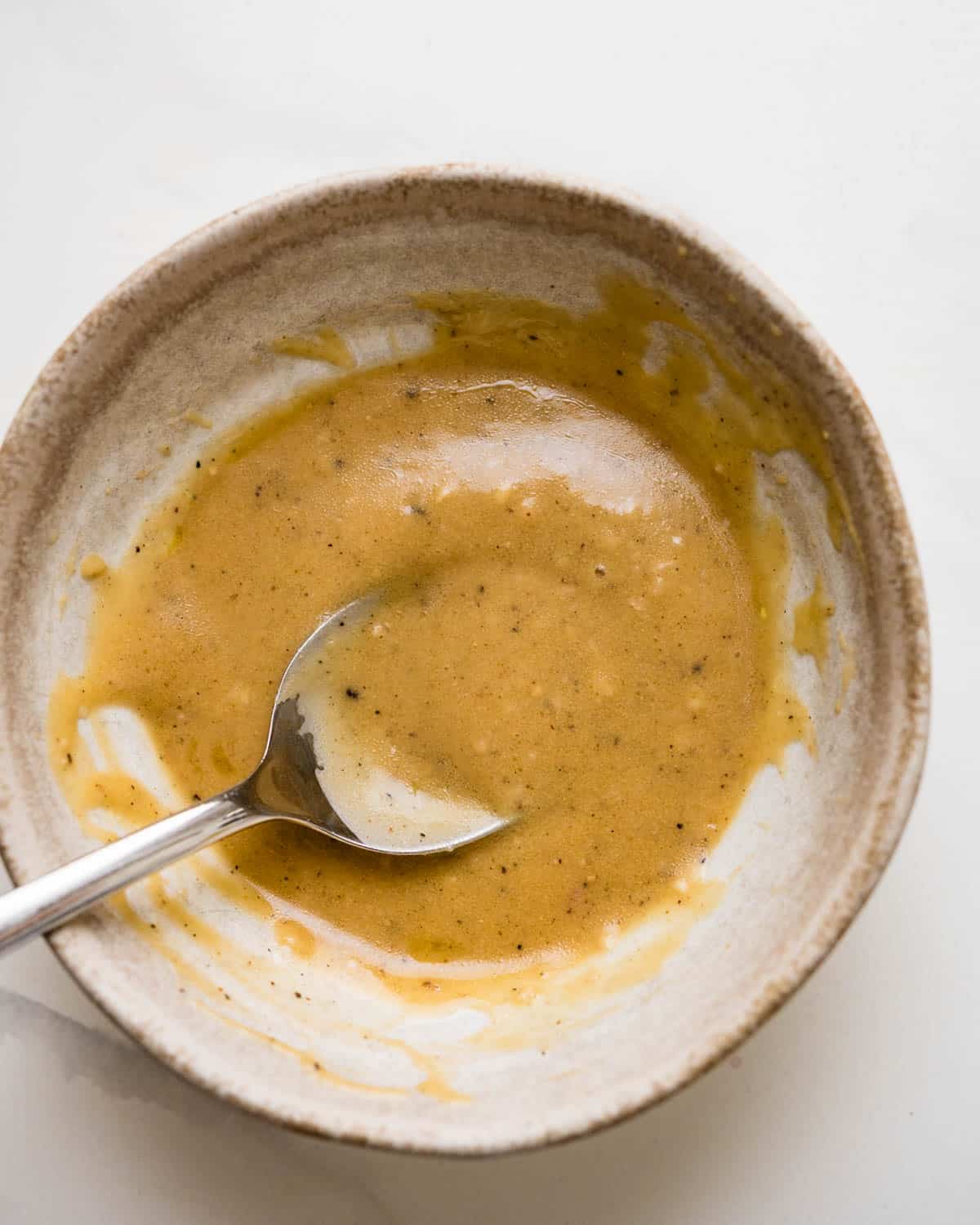
4. Add the extra-virgin olive oil one tablespoon at a time. Whisk until the dressing is completely emulsified, before adding the next tablespoon of oil.
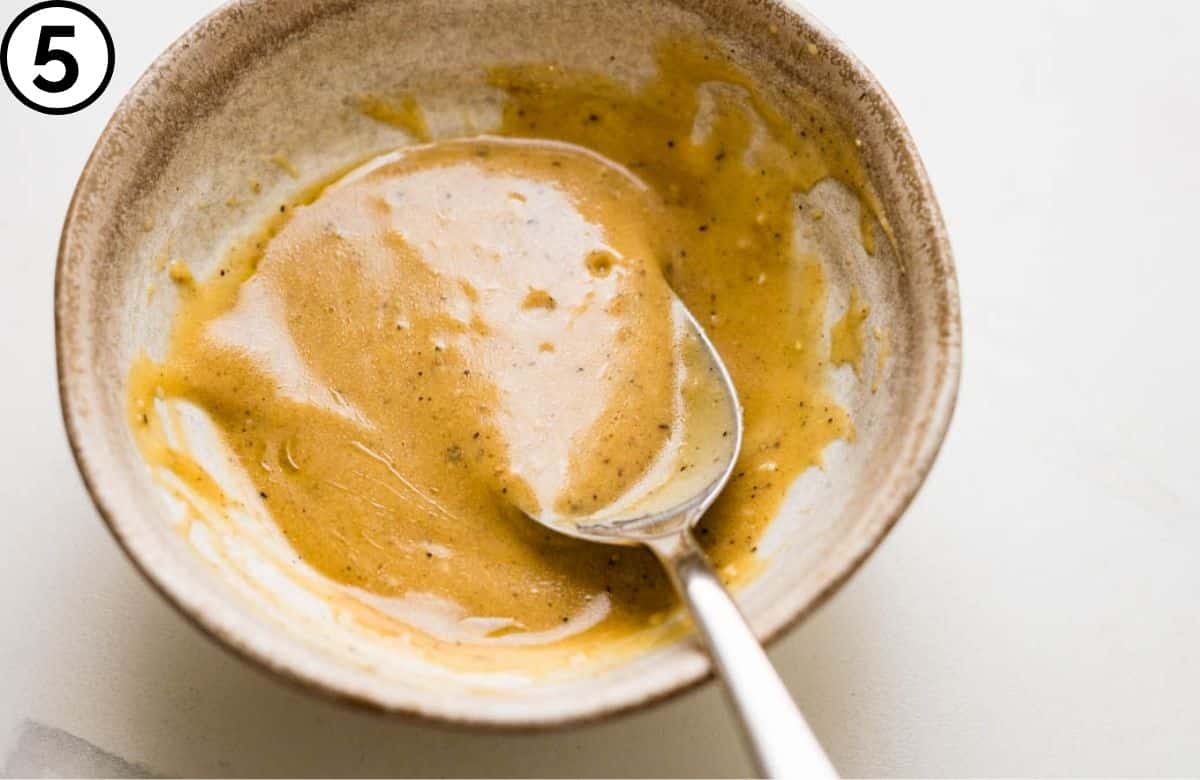
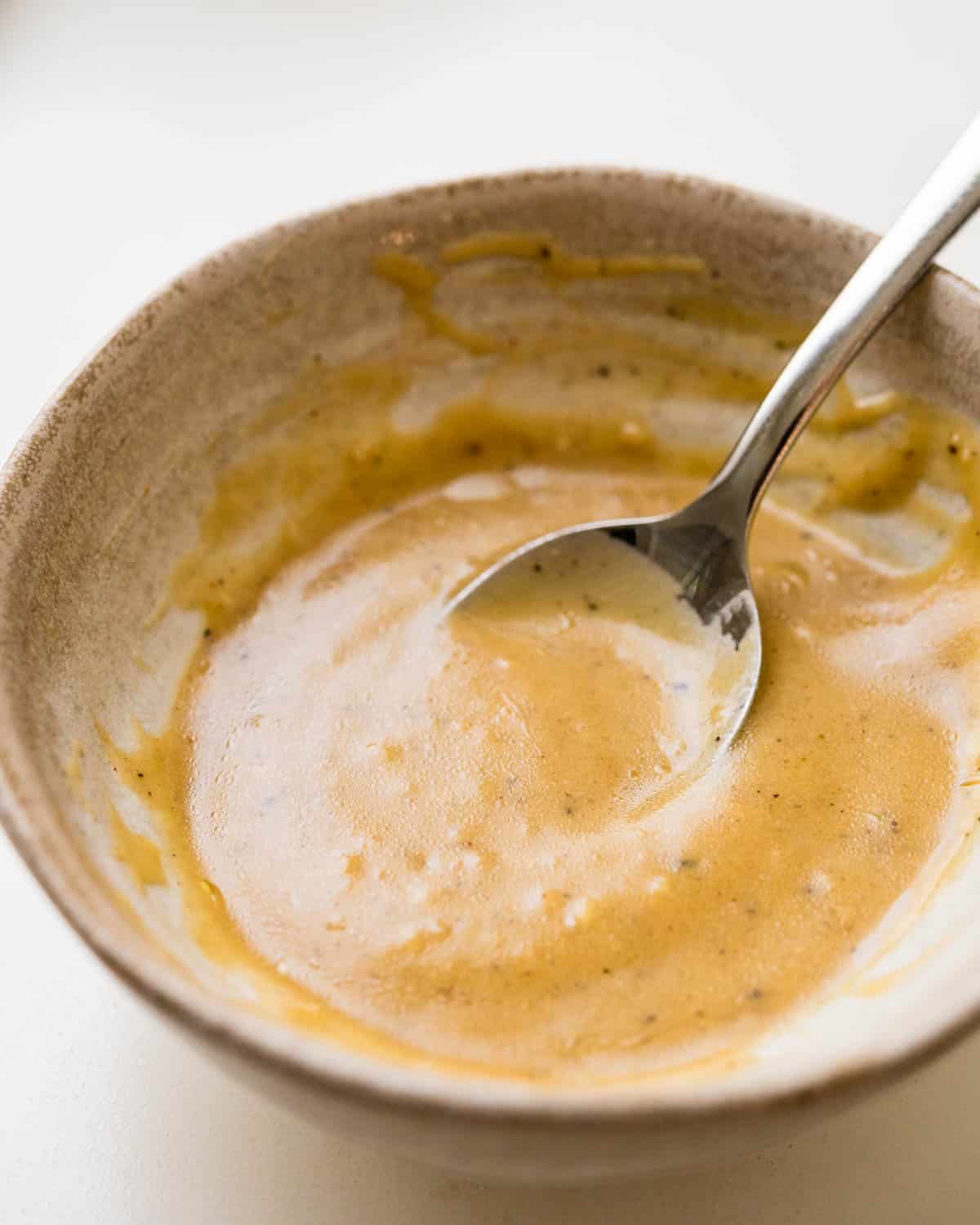
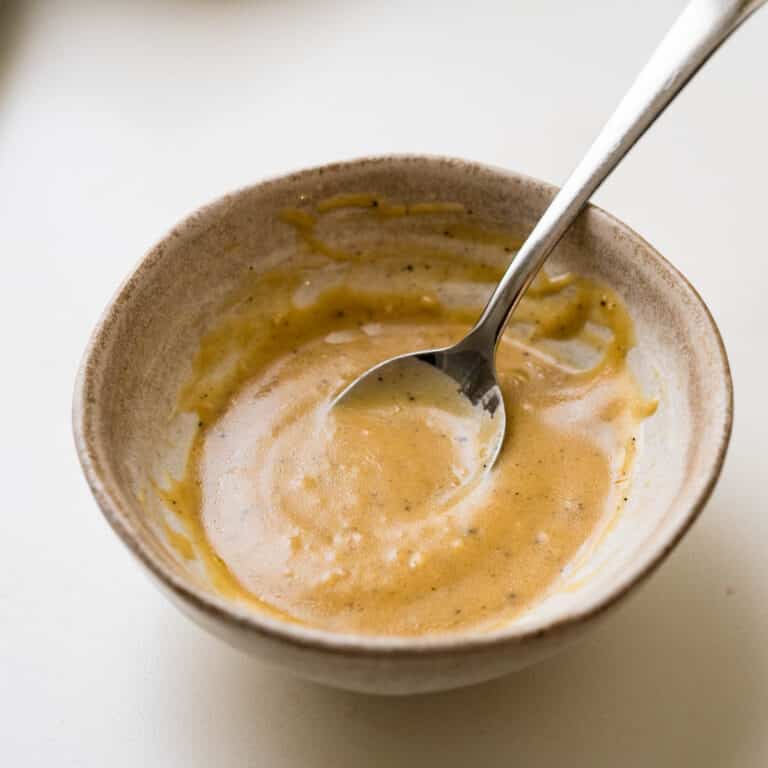
5. Once emulsified, the red wine vinaigrette will be thick and creamy; the perfect viscosity for coating greens without being soggy or wet.
Pro-Tips:
- Add the oil slowly and whisk constantly — this is what actually creates the emulsion. Dumping it in all at once is the most common reason a vinaigrette separates.
- Taste before you serve. Salt suppresses acidity, so a vinaigrette that tastes too sharp often just needs another pinch of salt, not more oil.
- This recipe makes enough for one large family salad (4-6 people). Scale it up or down to suit what you need, or save the rest in the fridge.
- Skip the extra dishes–if you’re assembling the salad ahead of time, make the dressing in the bowl you’re serving it in, then gently place the washed and dried greens on top. Cover with a dish towel and keep in the refrigerator until you’re ready to serve. Toss just before serving.
- Since the red wine vinaigrette is based on ratios, you could use 1 teaspoon vinegar to 3 teaspoons oil for a single-serve salad, or a ¼ cup red wine vinegar (4 tablespoons) to ¾ cup olive oil for a jar that will keep for the whole week in the fridge.
Mistakes to avoid:
- Adding all the oil at once. This is the single most common reason homemade vinaigrette breaks or separates. Slow and steady, whisking continuously, is what builds the emulsion.
- Using pre-ground pepper. It’s a small thing, but freshly ground pepper is noticeably more aromatic in a dressing this simple, where every ingredient is doing real work.
- Skipping the mustard. Some cooks treat Dijon as optional seasoning. In this recipe, it’s structural — without it, the oil and vinegar will separate within minutes of standing.
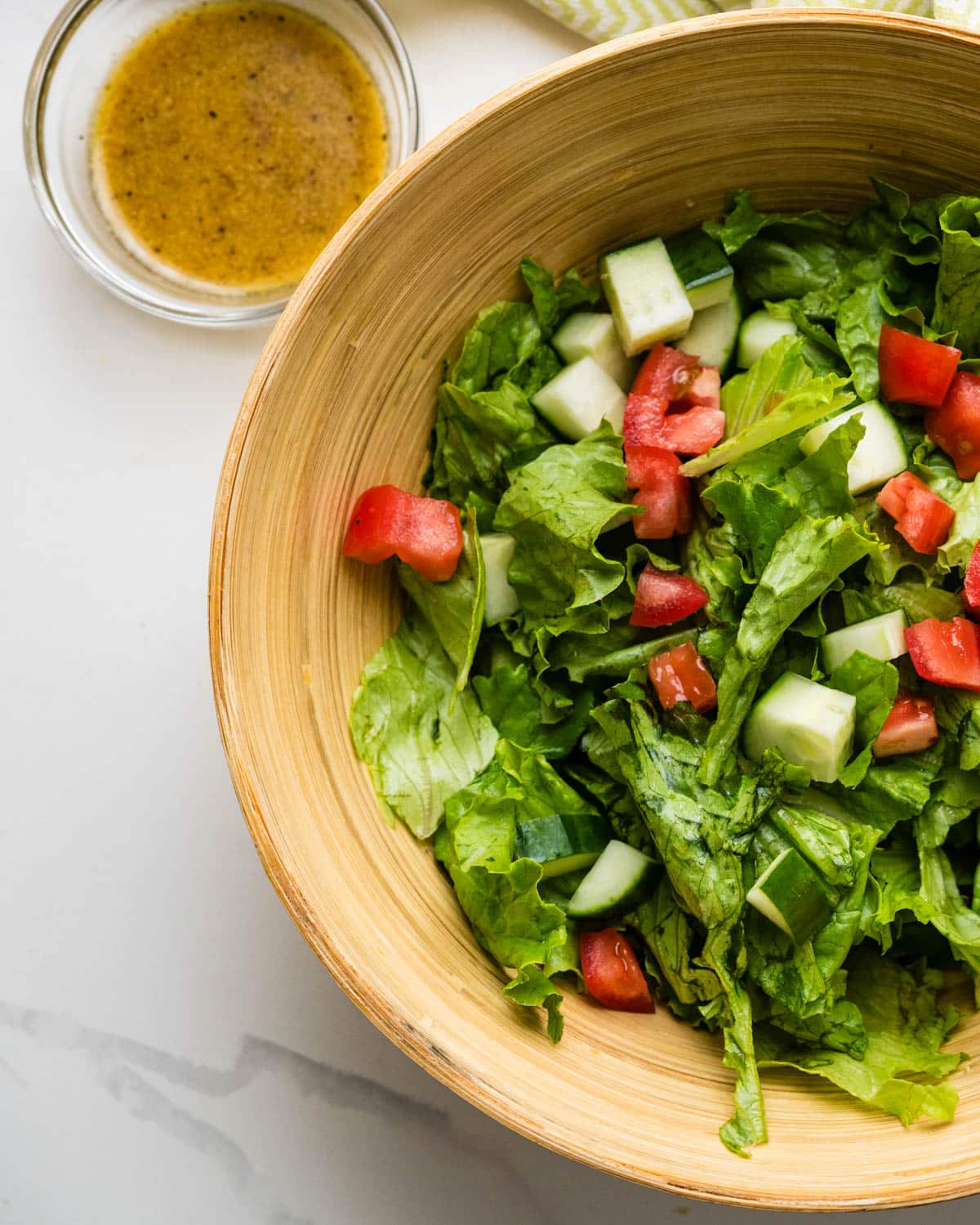
- Don’t overdress your greens. This red wine vinaigrette is punchy, tangy and tart. It clings to the lettuce and seasons it well. Most store-bought dressings don’t have this kind of bracing punch. I recommend adding 1-2 tablespoons to a large salad, tossing well with salad tongs, and then tasting a leaf. If it needs more dressing, add 1 tablespoon at a time.
Swaps and Substitutions:
- Balsamic swap: Replace the red wine vinegar with balsamic for a sweeter, more mellow dressing (or just make my Balsamic Vinaigrette Recipe instead, which is also built around the classic ratio).
- Other acids work too–Swap the red wine vinegar for lemon or lime juice or other sour citrus juices. Specialty vinegars, such as fig balsamic or other flavored vinegars, are other good options.
- Add sweetness–a teaspoon or two of honey, agave or maple syrup will soften the acid bite and add a sweet note. This is more of an American-style dressing.
- Herb version: Whisk in a teaspoon of finely chopped fresh herbs — thyme, tarragon, or chives all work well — after the oil is fully incorporated.
- Shallot instead of garlic: For a milder, sweeter allium note, swap the garlic for a teaspoon of very finely minced shallot.
- Creamy version: Whisk in a few tablespoons of mayonnaise or full-fat Greek yogurt at the end for a lightly creamy texture, closer to the dressing on my Endive Salad with Walnuts and Dijon Dressing.
FAQs
The traditional French ratio is three parts oil to one part acid (vinegar or citrus). This recipe follows that ratio exactly — 3 tablespoons olive oil to 1 tablespoon red wine vinegar.
Vinaigrettes are a temporary emulsion, not a permanent one, so some separation over time is normal — just whisk or shake before using. If it separated immediately after making it, the oil was likely added too quickly.
Yes. White wine vinegar, sherry vinegar, or balsamic vinegar can all be substituted in equal amounts, though each will shift the flavor slightly — sherry vinegar leans nuttier, balsamic sweeter.
No. Bottled Italian dressing typically includes a wider mix of dried herbs, sugar, and sometimes cheese or additional emulsifiers. This is a plainer, more classical French-style vinaigrette with a shorter ingredient list.
Make ahead:
- Make it up to one week ahead.
- This vinaigrette keeps well, which makes it worth doubling or tripling the batch.
Storage:
- Store it in a jar with a tight-fitting lid in the refrigerator for up to one week.
- The oil will solidify slightly when cold, so let it sit at room temperature for 5-10 minutes and shake well before using.
- Because there’s no dairy or egg in this version, it holds up better over time than creamy dressings do.
More dressings you might like:
Red Wine Vinaigrette
SPECIAL EQUIPMENT:
- whisk
INGREDIENTS:
FOR ENOUGH VINAIGRETTE FOR 1 LARGE FAMILY SALAD:
- 1 small clove garlic minced
- ½ teaspoon sea salt or kosher salt
- ¼ teaspoon black pepper preferably freshly ground
- 1½ teaspoons Dijon mustard
- 1 tablespoon red wine vinegar
- 3 tablespoons extra-virgin olive oil
DIRECTIONS:
- In a small bowl combine 1 small clove garlic, ½ teaspoon sea salt, ¼ teaspoon black pepper, 1½ teaspoons Dijon mustard, 1 tablespoon red wine vinegar and mix well to combine.
- Add 3 tablespoons extra-virgin olive oil, one tablespoon at a time and whisk after each until the mixture is smooth and emulsified. Continue whisking in the oil until it's thoroughly incorporated.
- Serve on salads or spoon over steamed veggies.
RECIPE VIDEO:
NUTRITION:
Nutritional Disclaimer
Nutritional information is an estimate only and is provided as a courtesy. Values are calculated automatically based on the ingredients and quantities in each recipe and may vary depending on specific brands, exact measurements, and substitutions made. For precise nutritional guidance, especially if you have a medical condition or dietary restriction, please consult a registered dietitian or run the ingredients through your own nutrition calculator.Pin it for later!