
Caribbean Poached Fish (court bouillon)
Inside: How to poach fish in a tomato-based court bouillon. See why cooking mahi mahi (or any fish) with this simple and foolproof method yields moist, tender, flaky fish every time. And snag my FREE guide for cooking fish flawlessly every time.
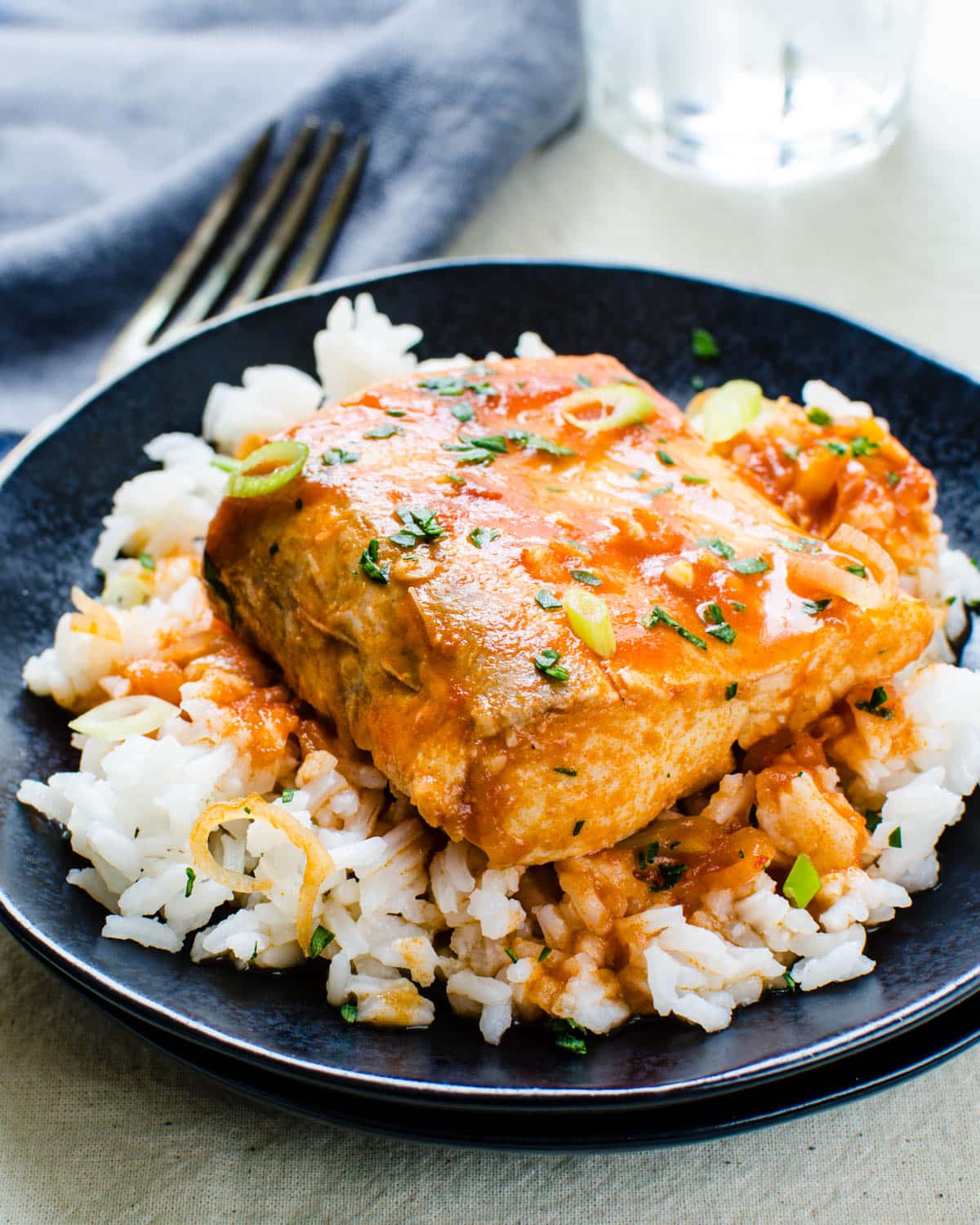
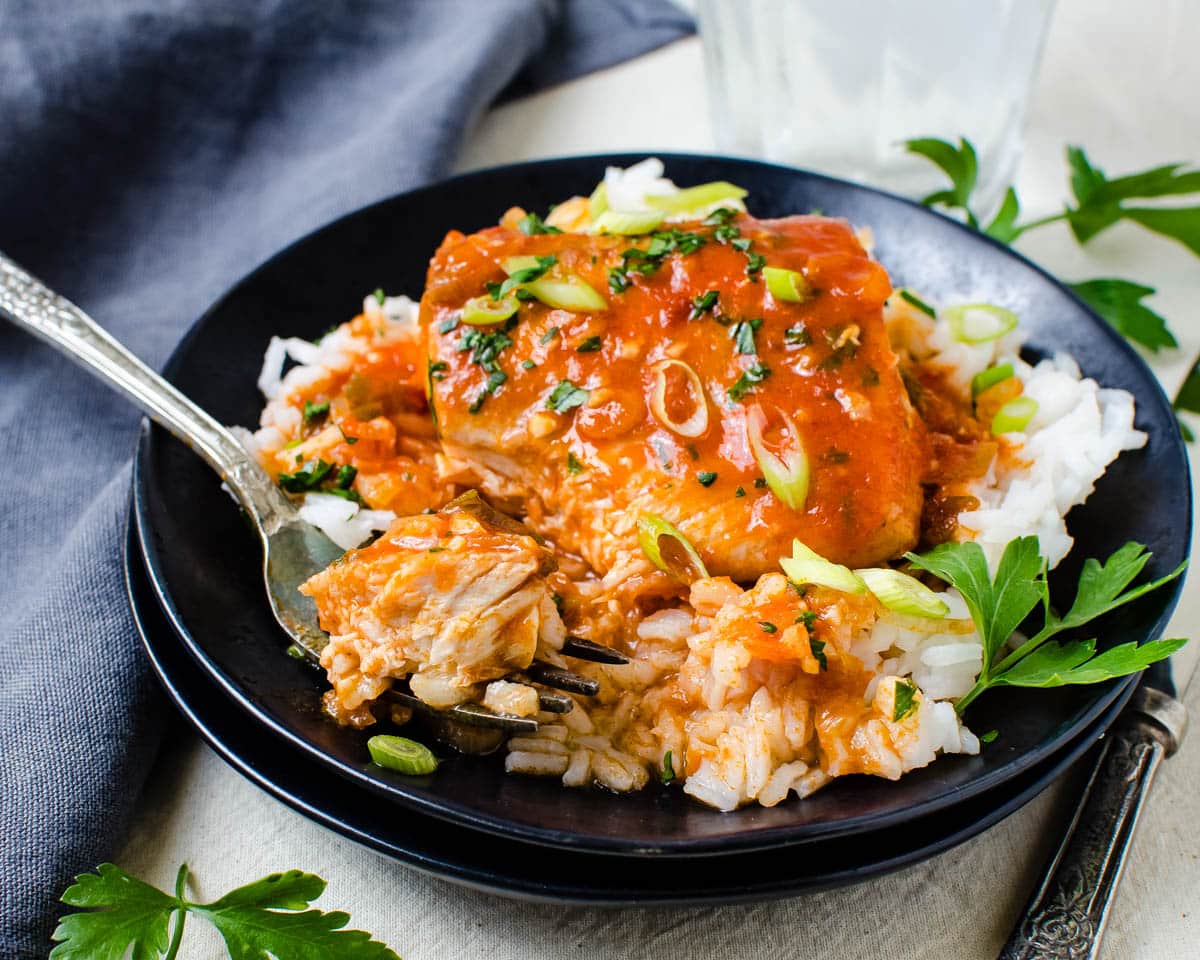
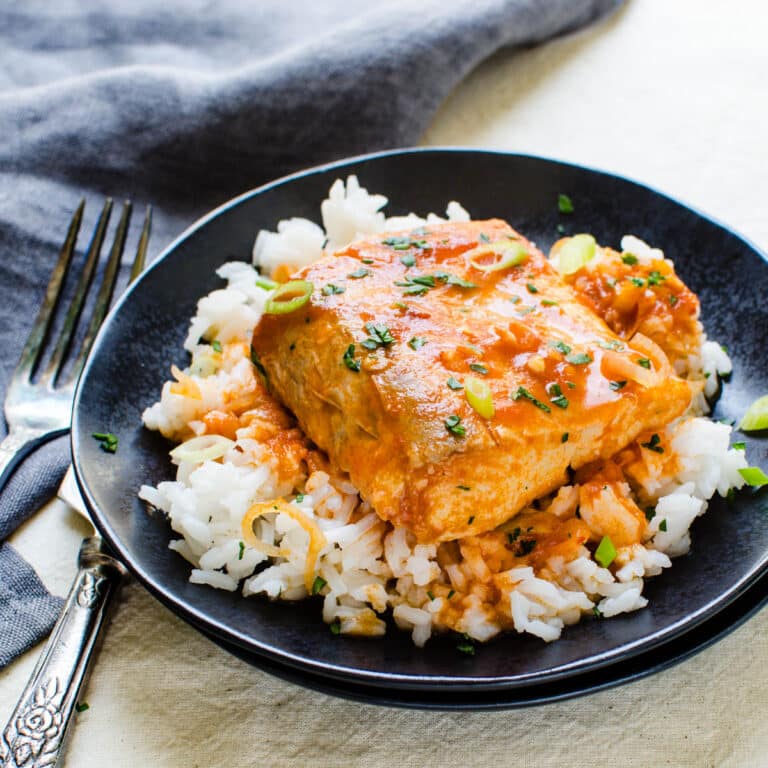
This recipe for spicy poached fish is popular throughout the Caribbean, and it couldn’t be easier to make with just a handful of aromatics. My easy mahi mahi recipe is delicious over rice, and the spicy tomato-based court bouillon makes a light and flavorful sauce to spoon over the seafood.

Court bouillon is a simple poaching liquid made with water or broth, usually infused with wine, herbs, and aromatics. It’s typically used for gently cooking fish, shellfish or other proteins. Once poached, the court bouillon is usually discarded.
I use traditional court bouillon to make perfectly poached chicken breasts and to gently cook the shrimp for this Shrimp Salad Sandwich.
This tomato-based version turns the poaching liquid into a delicious, spicy Caribbean sauce to serve with the poached fish as a complete meal.
I’ve made this fish in tomato sauce countless times for friends (including chefs and anglers), who all agree this is the best mahi mahi recipe. By the way, you can grab these free chef tips for cooking fish perfectly, even if you’re a novice
Why you’ll love this easy mahi mahi recipe
- The fish doesn’t stick or tear as it might when grilling or pan-searing, and the recipe is straightforward.
- It’s a healthy meal that’s naturally gluten-free, dairy-free and easy to make.
- You can use any fish. I used Mahi Mahi because it’s always available, but I’ve also made it with snapper, grouper, cod, halibut, and walleye. Just look for a fresh whitefish.
- The recipe is foolproof, and the fish is always flaky and tender.
- The spicy tomato broth that cooks the poached fish becomes the sauce to serve with the seafood.
- It’s ready to eat in about 45 minutes.
Ingredients:
- Fresh Fish Fillets – I used Mahi Mahi, but it works equally well with red snapper, grouper, kingfish, cod, halibut, perch, corvina, and most other fish or shellfish.
- Scallions–a.k.a. green onions.
- Garlic–the recipe uses five cloves, which might seem like a lot, but trust me, it doesn’t overpower the poached fish.
- Shallots–a cross between onions and garlic, this purple allium adds another layer of aromatics to the base of this Caribbean fish recipe.
- Olive Oil–you don’t need to use a fancy Extra Virgin olive oil; the everyday stuff works fine.
- Tomato Sauce–use a good quality tomato sauce as this is the main ingredient for the poaching liquid.
- Red Pepper Flakes–this gives the Caribbean poached fish its spicy kick, though you can use more or less depending on your heat tolerance.
- Dried Bay Leaves
- Kosher Salt–or sea salt.
- Black Pepper–freshly ground is best.
- Water–to thin the tomato sauce for poaching the fish.
- Lemon–a squeeze of lemon juice added just before serving will brighten the flavors in the dish.
- Parsley–I used flat-leaf Italian parsley, but curly parsley is fine, too.
- Cooked White Rice–for serving. I prefer sticky rice to converted rice like Uncle Ben’s because it’s better for soaking up the poaching liquid.
Step-by-step instructions:

- Finely slice the shallots and green onions on a cutting board and mince the garlic.

2. Heat the olive oil in a skillet over medium-low heat. Add the aromatics and sweat them until they soften and become translucent, stirring occasionally. Placing the lid on the skillet will trap steam and help soften the alliums. Be careful not to fry or brown the vegetables; otherwise, they can give the court bouillon a bitter taste.

3. Once the vegetables are soft and translucent, stir in the tomato sauce, red pepper flakes, bay leaves, salt, pepper and ½ cup of water. Stir to combine and continue to simmer the sauce over medium-low heat, uncovered, for another 10 minutes until it thickens.

4. Stir in the remaining water and add the fish fillets to the tomato broth. Secure the lid on the skillet and poach the fish in the court bouillon for about 8 minutes.
Use a spatula to flip the fish and cook the mahi mahi in the tomato broth for 7-8 minutes until cooked.

5. Squeeze the lemon juice over the top of the fish and sprinkle with chopped parsley.

6. While the fish poaches in the tomato court bouillon, make some white rice to serve it with using the package instructions. Try to time it so that the rice and seafood are done simultaneously (I usually start the rice after sweating the vegetables).

7. Serve the Caribbean poached fish with cooked sticky white rice.
Pro-Tips:
- I’ve included crushed red pepper flakes as the spice for this recipe, but if you have a favorite hot sauce, you can easily use that instead. Season to your tastes and serve extra on the side if others like more heat.
- The poaching liquid should be looser than a typical tomato sauce. If its too thick, stir in two to three tablespoons of water to loosen it up. Taste sauce and adjust seasonings as needed.

Variations:
- Swap the water for fish stock, bottled clam juice or shrimp stock for a deeper concentration of seafood flavors.
- Swap the last ¼ cup of water for white wine.
- Add other seafood to the court bouillon poaching liquid, like peeled and deveined shrimp, calamari or bay scallops.
- Serve over steamed couscous or quinoa instead of rice.

FAQs
Court bouillon is a French method for gently poaching protein and seafood while infusing it with aromatics. It keeps fish, shellfish and poultry moist while adding a subtle flavor to the meat.
Traditional court bouillon is made with celery, onions or leeks, peppercorns, white wine, and bundles of fresh herbs like thyme, parsley and bay leaves.
This recipe comes from the French West Indies and Lesser Antilles and has more of a Caribbean flavor.
French Cajuns and Creoles create more stew with their court bouillons–diced tomatoes, green bell peppers and large pieces of catfish or redfish, using a roux as a thickening agent. Creole seasoning gives it a spicy kick.
No. A stock is made with bones, connective tissues, vegetables and water; it’s simmered and strained for an ingredient that can be used to make soups, stews and other recipes. Court bouillon is a poaching liquid for cooking fish and proteins. In this recipe, the tomato-based court bouillon is a sauce for the poached mahi mahi.
Poaching is a method of cooking via a slow simmer. It’s ideal for cooking mahi mahi or other fish in liquid until cooked through. This helps the seafood retain its moisture instead of drying out.
Storage:
- Keep leftovers in an airtight container in the refrigerator for up to 3-4 days.
Reheating:
- Reheat in the microwave in 30-second bursts or over gentle heat in a skillet with a lid.
What to serve with Caribbean poached fish:
- Grated Cucumber Salad – This is especially nice because it cools your mouth from the sauce’s spice.
- Simple Green Leaf Salad
- Cheddar Chive Popovers

More fish recipes to try:
- Crunchy Salmon Cakes
- Grilled Swordfish Steaks
- Seared Salmon with Bourbon Glaze
- Crispy Baked Fish Tacos
- Caribbean Grilled Yellowtail Snapper Recipe with Easy Aioli
- Hogfish Recipe with Adriatic Sauce
Spicy Caribbean Mahi Mahi
SPECIAL EQUIPMENT:
- Large Skillet with a lid
INGREDIENTS:
- 1 pound mahi mahi fillets (or any fish fillet) cut into 4-6 oz portions
- 5-6 green scallions thinly sliced
- 5 cloves garlic minced
- 3 shallots thinly sliced
- 3 tablespoons olive oil
- 8 ounces good quality tomato sauce
- ¼-½ teaspoon red pepper flakes depending on how spicy you like it
- 2 bay leaves
- ¾ teaspoon kosher salt
- 2-3 grinds of black pepper
- ¾ cup water divided
- juice of half a lemon
- chopped parsley for garnish
Serve with
- 2 cups cooked long grain white rice – you want the rice to be sticky — NOT converted rice.
DIRECTIONS:
- Before you start, be sure to download your FREE guide to cooking flawless fish.
SWEAT THE VEG:
- Heat a 9-10" skillet over medium-low heat and swirl 3 tablespoons olive oil over the bottom of the pan. Add 5-6 green scallions, 5 cloves garlic and 3 shallots and cook, stirring occasionally, until vegetables are soft and translucent, about 10-15 minutes. (Don't crank up the heat – you don't want these vegetables to brown).
- Stir in 8 ounces good quality tomato sauce, ¼-½ teaspoon red pepper flakes, 2 bay leaves, ¾ teaspoon kosher salt, 2-3 grinds of black pepper and ½ cup water. Stir to combine and continue cooking, uncovered, until sauce has thickened somewhat, about 10 minutes.
POACH THE FISH:
- Stir in the remaining ¼ cup water and nestle 1 pound mahi mahi fillets in the poaching liquid. Put the lid on securely and poach the fish on low to medium-low heat for about 8 minutes.
- Using tongs or a spatula, flip the fish over and continue to poach for an additional 7-8 minutes. Remove from heat. Squeeze juice of half a lemon over the fish and chopped parsley for garnish.
- Serve on top of 2 cups cooked long grain white rice.
NOTES:
NUTRITION:
Nutritional Disclaimer
Nutritional information is an estimate only and is provided as a courtesy. Values are calculated automatically based on the ingredients and quantities in each recipe and may vary depending on specific brands, exact measurements, and substitutions made. For precise nutritional guidance, especially if you have a medical condition or dietary restriction, please consult a registered dietitian or run the ingredients through your own nutrition calculator.Don’t Forget To “Pin It” For Later!

Can I use cod rather than mahi?
Absolutely. I’ve made it with Cod and even Walleye before. Cod tends to be a little more delicate than Mahi, but since it’s a poached fish dish, it shouldn’t matter, just flip it carefully.
So good!!! We just got back from our 4th time in the BVI and we have made this…probably 4-5x. Delicious! Simple!
This is a perfect recipe, so delicious!
Delicious! I followed the recipe exactly and it turned out very tasty! My husband, a picky eater, cleaned his plate. Thank you for sharing!
I tinkered with the recipe and I loved it. Will be using as a way to cook my fish likely once a week now. I added 1/4 tsp Turmeric, 1/8 tsp Cayenne powder in place of the flakes, 1 minced sweet pepper simmered in the sauce, 1 tsp Cumin, white pepper instead of black pepper,3 bay leaves and I pureed 1/4 RIPE mango in the water to add to the sauce. I also simmered the sauce down for 20 minutes not the 10 as instructed.
absolutely floored by how good this recipe is!!! i added in turmeric and subbed red pepper flakes for cayenne powder to make it reaaally spicy. fantastic, can’t wait to make it again!!!
We add cumin and turmeric and love this dish!
I made this for my family 2 nights ago. My son just informed me that this was “one of the 3 best meals I’ve ever had in my life.” He’s 19 and has eaten in 8 different countries.
I’m so happy that your son enjoyed the mahi mahi! It’s a recipe that’s been in my family for years!
What an excellent recipe! Always trying to incorporate more tomato in my fish dishes, (sometimes even frozen Mah-Mahi fillets-usually all that is available here in Nova Scotia). C’mon Climate Change! LOL. This would be great for Haddock and Cod, Halibut, even Swordfish (all readily available) and even Basa filets from Vietnam (very good freshwater farmed fish-I think banned from the US to protect your Tilapia and Catfish farmers). I would hesitate with with farmed Salmon. Again thank you!
I have been known to use this recipe with lots of different fish — including Wahoo, Snapper — and when visiting my husband’s family in Minnesota — Walleye. It’s very versatile!