
Prickly Pear Syrup
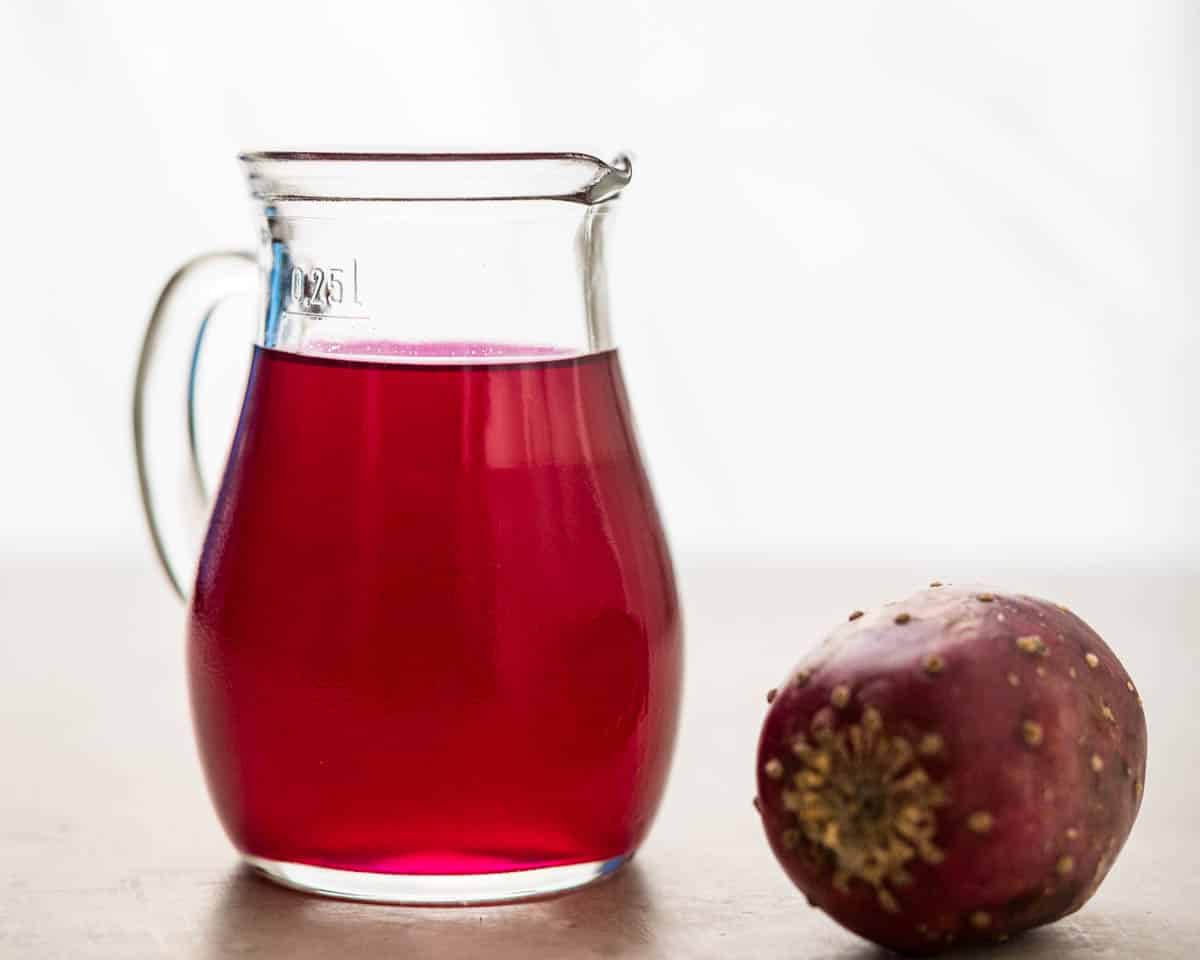
This homemade prickly pear syrup — made from real, whole prickly pears, not a bottle off a shelf — turns a spiky, unassuming desert fruit into one of the boldest things you’ll pour into a drink. Softly sweet, lightly tangy, and a shade of pink-purple so electric it looks doctored. (It’s not. That’s really the color.)
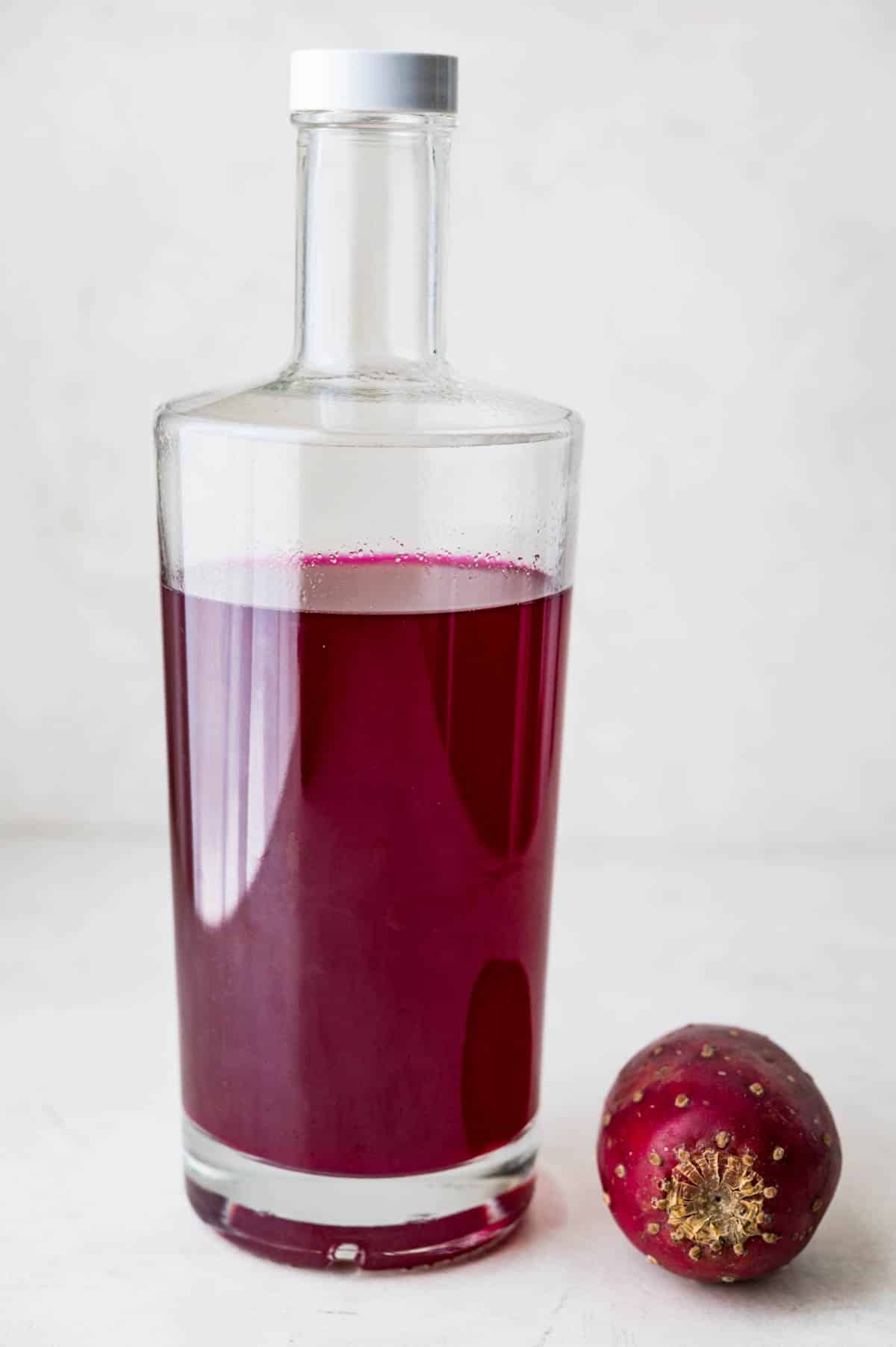
I’ve made a habit of turning whatever’s in season into syrup — passion fruit, guava, even rhubarb. Once you understand the basic ratio (roughly equal parts sugar and water, adjusted for how much natural sugar the fruit already brings), almost anything can become something worth pouring over a cocktail, a bowl of ice cream or a glass of iced tea.
Some of the simple syrup recipes behave themselves. My peach syrup and mango syrup barely need supervision — ripe fruit brings its own sweetness and color, and there’s nothing to fight.
Prickly pear is the opposite. The color shows up instantly and looks incredible, but the flavor underneath is mild, and getting a clear syrup out of it — instead of something with the texture of magenta soup — takes more finesse: straining it twice and balancing that sweetness with a little citric acid.
Prickly pears have a strange problem: all that color, not much punch. On their own, the flavor is mild; closer to watermelon crossed with bubblegum than anything bold. And without help, syrup made from them can taste thin next to how dramatic it looks. This recipe fixes that in three places.
Why this recipe works:
- Mashing the fruit, instead of blending it, releases color and juice without turning the seeds into a paste you’ll spend about twenty minutes trying to strain out.
- A 15-minute steep after cooking gives the syrup time to pull in more color and flavor before you strain it; rush that step, and you’ll end up with something paler and more watery instead of the Pantone pink-purple you see in these photos.
- Straining it twice in a regular mesh strainer and a fine mesh strainer, and not pressing hard on the solids when you’re straining, keeps prickly pear syrup free of excess sediment and eliminates the cloudy look.
Ingredients for prickly pear syrup:
- Prickly Pears–about 1½ pounds. Prickly pears are also known as tunas, and if you’re foraging yourself, you’ll want to take precautions – gloves, tongs, etc. If you’re selecting at the market, they’ve probably removed the prickly glochids that can irritate your skin like fiberglass.
- Granulated Sugar–don’t substitute brown sugar; it’ll pull that bright pink-purple color toward brown and add a weird molasses note.
- Water–straight from the tap.
- Citric Acid–this does real flavor work, balancing and adding real structure to the syrup’s flavors, not just acting as a preservative. A little goes a long way — find it in the baking aisle, the Kosher section (labeled “sour salt”), or online.
Equipment:
- Heavy duty gloves–only needed if you’re harvesting your own tunas. Skip it if you’ve bought them in the market.
- Old-fashioned potato masher–For mashing the pulp.
- Two strainers–You’ll need a regular mesh strainer and a fine mesh strainer (or cheesecloth). The second strain removes any minute sediment and keeps the prickly pear syrup clear and jewel-like.
How to make prickly pear syrup:
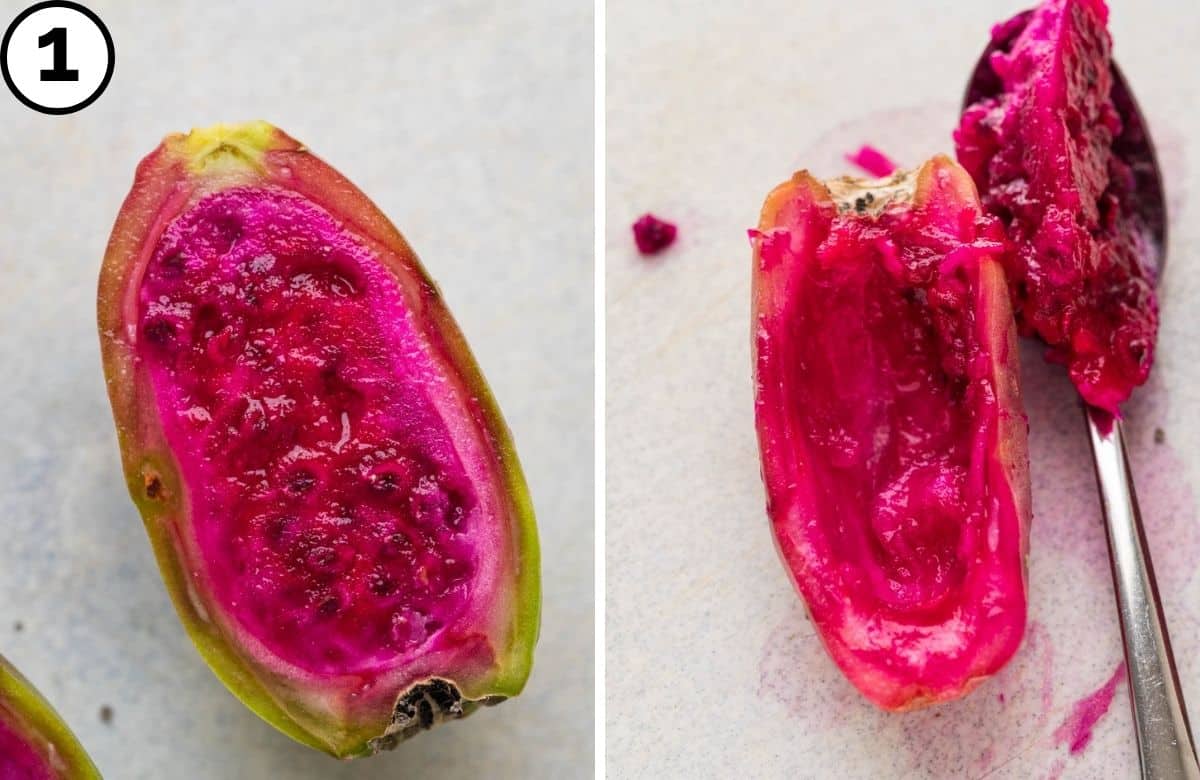
- 1. Slice the prickly pears in half and use a spoon to scoop out the flesh. Transfer to a large saucepan.
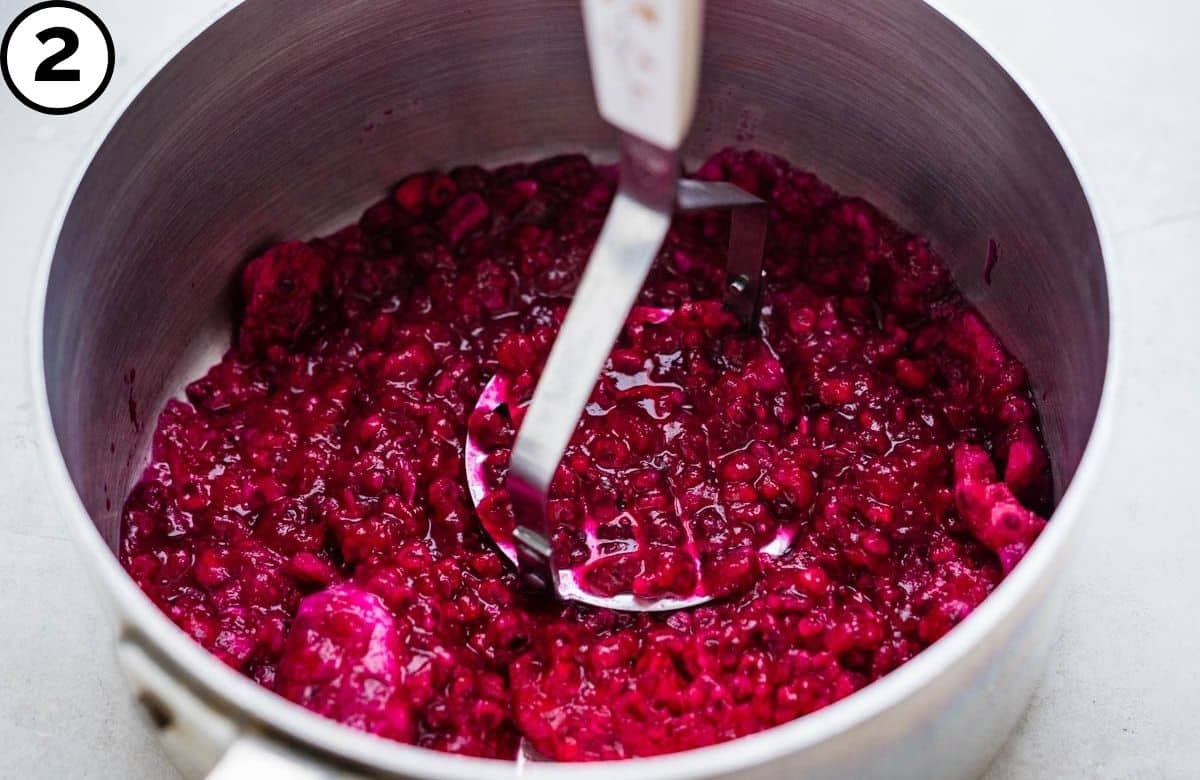
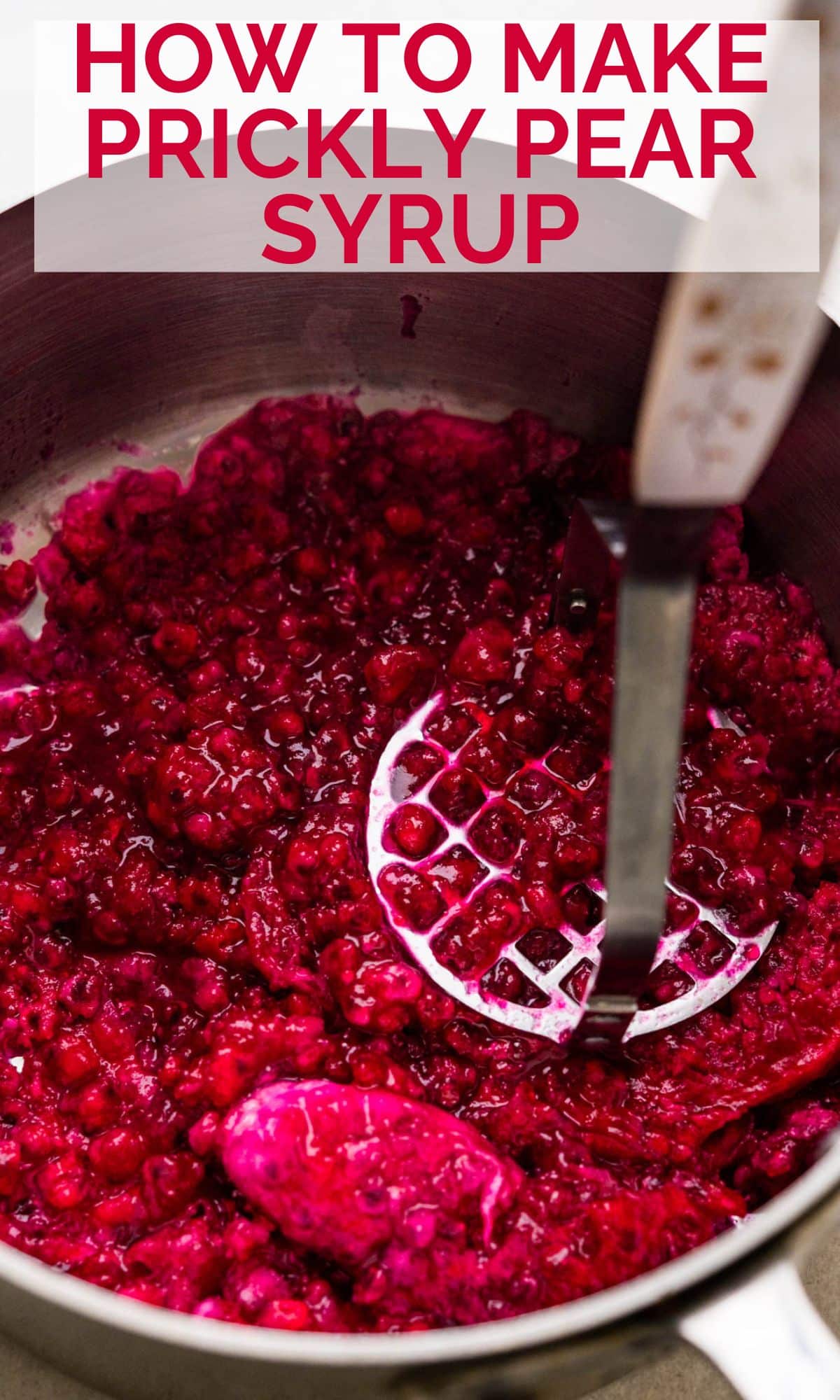
2. Use a potato masher to process the pulp and seeds, mashing them together.
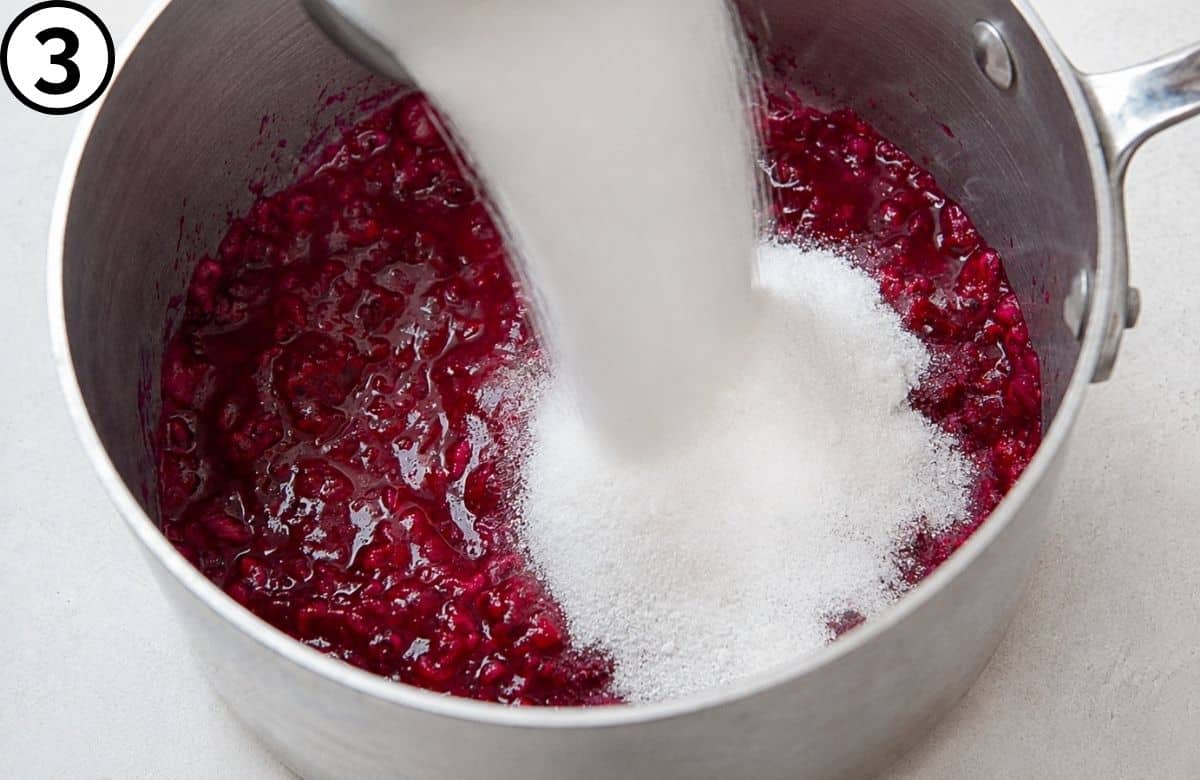
3. Add granulated sugar.
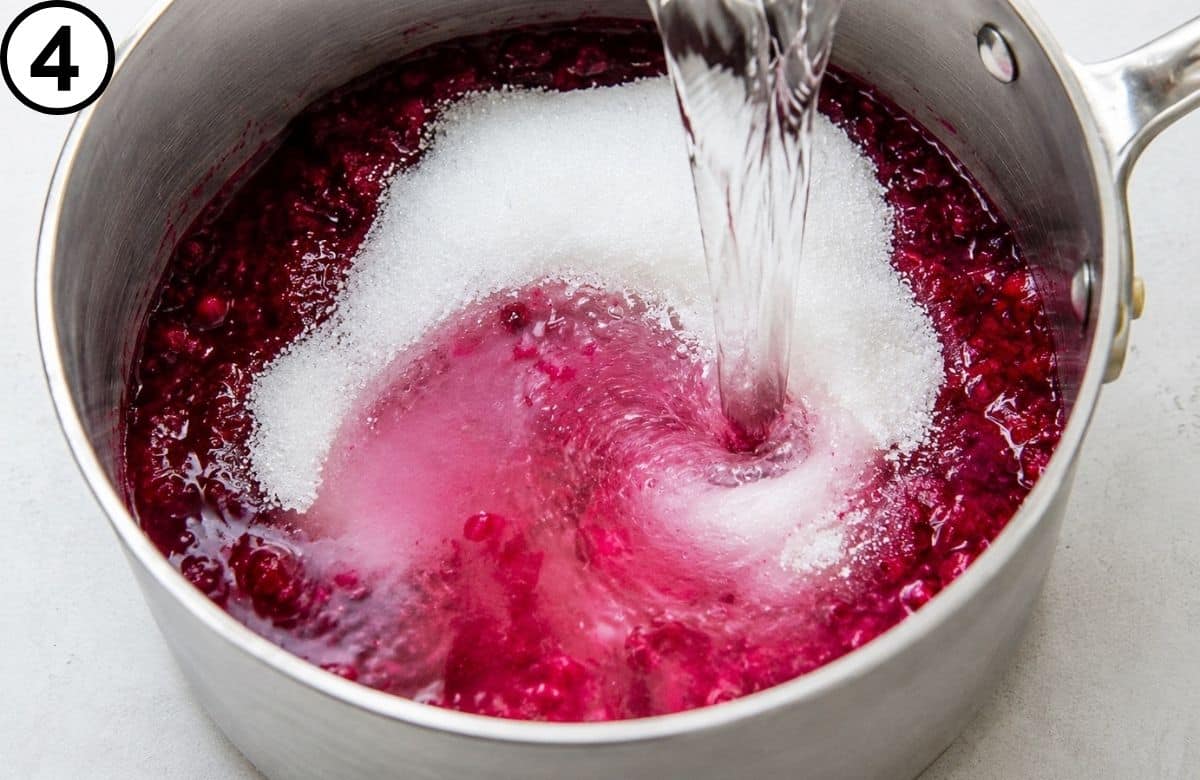
4. Pour in the water and stir the mixture to blend.
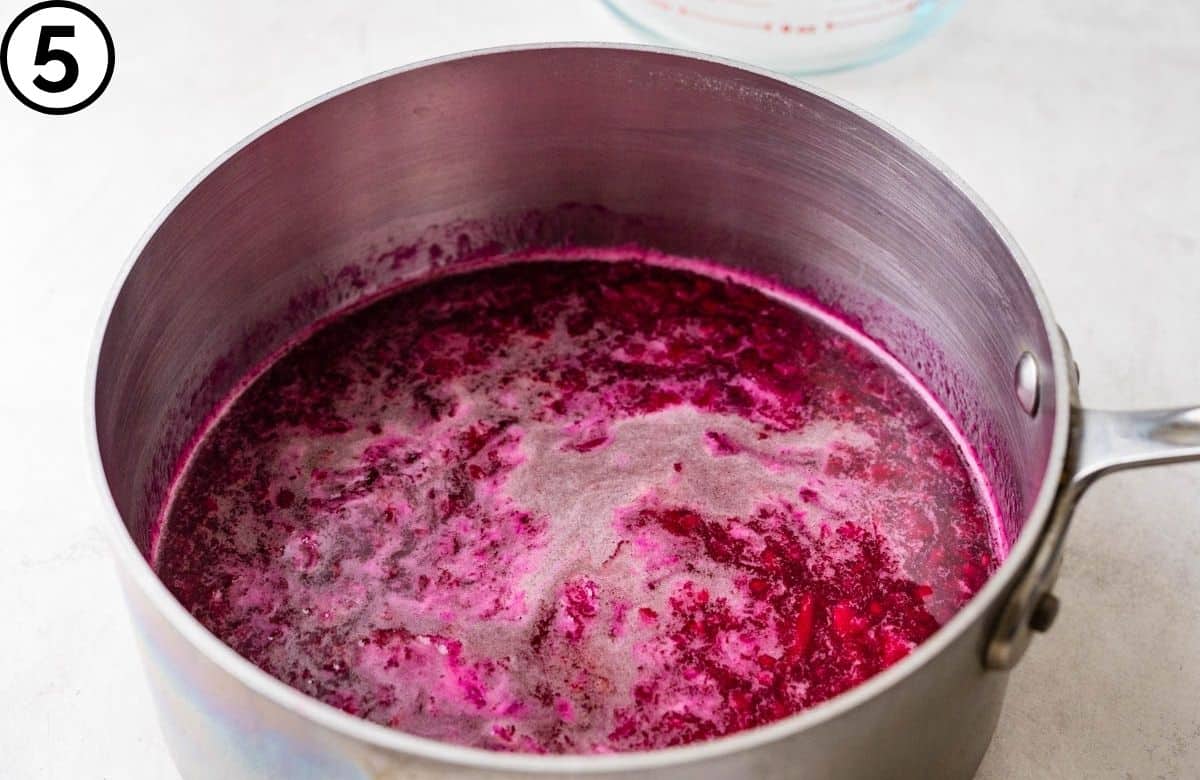
5. Bring the pot to a boil, then reduce the heat to low and simmer for 15 minutes, stirring occasionally until the sugar is dissolved.
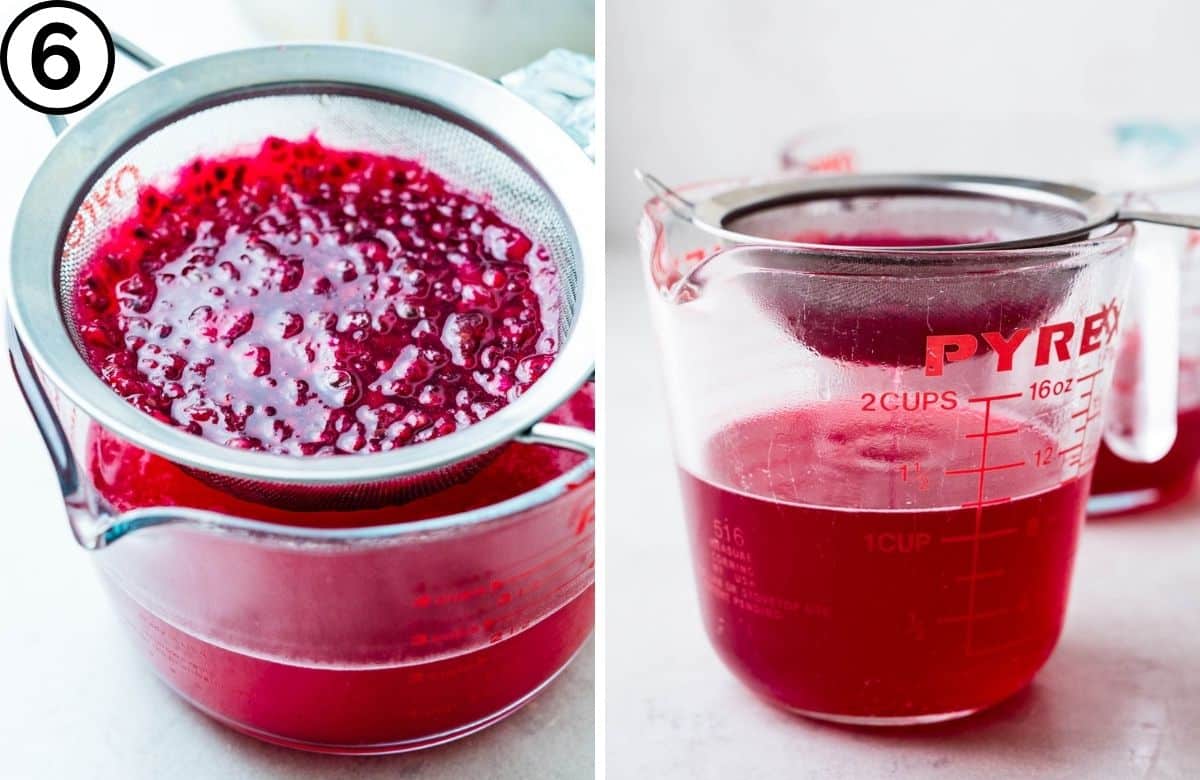
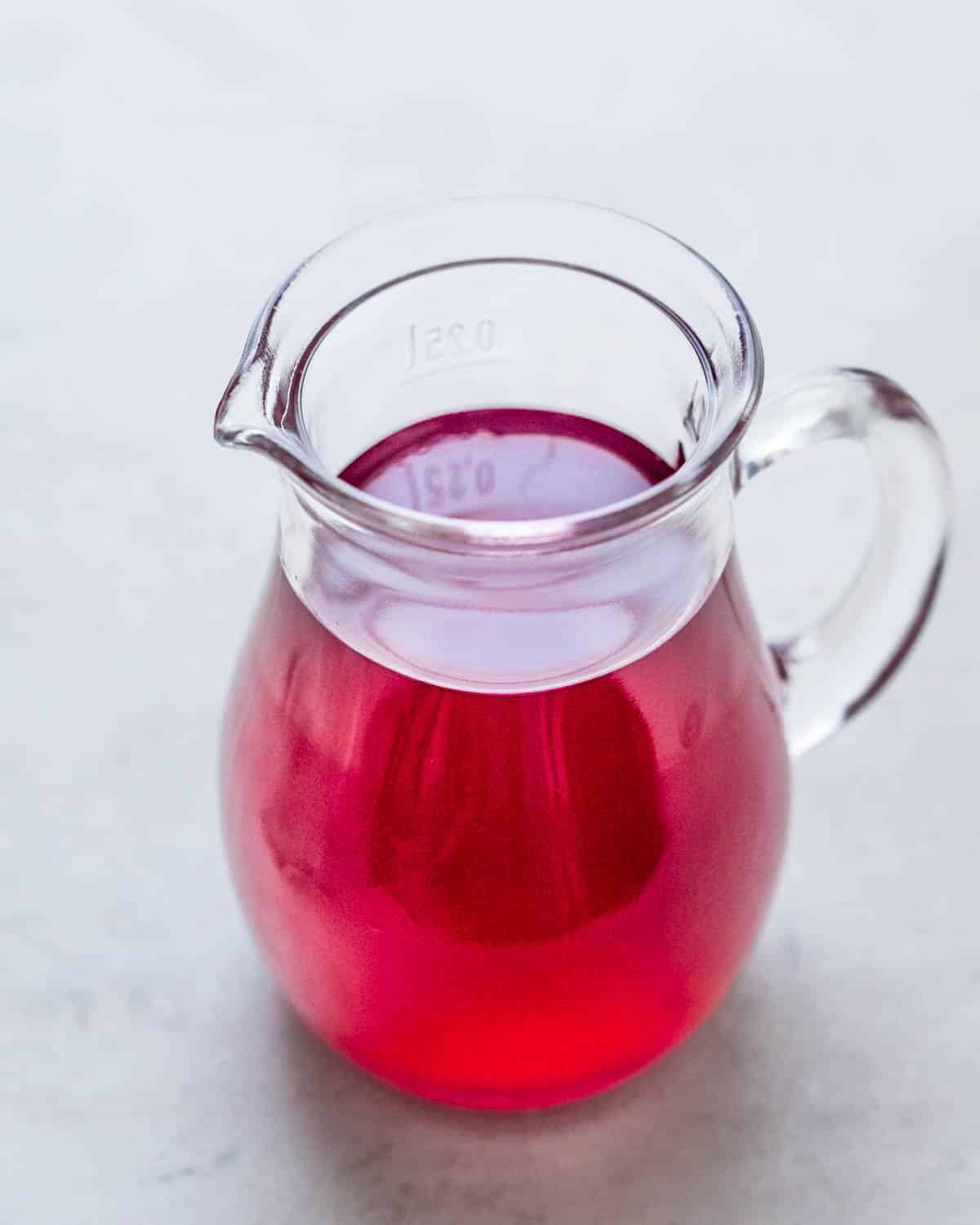
6. Strain the prickly pear syrup by placing the larger strainer over a 4-cup measure and pouring the liquid straight from the pan through the strainer. Stir the pulp in the strainer gently, but don’t press on the solids. Then pour the syrup through a fine-mesh strainer into a 2-cup measure to remove the remaining sediment.
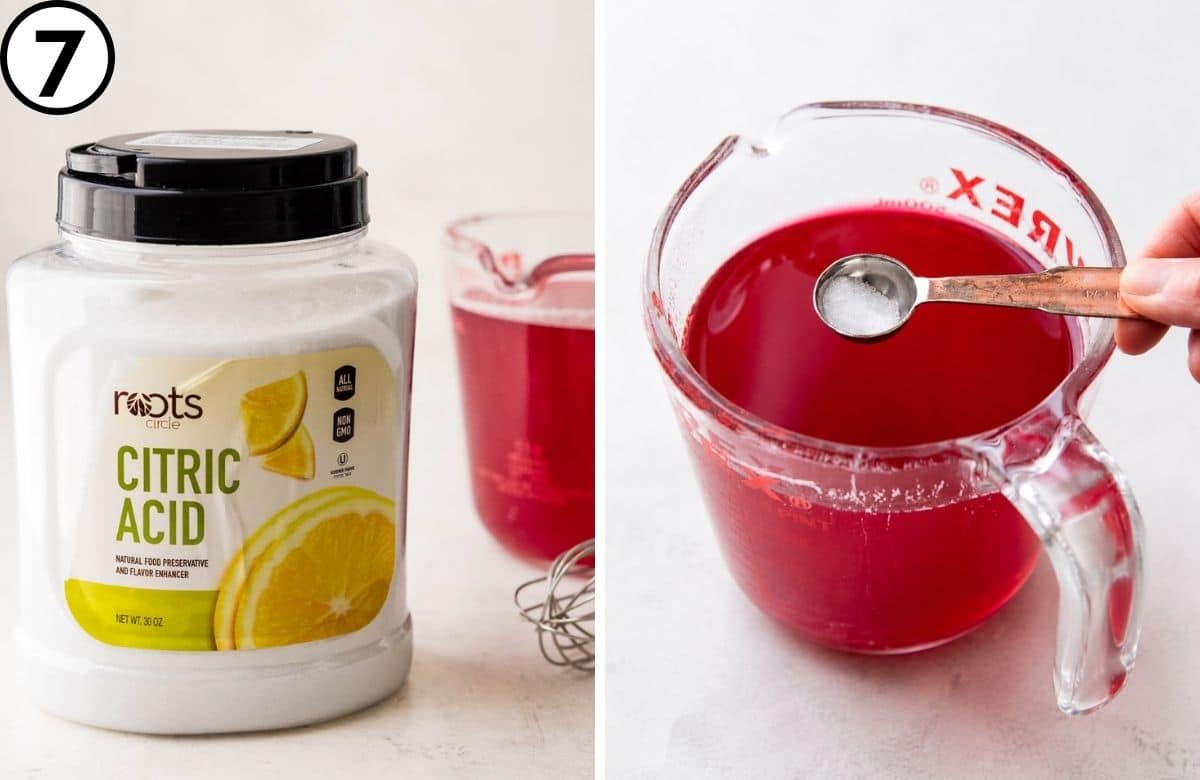
7. Add citric acid to the simple syrup. You only need a small amount, but it dramatically lifts the prickly pear flavor.
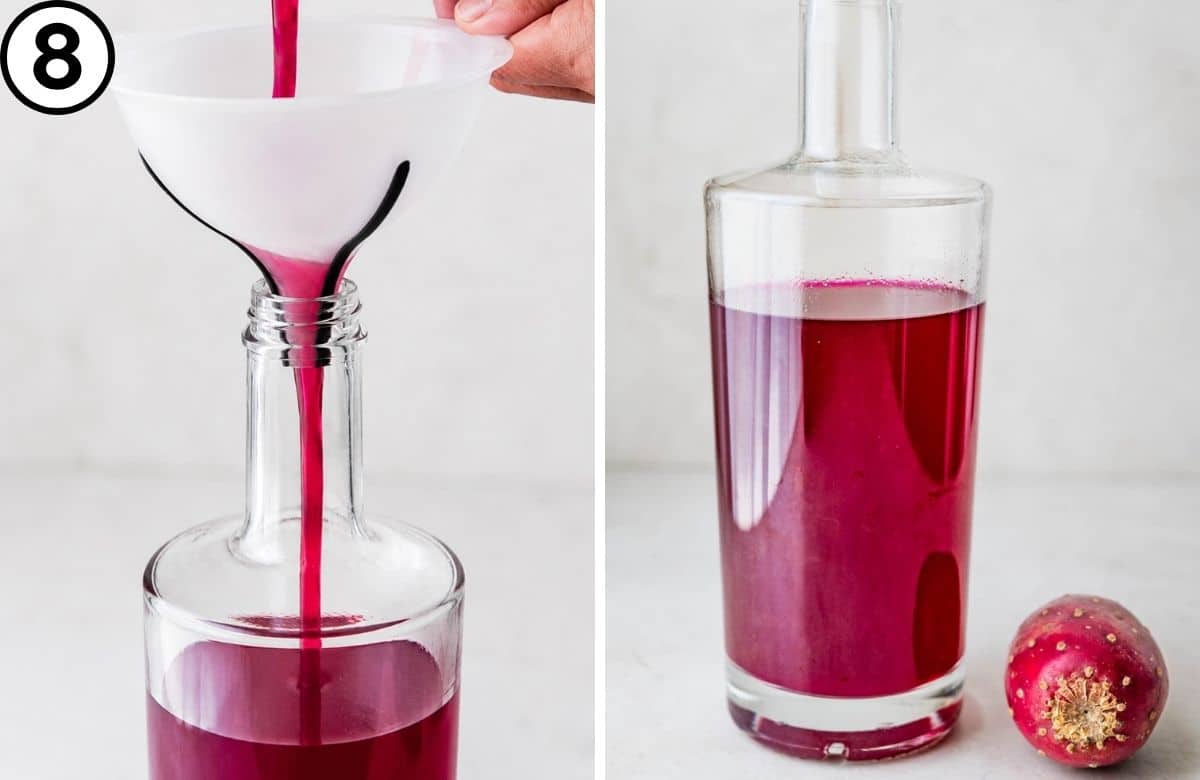
8. Transfer the syrup to a glass bottle or jar with a tight-fitting lid. Store in the refrigerator.
Pro-Tips:
- Be gentle —when you strain the syrup the first time, stir gently to help it pass through the mesh; don’t press on the pulp with your spoon. Pressing is what makes it cloudy instead of clear.
- Dissolve the citric acid by adding it right after the second strain, while the syrup’s still warm. It dissolves almost instantly.
- Citric acid is easy to find once you know where to look: the baking or canning aisle, the Kosher section (labeled “sour salt”), or online.
Mistakes to avoid:
- Using brown sugar instead of granulated. It’ll pull that signature pink-purple color toward brown — stick with granulated.
- Rushing the steep. Straining right after it’s done cooking, instead of letting it sit off heat for the full 15–20 minutes, gets you a paler, thinner syrup instead of the color and flavor you’re after.
- Skimping on the citric acid. The syrup looks vivid enough without it, but it tastes flat. Citric acid is what gives it the tartness that makes it worth drinking, not just a preservative.
- Handling home-harvested fruit bare-handed. If you’re picking your own instead of buying prickly pears already de-spined at the store, the glochids — the nearly invisible hair-like prickles — are worse than the obvious spines. Burn them off or glove up before you touch the fruit. See the bottom of this post for further instructions on handling tunas in the wild.
Swaps:
- Use frozen prickly pear purée instead of fresh fruit. Use about 1 cup of purée in place of the fresh tunas.
- Don’t have citric acid? Substitute lemon juice or lime juice, adding one tablespoon at a time until it tastes right to you. Keep in mind that lemon and lime have their own flavor; therefore, the syrup won’t be a pure prickly pear as with citric acid, which adds tartness without other flavors.
Storage:
- Store the syrup in a glass jar with a tight-fitting lid in the fridge, where it’ll keep for a month or more.
Freezing:
- To freeze it, pour the syrup into ice cube trays. Once frozen, pop the cubes out and transfer them to a zip-top freezer bag — a standard tray holds about 2–3 tablespoons per cube, so you can pull out just what you need, whenever you need it. That’s how you make prickly pear season last the rest of the year.
FAQs
Prickly pear syrup is a simple syrup made by cooking down prickly pear fruit (tunas) with sugar and water, then straining out the pulp and seeds. A little citric acid gets whisked in at the end for balance. What you’re left with is a bright pink-purple syrup you can stir into drinks and cocktails, spoon over ice cream, or use anywhere you’d use a flavored simple syrup.
On its own, prickly pear is mild — something like watermelon crossed with bubblegum. Cooking it down into syrup concentrates that flavor, and the citric acid adds a light tartness that keeps it from tasting flat. What you end up with is a syrup that’s softly sweet with a tang underneath it, not an in-your-face fruit flavor.
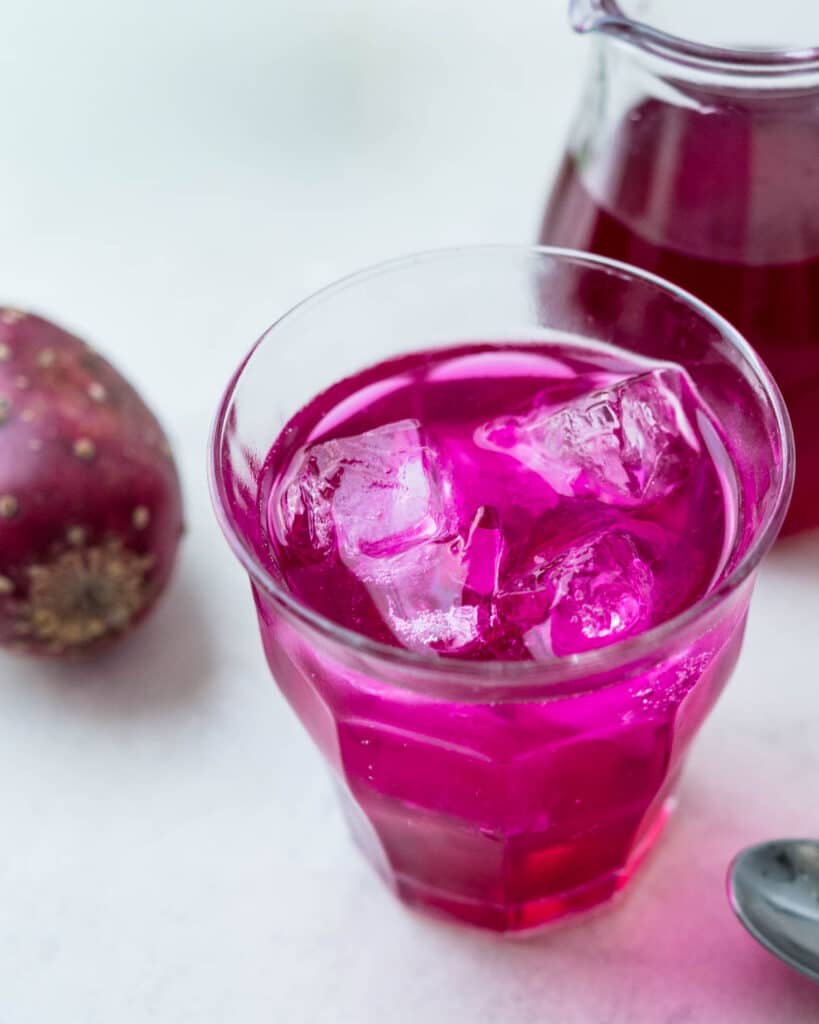
What can I use prickly pear syrup for?
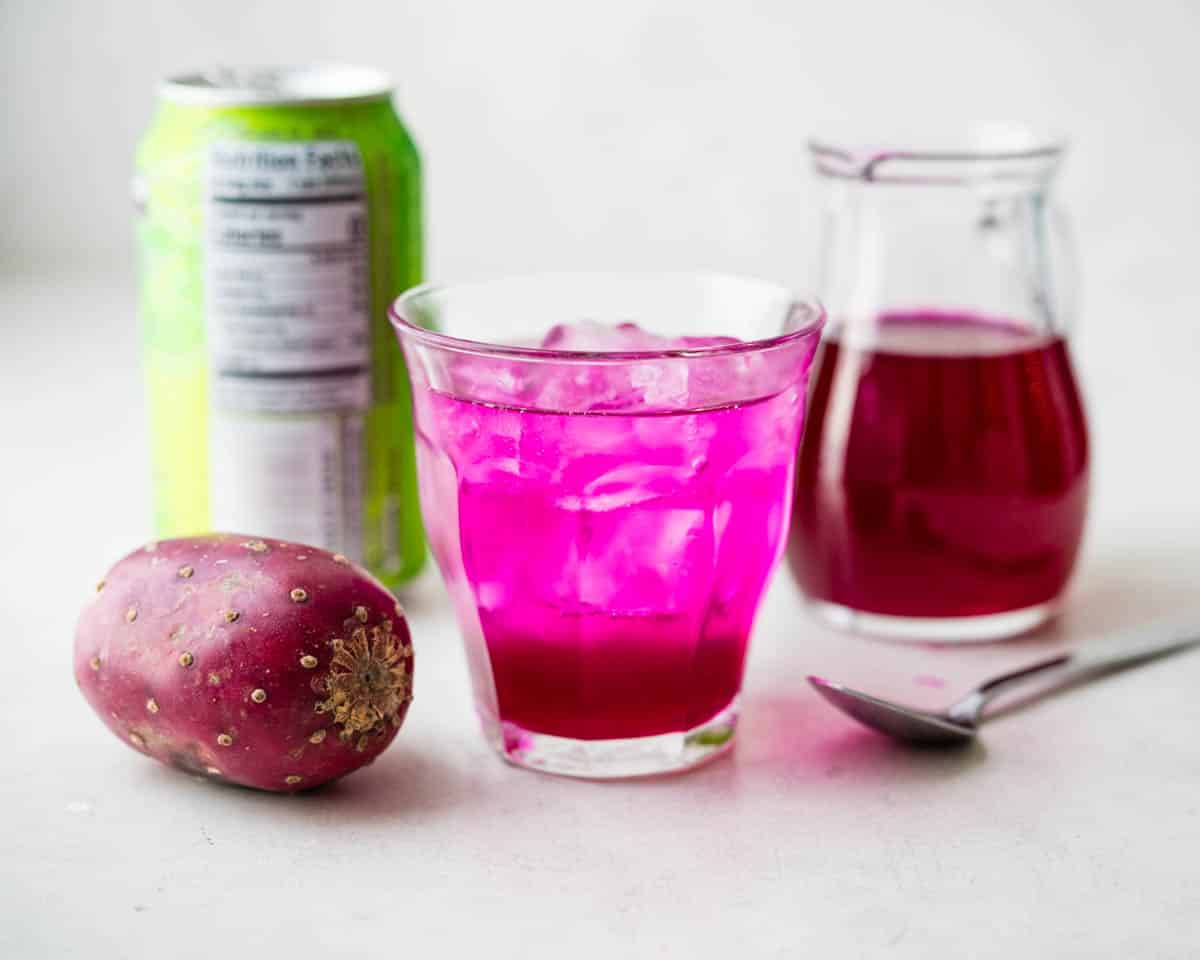
Obviously, you’ll want to use prickly pear syrup for drinks and cocktails. Look what happened when I added it to plain sparkling water (above).
That said, don’t feel constrained to use the vibrant simple syrup exclusively for beverages.
- Dress a dish of vanilla ice cream with a few spoonfuls of syrup.
- Make popsicles! Your kids will love them!
- Toss with fresh fruit (keep in mind, this syrup will turn any fruit a bright pink color).
- Stir into plain yogurt for breakfast with berries and granola.
- Use a little syrup to flavor (and color) a pan sauce for chicken or pork.
- Use prickly pear syrup to make a sorbet or ice cream.
- Make a prickly pear glaze (for cakes or cupcakes) by adding 1-2 tablespoons to two cups of powdered sugar and whisking until smooth.
- Get creative and use it for Halloween with the glaringly bright color (and tag me @garlicandzest if you do).
- Make prickly pear margaritas with tequila and lime (you can skip the agave as this syrup will stand in for it).
The possibilities are endless.
More simple syrup recipes you’ll love:
- Tropical Mango Syrup
- Homemade Pumpkin Spice Syrup
- Peach Syrup
- Passion Fruit Syrup
- Guava Simple Syrup
- Rhubarb Syrup
- Honey Simple Syrup
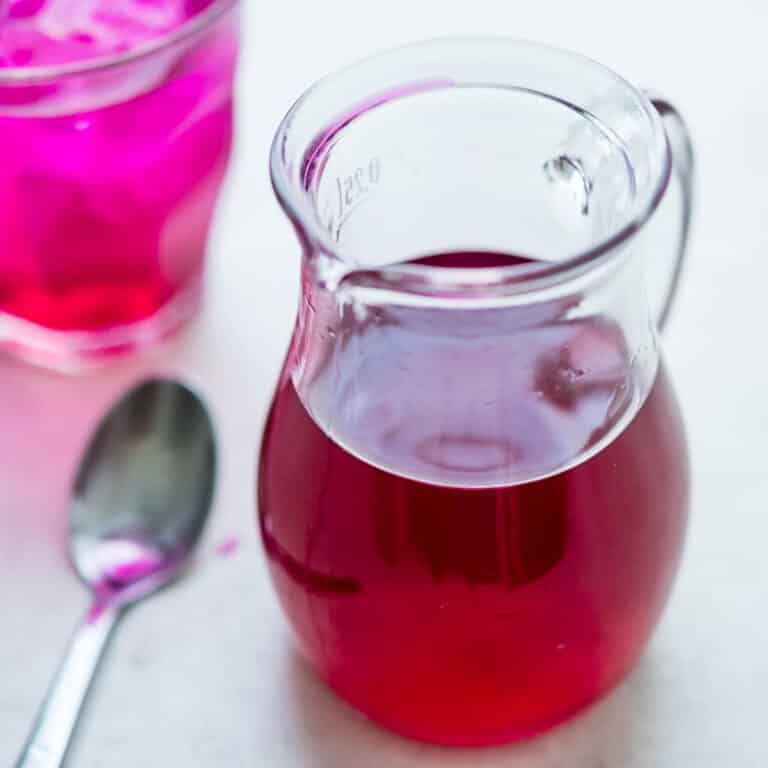
Prickly Pear Syrup
SPECIAL EQUIPMENT:
- heavy duty gloves for harvesting fresh prickly pear tunas. not needed if they're store-bought.
- potato masher
- mesh strainer
- fine mesh strainer or cheese cloth
INGREDIENTS:
- 1½ pounds prickly pears about 6-7
- 1 cup sugar
- 1½ cups water
- 1½ teaspoons citric acid or 2 tablespoons lemon or lime juice (or to taste).
DIRECTIONS:
- Slice 1½ pounds prickly pears in half lengthwise and scoop out the seedy pulp. Transfer to a saucepan.
- Use the potato masher to mash the pulp and seeds together, then add 1 cup sugar and 1½ cups water. Bring to a boil. Lower the heat to a low simmer and cook for 15 minutes or until the sugar is dissolved and the mixture is syrupy.
- Remove from heat and let the prickly pear steep and cool for another 15 to 20 minutes.
- Place the mesh strainer (the one with the larger holes) over a bowl or glass measuring cup to catch all the syrup. Pour the warm prickly pear syrup through the strainer. You can stir the pulp, to get the last bit of syrup to go through, but don't press on the seeds. Keep the syrup as clear as possible.
- Place the fine mesh strainer over another glass measuring cup or bowl and strain the prickly pear syrup again, this will remove any final sediment.
- Add 1 teaspoon citric acid and whisk to combine. Taste for flavor. If you think it needs more citric acid, add another ¼ to ½ teaspoon until it's the way you like it.
- Transfer the prickly pear simple syrup in a glass jar with a tight fitting lid in the refrigerator. It should last for a month in the refrigerator.
RECIPE VIDEO:
NOTES:
NUTRITION:
Nutritional Disclaimer
Nutritional information is an estimate only and is provided as a courtesy. Values are calculated automatically based on the ingredients and quantities in each recipe and may vary depending on specific brands, exact measurements, and substitutions made. For precise nutritional guidance, especially if you have a medical condition or dietary restriction, please consult a registered dietitian or run the ingredients through your own nutrition calculator.What are prickly pears?
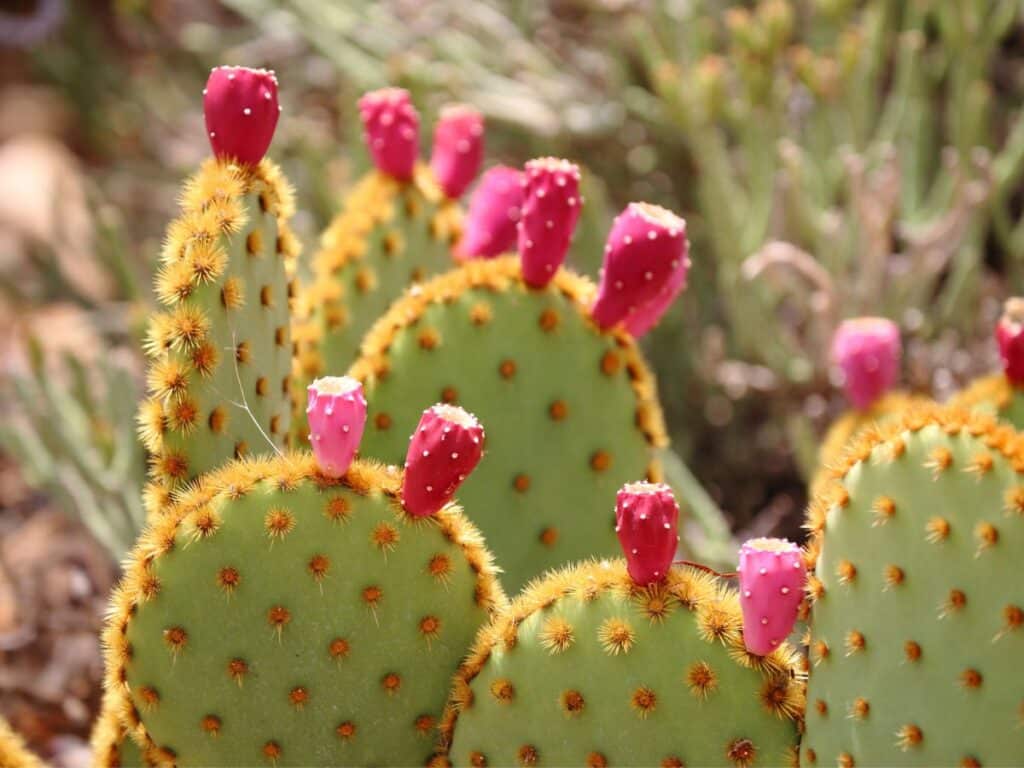
Prickly pears are the fruit of the nopales cactus, found across the American Southwest from Central Texas to Southern California. They’re called “tunas,” and they’re in season September through December — look for them at the market then.
Handling the spines and glochids
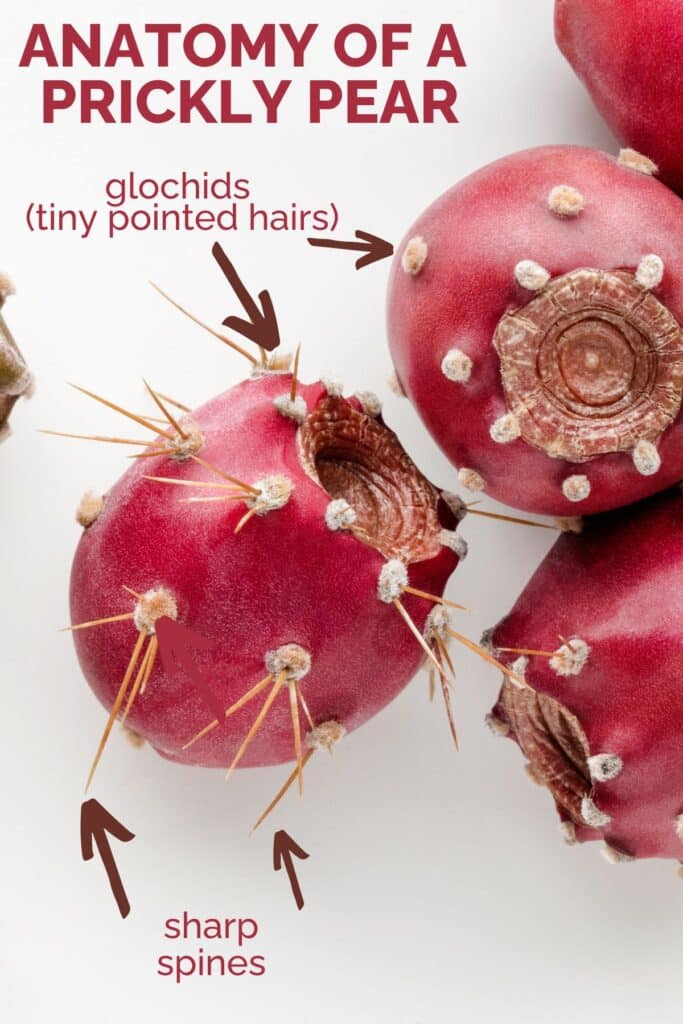
Prickly pears carry two kinds of defense, both visible in the photo below. The spines are the obvious ones — sharp, needle-like, sticking straight out of the fruit, easy to spot and easy to avoid.
Glochids are the sneaky ones: tiny, hair-like prickles covering the fruit that you can barely see, closer to fiberglass than anything you’d call a thorn.
One description I found calls it “like you are having a tiny hole drilled into your skin. By a laser. A laser that is ON FIRE.” I’ll pass on that.
If you’re harvesting your own, wear heavy gloves and use tongs to twist the fruit off the cactus rather than touching it. This video shows how to harvest and clean them. I’ve also seen them remove the hair-like spines with a kitchen torch or gas burner before handling the fruit further.
Most grocery stores do this for you before the fruit hits the shelf — I picked mine up bare-handed with no issue, which beats gloves and a blowtorch if you have the option.
Why bother turning it into syrup?
Eaten straight off the fruit, prickly pear is loaded with tough little seeds — edible, technically, but not worth risking a cracked tooth over. Cooking it down and straining it out is how you get all of that color and flavor without the dental bill.
Pin it for later!
Gorilla tape is the best thing in the world for taking prickly pear spines out of your hands.
You’re saying your recipe 6-7. Do you mean that Many tuna or do you mean that many cups? Because if you mean tunas themselves, they vary in size. So I found this rather confusing.
In the recipe it says 1½ pounds of tunas, or about 6-7. That shouldn’t be confusing.
I’ve never worked with prickly pear before, but this was really easy and the flavor is SO GOOD! Found small citric acid in my grocery store — makes all the difference.
does it stain your teeth ~clothes ~counter tops like pomegranates do ? looks so refreshing
You’d think it would, but no.
My experience: still-wet prickly pear juice will rinse out of a cotton t-shirt. However, dry juice turns into a stubborn, if not permanent, stain. No staining to natural teeth (don’t know about veneers). And, my countertops are dark granite, so I couldn’t tell if there are stains or not.