
Authentic Garlic Aioli Recipe (6 Ingredients, 5 Minutes)
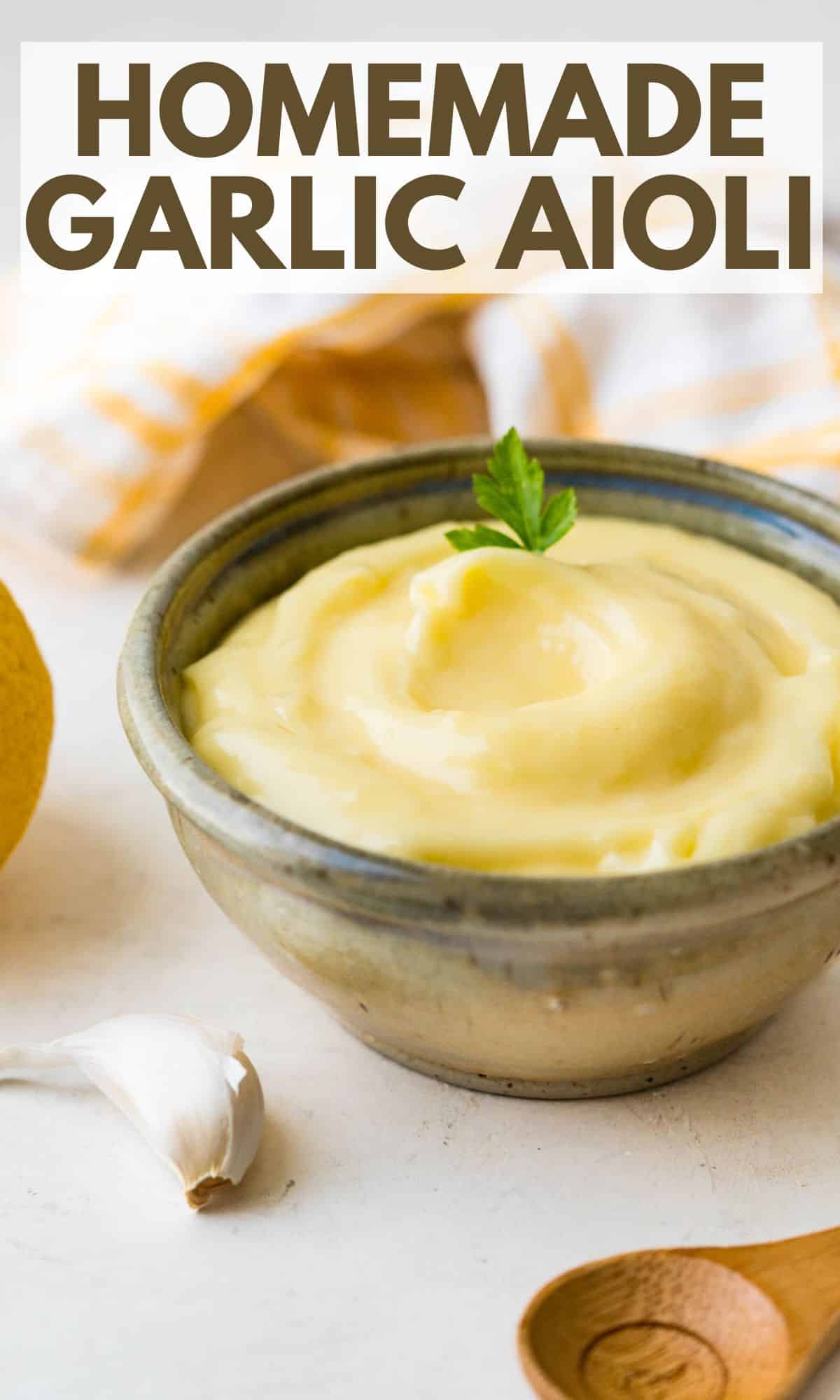
Making thick, luscious aioli is quick and easy. You’ll only need a few simple ingredients and about 5 minutes of elbow grease. Learn how to make this Provence-inspired garlic aioli recipe in minutes, then use the creamy, garlicky sauce to dress up everything from steamed vegetables and seafood to sandwiches.
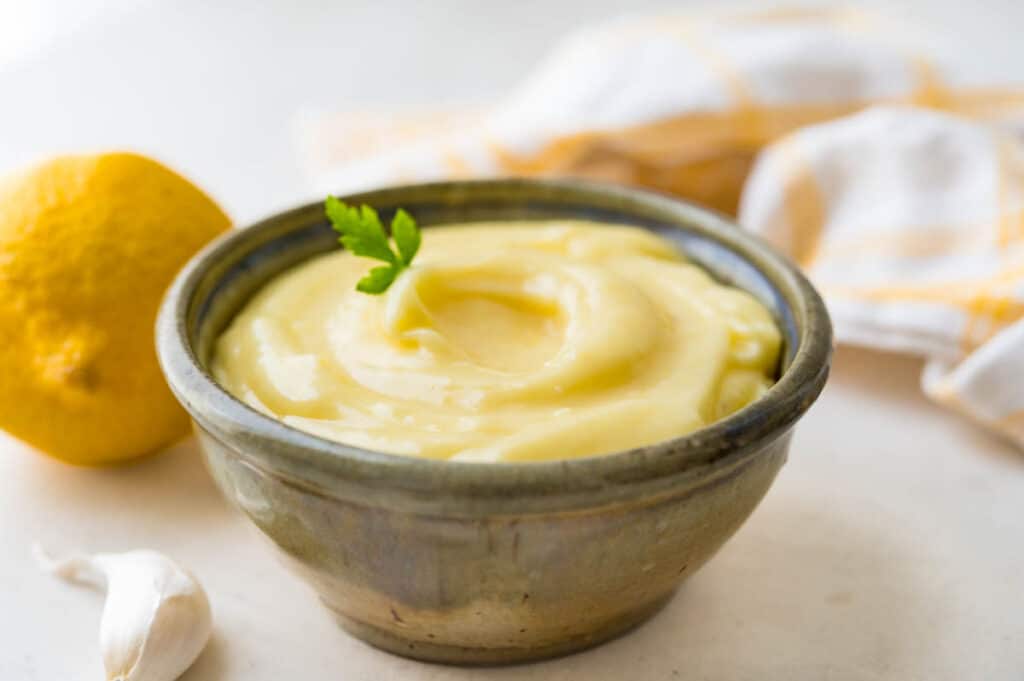
Aioli, pronounced ahy-oh-lee, is a classic creamy garlic-infused mayonnaise that’s often served with seafood like salmon and smoked salmon recipes, Caribbean Grilled Yellowtail Snapper or steamed and grilled vegetables like these Grilled Smoked Artichokes, and if you haven’t used it as a dip for French fries/frites, you’re missing out. However, the basic definition doesn’t do this luxurious sauce justice.
Origins of garlic aioli
The roots of classic aioli sauce span the northern Mediterranean territories from Andalusia, Spain to Provence in Southern France and Calabria (the “toe” of the boot), in Italy. As with any recipe that’s popular across vast regions, each locale has their own unique ways of making their garlic aioli recipe. The French include mustard in theirs while other regions stick strictly to olive oil and garlic.
The internet abounds with cheater’s versions of aioli recipe
Online you’ll fine loads of “aioli recipes” that start with prepared mayonnaise and garlic, but they’re not the real deal.
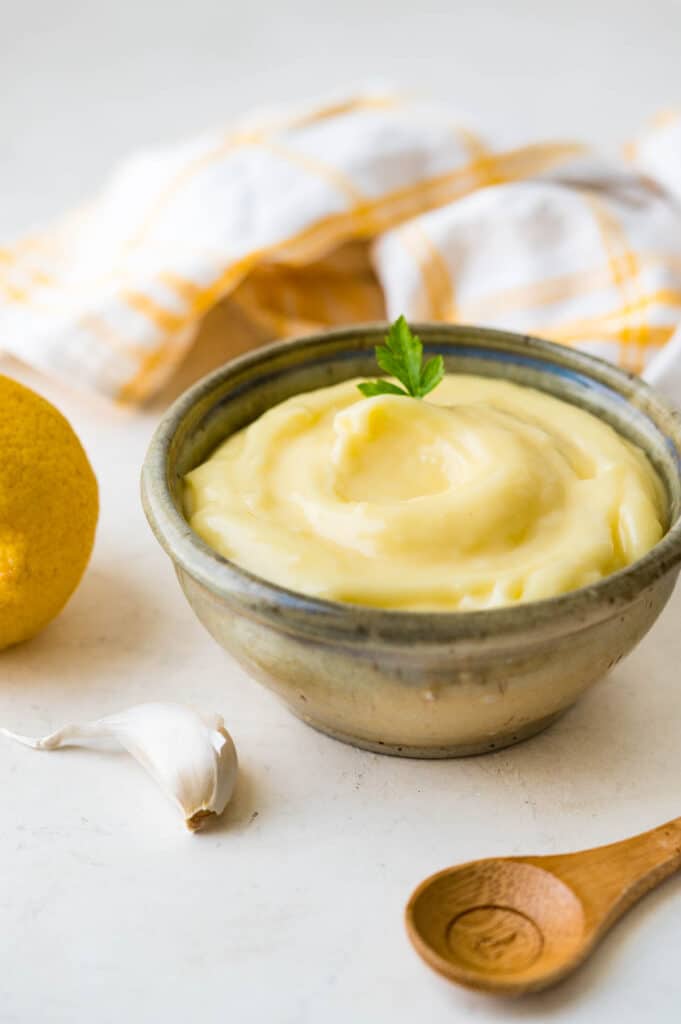
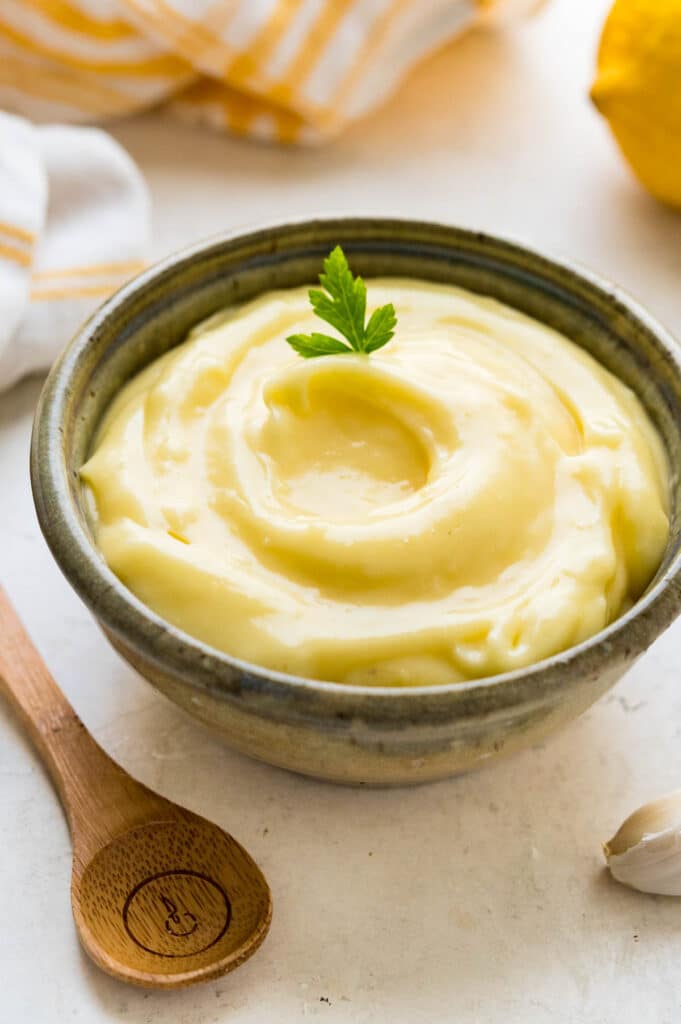
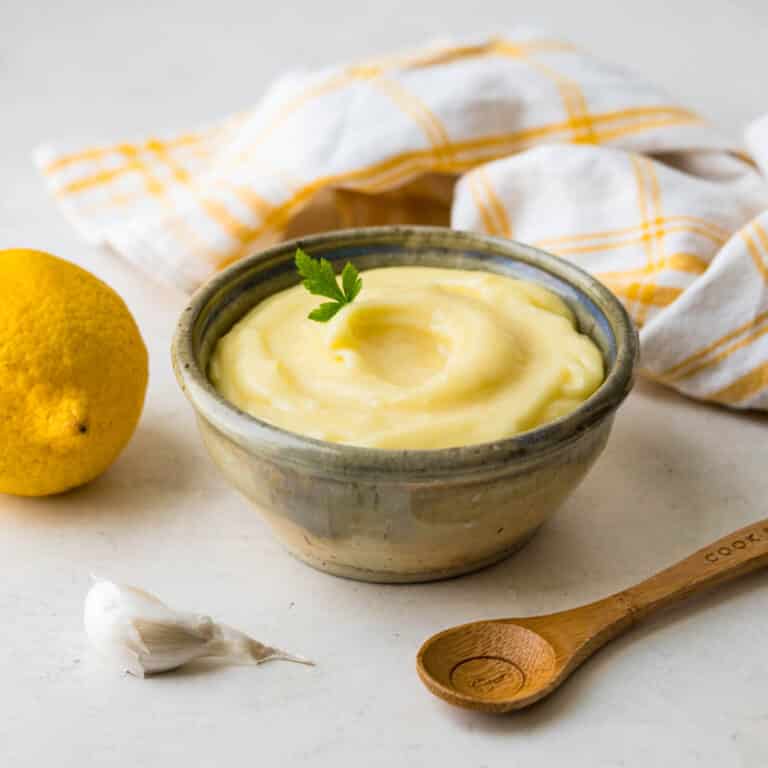
What they’re describing is a shortcut or cheater’s version for making an aioli sauce. The reason those recipes start with a prepared mayonnaise is that aioli is, at its most basic level, a mayonnaise. But a homemade aioli is thicker, much more yellow (because of the egg yolks) and way more flavorful.
I’m not going to get on a soapbox about it, because store-bought mayo isn’t bad. And for a quick and easy spread for a leftover chicken sandwich, I won’t quibble. Heck, I made a cheater’s version myself with this red pepper aioli.
However, if you do a side by side comparison of Hellman’s mayo (or any other brand) vs. a homemade mayonnaise, you’ll immediately see the difference. Tastewise, there’s no comparison. Trust me.
Ingredients you’ll need for garlic aioli
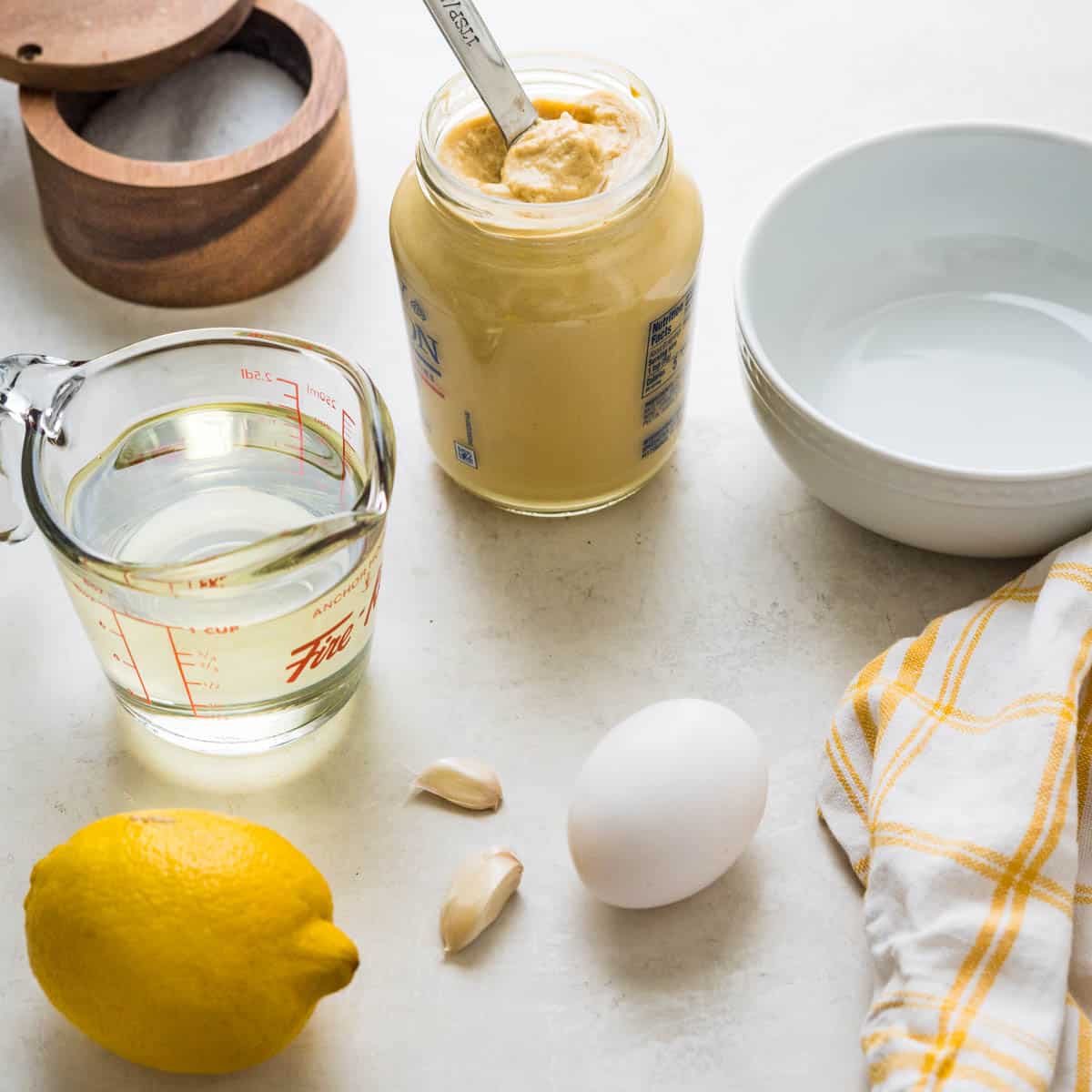
- Garlic – Use fresh garlic, not the kind in a jar.
- Dijon Mustard – This French mustard has a bit of white wine which softens the flavors.
- Egg Yolk – purchase pasteurized eggs for less risk of salmonella.
- Vegetable or Canola Oil – Don’t use olive oil as the flavor overpowers the aioli.
- Lemon Juice – fresh squeezed is best.
- Kosher Salt – or fine sea salt.
About the ingredients:
Traditional garlic aioli is made with raw egg yolks, (though if you’re squeamish about that, there are methods you can use to pasteurize the yolks to assure food safety).
Many classic aioli recipes use only olive oil, but I’ve found that it can be overpowering.
I prefer to use a more neutral oil (like vegetable or canola) for this creamy sauce. If you want to add a bit of olive oil to yours, I advise starting with a 3:1 ratio neutral oil to olive oil — so ⅔ cup neutral and ⅓ cup olive oil.
I’m sticking with the vegetable oil.
Purists make this unctuous emulsion using a mortar and pestle.
Others use a blender, but I’ve never had good results with that method.
Besides, Julia Child says, “You cannot make it successfully in an electric blender because for some reason the garlic acquires a raw and bitter taste, and the egg white required for the blender made sauce does not produce the fine heavy texture that is characteristic of a proper Mediterranean aioli.”
My method is one I learned from my mother and grandmother (both French cooks, so it’s legit) and it couldn’t be easier.
How to make this garlic aioli recipe:
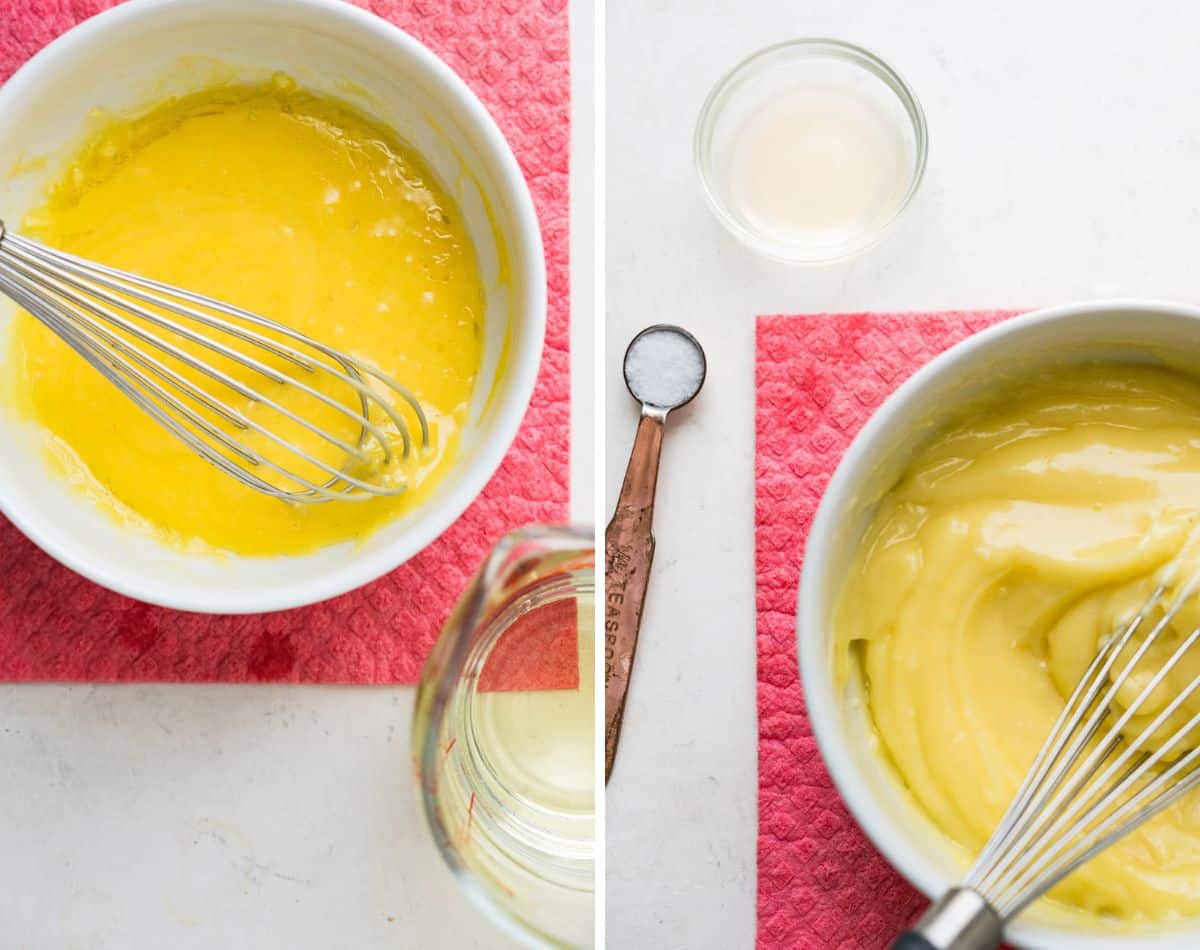
You’ll need to use both hands at the same time to make an aioli (one constantly whisking, the other drizzling in the oil). To prevent the bowl from sliding as you work, use the “setup method” below.
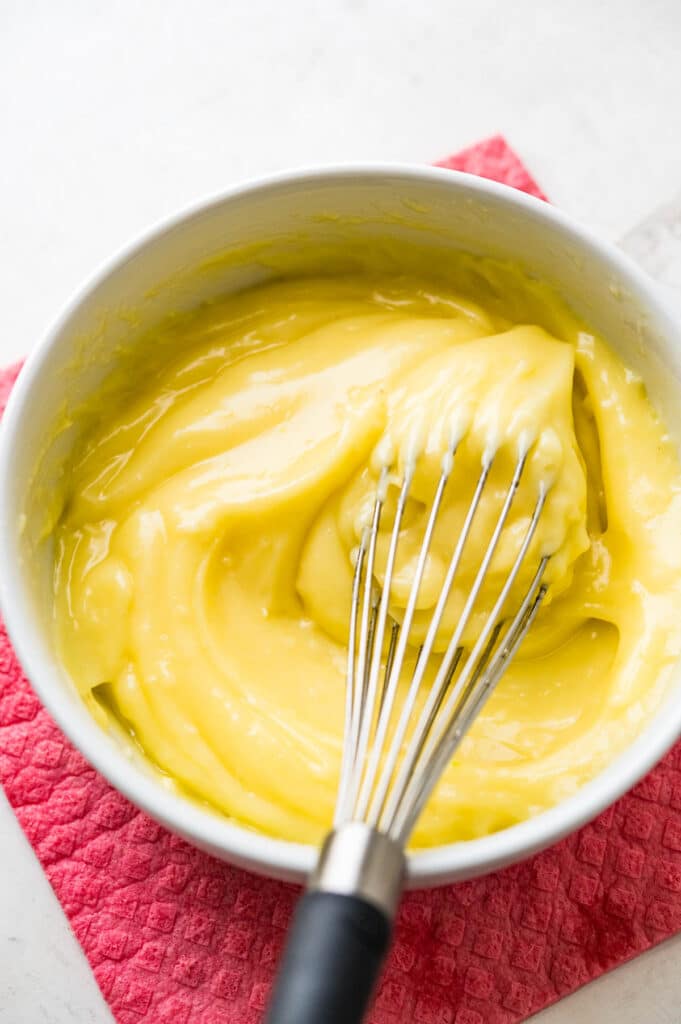
- Set up your bowl–Wet a dish towel, wring it out, and lay it flat on your counter. Set your mixing bowl on top — the damp towel keeps it from sliding while you whisk with one hand and pour with the other.
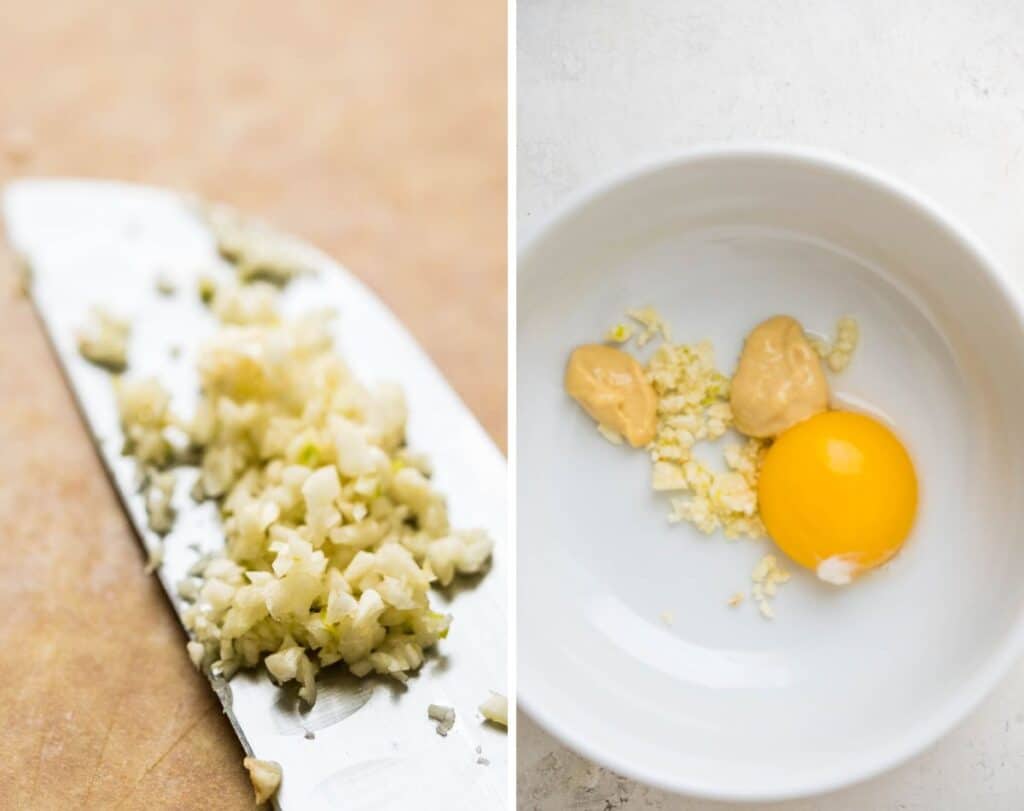
- Build the base–Add the minced garlic, egg yolk, and Dijon mustard to the bowl. Whisk until combined.
- Drizzle in the oil–don’t add it all at once. To make a classic garlic aioli, add the oil very slowly, in a thin, steady stream, whisking as you go. Pick a direction (clockwise if you’re right-handed, counter-clockwise if you’re left-handed) and don’t switch mid-stream, or you risk breaking the emulsion.
- Watch it come together–As the oil incorporates, the mixture will thicken and turn pale and creamy. Keep whisking until every drop of oil is worked in.
- Season and taste–Whisk in the lemon juice and salt. Taste and adjust with more salt or a touch more lemon juice if needed.
- Serve immediately or chill –It’s ready to eat immediately, but a few hours in the fridge lets the garlic bloom and deepens the flavor.
Pro-Tips:
- To assemble the aioli recipe, you’ll need both hands at once, which can get tricky when a bowl slips and slides on the countertop. The solution is this: Wet a dishtowel or reusable dishcloth and ring it out (Note: I used my Skoy-brand Swedish cloth, and this is my affiliate link). Set your bowl on the damp cloth, and it will remain in place without fidgeting.
- Don’t change the direction of your whisking; it should always be the same motion to develop the emulsion and prevent breaking. This warning comes from both my Mom and Grandmother (and countless cooking school teachers), who concur that you should never change the direction of your whisking or risk breaking (curdling) the aioli sauce.
- Constant whisking is a must; 3-5 minutes isn’t a lot – and truly, the garlic aioli recipe comes together in that timeframe, but your arm may get tired of the constant motion. Press on… and don’t be deterred.
Mistakes to avoid:
- The number one mistake people make: Being impatient and adding the oil too fast. This can break or curdle the emulsion. Don’t do it.
- Changing whisk direction mid-process–another failsafe, pick your direction and whisk in the same direction until the aioli is finished.
- Using olive oil as the sole fat–the flavor will overpower your aioli and make it one-note. A neutral oil, such as canola, vegetable or grapeseed, will give the best flavor. If you want to use olive oil, use only about ⅓ olive oil to ⅔ neutral oil.
- Skipping the damp-towel trick and fighting a sliding bowl. Seriously, you’ll thank me.
- Using raw, unpasteurized eggs. Most store-bought eggs have been pasteurized, but if you’re buying them fresh, they need to be pasteurized to kill harmful pathogens like Salmonella. Pasteurization does this without actually cooking the egg.
What does aioli sauce go with?
The beauty of a lush garlic aioli is that it will make just about anything you pair it with taste better.
- Aioli and fish are a natural combo. Try it with grilled fish, poached fish or oven baked fish and shellfish.
- Pair garlic aioli with steamed, boiled, roasted or grilled vegetables.
- It’s delicious with a simple poached chicken breast or the breast meat from a rotisserie chicken on a grill.
- Use garlic aioli as a dip for a crudite platter.
- Use instead of butter on your next eggy breakfast sandwich.
- Skip the Hellman’s and use this garlic aioli on sandwiches.
Swaps and Variations:
- Add fresh herbs–Stir or sprinkle in fresh chopped herbs like tarragon, chives or basil.
- Add some spice to the aioli by adding a pinch of cayenne pepper to the recipe at the beginning or stirring in a few teaspoons of your favorite hot sauce at the end.
- Reduce the sting. The garlic is very pronounced in this aioli, but if you want to tone it down, use roasted garlic or confit garlic instead.
FAQ’s
At its most basic level, aioli is an emulsion of egg yolks and oil. Garlic aioli contains minced garlic, and Dijon mustard helps emulsify the mixture into a smooth sauce.
Technically, yes — aioli is an emulsion of egg yolk and oil, which is the definition of a mayonnaise. What sets a real garlic aioli apart is the garlic and Dijon whisked in from the start, and the fact that it’s made by hand instead of built from a jar of store-bought mayo. That’s the difference between this recipe and the “cheater’s” versions floating around online.
To make a good aioli, use room temperature eggs, slowly add the oil, and whisk in a constant direction without changing it.
Make ahead:
- You can make it several hours or a day before using it.
- The garlic flavor in the aioli will get stronger, the longer it sits, so bear that in mind.
Storage:
- This garlic aioli recipe will keep for up to 3-5 days in an airtight container in the fridge.
- To prevent the aioli from developing a “skin”, cover the dish with plastic wrap and lightly press the wrap onto the surface of the sauce. Stir before using.
Freezing:
- I don’t recommend freezing the aioli; textures can change and weeping and separating can occur.
More amazing sauces and spreads you might like:
- Italian Salsa Verde
- Horseradish Sauce Recipe
- Classic Tzatziki Sauce
- Hatch Green Chile Sauce
- Pine Nut Pesto
- Bordelaise Sauce
- Deviled Ham Spread
- Pistachio Pesto
- Chermoula Sauce
- Walnut Pesto
Homemade Garlic Aioli Recipe
SPECIAL EQUIPMENT:
- whisk
INGREDIENTS:
- 2 cloves garlic minced
- 1 teaspoon Dijon mustard
- 1 large egg yolk
- 1 cup neutral oil (see note) like Canola or vegetable oil. Olive oil can be used sparingly.
- ½ teaspoon Diamond Crystal kosher salt or 1/4 teaspoon Morton's Kosher Salt
- 2 tablespoons fresh squeezed lemon juice
DIRECTIONS:
- Wet a dish towel and squeeze out the excess water. Place the damp towel on a work surface and put a small bowl on top of it. (This will help keep the bowl in place as you whisk the aioli and pour the oil at the same time.)
- Add 2 cloves garlic, 1 large egg yolk and 1 teaspoon Dijon mustard to the bowl and whisk to combine. Very slowly drizzle in 1 cup neutral oil (see note) in a steady stream, whisking clockwise if you're right-handed or counterclockwise if you're left-handed. Do not change the direction of your whisk.
- As the oil is whisked into the aioli, the mixture will start to emulsify. Continue to drizzle in the oil, whisking the entire time until all of the oil is incorporated.
- Add ½ teaspoon Diamond Crystal kosher salt and 2 tablespoons fresh squeezed lemon juice and whisk to combine. Taste for seasoning and adjust as necessary.
- You can use the aioli as soon as you make it, but if you cover and refrigerate it for a few hours, the flavors will intensify. It will be more garlicky and flavorful.
RECIPE VIDEO:
NOTES:
NUTRITION:
Nutritional Disclaimer
Nutritional information is an estimate only and is provided as a courtesy. Values are calculated automatically based on the ingredients and quantities in each recipe and may vary depending on specific brands, exact measurements, and substitutions made. For precise nutritional guidance, especially if you have a medical condition or dietary restriction, please consult a registered dietitian or run the ingredients through your own nutrition calculator.Pin it for later!
Love, love, love aioli! It is a standard in our house…love slathering on poached fish!